
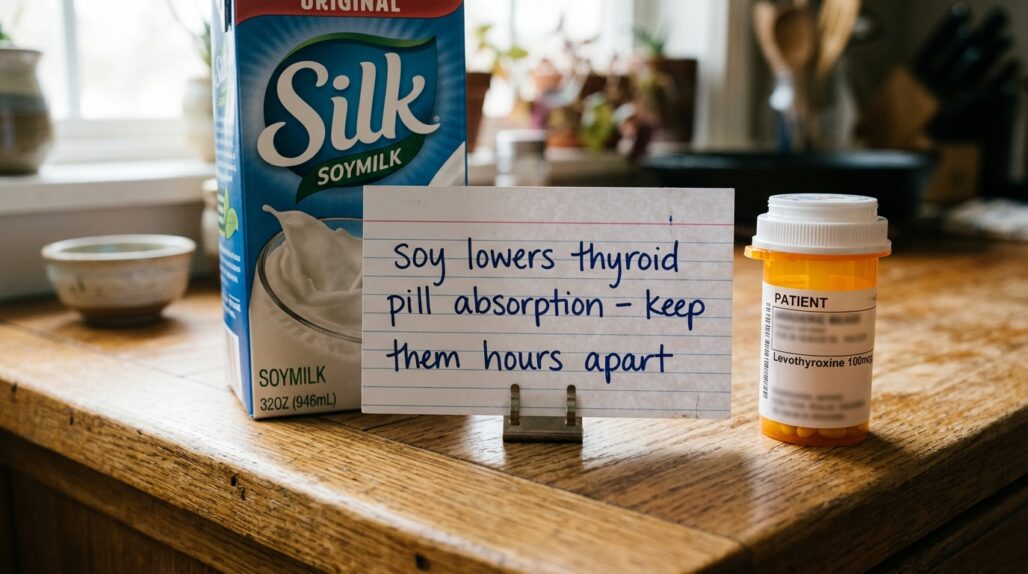
Before you decide
This article is general information, not medical advice. Levothyroxine dosing is individual, and only your prescriber should change it based on your labs.
The short version: soy is not off-limits if you take thyroid medication. The problem is almost always timing and consistency, not the soy itself. Most people who run into trouble are taking their pill and their soy together, or adding a large daily soy habit without telling anyone.
A few groups need closer attention. Infants on soy formula being treated for congenital hypothyroidism are the clearest example. People with Hashimoto's, subclinical hypothyroidism, or marginal iodine intake also sit higher on the risk list, because their thyroid has less spare capacity to absorb a hit.
If you are healthy with a normal thyroid, the picture is reassuring. The interaction that matters in practice is an absorption problem at the moment you swallow the pill, and that is fixable with a clock.
What the soy-levothyroxine interaction actually is
Levothyroxine is a narrow-margin drug. Small changes in how much you absorb can move your TSH, so anything that grabs onto the hormone in the gut matters.
Soy interferes in two separate ways, and it helps to keep them apart in your head.
- Direct binding in the gut. Soy protein and soy fiber can bind levothyroxine in the intestine so less of it crosses into your blood. This is a local, mechanical effect that happens when soy and the pill are in your stomach at the same time.
- Isoflavones and the thyroid gland itself. Soy isoflavones (genistein and daidzein) can mildly affect how the thyroid makes hormone, mostly by interfering with iodine use. This matters far more when iodine intake is low.
The first effect is the one that trips up most patients on medication. It is why the fix is spacing the pill away from soy, not avoiding soy for life.
In a well-documented case, a woman after thyroidectomy needed unusually high levothyroxine doses while taking a soy protein "cocktail" right after her pill. When she separated the soy from the medication, her levels normalized on a lower dose, as reported by Bell and Ovalle in Endocrine Practice. The dose did not change. The timing did.
How big is the effect, really?
This is where soy gets a worse reputation than the data supports. The strong signals come from case reports, where soy was taken with the pill or in large daily amounts. The controlled trials are calmer.
A randomized, double-blind crossover study in people with subclinical hypothyroidism found that isoflavone-free soy protein did not change thyroid function over 8 weeks, reported by Sathyapalan and colleagues in the Journal of the Endocrine Society. That is reassuring for anyone worried that a normal serving of tofu ruins their dose.
For thyroid function in general, a meta-analysis in Scientific Reports pooled 18 randomized trials. In healthy adults, soy did not change free T3 or free T4 and raised TSH by only a small amount (about 0.25 mIU/L), with unclear clinical meaning.
So why the warnings? Because averages hide the people at the edges. The same body of research shows the subclinical hypothyroid subgroup reacts more, and isolated patients have tipped into overt hypothyroidism. The effect is real but uneven, which is exactly why timing and monitoring beat blanket avoidance.
Who is most at risk
The interaction is not equal for everyone. Use the table below to find where you sit, then match it to the action.
| Group | Why the risk is higher | What to do |
|---|---|---|
| Infants on soy formula | Soy protein binds the hormone and prolongs high TSH; treated congenital hypothyroidism is fragile | Pediatric endocrinology should set the dose and monitor closely |
| Subclinical or marginal hypothyroid | Less thyroid reserve, so soy isoflavones can push TSH further | Keep soy intake steady; recheck TSH after any change |
| Low iodine intake | Soy acts as a goitrogen mainly when iodine is scarce | Make sure iodine intake is adequate; ask your clinician |
| Anyone taking pill and soy together | Direct gut binding lowers absorption at that dose | Separate the pill from soy by at least 4 hours |
| Healthy adults, normal thyroid | Minimal effect at normal soy servings | No special action beyond sensible spacing |
Two patterns deserve a closer look because they drive most of the real-world problems.
Soy infant formula and congenital hypothyroidism
This is the setting where the interaction is least debatable. Babies treated for congenital hypothyroidism who are fed soy-based formula can show prolonged high TSH and often need a higher levothyroxine dose to reach normal levels.
A clinical report describing this pattern, Conrad and colleagues in Archives of Disease in Childhood, found soy formula complicated dosing and called for frequent thyroid testing when formula changed. The dose may need to go up when soy formula starts and come back down when it stops.
If your child is on both, this is a conversation for the pediatric endocrinologist, not a do-it-yourself adjustment. Tell them every time the feeding plan changes.
What soy does to a normal thyroid
For an iodine-sufficient adult with a healthy thyroid, soy is not the villain it is sometimes made out to be.
A review of the human trials in healthy adults and hypothyroid patients, summarized by Messina and Redmond in Thyroid, found little evidence that soy harms normal thyroid function when iodine status is adequate. The catch is iodine. Soy behaves as a goitrogen mainly when iodine is in short supply.
The NIH Office of Dietary Supplements iodine fact sheet makes the same point: for most people eating a varied diet with enough iodine, reasonable amounts of goitrogenic foods like soy are not a concern. The risk concentrates in iodine-deficient settings.
The cautionary tale is the rare patient who overdoes it. A woman with autoimmune thyroiditis developed severe hypothyroidism after months of a concentrated soy-extract health drink, described by Nakamura and colleagues in the Journal of Medical Case Reports. She recovered after stopping it. The lesson is about high-dose soy concentrates plus an already-vulnerable thyroid, not a glass of soy milk.

What to do: timing, forms, and consistency
The fix is boring and effective. Build a routine and stick to it.
- Take levothyroxine first thing, on an empty stomach, with plain water. Wait 30 to 60 minutes before eating or drinking anything besides water.
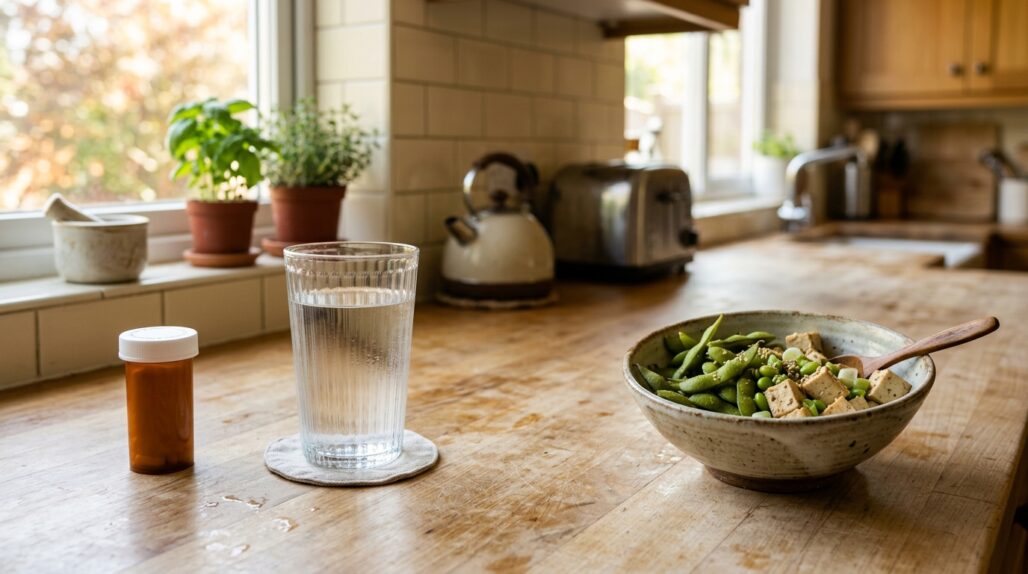
- Push soy to later in the day. Aim for at least 4 hours between the pill and soy milk, tofu, edamame, soy protein powder, or soy-based supplements. This matches the standard spacing advice for calcium and iron too.
- Keep your daily soy roughly constant. A steady habit means a steady dose. Big swings are what destabilize your levels.
- Watch concentrated sources. Soy protein isolate shakes, soy isoflavone pills, and "thyroid support" blends pack far more isoflavone than whole foods. Treat them like medication and tell your clinician.
If you are also juggling calcium, iron, or a multivitamin, the same 4-hour rule applies. Our guides on calcium and levothyroxine timing and coffee and levothyroxine cover those neighbors. For the bigger picture, see our ultimate drug-supplement interactions reference, and you can screen your own list with the drug-supplement interaction checker. If you are building a routine around your thyroid medication, our roundup of the best supplements for levothyroxine users covers what fits and how to space it.
If you take several supplements and lose track of what overlaps with your medication, a tracking app can help you keep a clean list to show a pharmacist. StackMyMed lets you log a stack and flag possible timing conflicts. It is a prompt for a professional conversation, not a substitute for one.
When to see a clinician
Most timing problems show up as a TSH that will not settle. Do not chase it on your own.
Book a review and recheck your TSH if you have recently started or stopped a regular soy habit, switched to soy-heavy meals, or began a soy protein or isoflavone supplement. Allow about 6 to 8 weeks after any routine change before retesting, since thyroid labs lag.
Get prompt medical attention for signs of undertreated hypothyroidism that are getting worse: deepening fatigue, cold intolerance, constipation, puffiness, or a noticeably slowed mood. For an infant on soy formula, any concern goes straight to the pediatric team. Never adjust a levothyroxine dose yourself to "cover" your soy intake.
FAQ
Can I drink soy milk if I take levothyroxine? Yes. Just keep it away from the pill. Take levothyroxine on an empty stomach with water and wait at least 4 hours before soy milk, and keep your daily amount steady so your dose stays stable.
How long should I wait between levothyroxine and soy? Aim for at least 4 hours after the pill before any soy food or supplement. This is the same spacing recommended for calcium and iron, which bind levothyroxine the same way.
Does soy lower my thyroid hormone levels? In iodine-sufficient adults with a normal thyroid, controlled trials show little to no effect on free T3 and free T4 and only a small rise in TSH. The bigger issue is reduced absorption when soy and the pill are taken together.
Is soy a problem if I have Hashimoto’s or subclinical hypothyroidism? You sit at higher risk because your thyroid has less reserve, and research suggests soy can nudge TSH up more in this group. Keep soy intake consistent, make sure your iodine is adequate, and have your clinician recheck your labs after any change.
My baby is on soy formula and thyroid medication – what should I do? Tell the pediatric endocrinologist. Soy formula can lower levothyroxine absorption, so the dose may need to be higher while on soy and lower after stopping, with frequent thyroid testing to guide it.
Are soy isoflavone supplements riskier than tofu? They can be, because concentrated supplements deliver far more isoflavone than whole soy foods. Treat them like medication, separate them from your pill, and let your clinician know you are taking them.
Conclusion: keep them apart, keep it steady
Soy does not mean giving up your favorite foods or your thyroid medication. It means respecting the clock. Take levothyroxine on an empty stomach, wait at least 4 hours before soy, and keep your daily soy intake consistent so your dose stays predictable.
The people who need extra care are infants on soy formula and adults with limited thyroid reserve or low iodine. For everyone else, sensible spacing handles it. If your TSH drifts after a diet change, that is a cue to recheck your labs with your clinician, not to self-adjust.
This article is for general education and does not replace personalized medical advice. Talk with your doctor or pharmacist before changing your medication, supplements, or diet, especially for a child on thyroid treatment.
Reviewed by the UsefulVitamins Editorial Team.
