
Affiliate disclosure: this article contains affiliate links. As an Amazon Associate, UsefulVitamins.com earns from qualifying purchases at no extra cost to you.
What you can realistically expect, night by night
Magnesium glycinate is not a sleeping pill. It will not knock you out the way an antihistamine or a high dose of melatonin can, and that is the first thing to get straight. If a gentle, melatonin-style nudge is what you are after, it can help to compare tart cherry against magnesium for sleep before settling on one.
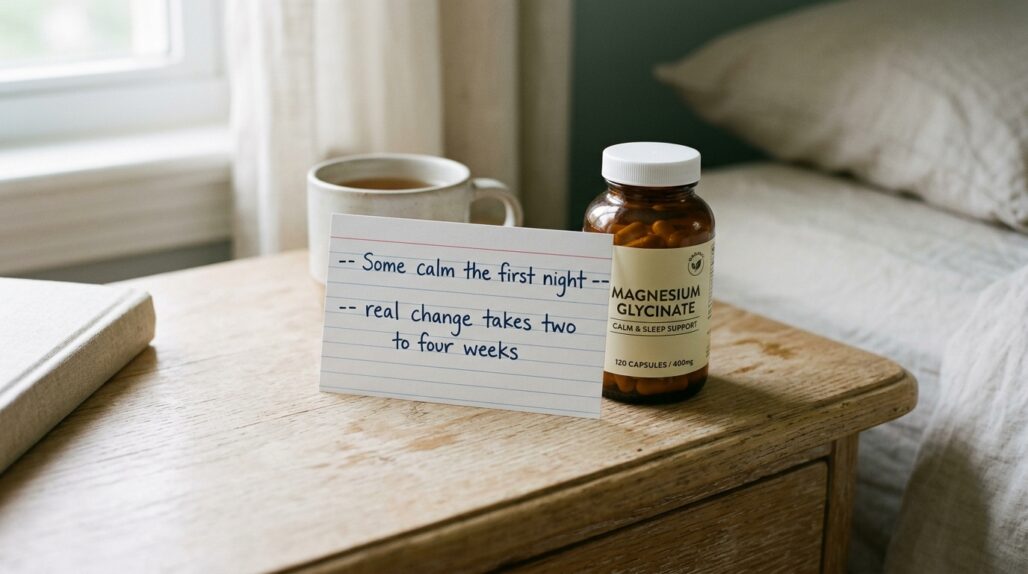
There are really two separate effects going on, and people confuse them constantly. One is a mild, same-night sense of calm that some people notice on night one. The other is the slower work of correcting a magnesium shortfall, which takes weeks and is the effect with the better evidence behind it.
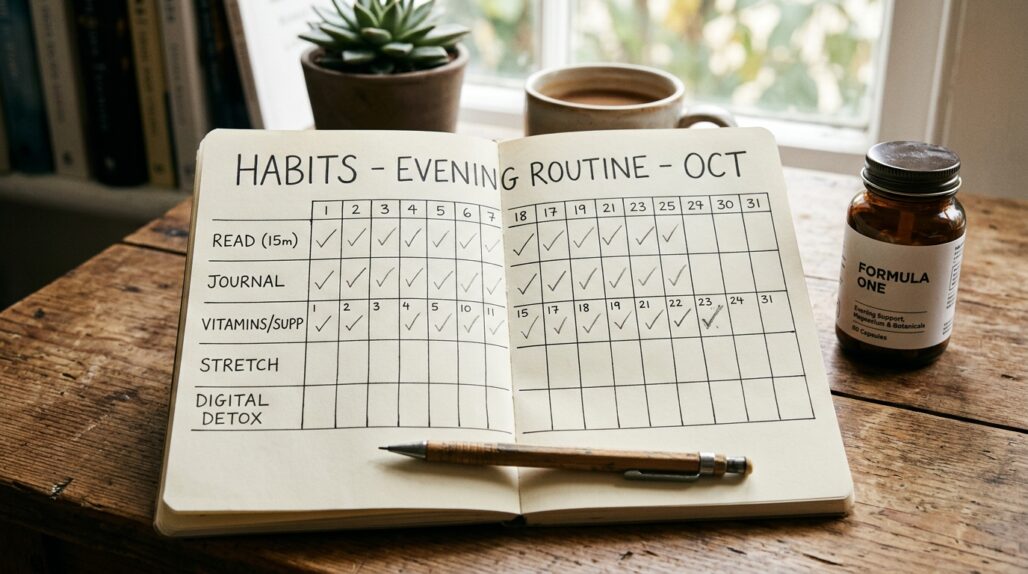
So if you took it last night and slept the same, you have not failed. You are just early in the timeline. The honest framing is a four-week trial, not a one-night test.
Why a calm first night and a real result are two different things
Magnesium works on the same brain chemistry that sedatives borrow. It helps the brain's main calming signal, GABA, work more strongly at its receptors, and it quiets the excitatory NMDA receptors that keep you wired. That is the plausible reason a few people feel slightly more relaxed the first evening.
The glycine half of the molecule pulls its own weight here. Research in Neuropsychopharmacology on glycine and the brain's master clock found that glycine triggers a small drop in core body temperature, and that temperature dip is one of the strongest physical cues for sleep onset.
But a one-night calm is not the same as fixing a deficiency. If your magnesium has been running low, restocking the body's stores happens gradually as you take it consistently. That correction is what nudges your sleep over the following weeks, and it is why consistency beats dose-chasing.
A practical note on timing: when you take it matters more than people think, and we cover the evening window in detail in our guide on when to take magnesium for sleep.

The week-by-week timeline
The numbers below come from the actual trials, not from a supplement label. In a 2025 randomized, double-blind, placebo-controlled trial of magnesium bisglycinate, 155 adults with poor sleep took 250 mg of elemental magnesium nightly for four weeks. Most of the improvement showed up in the first two weeks, and the magnesium group ended with a 28% drop in insomnia severity versus 18% for placebo.
That gap is real but modest. The researchers reported a small effect size, which fits the rest of the literature. A separate meta-analysis of magnesium for insomnia in older adults pooled three trials and found people fell asleep about 17 minutes faster, while flagging the evidence as low certainty.
Set your expectations against that. Here is a sensible way to read your own four weeks.
| Stage | What is happening | What you might notice |
|---|---|---|
| Night 1 to 3 | Mild GABA support and a small core-temperature drop from glycine | Some feel a faint calm; many feel nothing yet, which is normal |
| Week 1 | Body stores begin to refill if you were running low | Slightly easier wind-down for some; sleep quality scores start moving in trials |
| Weeks 2 to 4 | Steady-state correction of a magnesium shortfall | The clearest window for falling asleep faster and fewer 3 a.m. wake-ups |
| After 4 weeks | If it helps, you have your answer; if not, magnesium is likely not your issue | A fair point to decide whether to continue or look elsewhere |
One reason an older trial used a longer runway is worth knowing. The Abbasi 2012 trial in elderly adults with insomnia ran 500 mg of magnesium daily for eight weeks before measuring its sleep-onset and efficiency gains. Four weeks is a reasonable trial; eight weeks is the more patient version if early signs look promising.
Why glycinate, and not oxide or citrate, for sleep
The form is doing real work here, and it is mostly about your gut, not your brain.
Cheap magnesium oxide is poorly absorbed. In Firoz and Graber's bioavailability comparison of US magnesium products, oxide came out the worst absorbed of the common forms, with much of the dose passing through unabsorbed. What does not get absorbed pulls water into the bowel, which is exactly the laxative effect you do not want at bedtime.
Citrate absorbs far better than oxide, but at the higher doses people reach for sleep it still tends to loosen stools. That is fine if you also want constipation relief and a bad surprise if you do not.
Glycinate is the chelated form, where magnesium is bound to the amino acid glycine. It is absorbed across the small intestine instead of dragging water through the colon, so it is the gentlest common form on the stomach and the most night-friendly. The glycine also happens to be mildly calming in its own right.
If you want the deeper form-by-form comparison and our current picks, see our roundup of the best magnesium for sleep.
The dose, and the label trap that trips everyone
A common evening dose sits around 200 to 400 mg of elemental magnesium. The catch is that the number on the front of the bottle is often the compound weight, not the elemental magnesium your body actually counts.
Magnesium glycinate is only about 14% elemental magnesium by weight. So roughly 1,000 mg of pure magnesium glycinate delivers only about 141 mg of elemental magnesium. Some brands list "Magnesium (as magnesium bisglycinate) 200 mg," and there the 200 mg is the elemental amount. Same word on two labels, two very different doses.
This is also why dose-stacking is risky. The NIH Office of Dietary Supplements sets the upper limit for supplemental magnesium at 350 mg per day of elemental magnesium, and that ceiling exists specifically because higher amounts cause diarrhea in some people. Magnesium from food does not count toward it; this UL is about pills.
Do not eyeball this. Run your number through our magnesium dose calculator so you are working from the elemental figure and not the compound weight on the front label. That single check prevents most accidental over-dosing.

Which magnesium glycinate to buy
For sleep, you want a clean glycinate (or bisglycinate) with the elemental amount stated plainly and no stimulating extras. The brand matters less than the form and an honest label.
A capsule glycinate is the simplest path. A glycinate powder can be easier to split into a smaller dose if a full capsule loosens your stool. A flavored bedtime powder is usually citrate, which is pleasant but more likely to send you to the bathroom, so treat it as the gentlest only if citrate has agreed with you before.
If your main goal is value, our breakdown of the cheapest reliable magnesium glycinate on Amazon covers what to look for without overpaying for marketing.
We may earn a commission from links below, at no extra cost to you. This does not change which products we recommend.


As an Amazon Associate, UsefulVitamins.com earns from qualifying purchases at no extra cost to you.
Prices move, so check the current price and the cost per serving rather than the sticker on the bottle. A bigger number on the front does not mean a bigger elemental dose.
When it is not working, and what to do instead
If you have taken a fair elemental dose every night for four weeks and nothing has shifted, magnesium is probably not the lever for your sleep. That is useful information, not a failure.
A few honest reasons it may not help:
- Your magnesium was already fine, so there was no shortfall to correct.
- The real driver is something magnesium does not touch, such as sleep apnea, anxiety, pain, shift work, late caffeine, or a screen-lit bedroom.
- The dose was actually a poorly absorbed oxide, or the compound-weight label meant you were taking far less elemental magnesium than you thought.
Stop and reassess rather than climbing the dose. Pushing past the 350 mg supplemental ceiling chasing a result mostly buys you loose stools, not deeper sleep. If stress and a racing mind are what keep you up, it is worth weighing ashwagandha against magnesium for sleep before you give up on a calming supplement entirely.
Persistent insomnia, loud snoring with daytime exhaustion, or waking unrefreshed despite enough hours all deserve a real workup. Bring it to a doctor, who can screen for apnea and other causes that a supplement will never fix. Magnesium is a reasonable, low-risk thing to try, not a diagnosis.
FAQ
Can magnesium glycinate work the very first night? Some people feel a mild calm the first evening from its effect on calming brain chemistry, but the better-evidenced sleep benefit builds over two to four weeks of nightly use, so judge it on the trial, not on night one.
How much magnesium glycinate should I take for sleep? A common evening dose is 200 to 400 mg of elemental magnesium, but read the elemental number rather than the compound weight, and check your figure with our magnesium dose calculator before settling on an amount.
Why glycinate instead of citrate or oxide? Glycinate absorbs across the small intestine and is the gentlest common form, while oxide is poorly absorbed and citrate tends to loosen stools at sleep doses, which is why glycinate is the usual night-time pick.
Is it safe to take magnesium glycinate every night? For most healthy adults a modest nightly dose is generally well tolerated, but the supplemental upper limit is 350 mg of elemental magnesium per day, and anyone with kidney disease or on prescription medication should ask a pharmacist or doctor first.
What if it still is not helping after a month? If a fair elemental dose taken nightly for four weeks does nothing, magnesium is likely not your issue; rather than raising the dose, look at caffeine, screens, anxiety, or possible sleep apnea, and see a doctor for persistent insomnia.
Does it matter when I take it? Taking it at a consistent time, roughly 30 to 60 minutes before bed, fits the routine most studies used; our guide on when to take magnesium for sleep walks through the evening timing in more detail.
The bottom line
Expect a possible faint calm early and the real change over two to four weeks, with most of the movement landing in the first two. Take a 200 to 400 mg elemental dose of glycinate nightly, read the elemental number off the label, and give it a fair month before deciding.
If a clean trial does nothing, do not climb past the safe ceiling chasing it. The honest next step is to look at the rest of your sleep, and to bring stubborn insomnia to a clinician who can find the cause.
This article is general education, not medical advice. It is not a substitute for personalized guidance from your own doctor or pharmacist, and nothing here is meant to diagnose, treat, or replace a prescribed plan. Talk to a healthcare professional before starting any supplement, especially if you are pregnant, have kidney disease, or take prescription medication.
Reviewed by the UsefulVitamins Editorial Team.
