
If you want better workouts, the best athletic performance supplements are usually the simplest ones: creatine for strength and power, protein for recovery, caffeine for endurance, and electrolytes plus carbs for long sessions. The hard part is not “what exists” – it’s picking products that are actually dosed like the studies and fit your training. This article breaks down what’s working in 2026, what’s hype, and how to build a small, repeatable supplement routine that supports endurance, strength, and recovery without wasting money.
Summary / Quick Answer
The top athletic performance supplements are the ones with the strongest evidence and the most predictable results. For most active people, that looks like:
- Creatine monohydrate (3-5 g daily): supports strength, repeated sprint ability, and lean mass over time
- Protein (20-30 g per serving as needed): supports muscle repair and helps you hit daily protein targets
- Caffeine (individualized dose pre-workout): supports endurance and perceived effort in many athletes
- Electrolytes (especially sodium): supports hydration during heavy sweat sessions
- Carbohydrate gels/drinks (during long training): supports steady energy and performance in endurance work
Quick rule: if a label hides doses in a “proprietary blend,” it’s usually not built for repeatable performance.
What actually works (and why most products disappoint)
Walk into any store and you’ll see “performance” labels everywhere. But research and real-world results tend to cluster around a few ingredients that reliably move the needle, especially when the dose is right.
One reason many products disappoint is simple: underdosing. Trend reports in performance nutrition note that athletes are increasingly prioritizing “clinically dosed” formulas and transparency, because weak doses erode trust fast. That shift is also happening as sports nutrition becomes more mainstream – not just for gym gains, but for everyday energy, cognition, and body composition goals.
The 80/20 of performance nutrition (food first, then supplements)
Think of performance like a pyramid:
- Training plan + sleep
- Calories + macros (carbs, protein, fats)
- Hydration + electrolytes
- Targeted supplements
Supplements sit at the top because they fine-tune what’s already there. If you regularly under-eat, sleep 5 hours, and train inconsistently, no pre-workout can “fix” that.
A quick market reality check (why you’re seeing creatine everywhere)
Recent category reporting shows performance nutrition growing faster than the broader supplement market, with creatine leading the charge and hydration products exploding in popularity. In one industry analysis, creatine sales jumped sharply year-over-year and showed high repeat purchase rates, a signal that many users feel a noticeable benefit. Hydration and electrolyte products were also a standout growth segment, while pre-workouts rebounded modestly.
Here’s a practical takeaway: the market is following what people actually re-buy, not just what looks exciting on social media.
Visual: “Evidence vs. hype” quick screen
| Category | Common issue | What to look for on the label | Best use case |
|---|---|---|---|
| Creatine | Confusing “fancy” versions | Creatine monohydrate, 3-5 g | Strength, power, repeated efforts |
| Pre-workouts | Proprietary blends | Full dose disclosure, minimal filler | When you need a reliable boost |
| Electrolytes | Too little sodium | Sodium listed clearly (often 500-1000 mg) | Heavy sweat, heat, long sessions |
| Protein | Low protein per serving | 20-30 g protein, low added sugar | Filling gaps in daily intake |
| Endurance gels | GI distress | Dual-source carbs, lower fiber | Runs, rides, long events |
If your goal is muscle-focused training, pair this article with Best Supplements To Build Muscle for a more targeted stack.
Athletic performance supplements for strength and power: creatine done right
Optimum Nutrition Micronized Creatine Powder, 600 Grams
Optimum Nutrition Micronized Creatine Powder (600g) is a top-tier choice for athletes seeking reliable muscle strength and recovery support, delivering 5g of pure CreaPure creatine monohydrate per serving that’s micronized for easy mixing and backed by strong user ratings around 4.6/5 from 12,000+ reviews. Reddit communities like r/supplements and r/fitness consistently endorse it for quality and effectiveness, making it an excellent affiliate recommendation at ~$28 for 120 servings.
Creatine is the rare supplement that’s both widely used and strongly supported by research. It’s also one of the most misunderstood.
Creatine works by increasing phosphocreatine stores in muscle, which helps regenerate ATP (your “rapid energy” currency) during short, intense efforts. That’s why it’s most associated with strength training, sprinting, and repeated bursts. But it’s showing up more in broader “active performance” routines because people value consistent, repeatable training output – and because emerging interest includes cognition and recovery-adjacent benefits.
A deep dive across sports nutrition research highlights creatine monohydrate as one of the most studied and reliable options in performance supplementation. For a science-forward overview of sports nutrition ingredients and performance contexts, see the special issue from the American Society for Nutrition’s Current Developments in Nutrition.
How to take creatine (simple beats complicated)
Most people do best with:
- Dose: 3-5 g daily
- Timing: anytime, but take it consistently
- Form: creatine monohydrate (micronized is fine)
- With food: optional, but mixing into a shake is convenient
A “loading phase” (20 g/day for 5-7 days) can saturate stores faster, but it’s not required. Consistency matters more than timing.
Common concerns (what the evidence supports)
- Water weight: some people gain 1-3 lb early from increased water in muscle. That’s not fat gain.
- Safety: creatine monohydrate has a strong safety record in healthy adults when used as directed. If you have kidney disease or are under medical care, ask your clinician first.
- Women and creatine: women may have lower baseline creatine stores and can still benefit from supplementation.
Visual: Creatine checklist for athletes
| Question | Best answer |
|---|---|
| Is it monohydrate? | Yes |
| Is the daily dose 3-5 g? | Yes |
| Is it third-party tested? | Preferably, yes (especially for tested sport) |
| Any need for “creatine blends”? | Usually no |
| Do you need cycling? | Not typically |
If you’re building a broader routine, the Complete Supplement Stacking Guide: Combine Vitamins Safely can help you avoid doubling ingredients across products.
Endurance and energy: caffeine, carbs, and electrolytes that hold up in real training
BSN Syntha-6 Whey Protein Powder, 2.91 lbs
Protein is essential for recovery and muscle repair, which is discussed in the article.
Cellucor C4 Original Pre Workout Powder, 30 Servings
Caffeine is mentioned as a performance enhancer for endurance, making this pre-workout relevant.
Endurance performance has a different bottleneck than strength work. It’s less about a single explosive effort and more about fuel availability, hydration status, and perceived effort.
This is where many athletes over-focus on stimulants and under-focus on basics. The best “endurance stack” often looks boring on paper, but it works because it matches how physiology fails during long sessions.
Caffeine: one of the most reliable performance aids
Caffeine is consistently supported in sports science, particularly for endurance performance and perceived exertion. A comprehensive review hosted in the National Library of Medicine (PubMed Central) summarizes evidence across randomized trials and meta-analyses showing meaningful benefits when dose and timing are appropriate.
Practical guidelines:
- Start low if you’re sensitive.
- Use it strategically for key sessions, not every workout.
- Avoid taking it too late in the day if it disrupts sleep – sleep loss can erase the benefit.
Carbs during endurance: gels and drinks that reduce GI problems
For long runs, rides, or events, carbs are performance nutrition, not a treat. Many athletes do well with:
- 30-60 g carbs/hour for moderate endurance
- Up to ~60-90 g/hour for longer or harder sessions (training your gut matters)
Dual-source carb products (glucose + fructose) can improve absorption and reduce stomach issues for higher intakes.
Electrolytes: sodium is the headline for heavy sweaters
“Electrolytes” can mean many things, but for performance, sodium is often the limiting factor during heavy sweat sessions or heat exposure. Many popular products under-deliver sodium, which can leave you drinking plenty of water but still feeling flat.
A simple approach:
- Light sweat session: water may be enough
- Heavy sweat or heat: consider an electrolyte drink with a meaningful sodium dose
- Long sessions: combine electrolytes + carbs for better tolerance and steadier output
Visual: Endurance session fueling map (simple version)
| Session type | What to take | When |
|---|---|---|
| 30-60 min easy | Water | As needed |
| 60-90 min moderate | 30-45 g carbs + fluids | Start at 20-30 min |
| 90+ min or hot conditions | 45-90 g carbs + electrolytes + fluids | Steady intake throughout |
| Race or hard long workout | Carbs + caffeine (if tolerated) + electrolytes | Practice in training first |
For a deeper hydration breakdown, including what to look for on labels, see Electrolyte Water.
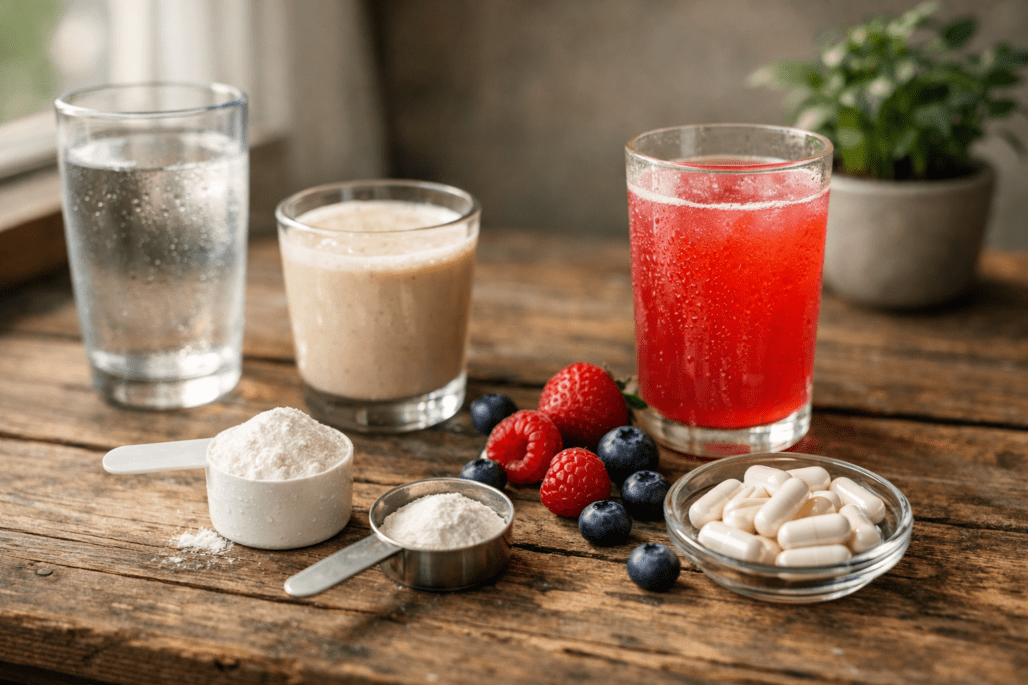
Protein and recovery: the most “everyday” performance supplement
Nuun Sport Electrolyte Tablets, 10 Tablets
Nuun Sport Electrolyte Tablets are a top-selling hydration product on Amazon with a strong 4.6-star rating from over 6,000 reviews, praised for delivering essential electrolytes in a gluten-free, vegan tablet form ideal for active lifestyles, though the ~$28 price for multi-packs reflects premium positioning; recommended for athletes seeking clean, effective replenishment based on high sales volume and positive feedback[1].
GU Energy Gel, 24 Pack
Carbohydrate gels are recommended for endurance training, making this product a perfect fit.
Protein isn’t flashy, but it’s often the most useful supplement for real life. The goal isn’t to “drink protein” – it’s to reliably hit a daily intake that supports training adaptation, recovery, and lean mass retention.
This matters even more right now because many people are training while also trying to manage weight. With reduced appetite (including among those using GLP-1 medications), it’s easy to under-eat protein and unintentionally lose muscle along with fat. Trend reporting in 2026 performance nutrition notes a clear push toward high-protein, easy-to-digest formulas designed for adherence and muscle preservation.
How much protein per serving is worth it?
For most people, a protein supplement becomes “useful” when it helps you hit targets you’d otherwise miss.
Look for:
- 20-30 g protein per serving
- Minimal added sugar (unless you specifically need carbs post-workout)
- A form you tolerate (whey, casein, soy, pea blends)
If you’re using protein for satiety, pairing it with fiber (from food, not necessarily the shake) often helps.
Timing: less important than consistency
The “anabolic window” is often overstated. A more practical approach:
- Spread protein across the day
- Include a solid dose after training if it helps you stay consistent
- Use shakes or bars when whole food is inconvenient
Visual: Protein supplement decision tool
| If you… | Best option | Why |
|---|---|---|
| Miss breakfast often | Ready-to-mix whey or plant protein | Fast, consistent intake |
| Need a portable option | Protein bar with 20+ g | Easy adherence |
| Get GI issues with whey | Lactose-free whey isolate or plant blend | Better tolerance |
| Are cutting calories | Higher protein, lower sugar | Helps preserve lean mass |
For readers who also want non-stimulant energy support, Best Energy Supplements to Boost Vitality Naturally is a helpful companion guide.
How to choose safe, effective products (and avoid common mistakes)
Most supplement “failures” aren’t because an ingredient never works. They happen because the product doesn’t match the evidence, the athlete’s needs, or safe-use basics.
Here’s the selection framework that protects both your results and your wallet.
1) Prefer transparent labels and clinically relevant dosing
A product should tell you exactly how much you’re getting. Be cautious with:
- “Proprietary blends” that hide amounts
- Long ingredient lists where key actives are sprinkled in tiny doses
- Products that promise multiple outcomes but lack meaningful amounts of anything
Industry trend coverage emphasizes that athletes are increasingly demanding transparency and repeatable outcomes, not novelty.
2) Third-party testing matters (especially for competitive athletes)
If you compete in tested sport, look for third-party testing and banned-substance screening. This doesn’t guarantee perfection, but it lowers risk.
3) Match the supplement to the session, not your mood
A common trap is using the same high-stim pre-workout for every workout. That can backfire via poor sleep, rising tolerance, and inconsistent performance.
Instead:
- Use caffeine for key endurance sessions or when you truly need it
- Use creatine daily for baseline support
- Use carbs + electrolytes when the session demands it
4) Don’t ignore foundational health supplements
Athletic performance is still human physiology. If your diet is low in omega-3-rich foods, for example, it may be worth learning the basics of fish oil quality and dosing. UsefulVitamins’ Omega 3 Fatty Acids Complete Guide covers what to look for and how to use it safely.
Visual: “Before you buy” checklist
| Check | Why it matters |
|---|---|
| Does it list full doses? | You can compare to study-backed amounts |
| Is it third-party tested? | Lower contamination and banned-substance risk |
| Does it fit your sport and session type? | Better results, fewer side effects |
| Have you tested it in training? | Avoid race-day surprises |
| Will it improve consistency? | The best supplement is the one you’ll use correctly |

Conclusion
Most athletic performance supplements that truly work are not mysterious. Creatine supports strength and repeated efforts, caffeine can improve endurance when used strategically, protein helps you meet daily needs for recovery, and electrolytes plus carbs keep long sessions from falling apart.
The practical next step is to pick one goal (strength, endurance, or recovery), choose one evidence-backed product, and run it consistently for 4-6 weeks while tracking training output and sleep. If you want to build from there, use the Complete Supplement Stacking Guide: Combine Vitamins Safely to avoid overlap, and revisit Electrolyte Water if hydration is your weak link.
As an Amazon Associate, I earn from qualifying purchases. Product recommendations are based on real reviews and independent research.
