

Emily Collins, Nutrition Researcher (Supplements & Superfoods)

Emily Collins, as a nutrition researcher, is responsible for providing in-depth insights and analysis on supplements and superfoods. Her articles on UsefulVitamins.com delve into the benefits, potential drawbacks, and evidence-based recommendations for various supplements and superfoods. Emily's expertise in nutrition research ensures that readers receive accurate and reliable information to make informed choices about incorporating these products into their health routines.

Molecular structures and supplement crystals in scientific editorial style for supplement claims decoder

Supplement Claims Decoder: Understanding Labels & Marketing

More people are taking supplements than ever, but supplement claims can still feel like a different language. One bottle promises “immune support,” another says “metabolic health,” and a third hints at results that sound suspiciously like treating a condition. This article breaks down what those words legally mean, how to spot the difference between marketing […]

Supplement Claims Decoder: Understanding Labels & Marketing Read More »
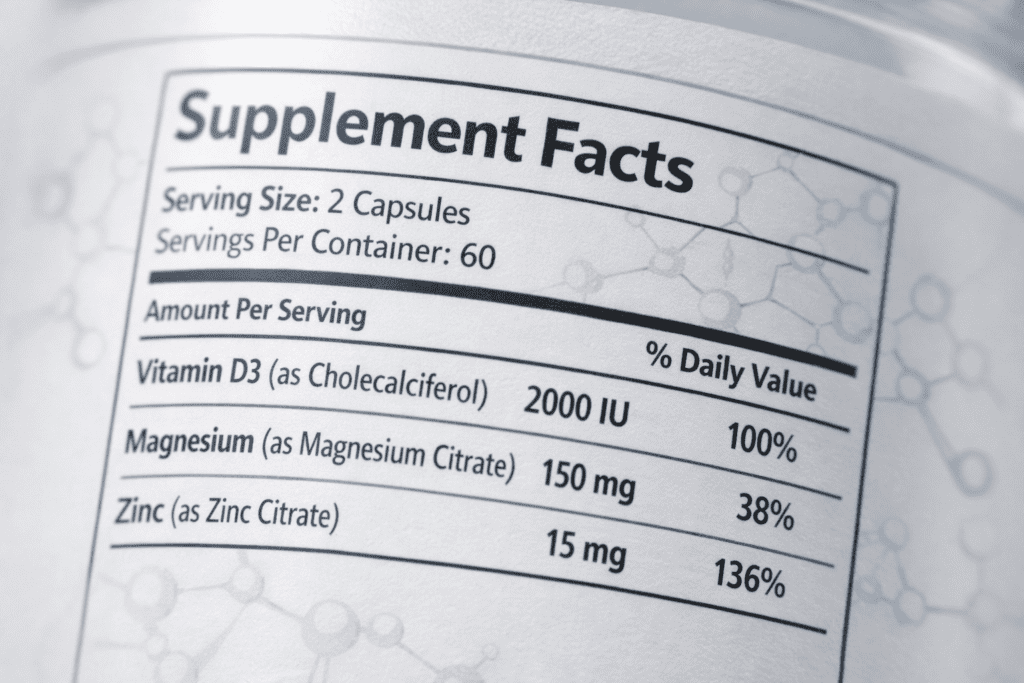
Supplement Facts label with magnified text showing how to read vitamin labels and ingredient information clearly

How to Read Supplement Labels: A Complete Guide

If you have ever stared at supplement labels and wondered what you are actually getting per pill, you are not alone. The fine print can hide big differences in dose, ingredient forms, and even quality signals. This guide breaks down how to read the Supplement Facts panel, interpret % Daily Value, spot marketing claims versus

How to Read Supplement Labels: A Complete Guide Read More »

FDA supplement regulation concept with lab equipment and capsules in clean scientific setting

Supplement Regulation Explained: FDA Rules & Safety

Supplement regulation in the U.S. works very differently from prescription drug regulation: most dietary supplements can be sold without FDA pre-approval, and companies are responsible for safety and truthful labeling before a product hits shelves. That reality can feel unsettling if you are trying to choose a safe magnesium, probiotic, or herbal blend. This article

Supplement Regulation Explained: FDA Rules & Safety Read More »

Supplement safety analysis showing vitamin quality control and red flags for health supplements

Supplement Safety Red Flags: What to Watch For

Dietary supplements can be helpful in the right context, but supplement safety is not guaranteed just because a product is sold in a familiar bottle or labeled “natural.” In the U.S., supplements are not approved before they hit shelves, and quality can vary widely between brands and even between batches. This article explains the most

Supplement Safety Red Flags: What to Watch For Read More »

Supplement quality testing in laboratory setting with scientific equipment and certification indicators

Supplement Quality Indicators: How to Choose Safe Products

If you’re wondering how to judge supplement quality, start by looking for credible third-party testing, clear labeling, and manufacturers that follow FDA-required Good Manufacturing Practices. Those three signals catch most of the problems that matter – incorrect doses, contamination, and misleading claims. This article breaks down the quality indicators that actually predict whether a product

Supplement Quality Indicators: How to Choose Safe Products Read More »

Anatomical illustration of supplement absorption in digestive system with molecular structures

Supplement Timing Optimizer: When to Take Your Vitamins

📚 Researched & cited by UV Editorial Team Independently reviewed · Last updated: May 29, 2026 · Our research methodology → If you’re wondering whether supplement timing actually matters, the most practical answer is: yes, for some supplements it can meaningfully change absorption, side effects, and results – especially around workouts, sleep, and iron. This

Supplement Timing Optimizer: When to Take Your Vitamins Read More »

Scientific visualization of supplement cost analysis with vitamin bottles and pricing metrics

Supplement Cost Calculator: Compare Prices & Save

Most people underestimate what they spend on vitamins until they add everything up. A supplement cost calculator makes that simple by turning bottles, subscriptions, and “just one more add-on” into a clear monthly and annual total. This article shows you exactly how to calculate your real stack cost, compare products using price-per-unit (not bottle price),

Supplement Cost Calculator: Compare Prices & Save Read More »

Molecular structures showing nutrient synergy and supplement stacking science

Complete Supplement Stacking Guide: Combine Vitamins Safely

Supplement stacking means combining two or more supplements on purpose – with a clear goal and a plan to avoid overlaps. Done well, supplement stacking can help cover diet gaps, support training, or target specific outcomes because some nutrients work better together than they do alone. Done poorly, it can quietly double your doses of

Complete Supplement Stacking Guide: Combine Vitamins Safely Read More »

Molecular visualization of drug supplement interactions showing pharmaceutical and botanical compounds meeting

Drug-Supplement Interaction Checker: Safe Health Combinations

📚 Researched & cited by UV Editorial Team Independently reviewed · Last updated: May 30, 2026 · Our research methodology → Many people take a prescription, add an over-the-counter remedy, then toss in a “natural” supplement – and assume they’ll all play nicely together. The reality is that drug supplement interactions can change how a

Drug-Supplement Interaction Checker: Safe Health Combinations Read More »

Vitamin deficiency test visualization showing molecular structures and body systems for personalized supplement assessment

Supplement Needs Assessment: Find Your Perfect Vitamins

Many people take vitamins “just in case,” but a supplement needs assessment is a smarter way to decide what – if anything – your body actually needs. It’s a structured check of your diet, health history, medications, lifestyle, symptoms, and (when appropriate) lab work, so your supplement plan matches real gaps instead of marketing promises.

Supplement Needs Assessment: Find Your Perfect Vitamins Read More »

Scroll to Top