
Search “nature’s Ozempic” and you land on berberine, a bitter yellow plant compound that social media has crowned a natural weight-loss and blood-sugar miracle. The honest comparison isn’t berberine versus Ozempic at all — it’s berberine versus metformin, the decades-old diabetes drug it actually resembles.
That distinction matters, because berberine is a dietary supplement and metformin is a prescription medicine, and the two are not interchangeable. Nothing here is medical advice, and no one should stop or swap a prescribed drug based on a supplement article. If you want the short version of what we’d keep in our own cabinet, the berberine formulas we actually trust are carded further down — but read the evidence first.
Affiliate disclosure: this article contains affiliate links. As an Amazon Associate, UsefulVitamins.com earns from qualifying purchases at no extra cost to you.
Before you decide
Berberine is not a replacement for metformin or any prescription medication. If a clinician has put you on metformin, insulin, or a GLP-1 drug, keep taking it exactly as prescribed. MedlinePlus is explicit that you should not stop taking metformin without talking to your doctor, even if you feel well.
Skip berberine entirely if you are pregnant or breastfeeding, and it should never be given to newborns. Berberine can also interact with many medications — including blood thinners, some blood-pressure drugs, and metformin itself — by changing how your liver clears them, so a pharmacist or physician review comes first.
And do the basics before any capsule. The highest-value moves for blood sugar are still diet, movement, sleep, and lab work with a clinician. A supplement is at most an adjunct to that foundation, never a substitute for it.
What berberine and metformin actually are
Berberine is a plant alkaloid extracted from herbs such as barberry, goldenseal, and Oregon grape. In the United States it is sold as a dietary supplement, which means it is not reviewed by the FDA for safety or effectiveness before it reaches the shelf. As MedlinePlus notes, supplements do not have to go through the testing that drugs do.
Metformin is the opposite. It is a prescription medicine and the first-line drug for type 2 diabetes worldwide, backed by decades of large trials and regulatory review. It is cheap, generic, and dosed by a physician who adjusts it for your kidney function.
So the fairest framing is this: berberine is the botanical that behaves the most like metformin, not a natural version of the drug. Same neighborhood, very different regulatory address.
The shared mechanism: AMPK
The reason berberine gets compared to metformin at all is a shared molecular target. Both activate an enzyme called AMP-activated protein kinase, or AMPK — the cell’s low-fuel switch that ramps up glucose uptake and dials down the liver’s glucose production.
When AMPK switches on, muscle cells pull in more glucose and the liver makes less of it, which is why fasting blood sugar tends to fall. Metformin’s main trick is reducing that hepatic glucose output, while berberine hits AMPK too but also acts locally in the gut, affecting bile acids and the microbiome.
The mechanisms overlap enough to explain similar glucose effects. But “similar pathway” is not the same as “same drug, same evidence, same safety file,” and that gap is the rest of this article.
Berberine vs metformin: the head-to-head evidence
There is one frequently cited direct comparison. A 2008 trial in Metabolism randomized newly diagnosed type 2 diabetics to berberine or metformin. Berberine’s glucose-lowering effect was similar to metformin’s over three months, dropping A1c from about 9.5% to 7.5% — but that arm was tiny, roughly 36 people.
Berberine also beats placebo. In a placebo-controlled study of 116 patients, it significantly lowered fasting glucose, A1c, and cholesterol. Pooled data tell the same story at larger scale: a 2015 meta-analysis of 27 randomized trials and 2,569 patients found berberine’s effect on blood sugar, lipids, and blood pressure “comparable” to standard medications.
Here is the honest caveat the headlines skip. A 2012 meta-analysis flagged the low methodological quality, small sample sizes, and risk of bias running through the berberine literature. “Comparable in small, imperfect trials” is a genuinely promising signal, but it is not the mountain of evidence behind metformin.
| Factor | Berberine | Metformin |
|---|---|---|
| What it is | Plant alkaloid sold as a dietary supplement | FDA-approved prescription drug, first-line for type 2 diabetes |
| Main mechanism | Activates AMPK; also acts in the gut and on lipids | Activates AMPK; lowers the liver’s glucose output |
| Blood-sugar evidence | Small RCTs and meta-analyses; low overall study quality | Decades of large trials; established standard of care |
| Typical dose | About 500 mg with meals, 2 to 3 times daily (short half-life) | 500 to 2,000 mg per day, titrated by a physician |
| Common side effects | GI upset (diarrhea, constipation, cramping) in roughly 1 in 3 | GI upset; rare lactic acidosis; B12 depletion over time |
| Oversight and quality | Not pre-approved by FDA; potency varies without testing | FDA-approved; dose adjusted for kidney function |
| Link to Ozempic | None — not a GLP-1 drug | None — not a GLP-1 drug |
The “nature’s Ozempic” myth
This nickname is where the internet goes off the rails. Ozempic and Wegovy are brand names for semaglutide, a prescription incretin-mimetic (GLP-1) drug that, per MedlinePlus, helps the pancreas release insulin, slows stomach emptying, and reduces appetite.
Berberine does none of that through the GLP-1 pathway. It works mainly through AMPK, not incretin receptors, so calling it “nature’s Ozempic” links two molecules that share a goal — lower blood sugar — but almost nothing mechanistically.
The weight-loss gap is just as real. Semaglutide produces large, well-documented weight loss in trials, while berberine’s weight effect is modest at best and mostly a side note to its glucose and lipid changes. If someone promises you Ozempic-level results from a $20 bottle, the pathway alone tells you to be skeptical.
Side effects and safety compared
Berberine’s most common problem is the gut. In the head-to-head trial, about a third of berberine users had transient GI effects — diarrhea, constipation, cramping, and flatulence — usually early and dose-related. Splitting the dose and taking it with food helps.
Metformin has its own GI profile plus two things berberine’s file cannot match for scrutiny. It carries a rare but serious risk of lactic acidosis and can deplete vitamin B12 over the long term, both of which are monitored by the prescriber who titrates your dose for kidney function.
Then there is quality. Because supplements are not pre-approved, the berberine capsule you buy may not contain exactly what the label claims. Third-party testing — USP, NSF, or independent lab verification — is the only real guardrail on potency and purity.
Who might reasonably try berberine (and how)
Berberine is most defensible as an adjunct for someone with prediabetes or mild metabolic issues who is already doing the lifestyle work and has cleared it with a clinician — not as a stand-in for a prescribed drug.
If that is you, the trial-tested approach is around 500 mg taken with meals, two to three times a day (roughly 1,000 to 1,500 mg total), because berberine clears quickly and single large doses upset the gut. Start low and re-check your numbers.
When you shop, prioritize third-party-tested products, a clear per-serving milligram amount, and either an HCl form or an absorption-paired formula, since berberine is famously poorly absorbed. The picks below reflect those criteria.
Recommended berberine supplements
Metformin is prescription-only, so there is no product to link for the drug — that is a conversation with your doctor. For the supplement side, these are three widely available berberine options at different price points. None is a treatment for any disease; they are simply what we would choose if we were adding berberine as an adjunct.
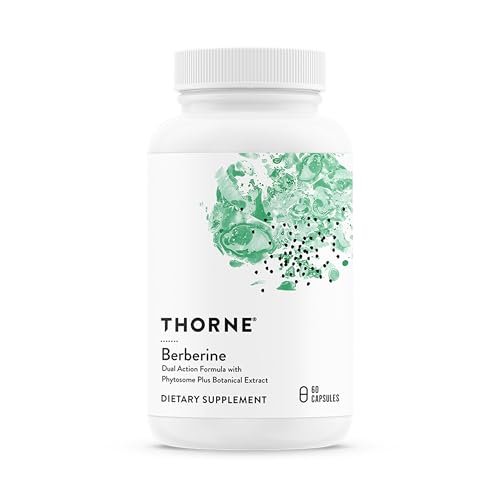
Thorne Berberine (Dual-Action Phytosome)
A phytosome-bound berberine plus botanical extract from a brand known for tight manufacturing standards and heavy third-party testing. The priciest option, but the one to reach for if quality assurance is your top concern.
- Trusted, heavily tested manufacturer
- Phytosome delivery aimed at better absorption
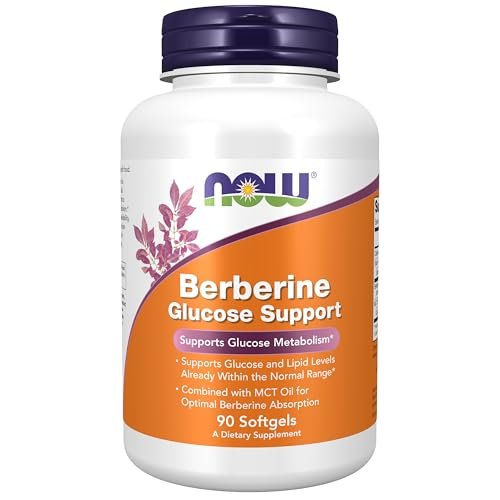
NOW Foods Berberine Glucose Support
Berberine combined with MCT oil to help offset the compound’s notoriously poor absorption, in a 90-softgel bottle from a large, widely audited brand. A sensible mid-range middle ground.
- MCT oil paired to support uptake
- 90 softgels at a mid-range price
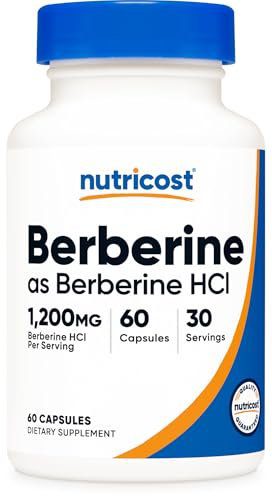
Nutricost Berberine HCl 1,200 mg
A straightforward, gluten-free, non-GMO berberine HCl at the lowest cost per serving of the three. No absorption extras, but the simplest way to hit the trial-style dose on a budget.
- Lowest cost per serving here
- Simple HCl form, gluten-free and non-GMO
Frequently asked questions
Can berberine replace metformin?
No. Berberine is a supplement, not an approved substitute for metformin, and the trials comparing them are small and low-quality. If you are prescribed metformin, keep taking it and raise any interest in berberine with your doctor first.
Is berberine really “nature’s Ozempic”?
No. Ozempic (semaglutide) is a prescription GLP-1 drug, while berberine works through AMPK, a completely different pathway. Berberine’s weight-loss effect is modest and nothing like semaglutide’s.
How much berberine did the studies use?
Most positive trials used about 500 mg two to three times a day, taken with meals. Because berberine clears the body quickly, split dosing works better and is gentler on the gut than one large dose.
Does berberine cause diarrhea?
It can. In the head-to-head trial, roughly a third of berberine users had temporary GI effects such as diarrhea, constipation, or cramping, usually early and dose-related.
Can I take berberine with metformin?
Only under medical supervision. Both lower blood sugar, and berberine can affect drug metabolism, so combining them without a clinician’s input risks hypoglycemia and interactions.
The bottom line on berberine vs metformin
Berberine earns the comparison to metformin because they share the AMPK pathway, and in small, imperfect trials berberine’s blood-sugar effect looks broadly similar. But “similar in weak studies” is not “interchangeable,” and berberine is a supplement while metformin is a scrutinized prescription drug.
The “nature’s Ozempic” label is the weakest claim of all. Berberine has nothing to do with the GLP-1 mechanism behind semaglutide, and its weight effect is modest. Treat berberine as a possible adjunct for the right person, never as a replacement for prescribed care.
Next steps: talk to your clinician before adding it, do the diet-and-movement basics first, and if you proceed, choose a third-party-tested product and re-check your labs.
This article is for general education and is not medical advice. It does not diagnose, treat, or replace care from a qualified clinician. Talk to your doctor before starting, stopping, or changing any medication or supplement. — UsefulVitamins Editorial Team
As an Amazon Associate, I earn from qualifying purchases.
