
Affiliate disclosure: this article contains affiliate links. As an Amazon Associate, UsefulVitamins.com earns from qualifying purchases at no extra cost to you.
How acid reducers change what your body absorbs
Omeprazole and its relatives (esomeprazole, lansoprazole, pantoprazole, rabeprazole, dexlansoprazole) are proton pump inhibitors, or PPIs. They turn down the acid pump in your stomach lining. That is the whole point of the drug, and for reflux, ulcers, or a healing esophagus it does its job well.
Stomach acid does more than burn. It pulls vitamin B12 off the proteins in your food, dissolves certain calcium salts, and keeps dietary iron in the form your gut can absorb. Quiet the acid for months or years and a handful of nutrients can drift down. None of this means the drug is bad or that you should skip a dose. It means a few sensible additions are worth knowing about, and a couple of common choices are worth correcting.
This page is education, not a prescription change. Keep taking your PPI exactly as directed. What follows is about adding the right thing safely and spacing the rest.
What omeprazole and other PPIs deplete or affect
Not every claim online holds up. Here is the honest picture, graded by how strong the evidence is.
Magnesium (FDA-acknowledged). This is the firmest one. In March 2011 the FDA issued a Drug Safety Communication requiring a low-magnesium warning on all prescription PPI labels after reviewing 61 cases. Low magnesium showed up with use as short as three months, though most cases appeared after a year or more. The reported events were not minor: muscle spasm and tetany, seizures, tremor, and heart rhythm problems including atrial fibrillation, SVT, and QT prolongation. The mechanism is reduced absorption in the gut, not the kidneys flushing it out. One detail matters here. In a meaningful share of the FDA-reviewed cases, oral magnesium alone did not fix the level and the PPI itself had to be reviewed. You can read the FDA's communication on PPIs and low magnesium for the specifics.
Vitamin B12 (well-documented, mostly observational). Your stomach needs acid to release B12 from the protein it is bound to in meat, fish, and eggs. Suppress the acid and that release step slows, so long-term PPI use can lower how much food-bound B12 you take in. The NIH Office of Dietary Supplements B12 fact sheet notes that clinically meaningful deficiency is unlikely unless use runs past roughly two years or your diet is already low. The twist is that the synthetic B12 in supplements and fortified foods is already in free form, so it does not need that acid step. A B12 supplement sidesteps the exact problem the PPI creates.
Calcium, specifically the carbonate form (well-documented). Calcium carbonate, the cheap and common form in most supplements and antacids, needs stomach acid to dissolve before your gut can use it. With the acid turned down, you absorb much less of it. A classic study in people with no stomach acid found calcium citrate absorbed roughly ten times better than carbonate (Recker, New England Journal of Medicine, 1985). It is part of why long-term PPI use carries a small bone-density and fracture signal. The fix is the form, not the mineral.
Iron, the non-heme kind (observational). Acid keeps dietary and supplemental iron in the absorbable ferrous form, and PPIs also nudge up a hormone called hepcidin that holds iron back at the gut wall (Hamano et al., 2019). Over years this can shave down iron stores. It is the mildest of the four and depends a lot on your diet and whether you are losing blood anywhere.
One caveat worth keeping in mind: a normal blood magnesium reading does not rule out a quiet whole-body shortfall, since the body works hard to keep the blood level steady. If you have been on a PPI for over a year, ask whether a magnesium check makes sense, especially if you also take a diuretic or digoxin.

The supplements worth adding, and how to take each
The best adds are the ones whose absorption does not lean on the stomach acid your PPI is suppressing.


As an Amazon Associate, UsefulVitamins.com earns from qualifying purchases at no extra cost to you.
We may earn a commission if you buy through links on this page, at no extra cost to you. It does not change what we recommend.
Magnesium glycinate is the top pick for most PPI users. Glycinate is gentle on the gut and well absorbed, which matters because magnesium oxide (the cheap form) is more likely to send you running to the bathroom. A common everyday dose is around 200 to 400 mg of elemental magnesium. Take it in the evening if it makes you drowsy. If your kidneys are not in good shape, clear the dose first, because impaired kidneys handle extra magnesium poorly.
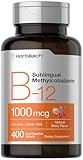
Sublingual methylcobalamin B12 makes sense if you have been on a PPI for a year or more, eat little animal protein, or have a low result on a blood test. Because supplemental B12 is already free of food protein, it does not need the acid step a PPI blocks. A typical sublingual dose is 1,000 mcg. There is no strict timing rule relative to your PPI.
Calcium citrate with vitamin D3 is the calcium form to choose, since citrate absorbs whether or not you have stomach acid. Split larger calcium doses (most people absorb 500 to 600 mg at a time best) and take it with or without food, your choice with citrate. Aim to meet, not exceed, your target through food plus supplement combined, and let your doctor set the number if you have kidney stones or take other medicines.
Here is the whole plan at a glance.
| Supplement | What it helps with | How to take it (timing/spacing from your dose) | Caution |
|---|---|---|---|
| Magnesium glycinate | Replaces the magnesium most clearly linked to long-term PPI use; the FDA-flagged depletion | Around 200 to 400 mg elemental, evening is fine; no special spacing from the PPI | Go low with kidney disease and confirm the dose; do not megadose to self-treat a low level |
| Sublingual methylcobalamin B12 | Bypasses the acid step a PPI blocks, so it covers food-bound B12 you may not be absorbing | 1,000 mcg under the tongue, any time of day | Test first if you suspect a deficiency; starting B12 can normalize blood counts and hide an underlying cause like pernicious anemia |
| Calcium citrate plus vitamin D3 | The acid-independent calcium form, for bone support while on a PPI | Split to 500 to 600 mg per dose; with or without food | Keep iron and thyroid meds a few hours apart from calcium; do not exceed your target |
There is a quiet logistics problem with all this. You are now juggling a prescription plus two or three supplements, each with its own timing. You can keep both your PPI and any supplement in one list with StackMyMed (our own free app), which can flag where two products overlap so you have something specific to ask your pharmacist about. It does not diagnose anything or tell you what to take, it just surfaces things worth raising. If an app is not your style, the low-tech version works just as well: write your full list on paper and show it to your pharmacist. Either way, the decision stays with them.
What to avoid or space apart
This section is the one that protects you, so read it slowly.
Calcium carbonate (Tums, Caltrate, most cheap calcium). It needs the acid your PPI is suppressing, so a lot of it passes through unused. Do not rely on it for your bones while on a PPI. Switch to calcium citrate, which does not depend on acid.
Oral iron taken at the same time as the PPI. A PPI already cuts non-heme iron absorption (Hutchinson et al., 2007). If iron is prescribed, take it as far from the PPI as your schedule allows, pair it with a little vitamin C to help, and ask your doctor to recheck ferritin and hemoglobin. Some people who do not respond to oral iron need an IV course instead.
Mega-dosing magnesium as a do-it-yourself fix. In about one in four of the FDA-reviewed cases, oral magnesium did not correct the low level while the PPI continued. Climbing your own dose mostly buys you diarrhea and hides a problem that needs a blood test, and sometimes a PPI review, not more capsules.
St John's wort. It strongly induces the CYP3A4 and CYP2C19 enzymes that break omeprazole down, dropping omeprazole blood levels by roughly 37 to 50 percent in one controlled study (Wang et al., 2004) and weakening acid control. Do not combine the two.
A red flag worth memorizing: muscle cramps or spasms, tremor, an irregular or racing heartbeat (palpitations), tingling, or any seizure while on a PPI can signal dangerously low magnesium, which can drag potassium and calcium down with it. That is a call-your-doctor-today situation and needs a blood test, not another supplement.

Can you cover this with food first?
Often, yes, and food should be the starting point. Magnesium lives in leafy greens, nuts, seeds, legumes, and whole grains. B12 comes from meat, fish, eggs, and dairy, or fortified foods if you eat little animal protein. Dietary calcium does not depend on stomach acid the way a carbonate pill does, so milk, yogurt, and fortified options still count. For iron, pair iron-rich meals with a source of vitamin C like peppers or citrus to help absorption.
Supplements fill the gaps food leaves, especially after a year or more on the drug. They are a top-up, not a replacement for eating well, and certainly not a replacement for the prescription itself.
FAQ
Does omeprazole cause vitamin or mineral deficiency in everyone? No. Most short-term users are fine. The risk grows with longer use, higher doses, older age, and a diet already low in these nutrients. The clearest concern, magnesium, mainly shows up after a year or more, which is why a check is reasonable at that point.
Can a supplement replace my PPI or let me take a lower dose? No. No supplement reduces stomach acid the way a PPI does, and none is a natural alternative to it. The drug is treating your reflux or ulcer condition. Any change to the dose, including stopping, is a decision for the doctor who prescribed it.
Why pick calcium citrate over the cheaper carbonate? Carbonate needs stomach acid to dissolve, and your PPI is suppressing that acid, so you absorb much less. Citrate absorbs with or without acid, which makes it the sensible form while on a PPI.
Should I take magnesium and my PPI at different times? There is no strict spacing rule between magnesium and a PPI. Spacing matters more for calcium and iron relative to each other and to thyroid medicine, where a few hours apart helps. Take magnesium when you will remember it.
How would I know my magnesium is low? Symptoms like cramps, tremor, palpitations, tingling, or a seizure are warning signs, but levels can drop quietly first. If you have been on a PPI over a year or also take a diuretic or digoxin, ask your doctor about a serum magnesium test. A normal blood level does not fully rule out a shortfall.
Is it safe to take all three of these together? For most people, yes, but timing and your own health matter. Show your full list to a pharmacist, especially if you have kidney disease, take a thyroid medicine, or are also prescribed iron.
The bottom line
If you take omeprazole or another PPI long term, the add that earns its place for most people is magnesium glycinate, because low magnesium is the one PPI effect the FDA puts on the label. Sublingual B12 and calcium citrate round it out, chosen because they do not need the acid your drug is suppressing. The interaction to respect above all is calcium carbonate, which quietly fails you on a PPI, so switch to citrate and keep iron away from your dose. Watch for cramps, tremor, palpitations, or tingling and treat those as a prompt to call your doctor, not to add more pills.
Take your full med and supplement list to your pharmacist before you change anything. The supplement supports you. The prescription stays exactly as your doctor wrote it.
For more on the picks above, see our roundups of the most affordable magnesium glycinate options and the best vitamin B12 supplements, work out a target with our magnesium dose calculator, and if you also take a blood-sugar drug, our guide to the best supplements for metformin users covers a similar depletion story.
This article is for general education and is not medical advice. It does not replace your prescription or a conversation with your own doctor or pharmacist. Talk to them before starting, stopping, or changing any medicine or supplement.
Reviewed by the UsefulVitamins Editorial Team.
