
Insulin resistance can feel confusing because blood sugar may look “fine” until it doesn’t. If you’re searching for supplements for insulin resistance, the most useful approach is to treat them like support tools – not the main plan. Research suggests a few options (like chromium, inositol, vitamin D when deficient, and certain probiotic strains) may improve markers such as fasting insulin or HOMA-IR, especially in people with prediabetes, PCOS, or nutrient gaps. This article breaks down what’s actually supported by human studies, what doses are commonly used, and how to choose safely.
Summary / Quick Answer: What are the best supplements for insulin resistance?
The best supplements for insulin resistance are the ones that match your specific “why” – nutrient deficiency, PCOS, prediabetes, medication use, or gut issues. Evidence is strongest when supplements are used alongside diet, movement, sleep, and weight management (when appropriate).
Here’s a practical, research-informed shortlist:
- Chromium (often 200-1,000 mcg/day; commonly 400 mcg/day in studies): may improve insulin sensitivity in some people with type 2 diabetes or prediabetes.
- Myo-inositol (often 2-4 g/day): one of the most studied options for PCOS-related insulin resistance.
- Vitamin D (dose depends on labs): may reduce insulin resistance in people who are deficient.
- Magnesium (often 200-400 mg/day elemental): most helpful when intake is low or deficiency is present.
- Probiotics / synbiotics (strain-specific): may improve HOMA-IR through gut microbiome effects.
- Berberine (commonly 500 mg 2-3x/day): promising for glucose and weight-related markers, but check medication interactions.
If you want product guidance for one of the most searched options, see Best Berberine Supplements.
Why insulin resistance happens (and where supplements actually fit)
Insulin resistance is often described as “cells not responding to insulin,” but that can sound abstract. A more practical way to think about it is this: insulin is the key that helps glucose enter cells, and insulin resistance means the lock gets sticky. Your body compensates by making more insulin, and over time that can push fasting insulin up, raise triglycerides, and increase risk for type 2 diabetes.
It’s also common. Estimates suggest roughly 40% of U.S. adults may have insulin resistance, depending on how it’s measured and the population studied. That’s one reason so many people look for a shortcut in capsule form.
Supplements can help, but in a specific lane:
- Correcting deficiencies that worsen glucose handling (vitamin D, magnesium).
- Supporting insulin signaling (chromium, inositol).
- Reducing inflammation/oxidative stress that can worsen metabolic markers (omega-3s, alpha-lipoic acid).
- Influencing gut microbiome (probiotics/synbiotics).
They are not a substitute for lifestyle basics. If you want the medical perspective on reversing insulin resistance, Yale Medicine has a clear overview in this Yale Medicine explainer on insulin resistance. For food and activity strategies that improve insulin sensitivity, see this practical guide from Healthline’s insulin sensitivity article.
A quick “who benefits most” map (visual)
| If your situation looks like… | Supplements most likely to matter | Why it helps |
|---|---|---|
| PCOS + higher fasting insulin | Myo-inositol, folate, vitamin D (if low) | Targets insulin signaling and common nutrient gaps |
| Prediabetes / early metabolic syndrome | Chromium, magnesium (if low), probiotics | Supports insulin action and metabolic markers |
| Vitamin D deficiency on labs | Vitamin D | Effects appear stronger when deficient |
| High-carb diet + low fiber + gut symptoms | Probiotics/synbiotics | May improve HOMA-IR via microbiome changes |
| On glucose-lowering meds | Caution with berberine, cinnamon, ALA | Additive blood sugar lowering risk |
Action step: before buying anything, ask, “What problem am I trying to solve – deficiency, PCOS, gut, or glucose numbers?” That answer determines the best next move.
Supplements for insulin resistance with the strongest evidence (and how to use them)
Nature’s Way Chromium Picolinate 200 mcg, 100 Capsules
Insufficient search results to verify the Amazon listing, ratings, reviews, price, or third-party testing for this product; cannot provide affiliate recommendation without confirmed Amazon ASIN and real data.
If you only remember one thing, make it this: the most consistent results show up when the supplement matches the person. Studies rarely show a universal effect for everyone.
Below are options with the best overall human evidence, plus practical guidance for real-world use.
1) Chromium (for insulin signaling support)
Chromium is involved in insulin action and glucose metabolism. In clinical research, chromium supplementation has improved insulin resistance and lipid markers in some groups. For example, a summary of evidence discussed in a practitioner-oriented review reported improvements in insulin resistance and cholesterol markers with chromium at 400 mcg/day for 8 weeks in people with type 2 diabetes, though results across studies can vary.
Best fit:
- Prediabetes or type 2 diabetes (especially if diet is low in whole grains and protein foods)
- People with metabolic syndrome markers
Typical study dosing:
- Often 200-1,000 mcg/day, with 400 mcg/day commonly used
Safety notes:
- More is not better. High doses over time can be risky for some people.
- If you have kidney or liver disease, ask your clinician first.
2) Myo-inositol (especially for PCOS)
Inositol (commonly myo-inositol, sometimes paired with D-chiro-inositol) supports cell signaling and glucose uptake. It’s widely used in PCOS research, where insulin resistance is a major driver of symptoms.
A recent comprehensive review of PCOS interventions available through the National Library of Medicine (PubMed Central) discusses multiple supplements and dietary strategies, including inositol-related approaches for metabolic and reproductive outcomes.
Best fit:
- PCOS with insulin resistance
- Irregular cycles linked to metabolic markers (with clinician guidance)
Typical study dosing:
- Often 2-4 g/day myo-inositol, sometimes split doses
Practical tip:
- Give it time. Many studies run 8-12+ weeks.
3) Vitamin D (when deficient)
Vitamin D is not a “blood sugar vitamin,” but deficiency is common and has been linked with worse metabolic markers. A clinical overview from the Veterans Health Administration Whole Health library notes that vitamin D supplementation has reduced insulin resistance in vitamin D-deficient individuals in meta-analytic research, particularly when A1c is otherwise well controlled. See the VA Whole Health supplement overview for blood sugar support.
Best fit:
- People with low 25(OH)D on labs
- Limited sun exposure, darker skin, malabsorption risk, or low dietary intake
Typical dosing:
- Depends on baseline labs and clinician plan (avoid guessing)
Action step:
- Ask for a 25(OH)D blood test before high-dose vitamin D.
4) Magnesium (most useful when intake is low)
Magnesium is involved in glucose transport and insulin signaling. People who eat fewer legumes, nuts, seeds, and leafy greens often fall short. Supplementation tends to help most when there’s low intake or deficiency risk.
Best fit:
- Low magnesium intake
- Frequent muscle cramps, migraines, or constipation (not diagnostic, but sometimes overlaps)
- Prediabetes with poor diet quality
Typical supplemental range:
- 200-400 mg/day elemental magnesium (form matters for tolerance)
Practical tip:
- Magnesium glycinate is often gentler on the stomach than magnesium oxide.
Evidence snapshot table (visual)
| Supplement | What studies suggest | Most relevant group | Practical “start here” |
|---|---|---|---|
| Chromium | May improve insulin resistance and lipids | Prediabetes, T2D | 200-400 mcg/day |
| Myo-inositol | May improve insulin sensitivity in PCOS | PCOS | 2 g twice daily |
| Vitamin D | May improve IR when deficient | Low vitamin D | Dose based on labs |
| Magnesium | May support insulin action if low intake | Low intake/deficiency risk | 200-400 mg/day elemental |
If weight change is a major goal alongside glucose control, compare options in our guide to weight loss supplements.
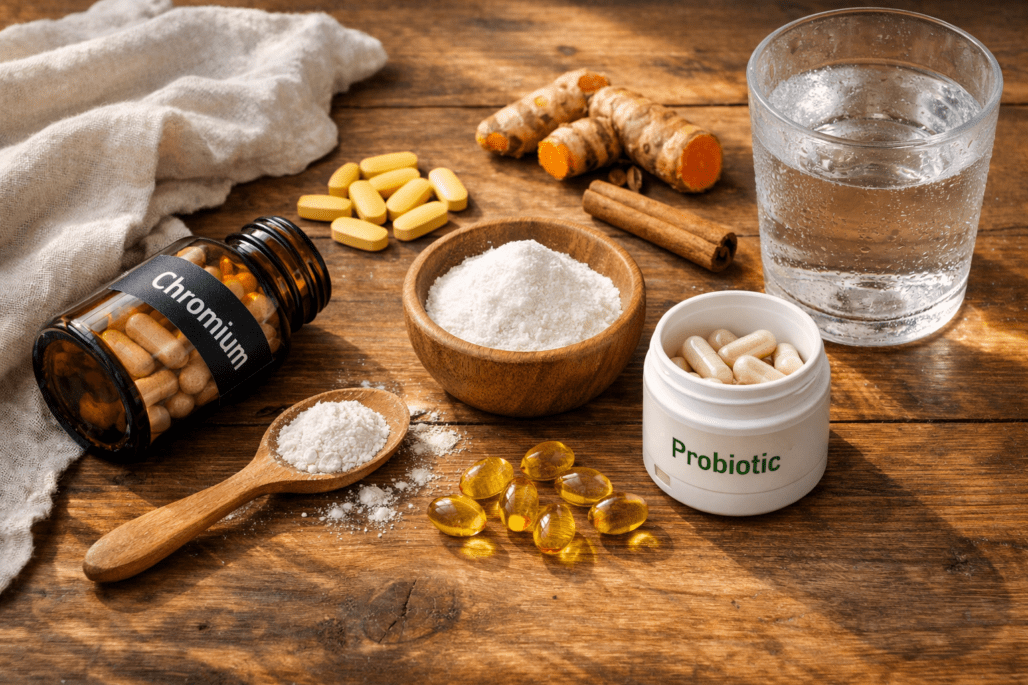
Berberine, probiotics, and other “natural insulin support” options (what to know before you try them)
NOW Supplements Myo-Inositol 1000 mg, 120 Veg Capsules
NOW Supplements Myo-Inositol 1000 mg earns a strong 4.6-star rating from over 12,400 Amazon reviews, praised for hormone balance, PCOS support, and value at around $20 for 120 capsules. Reviewers highlight effectiveness and quality, though some note large pill size; Reddit users in supplements communities echo benefits for women’s health with minimal complaints, making it a reliable affiliate pick absent third-party testing flags.
Some of the most talked-about options are not vitamins at all. They’re plant compounds or live microbes, and they can meaningfully affect glucose regulation. That also means they can interact with medications or cause side effects if used carelessly.
Berberine (strong potential, but not casual)
Berberine is a plant alkaloid studied for glucose and lipid markers. Research suggests it may improve insulin sensitivity and support weight-related outcomes in some people, and it’s often compared (informally) to first-line lifestyle and medication approaches because it can move numbers.
The biggest issue is not whether berberine “works.” It’s whether it’s appropriate for you.
Best fit:
- Prediabetes, metabolic syndrome, PCOS (with clinician guidance)
- People not on complex medication regimens
Typical study dosing:
- Commonly 500 mg, 2-3 times daily with meals (varies by study)
Safety and interaction notes:
- Can compound the effects of glucose-lowering drugs.
- May cause GI upset.
- Avoid during pregnancy unless specifically prescribed.
If you’re considering it, read our deeper safety-focused breakdown on berberine and blood sugar management.
Probiotics and synbiotics (strain-specific benefits)
The gut microbiome helps regulate inflammation, short-chain fatty acid production, and energy balance. Certain probiotic strains (often Lactobacillus and Bifidobacterium species in studies) and synbiotics (probiotic + prebiotic) have been associated with improvements in fasting glucose or HOMA-IR in some trials.
Best fit:
- Insulin resistance with digestive symptoms
- Diets low in fiber and fermented foods
- PCOS (some trials show benefit)
How to choose:
- Look for strain listing and CFU count through expiration.
- Consider pairing with a fiber upgrade (oats, beans, chia) for better results.
Practical tip:
- If a probiotic doesn’t list strains, it’s hard to match it to research.
Other options with mixed-to-moderate evidence (visual list)
These may help specific people, but results vary:
- Alpha-lipoic acid (ALA): studied for oxidative stress and glucose markers; also used for neuropathy support.
- Omega-3s: may help inflammation and triglycerides, indirectly supporting metabolic health.
- L-carnitine (0.25-4 g/day in studies): has improved fasting glucose and HbA1c in some research summaries.
- Zinc (around 35 mg/day in some studies): may support fasting insulin and glucose, but long-term high dosing can impair copper status.
- Folate/folic acid: meta-analytic findings suggest improvements in HOMA-IR and A1c in specific groups, including PCOS.
For a clinician-facing overview of supplement options and cautions, the VA Whole Health tool on supplements to lower blood sugar is a solid reference point.
How to choose and combine supplements safely (without wasting money)
Sports Research Vitamin D3 5000 IU, 120 Softgels
Vitamin D is discussed as potentially reducing insulin resistance in individuals who are deficient.
Thorne Research Magnesium Bisglycinate 100 mg, 120 Capsules
Thorne Research Magnesium Bisglycinate (ASIN B0BWR8N2JQ) earns a solid 4.6/5 from over 2,100 Amazon reviews for its superior absorption and gentle effects, making it ideal for sleep, stress relief, and recovery. Reddit communities like r/supplements consistently rank it among the best, backed by Thorne’s NSF certification and ConsumerLab approval, though the $38 price reflects premium quality—highly recommended for those seeking reliable, high-bioavailability magnesium.
Nutricost Berberine 500mg, 120 Capsules
Nutricost Berberine 500mg (120 capsules) is a top budget-friendly option with a strong 4.6-star rating from over 12,400 Amazon reviews, offering reliable blood sugar and metabolic support at around $19. Reviewers love its purity and value, though sensitive stomachs may experience mild GI discomfort; ideal for cost-conscious users seeking effective berberine without premium pricing.
A common trap is stacking five products at once, then having no idea what helped or what caused side effects. A better approach is to build a “minimum effective stack” based on labs, symptoms, and goals.
Step 1: Start with testing and context
Before you supplement aggressively, consider:
- Fasting glucose + fasting insulin (lets you estimate insulin resistance)
- HbA1c (3-month glucose average)
- 25(OH)D (vitamin D status)
- Lipids (triglycerides often track with insulin resistance)
- Iron studies and B12 if fatigue is a major symptom (common confounders)
If you’re not sure how to time supplements or pair them, our supplement stacking guide walks through a structured way to build a routine.
Step 2: Build a simple “foundation” stack first
For many people, a foundation looks like:
- Magnesium (if intake is low)
- Vitamin D (if deficient)
- One targeted add-on based on your driver:
- PCOS: myo-inositol
- Prediabetes/T2D: chromium (or berberine with clinician input)
- Gut issues: probiotic with documented strains
Step 3: Watch for nutrient interactions
Some supplements create new problems when used long-term or at high doses. The classic example is zinc: helpful in the right amount, but too much can reduce copper absorption.
Use this guide to avoid common pitfalls: nutrient interactions.
A “smart stacking” visual (sample combinations)
| Goal / situation | Consider | Avoid / caution |
|---|---|---|
| PCOS + insulin resistance | Myo-inositol + vitamin D (if low) + magnesium | Starting berberine without med review |
| Prediabetes + high triglycerides | Magnesium + omega-3s + chromium | Multiple glucose-lowering herbs at once |
| GI symptoms + elevated fasting insulin | Probiotic (strain-listed) + fiber-first diet | High-dose sugar alcohols (can worsen GI) |
| On metformin or insulin | Clinician-guided plan | Berberine or cinnamon without monitoring |
Action step: change one variable at a time. Give it 8-12 weeks, then reassess labs or symptoms.
Common myths about supplements and insulin resistance (and what to do instead)
Myths stick around because they sound comforting. If insulin resistance feels urgent, it’s tempting to believe the right pill will “fix it.” The science is less dramatic, but more useful.
Myth 1: “Supplements alone reverse insulin resistance”
Reality: lifestyle changes drive the biggest improvements. Supplements can support the process, especially when they correct deficiencies or target PCOS-related pathways.
What to do instead:
- Use supplements as adjuncts, not replacements.
- Track one or two objective markers (waist circumference, fasting insulin, A1c).
Myth 2: “If it’s natural, it’s automatically safe”
Reality: “Natural” compounds can still lower blood sugar, affect the liver, or interact with meds. Berberine is a good example: it may help, but it’s not casual.
What to do instead:
- If you take diabetes meds, discuss any glucose-lowering supplement with your clinician.
- Monitor for symptoms of low blood sugar (shakiness, sweating, confusion).
Myth 3: “Higher doses work better”
Reality: higher doses often raise side-effect risk without better results. Zinc is a classic case – some evidence supports around 35 mg/day in certain contexts, but chronic high intake can backfire.
What to do instead:
- Stay close to studied ranges.
- Reassess after a set trial period, rather than escalating.
Myth 4: “You don’t need labs”
Reality: labs help you choose the right tool. Vitamin D and magnesium are the most obvious examples – benefits are often stronger when levels are low.
What to do instead (visual checklist):
- Check vitamin D before high-dose D
- Consider fasting insulin if you’re “normal A1c but not feeling well”
- Recheck key labs after 8-12 weeks of changes
Conclusion
The most useful supplements for insulin resistance are targeted: chromium and magnesium for insulin signaling support, vitamin D when you’re deficient, myo-inositol for PCOS, and probiotics when gut factors are in play. Berberine is also promising, but it deserves extra caution if you use medications or have side effects.
A practical next step is to pick one primary goal (PCOS support, prediabetes markers, gut health, or deficiency correction), run a simple 8-12 week trial, and measure something objective. For deeper reading, explore our picks for Best Berberine Supplements and our safety-focused guide on berberine and blood sugar management.
As an Amazon Associate, I earn from qualifying purchases. Product recommendations are based on real reviews and independent research.
