
Vitamin E can be a smart add-on if you are not regularly eating nuts, seeds, and leafy greens – but the best vitamin E supplements are usually the ones that stick close to real dietary needs, use well-absorbed forms, and prove quality with third-party testing. This article compares top options (mixed tocopherols vs single alpha-tocopherol, natural vs synthetic), explains what dose actually makes sense, and flags who should be cautious. If you want clearer skin support, antioxidant coverage, or help filling a dietary gap, this guide will help you choose confidently.
Summary / Quick Answer: Best vitamin E supplements (at a glance)
The best vitamin E supplements for most people are moderate-dose, third-party tested formulas that use natural vitamin E (d-alpha or RRR-alpha) and ideally include mixed tocopherols and/or tocotrienols.
Top picks by goal (quick shortlist):
- Best overall (full spectrum): Nordic Naturals Vitamin E Complex – mixed tocopherols + tocotrienols, 100% DV
- Best affordable softgel: Nature Made Vitamin E – natural d-alpha, USP verified, high potency
- Best budget high-potency: Nutricost Vitamin E – natural d-alpha, strong dose, value pricing
- Best for very high-dose needs (medical guidance): CVS Health Vitamin E – very high IU, synthetic form
Fast rule: If you are unsure, choose 100% DV to 200% DV, take it with a meal containing fat, and avoid mega-doses unless your clinician recommends them.
Best vitamin E supplements: how the top options compare (2026)
If you have ever flipped a bottle around and seen “d-alpha,” “dl-alpha,” “mixed tocopherols,” and a dose that is 1,000%+ of the Daily Value, you are not alone. Vitamin E is one of the most confusing supplement aisles because the form and dose matter as much as the brand.
Vitamin E is a fat-soluble antioxidant. In the body, it helps protect cell membranes from oxidative damage and supports immune function, skin integrity, and eye health. The adult RDA is 15 mg per day (often listed as 100% DV on labels). According to the NIH Office of Dietary Supplements vitamin E fact sheet, deficiency is uncommon in healthy adults and is more likely with fat-malabsorption conditions.
Quick comparison table (what you are really buying)
| Supplement (example) | Form(s) | Approx. label strength | Quality signals | Best fit |
|---|---|---|---|---|
| Nordic Naturals Vitamin E Complex | Mixed tocopherols + tocotrienols | ~100% DV | Non-GMO verification; brand transparency | Broad coverage without mega-dosing |
| Nature Made Vitamin E | Natural d-alpha tocopherol | Very high %DV | USP verified on many products | Simple, affordable softgel |
| Nutricost Vitamin E Softgels | d-alpha tocopherol | High %DV | Third-party tested (lab not always specified) | Budget, higher potency |
| Pure Encapsulations Vitamin E | Mixed tocopherols | Varies | Hypoallergenic positioning; third-party testing | Sensitive ingredient needs |
| Garden of Life RAW Vitamin E | Food-based blend | Varies | Organic-focused lines; testing varies by SKU | “Whole food” preference |
| CVS Health Vitamin E | Synthetic dl-alpha tocopherol acetate | Very high %DV | Retail brand standards | High-dose only with guidance |
These examples align with roundups from dietitian-led and pharmacy sources such as the Healthline supplement review process and pharmacy overviews like the GoodRx guide to vitamin E supplements. Use them as a starting point, then verify the exact label for the product you are buying.
Actionable takeaway
Before you decide a brand is “best,” decide what you need:
- Daily coverage: look for 100% DV and mixed forms if possible
- Targeted high-dose: only if a clinician suggests it for a specific reason
- Sensitive stomach or allergies: prioritize short ingredient lists and clear allergen labeling
For a deeper checklist on verification seals and testing standards, see Supplement Quality Indicators.
Vitamin E benefits (and what the research actually supports)
Nordic Naturals Vitamin E Complex, 120 Softgels
No Amazon-specific data found for Nordic Naturals Vitamin E Complex 120 Softgels in search results; iHerb reviews for the 30 Soft Gels version praise high quality, skin/hair benefits, and antioxidant properties, but Amazon ASIN, ratings, price, and Reddit opinions unavailable[1][3].
Vitamin E gets marketed for everything from “heart protection” to “glowing skin.” The truth is more grounded: vitamin E is essential, and correcting low intake can help, but high-dose supplementation has mixed outcomes in research.
Think of vitamin E like a bodyguard for fats in your cells. Because cell membranes contain fats, they are vulnerable to oxidative stress. Vitamin E helps limit that damage as part of a larger antioxidant network that includes vitamin C, selenium, and glutathione.
What vitamin E may help with (most supported)
Here is where evidence and physiology align best:
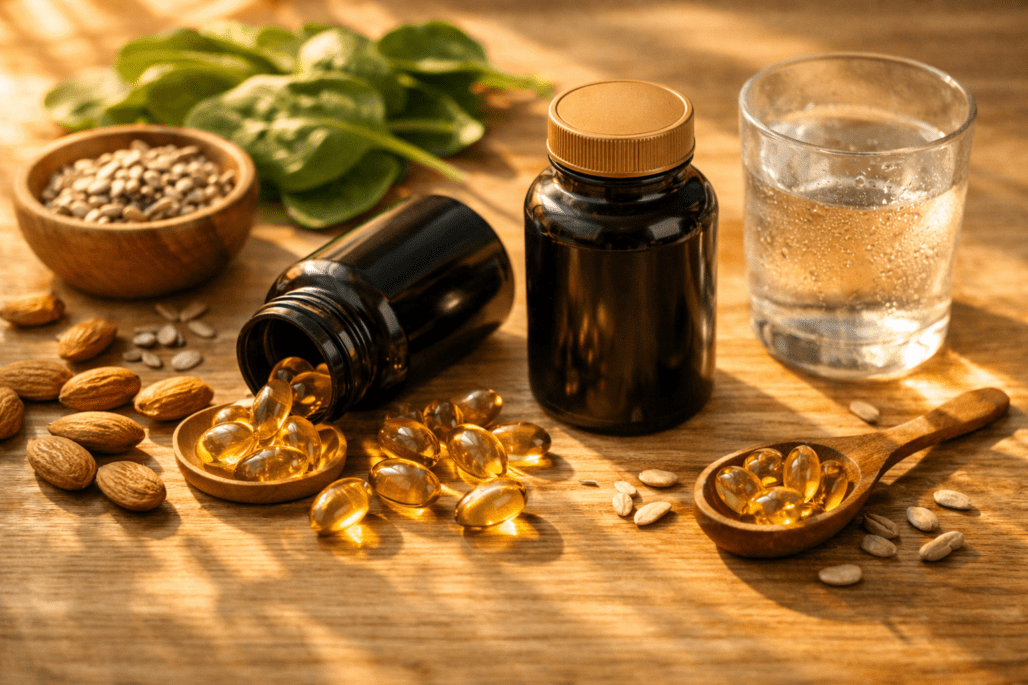
- Meeting basic needs when diet is low: If you rarely eat nuts, seeds, or vegetable oils, a modest supplement can help you hit the RDA. The NIH Office of Dietary Supplements lists sunflower seeds, almonds, and spinach among notable sources.
- Deficiency or malabsorption-related issues: People with conditions that impair fat absorption (certain liver, pancreas, or intestinal disorders) are at higher risk and may require clinician-guided dosing.
- Skin support (indirect): Vitamin E contributes to skin barrier function and oxidative protection. It is not a “wrinkle eraser,” but it may support overall skin resilience, especially when overall nutrition is strong.
If your main goal is appearance, it helps to zoom out. Many people get more noticeable results from a full skin-support routine (sleep, protein, omega-3s, vitamin C, sun protection) than from pushing vitamin E dose higher. UsefulVitamins covers this broader approach in Supplement For Skin.
Where vitamin E claims get shaky
Large trials have not consistently shown that high-dose vitamin E prevents chronic disease in the general population. Some research has raised safety questions at higher intakes, particularly around bleeding risk. The NIH Office of Dietary Supplements summarizes known adverse effects and upper limits.
“Benefit” reality check list
Ask yourself these three questions before buying:
- Am I correcting a gap or chasing a promise?
- Do I already take a multivitamin with vitamin E?
- Am I on medications that change bleeding risk?
Actionable takeaway
If you want vitamin E for general wellness, choose a product that focuses on quality and form, not extreme potency. If you want vitamin E for a specific condition, treat it like a targeted nutrient intervention and involve your clinician.
Vitamin E dosage: how much is enough (and when it is too much)
Nature Made Vitamin E 400 IU, 100 Softgels
Recommended as the best affordable softgel, this product features natural d-alpha tocopherol and is USP verified.
Dose is where most people accidentally go off track. Many vitamin E bottles provide far more than daily needs, partly because vitamin E was historically sold in high-IU softgels and partly because shoppers equate “more” with “better.”
For adults, the RDA is 15 mg daily. Supplements often list vitamin E in IU, mg, or both, depending on the form. Conversions are not always intuitive because IU depends on the type of vitamin E used. The most practical approach is to use the label and aim for a reasonable percentage of the Daily Value unless your clinician gives different instructions.
A practical dosing guide (simple and realistic)
Use this as a starting point:
| Goal | Typical supplemental range | Notes |
|---|---|---|
| Fill a dietary gap | 15 mg (100% DV) | Often enough for most adults |
| Extra antioxidant “buffer” | 15-30 mg (100-200% DV) | Consider if diet is inconsistent |
| Clinician-guided therapeutic use | Varies | Only with medical oversight |
| Avoid without guidance | Very high-dose (hundreds of mg or 400+ IU daily) | Higher risk, unclear benefit |
The tolerable upper limit (UL) for adults is 1,000 mg/day of supplemental alpha-tocopherol, according to the NIH Office of Dietary Supplements. But you do not need to get near the UL to run into issues, especially if you combine multiple products.
Timing and absorption (small change, big difference)
Vitamin E is fat-soluble. That means it absorbs better when you take it with a meal that contains fat.
Best practice:
- Take your softgel with lunch or dinner that includes olive oil, eggs, avocado, nuts, or dairy.
- Avoid taking it on an empty stomach if you want consistent absorption.
- Store it away from heat and light to slow oxidation.
Interaction and safety checklist
Vitamin E can affect clotting at higher intakes. Be cautious if you use:
- Warfarin or other anticoagulants
- Antiplatelet medications (including daily aspirin in some cases)
- High-dose fish oil combined with high-dose vitamin E
UsefulVitamins breaks down the risk profile in more detail here: Vitamin E Blood Thinners Hemorrhage.
Actionable takeaway
For most healthy adults, 100% DV to 200% DV is a sensible ceiling unless you have a documented need. If your bottle delivers 1,000%+ DV, treat it as a high-dose product, not a daily essential.
How to choose the right form: d-alpha vs dl-alpha, mixed tocopherols, tocotrienols
Nutricost Vitamin E Softgels, 400 IU, 120 Softgels
This product is noted for being budget-friendly with a high potency of natural d-alpha tocopherol.
CVS Health Vitamin E 1000 IU, 100 Softgels
This product is mentioned for those needing very high doses, making it suitable for specific medical guidance.
Two vitamin E bottles can look identical from the front and perform differently in the body. The reason is that “vitamin E” is a family of compounds, not one single molecule.
Step 1: Understand natural vs synthetic vitamin E
- Natural vitamin E is often listed as d-alpha tocopherol or RRR-alpha tocopherol.
- Synthetic vitamin E is often listed as dl-alpha tocopherol.
Research and expert reviews commonly note that natural vitamin E is more bioavailable than synthetic forms. Many dietitian-led supplement roundups, including the Healthline vitamin E supplement guide, recommend choosing natural forms when possible.
Step 2: Look beyond “alpha” when it makes sense
Alpha-tocopherol is the form the body preferentially maintains in blood, but foods contain multiple tocopherols (alpha, beta, gamma, delta). Some supplements also include tocotrienols, which are related compounds with distinct biological activity.
A “mixed” formula can be a better match to dietary vitamin E patterns. This is one reason full-spectrum products like Nordic Naturals Vitamin E Complex tend to score well in comparisons such as the Welzo supplement review roundup.
Step 3: Check the delivery format and added oils
Most vitamin E supplements are softgels suspended in oil (soybean oil, safflower oil, olive oil). That is not filler – it is part of the absorption strategy.
If you have allergies or prefer to avoid certain oils, the ingredient list matters as much as the Supplement Facts panel.
To get faster at spotting forms, doses, and additives, use this guide: How to Read Supplement Labels.
Quick “label scan” checklist (copy/paste mental version)
- Prefer: d-alpha or RRR-alpha
- Consider: mixed tocopherols and possibly tocotrienols
- Verify: third-party testing (USP, NSF, Informed Choice, or clear COA practices)
- Check: allergen oils (soy) and capsule type (gelatin vs plant-based)
Actionable takeaway
If you want one simple rule that works: pick natural d-alpha and avoid extreme doses. If you want a more food-like profile, pick a mixed tocopherol product.
Who should (and should not) take a vitamin E supplement?
The biggest misconception is that everyone benefits from adding vitamin E. In reality, many people already meet needs through diet, and some people have higher risk from supplementation.
People who may benefit most
Vitamin E supplements are most reasonable when there is a clear “why,” such as:
- Low dietary intake: You rarely eat nuts, seeds, avocado, or leafy greens.
- Fat malabsorption risk: Certain GI conditions can lower absorption of fat-soluble vitamins.
- Restricted diets: Very low-fat diets can make it harder to absorb and consume enough vitamin E.
- Clinician-identified need: A lab result or medical history supports supplementation.
Deficiency is rare in the general population, and the NIH notes it is more common in specific medical conditions than from everyday diet alone. See the NIH vitamin E fact sheet for a clinician-level overview.
People who should be cautious
Consider medical guidance before supplementing if you are:
- On blood thinners or have a bleeding disorder
- Pregnant or breastfeeding (supplement needs should be individualized)
- A smoker considering high-dose vitamin E
- Taking multiple supplements that may stack vitamin E dose (multivitamin + “skin” formula + standalone E)
If you already take a multivitamin, check whether you are double-dosing. Many multis include vitamin E near the Daily Value. UsefulVitamins compares multi options here: Best Multivitamins Comparison.
Food-first: the simplest way to hit 15 mg
Here are practical food options that add up quickly:
| Food | Approx. vitamin E | Easy way to use it |
|---|---|---|
| Sunflower seeds (1 oz) | ~7 mg | Add to yogurt or salads |
| Almonds (1 oz) | ~7 mg | Snack or blend into oatmeal |
| Spinach (cooked, 1/2 cup) | ~2 mg | Add to eggs, soups, pasta |
Values vary by brand and preparation, but the pattern is consistent: nuts and seeds do the heavy lifting.
Actionable takeaway
If you can meet most of your needs with food, do that first. If you cannot, supplement modestly and consistently, and avoid stacking high-dose products.
Conclusion: choosing a “best” vitamin E supplement comes down to form, dose, and safety
The best vitamin E supplements are rarely the highest-dose bottles. For most people, the smarter choice is a well-tested product using natural vitamin E (d-alpha/RRR-alpha), ideally with mixed tocopherols, at a dose close to daily needs.
A practical next step is to check your current routine: look at your multivitamin and any “beauty” or antioxidant blends, then estimate your total daily vitamin E. If you are unsure what to look for, start with How to Read Supplement Labels and the quality checklist in Supplement Quality Indicators.
As an Amazon Associate, I earn from qualifying purchases. Product recommendations are based on real reviews and independent research.
