
Affiliate disclosure: this article contains affiliate links. As an Amazon Associate, UsefulVitamins.com earns from qualifying purchases at no extra cost to you.
Where the sleep-gummy boom came from
Walk down any pharmacy aisle and the sleep shelf has quietly turned into a candy shelf. Soft, fruity, dosed-by-the-handful gummies have replaced the boring white tablet, and the category has exploded on the back of one promise: better sleep without a prescription.
The pitch is easy to like. Gummies taste good, feel gentle, and look nothing like a drug. Add a calming label, a lavender color, maybe a splash of CBD, and you have a product that sells itself on TikTok and at the checkout counter.
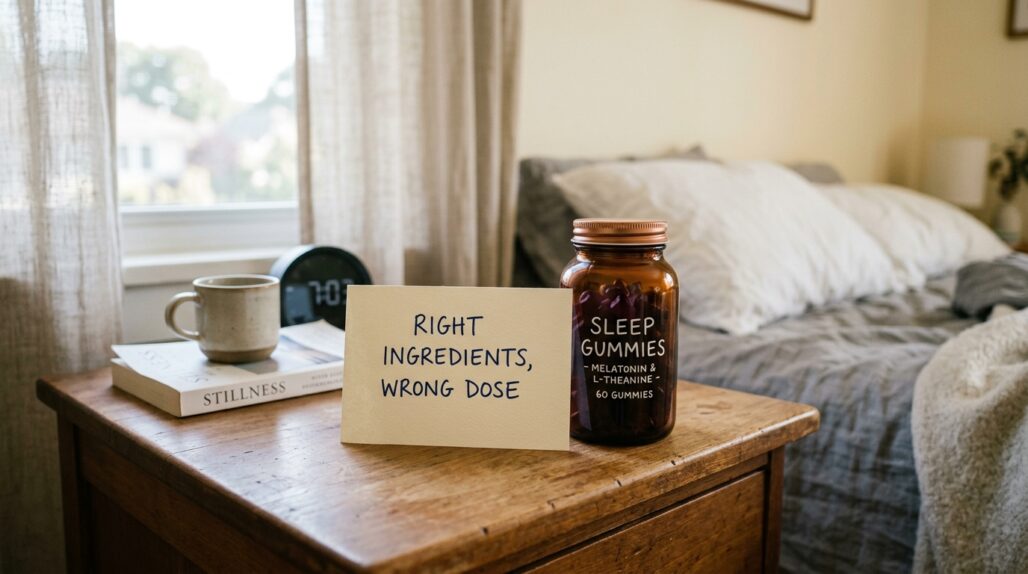
Here is the catch the marketing skips. The problem with sleep gummies is rarely the ingredients – it is the format. The actives inside have genuine evidence behind them. The way a gummy packages them tends to undo most of it.
So this is not a "scam" verdict. It is a "right idea, wrong execution" verdict, and the distinction matters for what you actually buy.
What is usually inside a sleep gummy
Strip the flavoring away and most sleep gummies are built from a short, repeating list:
- Melatonin – the headline ingredient, usually dosed at 3 to 10 mg.
- Magnesium – often as oxide or citrate, sometimes glycinate.
- L-theanine – an amino acid from tea, marketed for calm.
- Glycine – another amino acid, less common in gummies.
- Botanicals – chamomile, lemon balm, passionflower, valerian, usually in tiny amounts.
- CBD – added to a slice of the market for an extra wellness halo.
Then comes the part nobody advertises: sugar, corn syrup, gelatin or pectin, and coloring. A gummy has to taste like a gummy, and that means a sweetener load right before bed.
The actives are real. The delivery system is a dessert. That tension is the whole story.
What the human evidence actually shows
Let me grade each ingredient honestly, because "it has evidence" and "it does what the bottle implies" are not the same sentence.
Melatonin is a clock-setter, not a sedative. It signals your brain that it is night. According to the American Academy of Sleep Medicine's 2017 clinical practice guideline, the data are strong enough to use melatonin for circadian timing problems like jet lag and shift work, but the guideline actually suggests clinicians not use it as a routine treatment for chronic insomnia. At 2 mg it shaved only around 9 minutes off the time to fall asleep in pooled trials, on very low quality evidence. That is real, but it is small, and it is timing, not knockout power.
Glycine has the cleanest small-trial story. A double-blind crossover study by Yamadera and colleagues (Sleep and Biological Rhythms, 2007) gave 3 g of glycine before bed and saw shorter sleep onset and better subjective quality, backed by polysomnography. The signal is encouraging. The trials are also small, short, and mostly from one research group, so call it promising rather than settled.
Magnesium is weaker than the wellness world implies. A systematic review and meta-analysis by Mah and Pitre (2021) pooled just three small trials in older adults, rated the evidence low to very low quality, and found roughly a 17-minute improvement in time to fall asleep that the authors said was too weak to recommend on. The NIH Office of Dietary Supplements notes magnesium is genuinely useful when you are deficient, which is a different claim from "fixes sleep."
L-theanine reduces edginess more than it sedates. A 2025 systematic review of L-theanine sleep trials found modest, inconsistent benefits, mostly around relaxation at 200 mg rather than knocking you out. Helpful if anxiety is what keeps you up. Not a sleeping pill.
CBD for sleep is thin. Outside of specific seizure medication, the consumer-dose evidence for sleep is preliminary, and as you will see, CBD content in these products has been all over the map.
Add it up and you get four ingredients with modest, mostly small-study support. None of that is fake. None of it is dramatic either.
The format is the failure point
Here is where gummies actively work against the science. A 2023 research letter in JAMA (Cohen et al.) tested 25 melatonin gummy products. The measured melatonin ranged from 74 percent to 347 percent of the labeled dose, and only 3 of the 25 landed within 10 percent of what the label claimed. One product contained no detectable melatonin at all, just CBD.
Read that again. In a single study, fewer than 1 in 8 melatonin gummies were accurately dosed. Melatonin is sold as a supplement in the United States, so the FDA does not vet purity or dose the way it would for a drug. The label is a suggestion, not a guarantee.
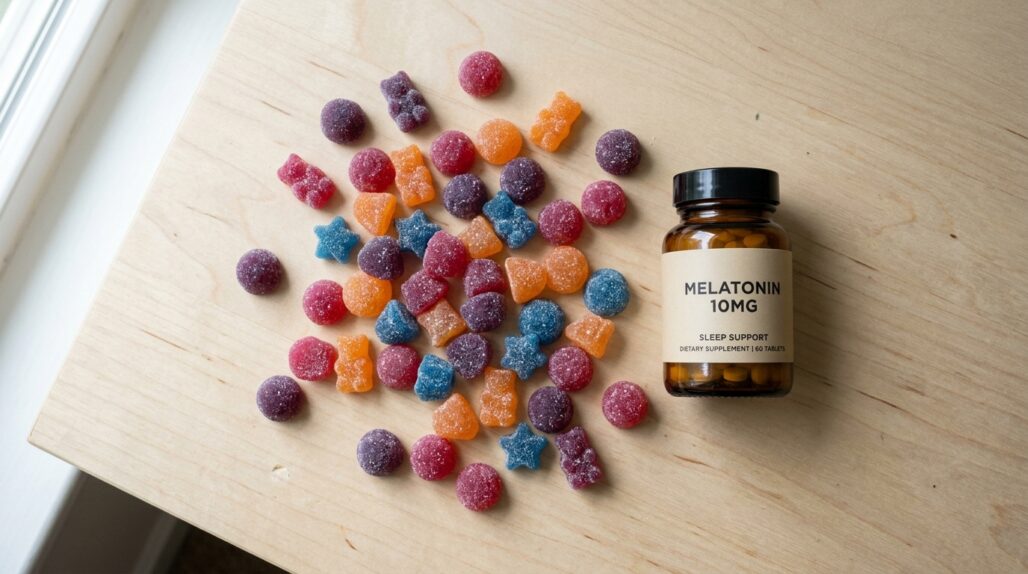
Now layer on the dose problem. Your body makes only a fraction of a milligram of melatonin at night. Low doses of around 0.5 to 1 mg raise blood levels into the natural range, which is plenty for a timing nudge. Most gummies pack 5 or 10 mg – many multiples of physiologic levels, with no added benefit for sleep onset and a higher chance of next-day grogginess.
Then there is the sugar. A chewy, sweet gummy is a small dose of fast carbohydrate right before bed, which is the opposite of what you want when you are trying to wind down.
So the same melatonin that helps in a 0.5 mg tablet often arrives in a gummy at 10x the useful dose, possibly mislabeled, wrapped in sugar. The ingredient did not fail you. The format did.
| Ingredient | The gummy claim | What the human evidence shows | Evidence grade |
|---|---|---|---|
| Melatonin | Knocks you out, more is better | Sets your body clock; 0.5-1 mg works, 5-10 mg adds grogginess not benefit; weak for chronic insomnia | Human trials, real for timing |
| Glycine | Deeper, more restful sleep | 3 g before bed shortened onset and improved quality in small polysomnography trials | Small human RCTs, promising |
| Magnesium | Natural relaxation, fixes sleep | About 17 min faster onset in older adults; helpful mainly if deficient | Low-quality human data |
| L-theanine | Calms the mind for sleep | Modest, mixed; reduces anxiety more than it sedates, around 200 mg | Mixed human data |
| CBD | Relaxing sleep support | Preliminary for sleep; content frequently off-label in testing | Thin, early |

Who a sleep gummy might still suit
This is not a "throw them all out" verdict. A few situations make a gummy reasonable.
You travel across time zones. A low-dose melatonin product, gummy or not, can help reset your clock for jet lag. Just look for one dosed at 0.5 to 1 mg, not 10.
You hate swallowing pills. If a gummy is the only format you will reliably use, that beats a perfect tablet you never take. Pick a low-dose, third-party-tested one and accept the sugar.
You want occasional, not nightly, help. For the rare rough night, a sensible dose is fine.
It is the wrong tool if you are reaching for it most nights, expecting it to sedate you, or treating a real sleep disorder. Nightly long-term use is a signal to talk to a clinician about what is actually keeping you up, whether that is stress, apnea, or a circadian issue. Cognitive behavioral therapy for insomnia, not a gummy, is the first-line treatment the sleep guidelines point to.
How to spot a gummy that is mostly sugar and hype
A few quick tells separate a defensible product from a candy:
- Mega-dose melatonin. A 5 or 10 mg gummy is a red flag, not a feature. Lower is better.
- Proprietary "sleep blend." If the herbs are hidden inside one blended number, you have no idea whether the chamomile is a real dose or a sprinkle.
- No third-party testing. Given the JAMA label findings, an NSF or USP or independent COA is close to mandatory here.
- Sugar high on the list. Several grams of added sugar per serving works against the goal.
- Stacked CBD with vague claims. Content varies wildly and the sleep evidence is thin.
If you still want to try it, or want the better option
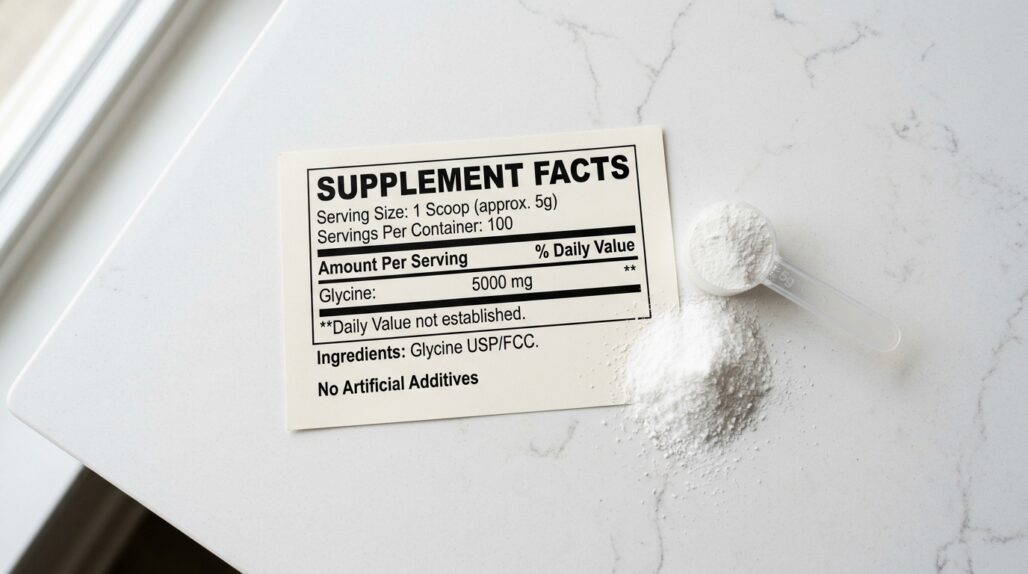
Honest version: the smartest move is usually to buy the active done right rather than the gummy. Low-dose melatonin (0.5 to 1 mg) for timing, glycine powder for the small-trial sleep-quality effect, or plain magnesium glycinate if you suspect you run low will get you the evidence without the sugar and the dose roulette.
If you would still rather have a gummy for convenience, then at least get one that is third-party tested and dosed low. Either way, the picks below are chosen to match the evidence, not the hype.


As an Amazon Associate, UsefulVitamins.com earns from qualifying purchases at no extra cost to you.
UsefulVitamins may earn a commission if you buy through these links, at no extra cost to you. It does not change our verdict or which products we list.
FAQ
Are sleep gummies a scam? No, but they are usually the wrong execution. The ingredients have real evidence; the gummy format tends to overdose melatonin, add sugar, and ship with historically unreliable labels.
Why is low-dose melatonin better than a 10 mg gummy? Your body makes only a fraction of a milligram at night. Around 0.5 to 1 mg already reaches natural levels and signals “it is night.” Higher doses add grogginess, not better sleep onset.
Does the magnesium in sleep gummies help? The evidence is weak and low quality, showing roughly a 17-minute improvement in older adults. Magnesium helps most if you are actually low in it, which is a different thing from a sleep cure.
Is the sugar in gummies a real problem? It is not dangerous, but a sweet chewy dose right before bed runs counter to winding down, and it adds up if you take them nightly.
Can I take a sleep gummy with my prescription sleep medication? Do not stack sleep aids on your own. Talk to your doctor or pharmacist first, since combining sedating products can worsen next-day impairment and other effects.
Should I take a sleep gummy every single night? Nightly long-term use is a sign to see a clinician about the underlying issue rather than self-treating. The guidelines point to behavioral therapy first for chronic insomnia.
The bottom line
Sleep gummies are not a fraud, and they are not magic. The actives inside have modest, real human evidence; the gummy wrapper is where the science goes to die – overdosed melatonin, sugar, and labels that one JAMA study showed were accurate in only 3 of 25 products.
If you want the benefit, buy the ingredient done right: a low-dose melatonin for timing, glycine powder for the small-trial quality effect, or a plain magnesium glycinate. If you genuinely prefer a gummy, choose a low-dose, third-party-tested one and go in clear-eyed about the trade-offs.
For sleep that does not come back on schedule, or for nightly reliance on any aid, the real answer is a conversation with a clinician, not a better gummy. Use the picks above to match what the evidence supports.
For more on getting the dose and format right, see our guides on whether 10 mg of melatonin is too much, how melatonin gummies compare to pills and liquid, where magnesium and melatonin actually differ for sleep, and our roundup of the best glycine supplements if you want to test the cleanest-evidence option.
This article is for general information and is not medical advice. Supplements can interact with medications and conditions. Talk to a doctor or pharmacist before starting anything, especially if you take prescription sleep or other medication, are pregnant, or have a health condition.
Reviewed by the UsefulVitamins Editorial Team.
