
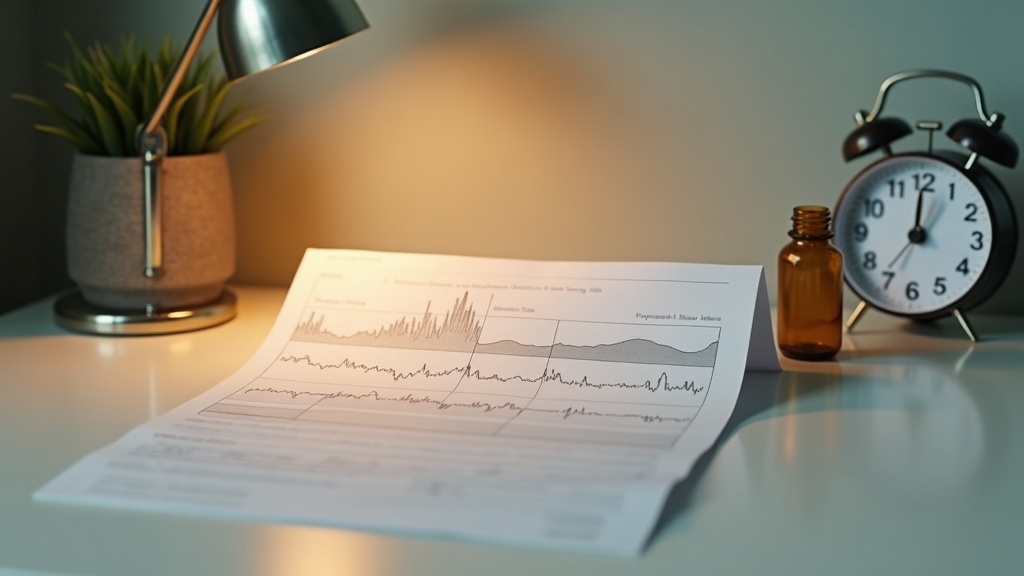
If you searched for supplements that affect REM sleep, you've probably watched your wearable label a night "low REM" and wondered which bottle to buy to fix it.
Quick Answer: what actually moves your REM and slow-wave sleep
No widely available supplement reliably restructures sleep architecture the way a glass of wine, a THC edible, or an SSRI does. Supplements modulate the edges. Drugs and behaviors move the center of mass.
- Best for understanding what's changing: anyone trying to interpret a wearable "low REM" or "low deep sleep" reading should first audit alcohol within four hours of bed, cannabis use in the past month, any SSRI/SNRI/anticholinergic prescription, and shift-work schedule. Those four levers explain most non-clinical architecture deviations.
- Not ideal for: anyone using supplements as a primary intervention for clinical insomnia, REM behavior disorder, suspected sleep apnea, or severely fragmented sleep. Those are polysomnography and AASM-certified specialist questions, not bottle questions.
- What to do first: before adding any supplement, fix light exposure (bright morning, dim evening), keep the bedroom under 19 degrees Celsius, audit caffeine after 2 p.m., and look honestly at alcohol and cannabis use. Those four behaviors move architecture more reliably than any single capsule.
- Decision shortcut: if your wearable is your only data source, treat its stage labels as trend information, not absolute truth. Most consumer devices agree with clinical polysomnography roughly 60 to 70 percent of the time on stage classification, and they systematically overestimate REM.
This article is a deep dive into the mechanism and evidence, not a roundup of bottles to buy. The reasoning behind every claim is in the sections below.
What sleep architecture actually is
In a sleep lab, a polysomnographer attaches EEG electrodes, EOG channels for eye movement, EMG channels for chin and leg muscle tone, and ECG and respiratory belts. Across the night, a trained technologist scores 30-second epochs into one of four stages per the AASM Manual for the Scoring of Sleep, which is the international reference. The four stages are not arbitrary buckets. They reflect distinct neurophysiology.
N1 is the lightest stage, the transition out of wake. EEG shows low-amplitude mixed-frequency activity, slow rolling eye movements, and reduced muscle tone. It typically occupies 2 to 5 percent of a healthy adult night. It is the stage that fragments first when sleep is disturbed.
N2 is the workhorse. EEG shows sleep spindles (12 to 14 Hz bursts originating in the thalamic reticular nucleus) and K-complexes (large biphasic waves often triggered by external stimuli). Spindles are mechanistically tied to memory consolidation and sensory gating. N2 occupies roughly 45 to 55 percent of a healthy adult night, the single largest fraction.
N3 is slow-wave sleep, sometimes called deep sleep. EEG shows high-amplitude delta waves (under 4 Hz) covering at least 20 percent of the scored epoch. N3 is dominant in the first third of the night and is the stage associated with growth hormone secretion, glymphatic clearance of metabolic waste, and the felt sense of restoration. It declines steeply with age. Healthy adults typically run 13 to 23 percent N3.
REM is rapid eye movement sleep. EEG looks remarkably like wake (low-amplitude, mixed-frequency), eye movements are rapid and conjugate, and skeletal muscle tone is profoundly suppressed (REM atonia) to prevent acting out dreams. Aminergic neurons (locus coeruleus noradrenergic, raphe serotonergic) fall silent during REM while cholinergic neurons in the pontine tegmentum become highly active. This monoaminergic-to-cholinergic switch is the brainstem hallmark of REM. REM occupies 20 to 25 percent of a healthy adult night and is dominant in the second half of the night.
The night runs in cycles of roughly 90 to 110 minutes, with four to six cycles per night. Early cycles are N3-heavy. Late cycles are REM-heavy. The cycle structure itself, not just the total minutes per stage, is what architecture means.
What actually changes architecture (the honest list)
Before we talk about supplements, the substances and behaviors that genuinely move architecture deserve to be named, because they explain most of what people see on their wearables.
Alcohol. Even one drink within three hours of bed suppresses REM in the first half of the night and produces a REM rebound in the second half. Sleep looks deeper early, then fragments. Heart rate variability drops. Wearables consistently flag this pattern as "poor recovery" without naming the cause. This is the single most common reason a healthy adult's wearable shows low REM.
Cannabis (THC). Chronic THC use suppresses REM. Stopping after chronic use produces a REM rebound that can last weeks. The 2018 PACE trial of dronabinol for sleep apnea is one of the cleaner human polysomnography datasets on cannabinoid effects, and it confirms a measurable REM reduction. CBD is a different molecule with a different (and less well characterized) profile, though emerging small studies suggest it may reduce symptoms of REM sleep behavior disorder in select populations.
SSRIs and SNRIs. Serotonergic antidepressants suppress REM, sometimes dramatically. This is a well-documented clinical observation in psychiatry. Some patients show 30 to 50 percent reductions in REM time on standard SSRI doses. The effect persists across the treatment course and is part of why patients on SSRIs sometimes report "less vivid dreaming."
Benzodiazepines and Z-drugs (zolpidem, eszopiclone). GABA-A positive allosteric modulators reduce slow-wave sleep and modestly suppress REM. The sleep feels less restorative even when total sleep time looks adequate. This is one reason chronic benzodiazepine use for insomnia is increasingly out of favor.
Mirtazapine and trazodone. These two antidepressants, often prescribed off-label for sleep, actually increase slow-wave sleep, which is unusual in the psychotropic class.
Anticholinergic antihistamines (diphenhydramine, doxylamine). The active ingredient in Benadryl and most OTC "PM" sleep aids suppresses REM, fragments sleep, and produces next-day cognitive impairment. The Drugs.com diphenhydramine monograph summarizes the anticholinergic burden honestly. These are not benign sleep aids, particularly in adults over 65, where anticholinergic load is associated with cognitive decline.
That list is what actually rearranges architecture. Supplements live in a much smaller signal range.
What supplements actually do to architecture
Mechanistically, most sleep supplements act at GABAergic, serotonergic, or thermoregulatory points that are upstream of sleep onset but do not specifically restructure stage architecture. The honest framing is that they nudge sleep efficiency (the fraction of time in bed spent asleep) and subjective quality more than they redistribute minutes between N2, N3, and REM.
Melatonin. Melatonin is a circadian phase signal, not a sedative. At physiologic doses (0.3 to 1 mg, ideally timed several hours before habitual sleep onset for phase advance), it acts on MT1 and MT2 receptors in the suprachiasmatic nucleus to advance the circadian phase. The NIH ODS Melatonin Fact Sheet notes that high supraphysiologic doses (3 to 10 mg) sometimes used in sleep marketing produce no additional architectural benefit and may slightly suppress REM in some individuals. The effect size on architecture, even at high dose, is modest compared with the substances above.
Magnesium. A 2012 RCT by Abbasi and colleagues in elderly adults with primary insomnia found that 500 mg of magnesium oxide nightly for eight weeks improved Pittsburgh Sleep Quality Index scores and modestly increased serum melatonin. Magnesium acts as a GABA-A receptor positive modulator and an NMDA receptor antagonist at relevant concentrations, mechanisms that plausibly support sleep onset. The architectural signal is small: modest improvement in sleep efficiency and a small slow-wave increase in some studies, with substantial heterogeneity. For deeper coverage of forms and dosing, see the best magnesium for sleep.
Glycine. The 2007 Yamadera trial reported subjective sleep improvements and a non-significant trend toward shorter time to reach slow-wave sleep on polysomnography at 3 grams pre-bed. The mechanism combines NMDA modulation, glycine receptor inhibitory tone in the brainstem, and a measurable drop in core body temperature. The architectural signal is modest and the literature is small and geographically narrow. The deep-dive read is in glycine for sleep.
L-theanine. L-theanine, an amino acid from green tea, increases alpha-wave activity and partially blunts caffeine-induced sleep disruption per the Kim 2019 study. It improves subjective sleep quality and sleep efficiency without substantially altering stage distribution in healthy adults. Useful for people whose sleep onset is dominated by mental noise rather than physical arousal.
5-HTP. 5-hydroxytryptophan is a serotonin precursor that crosses the blood-brain barrier and feeds the serotonin-to-melatonin pathway. Small studies suggest modest REM increases and shorter sleep latency, consistent with the serotonergic mechanism. The data are thin and the population narrow, and 5-HTP carries a real interaction risk with SSRIs and other serotonergic agents that makes self-experimentation a bad idea.
CBD. Cannabidiol is an emerging area. Small studies suggest CBD may reduce REM behavior disorder symptoms in Parkinson's patients and may produce modest sleep improvements at doses of 25 to 175 mg. The polysomnography evidence is thinner than the marketing implies, and product quality varies widely.
Apigenin (chamomile flavonoid). The polysomnography data on chamomile and apigenin specifically are limited. Most evidence is subjective questionnaire data from small trials. Mechanism (GABA-A binding at the benzodiazepine site) is plausible. Effect on architecture is unconvincing in the available literature.
The honest synthesis: supplements modulate the edges of architecture. They do not restructure it. A reader expecting a melatonin pill to add 40 minutes of N3 is going to be disappointed and is also misreading the literature.
Actionable takeaway: if your wearable shows low REM, the highest-yield first move is auditing alcohol, cannabis, and SSRI use, not adding a supplement. If those are not in play, fix light, temperature, and caffeine timing. Supplements come fourth.
Why your wearable probably overestimates REM
Consumer wearables infer sleep stages from a combination of heart rate, heart rate variability, motion (accelerometry), and (on newer devices) blood-oxygen and skin temperature trends. They do not measure EEG, EOG, or chin EMG, which are the channels that actually define REM and slow-wave sleep in the AASM scoring manual.
The validation literature is consistent. The Chinoy 2021 study compared seven consumer devices (Fitbit, Oura, Whoop, Apple Watch, and others) against gold-standard polysomnography. All devices performed reasonably well at distinguishing sleep from wake (high specificity for "in bed but awake"). Stage-level performance was substantially weaker. Most devices overestimated REM and underestimated N1. Agreement with polysomnography at the epoch level typically ran 60 to 70 percent, with individual devices ranging higher or lower.
The de Zambotti 2019 validation of Fitbit Charge 2 showed similar findings: useful for trend-level information, poorly calibrated for absolute stage classification, especially in any population that is not a healthy young adult. Devices perform worse in people with disordered sleep, the exact population most interested in the data.
This does not make wearables useless. They are reasonable for tracking total sleep time, sleep regularity, sleep efficiency, and night-to-night trends. They are unreliable for telling you a specific number of minutes in REM versus N3. Trust the trends, doubt the absolute stage minutes.
The American Academy of Sleep Medicine has explicitly stated that consumer wearables are not validated for clinical insomnia diagnosis. If a wearable is telling you something is wrong with your architecture and the felt experience matches, escalate to a sleep specialist for an actual polysomnogram. If the wearable says something is wrong and you feel fine, the wearable is probably wrong.
When fragmented architecture is a clinic problem, not a supplement problem
Some patterns are sleep-medicine territory and should not be self-managed with supplements.
- Loud snoring with witnessed apneas, gasping awakenings, or morning headaches. This is sleep apnea screening territory. A home sleep apnea test or in-lab polysomnogram is the next step. No supplement treats apnea.
- Acting out dreams, kicking or punching during sleep, falling out of bed. This is REM sleep behavior disorder, which has prognostic significance for later neurodegenerative disease (Parkinson's, Lewy body dementia). It requires neurological evaluation, not a melatonin trial.
- Persistent insomnia (three or more nights per week, three or more months). Chronic insomnia is the formal DSM diagnosis. Cognitive behavioral therapy for insomnia (CBT-I) is the guideline-recommended first-line treatment, with stronger evidence than any pharmacologic option. Refer.
- Severe daytime sleepiness despite adequate sleep opportunity. Narcolepsy, idiopathic hypersomnia, or untreated apnea. Sleep specialist territory.
- Sleep disruption tied to shift work. This has its own evidence base and its own playbook. See supplements for shift workers for the targeted read.
The shorthand: if sleep is severely disordered, the answer is an AASM-certified sleep specialist and a polysomnogram, not a smarter supplement stack.
Where to start if you want to experiment
For a healthy adult with mildly imperfect sleep who wants to experiment thoughtfully:
- Audit the big levers first. Alcohol within four hours of bed, cannabis use, caffeine after 2 p.m., bedroom temperature, light exposure, and shift-work schedule explain most non-clinical architecture deviations.
- Pick one supplement at a time and trial for two to four weeks. Magnesium glycinate at 200 to 400 mg elemental in the evening is a reasonable first lever. Glycine at 3 grams pre-bed is a second. L-theanine at 100 to 200 mg is a third if mental noise is the problem.
- Track subjective sleep quality and next-day function, not your wearable's stage minutes. The wearable is for trend confirmation, not the primary endpoint.
- If two or three trialed supplements do not move the needle, the lever is not in the supplement aisle. Reassess behavior, see a clinician, or pursue CBT-I.
Actionable takeaway: sleep supplements are a small bias toward easier onset and modest improvements in subjective quality. They are not architecture restructuring tools. Treat them accordingly.
Conclusion: the bottom line on supplements and REM architecture
Sleep architecture is real, measurable, and meaningful, but it is also harder to move than supplement marketing suggests. The substances that genuinely rearrange architecture are alcohol, cannabis, SSRIs, benzodiazepines, and anticholinergic antihistamines. Magnesium, glycine, melatonin, L-theanine, and 5-HTP can nudge sleep efficiency and subjective quality, but they do not restructure stages. Consumer wearables are reasonable for trend-level data and unreliable for absolute stage classification, particularly for REM. If your sleep is mildly imperfect, audit behavior first, trial one supplement at a time, and read your wearable as a trend tool. If your sleep is severely disordered, the answer is a polysomnogram and an AASM-certified specialist, not a smarter stack.
Next steps:
- Audit the four big architecture levers (alcohol, cannabis, caffeine timing, light and temperature) before adding any supplement.
- If you want a single low-risk lever to try, start with the best magnesium for sleep and trial it for four weeks.
- Read how we review supplements and Maria Rodriguez's author page for the source hierarchy behind this article.
This article is for informational purposes and not medical advice. Sleep disorders, mood and psychiatric conditions, and prescription interactions require evaluation by a licensed clinician. Consult your physician before starting any supplement, particularly if you are pregnant, nursing, taking SSRIs, SNRIs, benzodiazepines, or any sedative medication, or managing a chronic condition. If your sleep is severely disordered, ask for a referral to an AASM-certified sleep specialist.
Reviewed by Maria Rodriguez, MS Nutrition Science, focused on cognitive and mood biochemistry.
