
If you’re wondering how to judge supplement quality, start by looking for credible third-party testing, clear labeling, and manufacturers that follow FDA-required Good Manufacturing Practices. Those three signals catch most of the problems that matter – incorrect doses, contamination, and misleading claims. This article breaks down the quality indicators that actually predict whether a product is what it says it is, how to read labels like a pro, and what “regulated” really means for supplements in the U.S. You’ll also learn quick red flags and a simple checklist you can use before you buy.
Summary / Quick Answer: How to spot supplement quality fast
The fastest way to assess supplement quality is to confirm independent testing, manufacturing standards, and honest labeling.
Here’s a quick, practical checklist:
- Look for third-party certification (examples: USP Verified, NSF) that checks identity, purity, and label accuracy.
- Confirm cGMP manufacturing – reputable brands state they follow FDA current Good Manufacturing Practices.
- Read the Supplement Facts panel for dose, form (like magnesium glycinate vs oxide), and serving size consistency.
- Watch for red-flag claims like “treats,” “cures,” or “prevents” diseases.
- Prefer brands with lot numbers + contact info and transparent testing documentation (COAs when available).
- Avoid “proprietary blends” when you need a specific therapeutic dose.
If you’re still unsure what you personally need, start with a supplement needs assessment before comparing products.
Supplement quality indicators that matter most (and why)
Most shoppers focus on the ingredient list first. That’s understandable, but it’s not the best predictor of quality.
A more reliable approach is to think like a quality auditor: “Was this product made consistently, tested correctly, and labeled honestly?” That’s where the biggest differences show up between brands.
The three pillars of supplement quality
- Identity – Is the ingredient actually what the label says it is?
- Purity – Is it free from harmful levels of contaminants?
- Potency – Does it contain the stated amount through shelf life?
Those pillars line up with what strong third-party programs test for. For example, the USP Dietary Supplement Verification Program overview describes how USP verification evaluates label accuracy, ingredients, and manufacturing quality. Similarly, NSF certification programs are widely used in supplement manufacturing and sports supplement testing – see the NSF certification program information.
Visual: “High-signal” vs “low-signal” quality clues
| What you see on a bottle | Signal strength | Why it matters |
|---|---|---|
| USP Verified or NSF mark | High | Independent checks for identity, purity, and label claims |
| “Made in the USA” only | Low | Location alone doesn’t prove testing or cGMP compliance |
| Full Supplement Facts + forms listed | High | Helps verify dose and bioavailable forms |
| Proprietary blend for key actives | Low | Hides amounts, makes dose evaluation harder |
| Lot number + manufacturer contact | Medium-High | Supports traceability and accountability |
| “Clinically proven to cure…” | Negative | Often signals misleading marketing or noncompliance |
Actionable takeaway: If you only do one thing, prioritize credible third-party certification and transparent labeling. Then compare brands.
For more context on how the market has grown (and why quality varies so much), see Vitamin And Supplement Industry Statistics.
Understanding supplement standards in the U.S. (FDA, DSHEA, and cGMP)
Nature Made Vitamin D3 2000 IU, 220 Tablets
Vitamin D3 is essential for overall health and is often included in quality supplements. This product is USP verified, ensuring its identity, purity, and potency.
Many people assume supplements are “FDA approved.” They’re not – and that misunderstanding leads to bad buying decisions.
In the U.S., supplements are regulated as a category of food, not drugs, under the Dietary Supplement Health and Education Act (DSHEA). That means manufacturers can market products without pre-market FDA approval, as long as they meet legal requirements for safety and labeling. The FDA can take action when products are adulterated, misbranded, or unsafe, but much of the responsibility starts with the manufacturer.
The FDA’s core quality tool here is current Good Manufacturing Practices (cGMPs). cGMP rules cover how supplements are produced, tested, packaged, labeled, and stored. In plain terms, cGMPs are meant to reduce preventable problems like ingredient mix-ups, contamination, and inconsistent dosing. The FDA’s dietary supplement cGMP overview explains what these standards are designed to control.
What cGMP compliance should look like in real life
A cGMP-aligned company typically has:
- Supplier qualification (vetting raw ingredient sources)
- Identity testing for incoming ingredients
- In-process controls to prevent batch errors
- Finished product testing (at least for identity and key specs)
- Documented procedures and batch records
- Stability programs to support expiration dates
Visual: “Regulated” doesn’t mean “pre-approved”
| Topic | Prescription drugs | Dietary supplements |
|---|---|---|
| Pre-market approval | Yes (FDA review required) | No (manufacturer responsibility) |
| Manufacturing standards | Strict GMP | cGMP required, enforcement varies |
| Claims allowed | Can treat diseases (with approval) | Structure/function claims only |
| Post-market enforcement | Recalls, inspections | Recalls, inspections, warning letters |
Actionable takeaway: When a brand says “FDA approved,” treat it as a red flag. Instead, look for cGMP language plus third-party testing evidence.
If you take medications or have a condition, quality is only half the equation. The other half is safety. Use this guide to supplement safety and interactions before adding new products.
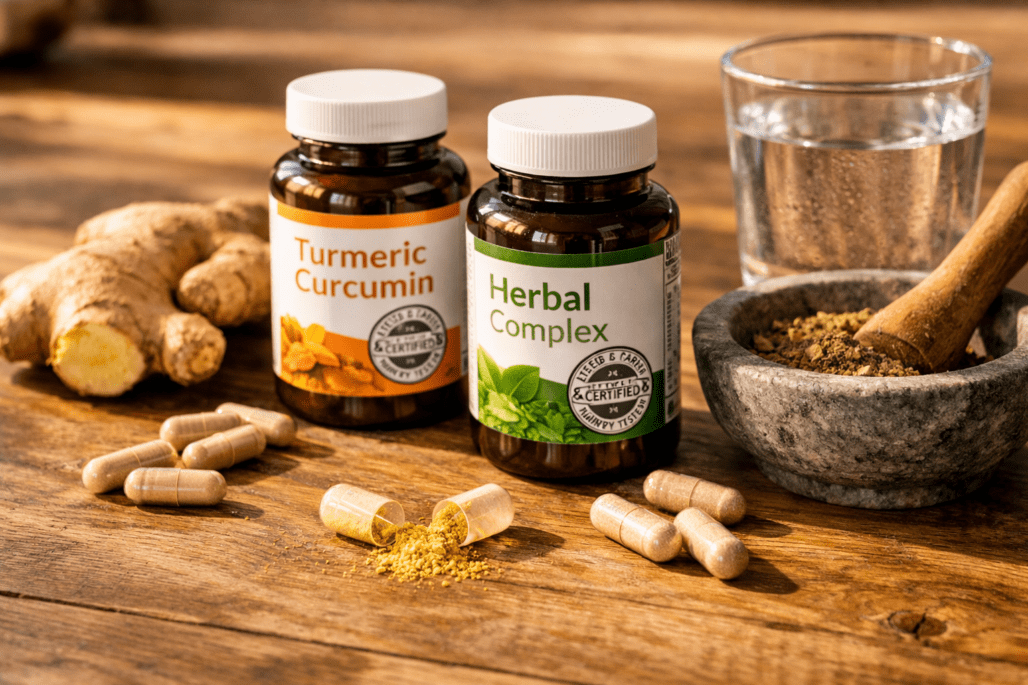
How to read a supplement label like a quality checklist
Garden of Life Vitamin Code Raw One for Men, 75 Capsules
This multivitamin is made with whole foods and is certified non-GMO, aligning with the article’s emphasis on quality indicators such as transparency and ingredient integrity.
Kirkland Signature Daily Multi, 500 Tablets
Kirkland Signature Daily Multi, 500 Tablets offers outstanding value at under 4¢ per tablet with a solid 4.6-star rating from over 12,000 Amazon reviews, making it a reliable choice for budget-conscious users seeking a complete once-daily multivitamin; positive Reddit feedback highlights its equivalence to pricier brands, despite lacking USP certification.
A label can’t prove everything, but it can reveal a lot. Think of it like reading a nutrition label – you’re looking for clarity, completeness, and internal consistency.
Start with the Supplement Facts panel
Check:
- Serving size: Is it realistic? (For example, “6 capsules per serving” can be a practical barrier.)
- Amount per serving: Does it match the dose used in research or clinical practice?
- Ingredient form: Some forms have better absorption or tolerability than others (examples: magnesium glycinate vs oxide; methylcobalamin vs cyanocobalamin for B12).
- Daily Value (DV): Helpful context, but not the whole story for therapeutic dosing.
Scan the “Other Ingredients” section
This is where you’ll find capsule materials, fillers, binders, sweeteners, and colors. “Other ingredients” aren’t automatically bad, but they should make sense.
Quality-minded brands usually keep this list short and specific.
Know what claims are allowed (and what crosses the line)
Supplements can make structure/function claims like “supports immune health” or “helps maintain bone health.” They cannot legally claim to diagnose, treat, cure, or prevent disease without going through drug approval pathways.
If you see disease claims, be cautious. The FTC and FDA have a history of enforcement against deceptive marketing. A practical overview of compliance expectations is discussed in this dietary supplement regulatory compliance analysis by Cohen Healthcare Law.
Visual: Label “green flags” and “red flags”
-
Green flags
- Clear doses for every active ingredient
- Specific ingredient forms (not vague names)
- Lot number + expiration date
- Manufacturer name, address, and contact
-
Red flags
- “Proprietary blend” hiding key dosages
- Mega-doses with no rationale
- Disease-treatment promises
- Missing company contact details
Actionable takeaway: If you can’t verify the dose and form from the label alone, you can’t judge value or safety well. Choose a product that makes evaluation easy.
Want to understand whether you should pay more for a name brand? Compare the real-world pros and cons in generic vs. brand name supplements.
Third-party testing and certification: what it does (and doesn’t) guarantee
NOW Supplements, L-Theanine 200 mg, 120 Veg Capsules
This supplement is tested for purity and potency, making it a good example of a product that adheres to quality standards discussed in the article.
Thorne Research Basic Nutrients 2/Day, 60 Capsules
Thorne is known for its commitment to quality and transparency, making this product a strong example of a supplement that meets high standards.
Third-party certification is one of the clearest signals consumers can use – but it helps to know what it actually covers.
In general, a credible certification program evaluates whether a product:
- Contains listed ingredients at stated amounts
- Meets limits for certain contaminants
- Is made under audited manufacturing conditions
Programs vary, but two of the most recognized in the U.S. market include USP Verified and NSF. USP describes its verification approach and what the mark means in the USP Verified Mark program details. NSF provides similar information about certification scope and auditing in its NSF supplement certification resources.
COAs (Certificates of Analysis): helpful, but not foolproof
Some brands share a COA per lot. That can be a strong transparency signal, but quality depends on:
- Which lab ran the tests (independent vs in-house)
- Which methods were used (validated methods matter)
- Which analytes were tested (identity only vs broader contaminant panels)
- Whether results are complete and match the product
If a company shares COAs, look for lot matching and readable results, not just a marketing graphic.
Visual: What different verification approaches usually cover
| Approach | Typical coverage | Best for |
|---|---|---|
| USP Verified / NSF certification | Identity, potency, contaminants, manufacturing audits | Broad confidence in consistency |
| In-house testing only | Varies widely | Basic QC, not strong independent proof |
| COA posted online | Depends on lab + test panel | Extra transparency, lot-level checks |
| “Lab tested” claim with no details | Unclear | Not meaningful without specifics |
Actionable takeaway: Treat third-party certification as a “high-confidence shortcut,” especially for daily staples like vitamin D, magnesium, omega-3s, or multivitamins.
If you’re comparing premium brands that emphasize testing, this side-by-side breakdown can help: Thorne vs. Pure Encapsulations comparison.

New ingredients, industry changes, and why quality signals keep evolving
Even if you buy from reputable brands, the supplement world changes fast. New ingredient trends, new delivery formats, and shifting regulatory priorities can affect what “good quality” looks like year to year.
New Dietary Ingredients (NDIs) and safety review
When a company introduces a new dietary ingredient (especially one not marketed in the U.S. before 1994), it may need to submit a notification to the FDA with evidence supporting safety under labeled conditions of use.
The FDA has publicly discussed efforts to modernize dietary supplement oversight and improve clarity around submissions. See the FDA’s planning notes in the Human Foods Program priority deliverables, which includes dietary supplement oversight modernization work.
What this means for consumers: newer, trend-driven ingredients can have less safety history, less standardization, and more variability in sourcing. That doesn’t automatically make them unsafe, but it raises the bar for transparency and testing.
Compliance pressure isn’t only from regulators
Retailers and marketplaces increasingly set their own standards, requiring documentation, restricted-ingredient lists, and testing. A legal and business overview of these pressures appears in this 2026 regulatory and business factors analysis by Skadden.
This can be good for quality, but it can also create uneven rules across stores. The same product may be allowed on one platform and rejected by another.
Research-grade identification: how scientists think about supplement quality
The NIH has emphasized that supplement research needs strong product characterization so study results are meaningful and reproducible. The NIH Office of Dietary Supplements strategic planning materials discuss improving rigor around dietary supplement identification and measurement quality.
Consumer translation: when brands can clearly identify ingredients, standardize extracts, and document testing, they’re aligning more closely with what research demands.
Visual: When to raise your quality bar
| Scenario | Why risk increases | What to do |
|---|---|---|
| New “viral” ingredient | Less safety and standardization | Prefer third-party certified, avoid megadoses |
| Complex blends | Hard to verify dose and interactions | Choose single-ingredient products when possible |
| Gummies and drink mixes | Stability and dosing consistency challenges | Look for stability data or strong certification |
| Hemp-derived products | Variable regulation, THC thresholds | Demand COAs and clear cannabinoid testing |
Actionable takeaway: The newer or more complex the product, the more you should rely on third-party certification, lot-level testing transparency, and conservative dosing.
Conclusion: A simple way to choose better supplements
Supplement quality comes down to a few repeatable checks: credible third-party certification, cGMP-aligned manufacturing, and labels that let you verify dose and ingredient form. If a company makes that information easy to find and backs it with independent testing, you’re usually in safer territory.
Next step: confirm what you actually need, then choose the simplest product that meets your goal. Start with this supplement needs assessment, and if you’re taking medications, review supplement safety and interactions before adding anything new.
As an Amazon Associate, I earn from qualifying purchases. Product recommendations are based on real reviews and independent research.
