
Summary: What You Actually Need to Know
Here is the question most readers arrive with: are vasopressin and DDAVP the same thing, and can you just use them to avoid wetting the bed or to boost some hormonal endpoint?
The short answer is no to the first part and be very careful about the second. Vasopressin (brand name Vasostrict) and desmopressin (DDAVP) are related but chemically distinct peptides with separate FDA-approved indications, separate risk profiles, and very different settings of use.
Vasopressin is a hospital-only vasopressor reserved for septic shock in intensive care units. You will not encounter it outside a critical care setting. Desmopressin is a prescription synthetic analog approved for central diabetes insipidus, certain bleeding disorders, and nocturnal enuresis (bedwetting) in children. It has a boxed warning for life-threatening hyponatremia. Both are legitimate medicines backed by solid evidence within their approved uses. Neither belongs in a gray-market peptide stack.
Vasopressin vs. Desmopressin: Two Different Molecules, Two Different Jobs
People routinely conflate these two compounds, and the confusion is understandable. Both derive from the same ancestral nine-amino-acid peptide produced by the posterior pituitary gland. But "related" does not mean "interchangeable," and the differences matter enormously for safety.
Vasopressin (arginine vasopressin, AVP) is the native human hormone. Its nine-amino-acid sequence is Cys-Tyr-Phe-Gln-Asn-Cys-Pro-Arg-Gly, with the two cysteines forming a disulfide bridge that creates a ring structure. It acts on at least three receptor subtypes: V1a receptors on vascular smooth muscle (causing vasoconstriction), V1b receptors in the pituitary (involved in ACTH release), and V2 receptors in the kidney collecting duct (promoting water reabsorption). The half-life of endogenous AVP in circulation is roughly 10 to 20 minutes.
Desmopressin (1-deamino-8-D-arginine vasopressin, DDAVP) is a synthetic analog with two deliberate structural changes: the amino group is removed from cysteine at position 1, and the L-arginine at position 8 is replaced by D-arginine. These modifications increase the half-life to six to eight hours and shift receptor selectivity heavily toward V2, reducing the V1a vasoconstrictor activity that makes native vasopressin dangerous outside the ICU. This selectivity is why desmopressin can be used in outpatient settings for fluid management and bleeding disorders without the cardiovascular risks of the parent molecule.
Think of it this way: native vasopressin is a master key that opens several locks simultaneously, some of which you do not want to open at home. Desmopressin is a copy of that key filed down to fit only one specific lock. If you are new to how peptides are classified and why their receptor selectivity matters, our what are peptides primer covers the foundational concepts.
Mechanism of Action: The V1 and V2 Receptor System
Understanding why these peptides work requires a brief look at their receptor targets.
V1a receptors are located primarily on vascular smooth muscle. When vasopressin binds here, calcium is released intracellularly and the vessel constricts. This is the mechanism exploited in septic shock, where the immune system causes catastrophic vasodilation and blood pressure collapses to life-threatening levels. The drug raises peripheral vascular resistance without increasing heart rate, making it a useful adjunct to catecholamines like norepinephrine.
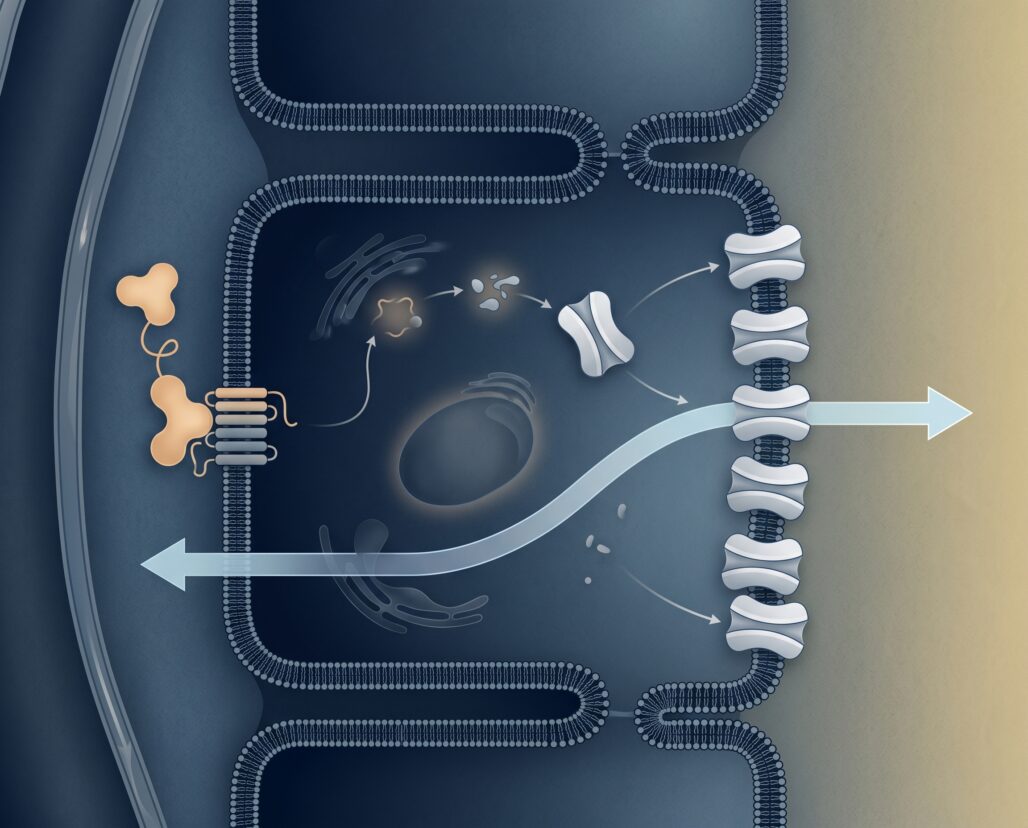
V2 receptors sit on the basolateral surface of principal cells lining the kidney collecting duct. Binding triggers a cyclic AMP cascade that mobilizes aquaporin-2 water channel proteins to the apical membrane, creating a pathway for water to flow from tubular fluid back into the bloodstream. The net result is more concentrated urine and less urine volume. This is the mechanism that matters for diabetes insipidus and nocturnal enuresis. Desmopressin's high selectivity for V2 means it replicates this kidney effect with minimal vascular consequences at therapeutic doses.
V2 receptors also exist on vascular endothelium, where stimulation prompts release of von Willebrand factor and factor VIII from storage sites. This is why desmopressin has a role in hemostasis for patients with hemophilia A and mild von Willebrand disease Type I, a use that surprises many readers who only think of it as a "bedwetting drug."
FDA-Approved Indications by Product
Vasostrict (Vasopressin Injection, 20 units/mL)
The FDA approved Vasostrict under NDA 204485 in 2014. The approved indication is vasodilatory shock, which includes distributive shock states such as septic shock, when standard catecholamine therapy is insufficient to maintain adequate perfusion pressure.
This is strictly an ICU medication. Dosing is carefully titrated by intravenous infusion in units per minute, monitored continuously, and adjusted based on hemodynamic response. The 2008 VASST trial (Russell et al., NEJM, PMID 18305265), a multicenter double-blind study of 778 patients, found no significant 28-day mortality reduction with vasopressin versus norepinephrine (35.4% vs 39.3%, P=0.26). A prespecified less-severe subgroup trended toward benefit (26.5% vs 35.7%, P=0.05). The drug is used because it reduces the catecholamine dose required and fits within surviving sepsis guidelines, not because it eliminates mortality.
Vasostrict carries warnings for digital ischemia (reduced blood flow to fingers and toes), mesenteric ischemia, and cardiac arrhythmias. It has no role in home use, no oral formulation, and no indication for any wellness application.
Desmopressin Acetate (DDAVP and generics)
Desmopressin is available in three routes of administration: intravenous injection, nasal spray, and oral tablet. Each formulation carries somewhat different approved indications and dosing considerations.
Central diabetes insipidus (CDI): CDI occurs when the posterior pituitary fails to produce enough AVP, causing the kidneys to excrete massive volumes of dilute urine (often 3 to 20 liters per day) and triggering constant thirst. This is not the far more common type 2 diabetes. CDI can follow head trauma, pituitary surgery, or tumors affecting the hypothalamus. Desmopressin replaces the missing hormone signal at the V2 receptor, dramatically reducing urine output and restoring normal fluid balance. The intranasal formulation was among the first treatments for CDI, and both oral and nasal routes remain standard care.
Hemophilia A and von Willebrand Disease Type I: For patients with factor VIII activity levels above 5%, desmopressin can trigger release of stored von Willebrand factor and raise factor VIII levels sufficiently to manage minor procedures, dental work, or minor bleeding episodes. This reduces the need for factor concentrate infusions in mild cases. It is not effective for severe hemophilia A (factor VIII below 1%) or for Type II or Type III von Willebrand disease. The intravenous formulation (0.3 mcg/kg infused over 15 to 30 minutes) is used in surgical settings; the intranasal concentrated formulation (Stimate, 1.5 mg/mL) is used for outpatient management.
Primary nocturnal enuresis: This indication, discussed in depth in the section below, involves oral or intranasal desmopressin to reduce urine production during sleep in children over five years of age who wet the bed without an underlying anatomical cause. The FDA approved this use, but also subsequently withdrew approval for the intranasal formulation for this specific indication because of the hyponatremia risk in children, who are more vulnerable to fluid overload than adults.
The Hyponatremia Warning: This Is the Risk That Matters Most
The boxed warning on desmopressin prescribing information is not decorative. Hyponatremia, defined as serum sodium below 135 mEq/L, can be life-threatening. At severe levels (below 120 mEq/L), it causes cerebral edema and carries a real risk of seizures, coma, respiratory arrest, and death.
How does an antidiuretic cause this? The mechanism is straightforward. Desmopressin tells the kidneys to retain water. If a patient simultaneously drinks more water than the body can dilute away, plasma sodium drops. The kidney has been told to hold water regardless, so the excess dilutes the blood. In a healthy adult taking appropriate doses with normal fluid intake, this is unlikely. In children, who have smaller body water reserves and less reliable fluid self-regulation, and in elderly patients with reduced renal reserve, the risk increases substantially.
Recognize the early symptoms: Headache, nausea, and confusion are warning signs of developing hyponatremia. These can progress rapidly to drowsiness, vomiting, and altered consciousness. Seizures represent a medical emergency. Anyone taking desmopressin who develops these symptoms should stop the medication and seek emergency care immediately. Do not wait to see whether symptoms resolve on their own.
The standard precaution: Fluid intake must be restricted for one hour before and for eight hours after taking desmopressin. Serum sodium should be checked within one week of starting treatment and approximately one month later, with more frequent monitoring in patients over 65 years old and those with any renal impairment or other risk factors.
Desmopressin is contraindicated in patients with moderate-to-severe kidney disease (creatinine clearance below 50 mL/min), a history of hyponatremia, SIADH, polydipsia, uncontrolled hypertension, heart failure, and in patients using loop diuretics or systemic glucocorticoids, both of which further impair the body's ability to regulate sodium.
Nocturnal Enuresis in Children: What Parents Need to Know
Bedwetting (primary nocturnal enuresis) affects roughly 15% of five-year-olds and persists in around 1 to 2% of teenagers. For most children, time and behavioral strategies (bladder training, lifting, alarm devices) resolve the problem without medication. Desmopressin is a second-line option for children who have not responded to alarm therapy or for whom a temporary reduction in nighttime urination is needed for practical reasons, such as school trips.
When it works, it works by a simple mechanism: the child produces less urine during the hours of sleep, reducing the volume that would otherwise trigger waking. Response rates in clinical practice vary widely. Some children have a near-complete response from the first dose; others show no benefit. It does not treat an underlying cause and relapse rates after stopping the drug are high.
The safety precautions for children are strict and non-negotiable. Do not give a child desmopressin alongside large fluid volumes in the evening. This means limiting drinks for the hour before the dose and ensuring the child does not drink excessively in the hours after. The risk of symptomatic hyponatremia in children given desmopressin with unrestricted fluids is real and has been reported in post-marketing surveillance. The FDA withdrew approval of the nasal spray formulation for enuresis specifically in children because absorption from nasal mucosa is more variable and harder to control, increasing risk compared to the oral tablet.
Practical guidance for families: Desmopressin for nocturnal enuresis in a child requires a pediatric specialist's prescription and supervision. Do not exceed the prescribed dose. Establish a consistent fluid-restriction routine every evening. Do not give the medication during an illness associated with vomiting, diarrhea, fever, or increased fluid demands, since these conditions impair sodium regulation and dramatically raise hyponatremia risk. If your child develops headache, nausea, or unusual confusion or drowsiness after taking desmopressin, treat it as a medical emergency.
Are These Peptides "Anti-Aging" or Performance-Enhancing?
Here is where skepticism is warranted and the answer is unambiguous: no.
Neither vasopressin nor desmopressin appears in legitimate athletic enhancement or longevity research with any meaningful human evidence. There is no credible mechanism by which either peptide would improve muscle mass, reduce body fat, enhance athletic performance, or slow biological aging. Their receptor targets are narrow and specific: blood vessel tone and kidney water handling. These are not pathways associated with the outcomes wellness peptide enthusiasts typically seek.
Some older research has explored AVP's role in memory consolidation via V1b receptors in the brain, but this work has not translated into any approved drug or clinically validated intervention. The noise about intranasal vasopressin for "social bonding" in online forums rests on preliminary animal studies and small, unreplicated human trials. Compare it to oxytocin research, where similar preliminary enthusiasm has also failed to replicate cleanly in controlled trials.

Frequently Asked Questions
Is DDAVP the same as vasopressin? No. DDAVP (desmopressin) is a synthetic analog of vasopressin with structural modifications that make it V2-selective and longer-acting. Vasopressin is the native hormone that acts on multiple receptor types. They are used in different clinical settings for different conditions.
Can I buy desmopressin without a prescription? No. Desmopressin is a prescription drug in the United States and virtually all other countries. Any source offering it without a prescription is operating outside legal and safety frameworks. Given the hyponatremia risk, self-dosing without medical supervision and monitoring is genuinely dangerous.
Will desmopressin help my child outgrow bedwetting faster? No. It suppresses nighttime urine production while the child takes it but does not change the underlying maturation of nocturnal vasopressin secretion. Most children with primary nocturnal enuresis naturally increase their own nighttime AVP production as they mature; desmopressin does not accelerate this process. Alarm therapy has better long-term cure rates.
Can vasopressin be used for anything outside the hospital? The FDA-approved indication for Vasostrict is in-hospital management of vasodilatory shock. There is no approved outpatient use. Do not confuse this with desmopressin, which does have outpatient approved indications.
Is desmopressin safe in pregnancy? Desmopressin has been used in pregnancy for central diabetes insipidus and for managing von Willebrand disease in patients who require it for bleeding control, typically under hematology consultation. Decades of clinical experience have not identified a clear signal of major birth defects. However, this is a decision requiring a physician's judgment, not self-management. Pregnancy affects both the kidney's handling of water and baseline sodium levels, and monitoring must be adjusted accordingly.
If you are managing a protocol like this, StackMyMed (our companion app) keeps your doses, timing, and interaction checks in one place. It does not replace medical advice — bring the log to your clinician.
Conclusion: Narrow Indications, Real Risks, No DIY Role
Vasopressin and desmopressin represent two well-characterized medicines derived from a single ancestral peptide. The evidence for their approved uses is solid and peer-reviewed. What they are not is a general-purpose wellness compound.
The FDA-approved indications are precise: vasopressin for septic shock under ICU monitoring, desmopressin for central diabetes insipidus, hemophilia A, von Willebrand Disease Type I, and physician-supervised nocturnal enuresis in children. The hyponatremia risk associated with desmopressin is serious enough that even prescribed use requires laboratory monitoring. Gray-market sources are not equipped to manage that risk.
Work with a specialist if you or your child have an indication for one of these drugs. If you are exploring peptides for performance or longevity, look elsewhere.
For a broader map of peptides that have cleared the regulatory bar, see our guide to FDA-approved peptides. For a case where a related neuropeptide is routinely overhyped, our review of synthetic oxytocin applies the same critical standards.
Sources:
- Russell JA, Walley KR, Singer J, et al. (VASST Investigators). Vasopressin versus norepinephrine infusion in patients with septic shock. N Engl J Med. 2008;358:877-887. PMID: 18305265
- Desmopressin Acetate Injection, USP Prescribing Information. Fresenius Kabi USA, LLC. DailyMed SetID: 0d96944d-736d-4b56-b726-d21eacd8bc85
- Desmopressin Acetate Injection Prescribing Information. Sun Pharmaceutical Industries, Inc. DailyMed SetID: 9fd48eec-aa24-4888-b99f-d409ada958a7
- FDA Drug Approval: Vasostrict (vasopressin injection). NDA 204485. Approved 2014. FDA Drugs@FDA
- Bichet DG. Vasopressin and the regulation of thirst. Ann Nutr Metab. 2019;74(Suppl 2):8-12. PMID: 31112988
This article is for educational purposes only and does not constitute medical advice. Vasopressin (Vasostrict) is a hospital-administered medication and must not be used outside an intensive care setting. Desmopressin (DDAVP) is a prescription drug. Neither medication should be obtained or used without physician supervision. The hyponatremia risk associated with desmopressin can be life-threatening; if you or a family member develop symptoms including severe headache, nausea, confusion, or seizures while taking this medication, seek emergency medical care immediately. Always consult a qualified healthcare provider regarding any medical condition or treatment.
This article is for informational purposes and not medical advice. Peptides, especially those marketed for therapeutic use, can interact with medications and health conditions. Consult a licensed physician before starting any supplement, particularly if you are pregnant, nursing, taking prescription medications, or managing a chronic condition.
