
Affiliate disclosure: this article contains affiliate links. As an Amazon Associate, UsefulVitamins.com earns from qualifying purchases at no extra cost to you.
Before you decide
An at-home thyroid test can tell you a lot, but it is a screening tool, not a diagnosis. It gives you numbers to bring to a clinician; it does not replace the exam, history, and repeat testing a doctor uses to actually diagnose and treat a thyroid problem.
We picked these kits the way we’d choose one for our own family before a GP visit: prioritizing the labs that report a full four-marker panel from a CLIA-certified laboratory rather than the cheapest strip on the shelf. A result you cannot act on is not a bargain.
Skip the DIY route entirely if you are pregnant, recently postpartum, or already on thyroid medication and feeling unwell. Those situations need a physician-ordered venous panel and clinical judgment, not a finger-prick screen you interpret alone.
Finally, decide up front what you want to learn. If you only want a rough yes/no on whether your thyroid is in range, a rapid TSH screen is enough; if you suspect Hashimoto’s or your symptoms persist, pay for the antibody panel, because that is the number that predicts where things are heading.
What your thyroid markers actually mean
Your thyroid gland sits at the base of your neck and sets the pace of your metabolism. A good panel measures both the signal from your brain and the hormone your gland is producing, which is why a single number can be misleading. The American Thyroid Association’s overview of thyroid function tests is a plain-language reference worth reading alongside your results.
TSH (thyroid-stimulating hormone) is the pituitary’s message to the gland, and it is the most sensitive first-line marker. When the thyroid underperforms, TSH rises to push it harder; a high TSH is often the earliest sign of trouble, which is why the MedlinePlus TSH test explainer calls it the standard screening test.
Free T4 (thyroxine) is the main hormone the gland secretes, the storage form your body converts as needed. Pairing Free T4 with TSH tells you whether an abnormal signal reflects a real hormone shortfall or just an early warning while output is still normal.
Free T3 (triiodothyronine) is the active hormone that does the work in your tissues. It adds nuance in some cases, though most guidelines lean on TSH and Free T4 for everyday diagnosis and treat T3 as a secondary data point.
TPO antibodies (thyroid peroxidase antibodies) are the autoimmune marker, and this is the result most cheap kits leave out. A positive TPO points toward Hashimoto’s thyroiditis, and it matters for prognosis: in the classic twenty-year Whickham Survey follow-up published in Clinical Endocrinology, people with both a raised TSH and positive antibodies progressed to overt hypothyroidism far faster than those with a borderline TSH alone. The MedlinePlus thyroid antibodies page explains how these are used. Antibodies are the marker that turns a borderline result into a reason to monitor closely, and it is exactly why we weight full-panel kits above rapid screens.
Who should test at home (and who probably should not)
The strongest reason to test is a cluster of symptoms that overlaps with an underactive thyroid: persistent fatigue, unexplained weight gain, cold intolerance, dry skin, constipation, low mood, or hair thinning. The NIDDK hypothyroidism resource lists these, and notes they are common and non-specific, which is precisely why objective numbers help.
Two other groups get real value from home testing. People with a family history of Hashimoto’s or another autoimmune condition benefit from an antibody panel even when symptoms are mild, and people who have been told they are “borderline” often want to recheck between clinic visits.
Home testing is most useful when you already suspect something. Population-wide screening of people with no symptoms is a different question, and the U.S. Preventive Services Task Force found insufficient evidence to recommend routine screening of asymptomatic adults. In other words, a home kit is a good answer to a specific worry, not a reason to test yourself on a whim.
If you already take levothyroxine and are adjusting your dose, testing at home can help you track trends, but the interpretation and any dose change belong to your prescriber. Self-adjusting thyroid medication based on a finger-prick number is where people get into trouble.
At-home vs lab accuracy: what CLIA certification means
The single most important quality signal on any home thyroid kit is the lab behind it. Reputable kits ship your sample to a laboratory certified under CLIA, the federal standards program described by the CDC’s Clinical Laboratory Improvement Amendments overview. A CLIA-certified lab runs the same validated assays a hospital would.
The difference from a clinic draw is the sample. Most home kits use a capillary finger-prick or dried blood spot rather than a venous tube, and that convenience introduces variables: how well you filled the collection card, how hydrated you were, and how long the sample spent in the mail.
Handled correctly, finger-prick TSH and Free T4 track venous results closely enough for screening. But a borderline or abnormal home result should always be confirmed with a standard venous panel before anyone makes a treatment decision. Treat the home number as a well-informed flag, not the final word.
The rapid-screen category is different again. A same-day cassette test gives you a quick TSH band without mailing anything, which is genuinely useful for triage, but it does not deliver the Free T4 and antibody detail that changes management.
How the kits compare
Here is how our three picks line up on the things that matter: which markers they measure, how you collect the sample, and what you actually pay. The full-panel kits earn their higher price by including TPO antibodies, while the rapid screen wins purely on speed and cost.
| Kit | Markers measured | Sample & result | Approx. price |
|---|---|---|---|
| Everlywell At-Home Thyroid Test | TSH, Free T3, Free T4, TPO antibodies | Finger-prick, mailed to CLIA-certified lab, digital report | ~$149 |
| Choose Health 4-in-1 Thyroid Test | TSH, T3, T4, TPO antibodies | Finger-prick, mailed to lab, online results | ~$95 |
| At-home rapid TSH cassette kit | TSH (screen only) | Finger-prick, same-day cassette reading at home | ~$18 |
How to act on your results
Whatever your kit shows, the next step is a conversation, not a supplement order. Bring the numbers to your primary care doctor or an endocrinologist, who can repeat the test on a venous sample and interpret it against your symptoms and history.
If your TSH is high with a low Free T4, that pattern suggests hypothyroidism, and standard first-line treatment is levothyroxine prescribed and titrated by a clinician. Never start, stop, or change a thyroid dose based on a home result alone; small dose errors have real consequences, and follow-up bloodwork is timed for a reason.
If your TSH is only mildly elevated but your TPO antibodies are positive, that is a monitoring situation rather than an emergency. Positive antibodies mean the odds of progressing are higher, so periodic rechecks make sense, and a home panel is a reasonable way to watch the trend between visits.
Supplements sit strictly downstream of that clinical picture. If you and your clinician want to look at nutrition support, our guides to the best supplements for thyroid health and supplements studied for Hashimoto’s cover what the evidence actually supports. They are an adjunct to standard care, never a substitute for it.
Our at-home thyroid test kit picks
All three kits below use a finger-prick sample and are widely available. We ranked them by how much decision-useful information they return per dollar, which is why the two full antibody panels lead and the rapid screen rounds out the list as a triage option.
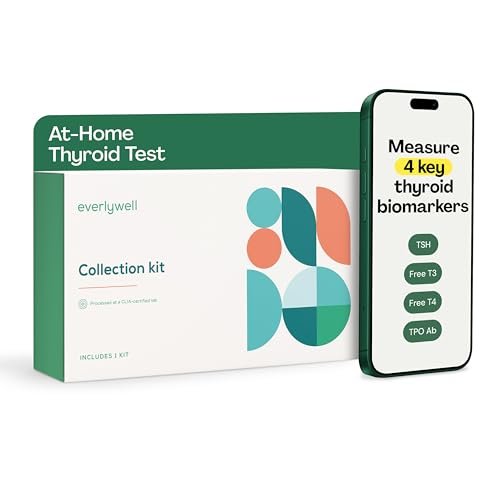
Everlywell At-Home Thyroid Test
The most complete of our picks: one finger-prick returns TSH, Free T3, Free T4 and TPO antibodies, processed by a CLIA-certified lab with a physician-reviewed digital report.
- All four core markers, including the antibody test cheaper kits skip
- CLIA-certified lab processing with an easy-to-read online report
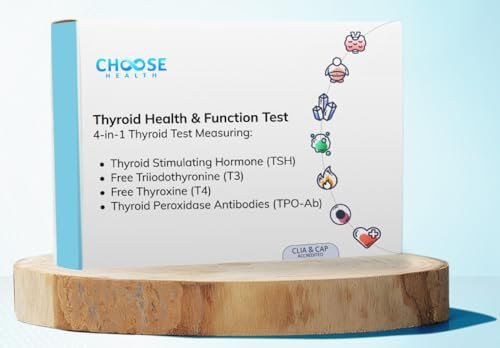
Choose Health 4-in-1 Thyroid Test
Covers the same four markers — TSH, T3, T4 and TPO antibodies — for roughly a third less than the category leader, which makes it our value pick for a full workup.
- Full four-marker panel at a lower price point
- Same convenient finger-prick and mail-in workflow
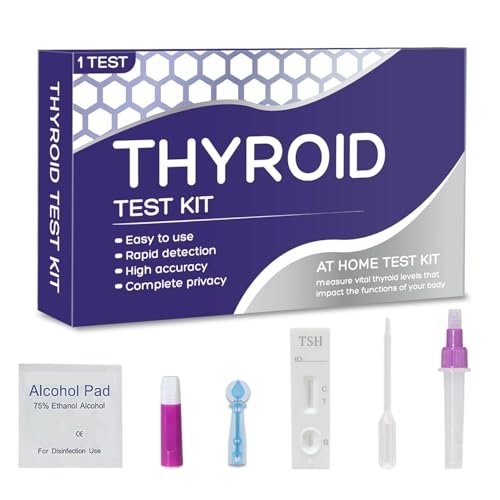
At-Home Rapid TSH Test Kit
A same-day TSH screen you read at home with no mailing involved. It is a triage tool, not a diagnosis — treat any abnormal band as a prompt to order a full panel and see a clinician.
- Fast, low-cost first look with no lab wait
- Handy for rechecking a known concern between appointments
FAQ
Are at-home thyroid tests accurate? When the kit ships your sample to a CLIA-certified lab and you collect it correctly, finger-prick TSH and Free T4 track venous results closely enough for screening. The main variables are collection technique and transit time, so any abnormal result should be confirmed with a standard clinic draw before acting.
Which markers should an at-home kit include? At minimum TSH, and ideally Free T4 to interpret it. If you want a meaningful picture — especially with a family history of autoimmune disease — choose a panel that also measures Free T3 and TPO antibodies, since antibodies are what flag Hashimoto’s and predict progression.
Can an at-home test diagnose Hashimoto’s? No single test diagnoses Hashimoto’s on its own, but a positive TPO antibody result strongly points toward it. A clinician confirms the diagnosis by combining antibodies, thyroid function, symptoms and sometimes imaging, so use the home result as a reason to book an appointment.
Do I need to fast or test in the morning? Fasting is not required for a thyroid panel, but TSH has a mild daily rhythm and tends to run higher in the early morning. For consistency, collect your sample at a similar time of day each time you retest, and follow the kit’s specific instructions.
Can I use a home test to adjust my levothyroxine dose? No. Tracking trends at home is fine, but any change to a thyroid medication dose must be made by your prescriber using confirmatory bloodwork timed to your treatment. Self-adjusting on a finger-prick number risks over- or under-treatment.
The bottom line on at-home thyroid testing
An at-home thyroid kit is a genuinely useful way to turn vague symptoms into numbers you can act on, provided you buy the right one and treat it as a screen. For most people that means a full panel with TPO antibodies from a CLIA-certified lab, not the cheapest TSH strip, because antibodies and Free T4 are the results that change what a clinician does next.
Our default recommendation is the Everlywell full panel for completeness, the Choose Health 4-in-1 when you want the same four markers for less, and an at-home rapid TSH cassette only as a fast first look. Whatever you choose, the result is the start of a conversation with a clinician, not the end of one.
Next steps:
- Match the kit to your goal — full antibody panel if you suspect Hashimoto’s, rapid screen for a quick check.
- Confirm any abnormal or borderline result with a venous panel ordered by your doctor.
- If nutrition comes up, review the evidence in our guide to the best supplements for thyroid health before adding anything.
Written and reviewed by the UsefulVitamins Editorial Team. This article is for general education and is not medical advice; talk to a qualified clinician about diagnosing or treating any thyroid condition.
As an Amazon Associate, I earn from qualifying purchases.
