
Affiliate disclosure: this article contains affiliate links. As an Amazon Associate, UsefulVitamins.com earns from qualifying purchases at no extra cost to you.
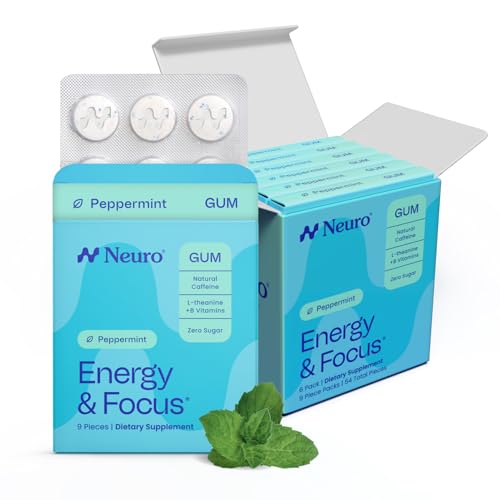
Neuro Gum is a caffeinated chewing gum sold by NeuroGum, Inc. that pairs 40 mg of caffeine with 60 mg of L-theanine in each piece. We pulled the label from the NIH supplement database, opened every human trial behind the caffeine plus theanine claim, and ran the price per 100 mg of caffeine against coffee and a plain tablet. The gum does what it says, but you pay a steep premium for the format, and the trials behind the theanine pairing used doses that do not match one piece. We have no relationship with the company or any brand named here; the picks at the end are the ones we would keep in our own family's desk drawer for a long drive.
Before you decide
Skip this product if you are pregnant or breastfeeding, under 18, or living with a heart rhythm problem, an anxiety disorder, or treated high blood pressure. The company's own FAQ says the gum is formulated for adults and is not recommended for anyone under 18, and the European Food Safety Authority's caffeine assessment sets a pregnancy ceiling of 200 mg of caffeine per day from all sources.
Caffeine also stacks. The FDA's consumer guidance on caffeine cites 400 mg a day for most adults as an amount not generally associated with negative effects, and notes that some medications and conditions raise sensitivity. Two pieces on top of two mugs of coffee can put you past that line before lunch.
This is general information, not medical advice; your doctor or pharmacist outranks any website, including this one.
Who is this page for? Adults who tolerate caffeine and want to know whether a $25 to $31 pack of gum is a smarter buy than a coffee or a tablet, and readers who heard a podcast ad and want the numbers first.
What Neuro Gum actually is
Neuro Gum is made by NeuroGum, Inc., the company named on the brand's terms of service page. The core product, Energy and Focus, comes as gum and mints in five flavors, with an Extra Strength version at 100 mg of caffeine per piece and a caffeine free Memory and Focus line. The flagship 40 mg piece is the one most people ask about, and the one we costed out.
The label on the NIH Dietary Supplement Label Database entry for the peppermint gum lists a serving of two pieces delivering 80 mg of natural caffeine, 120 mg of L-theanine, 1.4 mg of vitamin B6 and 4.8 mcg of vitamin B12.
Divided by two, that is 40 mg caffeine, 60 mg L-theanine, 0.7 mg B6 and 2.4 mcg B12 per piece, and the company's product page prints the same per piece figures with B6 at 41 percent and B12 at 100 percent of the daily value.
It is sugar free, sweetened with sorbitol, xylitol, sucralose, monk fruit and steviol glycosides, with spirulina for color. The DSLD entry filed in January 2025 does not list xylitol, so the blend has shifted between label versions. If you are avoiding a specific sweetener, read the pack in your hand, not a database.
A word on company history, because search results make a mess of it. The brand appeared on Shark Tank in its eleventh season, asked $750,000 for 5 percent, and left without a deal, per the company's own account of the episode. A trademark suit filed in April 2020 by a beverage company with a similar name was dismissed with prejudice after a settlement in November 2021; it was a dispute over the word, not over product safety.
A federal docket search also turns up a May 2026 case in New York that names NeuroGum, Inc. as defendant, but the docket lists no nature of suit and the only document attached to it concerns a different company, so we cannot say what it alleges. An openFDA enforcement search for the brand returns no recalls.
What you get per piece
All figures below are from the brand's own product pages and the NIH label database, checked in September 2026. The coffee row uses government price and caffeine data and the tablet row a manufacturer's list price, both explained in the next section.
| Product | Active mg per piece | Other actives | Sugar or sweetener | Pieces per pack | Price per piece | Price per 100 mg caffeine |
|---|---|---|---|---|---|---|
| Energy and Focus gum, 54 pack | 40 mg caffeine | 60 mg L-theanine, 0.7 mg B6, 2.4 mcg B12 | sugar free; sorbitol, xylitol, sucralose, monk fruit, stevia | 54 (6 packs of 9) | about $0.46 | about $1.16 |
| Energy and Focus gum, 90 pack | 40 mg caffeine | 60 mg L-theanine, 0.7 mg B6, 2.4 mcg B12 | sugar free; same blend | 90 (bulk bag) | about $0.34 | about $0.86 |
| Extra Strength gum, 54 pack | 100 mg caffeine | 60 mg L-theanine, B6 at 82% DV, B12 at 200% DV | sugar free; same blend, no gum arabic listed | 54 | about $0.56 | about $0.56 |
| Extra Strength gum, 90 pack | 100 mg caffeine | 60 mg L-theanine, B6, B12 | sugar free; same blend | 90 | about $0.41 | about $0.41 |
| Home brewed coffee, 8 oz | 95 to 200 mg caffeine | none added | none unless you add it | about 45 cups per pound at 10 g of grounds | about $0.21 per cup | about $0.10 to $0.22 |
| Caffeine tablet, 200 mg | 200 mg caffeine | none | none | 100 | about $0.10 | about $0.05 |
The Amazon listing for the 90 count gum repeats the 40 mg and 60 mg figures; its live price was not readable in our fetch, so the math above uses the brand's own site.
The cost, stated honestly
The 54 piece box is $24.99, about $0.46 a piece; the 90 piece bag is $30.99, about $0.34; the 180 piece bag is $61.98, the same $0.34, so the discount stops at 90. A subscription is advertised as 25 percent off but the price it prints is 21 percent off, bringing a 54 pack to $19.74, about $0.37 a piece. Whatever pack you pick, one piece costs between $0.34 and $0.46.
Now normalize to caffeine, because that is the ingredient doing the work. At 40 mg a piece you need two and a half pieces to reach 100 mg, so the 90 pack costs about $0.86 per 100 mg of caffeine and the 54 pack about $1.16. Extra Strength is cheaper per milligram, about $0.41 to $0.56 per 100 mg, because the same gum carries more caffeine.
Coffee is the reference most people use. The Bureau of Labor Statistics price series for ground roast coffee put the US city average at $9.30 a pound in August 2026. At 10 g of grounds per 8 ounce cup, a 454 g pound makes about 45 cups, about $0.21 each.
MedlinePlus gives an 8 ounce cup 95 to 200 mg of caffeine, so home brewed coffee lands at roughly $0.10 to $0.22 per 100 mg. The gum costs about four times as much as coffee per milligram of caffeine, and a cafe markup on the coffee side would narrow the gap without closing it.
A plain caffeine tablet is the floor. A widely sold 200 mg tablet lists at $9.98 for 100 on the manufacturer's site, $0.10 a tablet and about $0.05 per 100 mg. That makes the gum roughly 17 times the tablet price per milligram.
At a realistic two pieces a day (80 mg of caffeine), the 90 pack works out to about $21 a month, and three pieces a day burns exactly one 90 pack, $30.99. One home brewed cup a day is about $6 a month. The caffeine dose calculator shows how many pieces fit under your own ceiling.
What the trials actually measured
The pitch for pairing caffeine with L-theanine rests on a handful of small human trials, and none of them used the dose in one piece of this gum. The marketing leaves that gap out.
The most cited trial, a 2008 crossover study in Biological Psychology, tested 150 mg of caffeine with 250 mg of L-theanine. The combination gave faster simple reaction time, faster numeric working memory and better sentence verification accuracy than caffeine alone, with lower headache and tiredness ratings.
That is nearly four pieces of gum worth of caffeine and theanine, taken at once. Theanine alone in that study raised headache ratings and worsened serial subtraction, worth knowing if you assume the amino acid is harmless filler.
Two industry funded trials used doses closer to the gum. A 2008 study in Nutritional Neuroscience from Unilever researchers gave 27 volunteers 50 mg of caffeine with or without 100 mg of L-theanine; the pairing improved speed and accuracy on an attention switching task at 60 minutes and reduced distraction at 60 and 90 minutes.
A 2010 follow up from the same company tested 97 mg of L-theanine with 40 mg of caffeine in 44 young adults and found better task switching accuracy, higher alertness and less tiredness, with no effect on visual search, choice reaction time or mental rotation. That 40 mg matches one piece exactly, but the theanine dose was about 1.6 pieces worth, and both studies came from a consumer goods company that sold tea and had an interest in the result.
Is the pairing synergistic, more than the sum of its parts? The trial built to test that question says no, though the 2008 crossover did report one significant interaction, on delayed word recognition reaction time. A 2017 five way crossover in 20 men compared 200 mg of theanine, 160 mg of caffeine, the two together, a cup of black tea and placebo.
Recognition reaction time improved with theanine, with caffeine and with the combination, but there was no significant theanine by caffeine interaction. The authors call the effects additive: in that trial theanine alone improved reaction time about as much as caffeine alone, and neither multiplied the other.
The speed claim is better supported. A 2002 pharmacokinetic study from a US Army research institute gave 84 men 50, 100 or 200 mg of caffeine as gum or capsules. Peak blood levels arrived at 44 to 80 minutes for the gum versus 84 to 120 minutes for capsules, consistent with absorption through the lining of the mouth.
Relative bioavailability of the gum was only 64 percent at the 50 mg dose, so a 40 mg piece may deliver less than 40 mg into your blood, though the study found no statistically significant difference in total exposure between gum and capsule.
Chewing time matters too: a 2019 study in Food and Function found caffeine release rose with chewing time, 10 minutes beating 5 and 5 beating 2, with two blood peaks, one from the mouth and one from the gut. Spit the gum out after three minutes and part of the dose goes with it.
On side effects, one recent trial favors gum, but at a dose far above one piece. A 2025 trial in 16 resistance trained men used 4 mg per kg, roughly 280 mg for a 70 kg man, as gum or capsule.
Strength gains were the same, but gum produced less gastrointestinal discomfort (12.5 versus 37.5 percent) and no palpitations at 24 hours versus 25 percent for capsules. That is one small trial, and 280 mg is seven pieces of Neuro, which nobody should chew at once.
Who it is worth it for
The gum earns its price for a narrow set of people. If you need a small dose in your pocket with no kettle or cafe in reach, a piece at a desk or on a train beats a tablet for convenience, and the roughly 40 minute head start over a capsule is real. Someone who wants 40 to 80 mg on demand without brewing anything is the customer this product was built for.
It also suits people for whom coffee itself is the problem. If a mug upsets your stomach, the gum sidesteps the acid and the volume, and the small dose per piece makes it easy to stay under the EFSA single dose figure of 200 mg that raises no concern for healthy adults.
If the underlying problem is a broader energy slump, start with our review of supplements for energy and fatigue, because a stimulant does not fix iron, sleep or thyroid.
If you like the theanine effect, the cheapest way to get it is not this gum. A capsule costs a few cents, and the L-theanine dose calculator shows how 60 mg compares with the 100 to 250 mg used in trials.
Who should skip it
Anyone under 18 should skip it, full stop. The American Academy of Pediatrics clinical report on sports and energy drinks states that caffeine and other stimulants in energy drinks have no place in the diet of children and adolescents, and the company does not recommend the product for minors.
EFSA applies 3 mg per kg per day to children and adolescents, 150 mg for a 50 kg teenager, but a ceiling is not an invitation. A teen who is tired needs sleep, not a 40 mg pellet in a school bag.
Pregnant and breastfeeding readers sit under a 200 mg per day ceiling from all sources in the EFSA opinion, and coffee, tea and chocolate already eat into it. If you take medication for blood pressure, a heart rhythm condition, anxiety or sleep, ask a pharmacist first; our explainer on L-theanine and Xanax covers why the calming half of the formula is not a free pass either.
Skip it too if you drink coffee in the afternoon and your problem is sleep. A 40 mg piece at 4 pm is still caffeine at 4 pm. The caffeine cutoff calculator estimates when your last dose should land, and it does not care whether the caffeine came from a mug or a mint.
Then there are readers chasing a real jolt. One piece is less than half a weak cup of coffee. People who chew three or four to feel something are paying $1.00 to $1.85 for what a cup of drip delivers for a quarter.
What to look for when buying
Buy the 90 or 180 piece bag, not the 54 piece box of blister packs, unless you need the pocket format. The per piece price drops from about $0.46 to $0.34 and does not fall further with bulk. A subscription shaves another 21 percent, but set one up only after you know you will chew through 90 pieces in a month.
Check the strength on the pack. The regular gum is 40 mg; Extra Strength is 100 mg, looks nearly identical and costs less per milligram. Mixing them up in a pocket is the easiest way to double a dose by accident.
Chew each piece for at least five to ten minutes. The release study above showed a two minute chew leaves part of the dose in the gum, and that release is the whole reason gum beats a capsule on timing. Chewing with a mouthful of coffee also defeats the point.
Gum versus gummy versus pill comes down to dose accuracy, sweetener load and price per active milligram; our piece on whether gummy vitamins are as good as pills walks through them, and our review method explains how we cost every product against its label.

As an Amazon Associate, UsefulVitamins.com earns from qualifying purchases at no extra cost to you. We only recommend products supported by published research or third-party testing.
FAQ
How much caffeine is in Neuro Gum?
Each piece of the regular Energy and Focus gum has 40 mg of natural caffeine and 60 mg of L-theanine, per the NIH label database entry, which lists 80 mg and 120 mg for a two piece serving. The Extra Strength gum has 100 mg of caffeine per piece with the same 60 mg of theanine.
Is Neuro Gum safe?
For healthy adults who keep total caffeine under the 400 mg a day that the FDA and EFSA both cite, a few pieces a day is ordinary caffeine use. The risk is stacking: ten pieces is 400 mg on its own, and the company's own pages say not to exceed 400 mg from all sources.
Is Neuro Gum safe for kids or teens?
No. The company says it is formulated for adults and does not recommend it for anyone under 18, and the American Academy of Pediatrics states that the caffeine in energy drinks has no place in the diet of children and adolescents. A sleepy teenager needs an earlier bedtime.
Is Neuro Gum better than coffee?
Faster and smaller, not better. Gum reached peak blood caffeine in 44 to 80 minutes versus 84 to 120 for capsules in the 2002 Army study, but one piece holds less than half the caffeine of a weak 8 ounce coffee at about four times the price per milligram.
Does Neuro Gum interact with medications?
Caffeine can. The FDA notes some medications increase sensitivity to caffeine, and the theanine half may add to sedatives or blood pressure drugs in ways not studied in gum. If you take a prescription for your heart, blood pressure, anxiety or sleep, ask a pharmacist before making this a habit.
How long should you chew Neuro Gum?
At least five minutes, ideally ten. In a 2019 release study, caffeine released from gum rose with chewing time from 2 to 5 to 10 minutes, with two blood peaks, one from the mouth and one from the gut. A quick chew and spit wastes part of what you paid for.
The verdict
Neuro Gum is a legitimate product from a company with no recalls in the FDA enforcement database, and it delivers what the label says: 40 mg of caffeine and 60 mg of L-theanine per piece, absorbed faster than a swallowed dose. What it does not deliver is value.
At about $0.34 to $0.46 a piece you pay roughly $0.86 to $1.16 per 100 mg of caffeine, against about $0.22 for home brewed coffee and about $0.05 for a tablet. The theanine pairing behind the premium was tested at 100 to 250 mg, not 60, and the trial built to test synergy found the two ingredients add up rather than multiply.
Buy it if the format is the point: a small, fast, pocketable dose for people who cannot or will not drink coffee. Skip it if you are under 18, pregnant, on heart or blood pressure medication, already at your caffeine ceiling, or hoping a $31 bag of gum will do what $6 of coffee a month already does.
