|
Bottom line
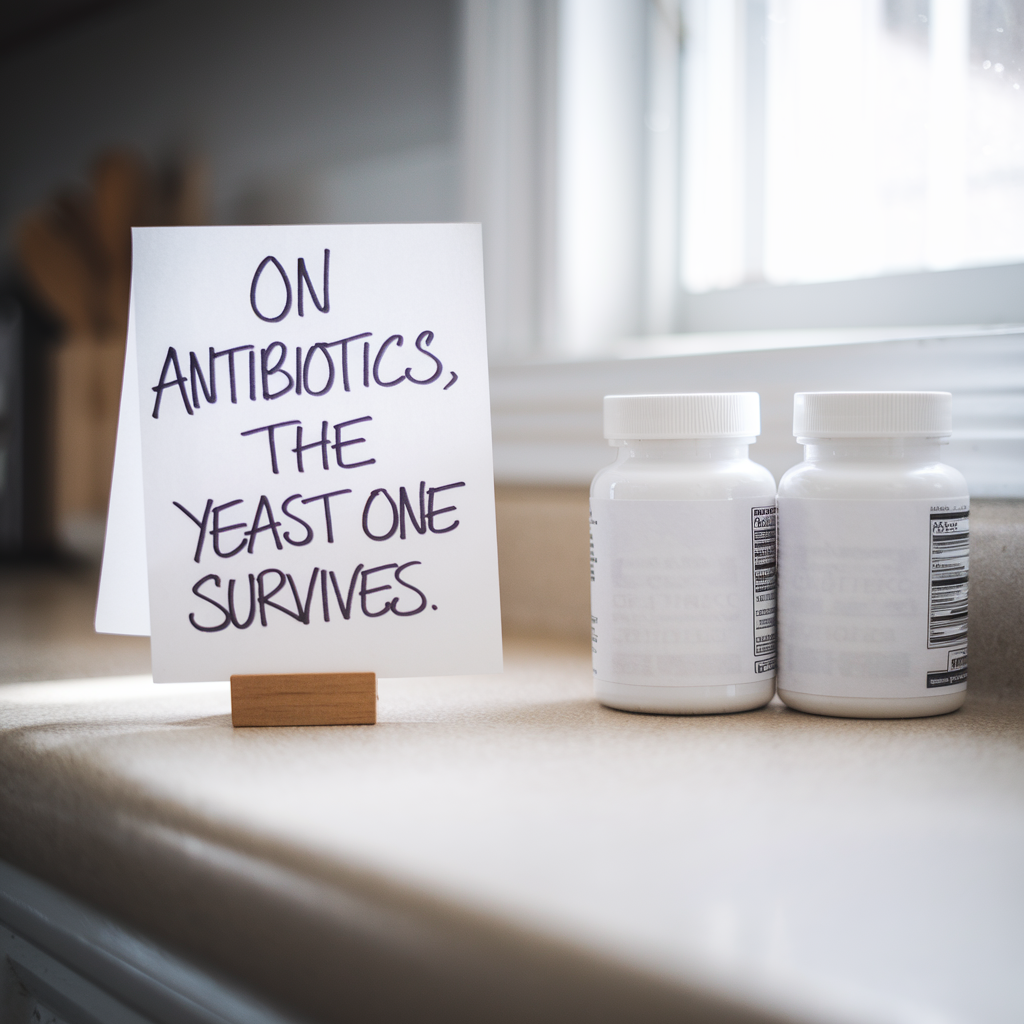
The decisive difference: Florastor is a yeast (S. boulardii CNCM I-745) that survives antibiotics; Culturelle’s LGG is a bacterium that antibiotics kill. On antibiotics pick Florastor; for ongoing gut maintenance either works.
- Pick Florastor if: you are on antibiotics or about to start a course, since antibacterial drugs cannot touch a yeast.
- Pick Culturelle if: you want a cheaper once-daily capsule for everyday maintenance, backed by one of the most-studied bacterial strains on the market.
- Skip both if: you are immunocompromised, seriously ill, or have a central IV line; talk to your doctor before any probiotic.
|
Affiliate disclosure: this article contains affiliate links. As an Amazon Associate, UsefulVitamins.com earns from qualifying purchases at no extra cost to you.
Most Florastor vs Culturelle comparisons list CFU counts and prices and call it a day. That misses the one fact that actually decides the question for most shoppers: Florastor is a yeast and Culturelle is a bacterium, and only one of those survives a course of antibiotics. Once you see the comparison through that lens, almost every "which one?" scenario answers itself. These are also the two probiotics we keep in our own family's medicine cabinet, so the recommendations below are the same ones we follow at home.
Before you decide
Neither product is a drug, and nothing here is medical advice. Probiotics are supplements with strain-specific evidence for narrow situations, not cure-alls, and the honest reading of the research supports them for some digestive problems and not others.
A few groups should skip both products until a doctor says otherwise. Anyone who is immunocompromised, critically ill, or has a central venous catheter should not take S. boulardii, because rare cases of yeast entering the bloodstream (fungemia) have been reported in exactly those patients. The same caution applies to bacterial probiotics like LGG for people with severely weakened immune systems. Pregnant readers, people with short bowel syndrome, and parents of infants should also check with a clinician first.
One more exclusion that surprises people: if you take a prescription antifungal such as fluconazole, Florastor is the wrong choice, because antifungals kill yeast the same way antibiotics kill bacteria. In that specific case the usual logic flips and a bacterial probiotic makes more sense.
This comparison is for the everyday buyer standing in a pharmacy aisle: someone holding a fresh antibiotic prescription, or someone who just wants a daily gut-support capsule and needs to know whether the price gap between these two brands buys anything real.
What you're actually buying
Florastor contains a single organism: Saccharomyces boulardii CNCM I-745, a freeze-dried probiotic yeast originally isolated from lychee and mangosteen fruit in the 1920s. Each capsule holds 250 mg of the yeast, which works out to roughly 5 billion live cells on labels that state a count. The suggested use on the brand's site is 2 capsules, 1 to 2 times daily, so the standard adult day is 500 mg minimum. The strain designation matters here: CNCM I-745 is the specific strain used in most of the published research, and generic "S. boulardii" products are not automatically equivalent. We cover the brand in more depth in our full Florastor review.
Culturelle Digestive Daily also contains a single organism: Lactobacillus rhamnosus GG, the strain catalogued as ATCC 53103 and usually shortened to LGG. Each capsule delivers 10 billion CFU plus 200 mg of inulin, a chicory-root prebiotic fiber, and the label dose is one capsule per day. LGG is arguably the most-studied probiotic bacterium in existence, with hundreds of human trials behind it. If you want the case for and against the brand on its own, we've written up whether Culturelle is worth it separately.
Do not read the CFU gap (10 billion vs 5 billion) as a quality verdict. Yeast cells are far larger than bacterial cells, and doses across the two organisms are not comparable on a CFU basis. The S. boulardii research was mostly run at 250 to 1,000 mg per day, which is exactly the range Florastor's label provides. What matters is whether each product matches the doses that worked in its own trials, and both do.
Both products are shelf-stable and neither requires refrigeration, which puts them on the convenient side of a divide we explain in our guide to shelf-stable vs refrigerated probiotics.
Head-to-head: what happens when antibiotics enter the picture
Here is the mechanism the marketing copy of both brands soft-pedals. Antibacterial antibiotics kill bacteria. LGG is a bacterium. Take Culturelle at the same time as amoxicillin and a meaningful share of that 10 billion CFU dies before it does anything. Culturelle's workaround, printed in its own usage guidance, is to take one capsule twice daily during a course and space the capsules away from the antibiotic doses, then continue for 10 days after the course ends.
Florastor has no such problem. S. boulardii is a yeast, and no antibacterial drug can kill it, so you can swallow it in the same sip of water as your antibiotic and the full dose arrives alive. That single biological fact is why S. boulardii shows up so often in hospital protocols alongside antibiotic prescriptions. Its known enemy is different: antifungal medication, which clears it out completely.
The clinical evidence tracks the mechanism. A 2015 meta-analysis of 21 randomized trials in Alimentary Pharmacology and Therapeutics covering 4,780 people found S. boulardii roughly halved the risk of antibiotic-associated diarrhea, cutting it from about 21% to 9% in children and from about 17% to 8% in adults, with a number needed to treat of 10. The benefit held in both children and adults, which is the detail worth remembering.
LGG's record on the same question is real but patchier. The companion 2015 meta-analysis of 12 LGG trials found the strain reduced antibiotic-associated diarrhea from 22.4% to 12.3% overall. Dig into the subgroups, though, and the effect was statistically significant in children but not in general adult users, reaching significance in adults only for the specific case of H. pylori eradication therapy. For an adult on a routine antibiotic course, the LGG evidence is simply thinner than the yeast evidence.
Two more data points round out the picture. A 2017 Cochrane review of 31 trials found probiotics as a class cut C. difficile-associated diarrhea from 4.0% to 1.5% in people on antibiotics, with the benefit concentrated in patients whose baseline risk exceeded 5%. And the American Gastroenterological Association's 2020 clinical practice guideline conditionally suggested a short list of specific strains, S. boulardii among them, for exactly this on-antibiotics population, while urging selectivity everywhere else.
One caution for parents: LGG's reputation took a genuine hit for treating stomach bugs that have already started. A large 2018 trial in the New England Journal of Medicine gave LGG or placebo to children who arrived in emergency departments with acute gastroenteritis and found no benefit at all: same illness severity, same diarrhea duration. Prevention during antibiotics and treatment of an active stomach bug are different jobs, and neither product has good evidence for the second one.
The numbers side by side
| Spec |
Florastor |
Culturelle Digestive Daily |
| Organism |
Yeast: S. boulardii CNCM I-745 |
Bacterium: L. rhamnosus GG (ATCC 53103) |
| Dose per capsule |
250 mg (about 5 billion CFU) |
10 billion CFU |
| Label serving |
2 capsules, 1-2 times daily |
1 capsule daily (2 daily during antibiotics or travel) |
| Survives antibacterial antibiotics |
Yes, can be taken simultaneously |
No, space doses hours apart |
| Killed by antifungal drugs |
Yes |
No |
| Added prebiotic |
None |
Inulin (chicory root), 200 mg |
| Refrigeration |
Not required |
Not required |
| Strongest evidence |
Antibiotic-associated diarrhea prevention in children and adults |
Antibiotic-associated diarrhea prevention in children; daily use |
| Typical cost per day |
About $0.85 to $2.50 |
About $0.60 |
The CFU row deserves one repeat warning: those two numbers describe different organisms at different cell sizes and cannot be compared head-to-head as a potency score.
Price per day: the honest math
Culturelle is the cheaper habit, and it is not close. A 30-count bottle runs about $18 on the brand's own site as of August 2026, and the label dose is one capsule a day. That is roughly $0.60 per day, and larger counts at warehouse clubs push it lower.
Florastor's sticker prices look similar until you do the serving math. A 20-count box runs about $19 to $25 at grocery chains as of August 2026, but the adult serving is 2 capsules daily, so a box lasts 10 days. That is roughly $1.90 to $2.50 per day. The economics improve sharply at Costco, where a 100-count bottle was recently about $43 after an instant savings promotion, working out to roughly $0.86 per day at 2 capsules daily.
The practical conclusion writes itself. For a 10-day antibiotic course, the total Florastor outlay is about $20, a reasonable one-time insurance premium against a week of diarrhea. As a 365-day daily habit, Florastor at small-box prices costs over $700 a year against Culturelle's roughly $220, and the daily-use evidence does not justify that premium for a healthy adult.
Who should pick Florastor (and who Culturelle)
Pick Florastor when antibiotics are involved. It is the only one of the two that works at full strength during the course itself, its adult evidence for preventing antibiotic-associated diarrhea is stronger, and the AGA's conditional strain list includes it for this exact situation. It is also the natural pick for people who react badly to bacterial probiotics, and its capsules can be opened and mixed into cool soft food for kids (Florastor's directions allow this, excluding hot or carbonated liquids).
Pick Culturelle for maintenance. A once-daily, $0.60 capsule of the most-studied probiotic bacterium is the sensible default for general gut upkeep, and it makes particular sense in households buying for kids, where LGG's pediatric evidence is at its best. The included 200 mg of inulin is a token prebiotic dose, but the direction is right; our explainer on prebiotics vs probiotics vs synbiotics covers why the combination approach matters more than that small number suggests. One caveat: people with IBS who react to FODMAPs occasionally notice gas from inulin, even at 200 mg.
There is no rule against owning both. A realistic household pattern is Culturelle as the daily driver and a box of Florastor in the cabinet for antibiotic courses. And if your comparison shopping is really Culturelle against other bacterial brands, our Align vs Culturelle breakdown covers that matchup strain by strain.
What to look for when buying
Check the strain, not just the species. The research applies to S. boulardii CNCM I-745 and L. rhamnosus GG specifically, and a bargain bottle listing only "S. boulardii" or "L. rhamnosus" is not automatically the same organism doing the same job. The NIH Office of Dietary Supplements fact sheet on probiotics is blunt that probiotic effects are strain-specific.
Check the CFU guarantee wording. A label promising CFU "at time of expiration" beats one promising CFU "at time of manufacture", because live counts decline in the bottle. Both brands here are shelf-stable, but heat still degrades them, so skip bottles that have obviously baked in a car or a sunny warehouse-store endcap.
Check the extras against your own gut. Culturelle's inulin is harmless for most people and unwelcome for some FODMAP-sensitive guts. Florastor's classic capsules contain lactose monohydrate as an excipient; the amount is small and the brand calls the product appropriate for lactose intolerance, but strict dairy avoiders should read the ingredient panel first.
Finally, buy from mainstream retail. Probiotics are a favorite category for gray-market resellers, and a capsule that spent a summer in an unconditioned warehouse can be a very expensive placebo.
As an Amazon Associate, UsefulVitamins.com earns from qualifying purchases at no extra cost to you. We only recommend products supported by published research or third-party testing.
FAQ
Can I take Florastor and Culturelle together?
Yes. The yeast and the bacterium do not interfere with each other, and no interaction between them is documented. That said, for most healthy adults running both daily is redundant spending; the sensible combination is Culturelle daily plus Florastor added during antibiotic courses.
Should I still take Culturelle during antibiotics?
You can, and the brand's own guidance is one capsule twice daily during the course, spaced away from antibiotic doses, continuing 10 days after. It is a workable plan with trial support in children. But Florastor removes the timing problem entirely, which is why it is our first choice for that specific window.
Do either of these need refrigeration?
No. Both are shelf-stable at room temperature, and neither label calls for refrigeration. Store both in a cool, dry spot away from sunlight, and avoid leaving them in hot cars.
Which is better for travel?
Either travels well since neither needs a fridge. For routine trips, Culturelle is cheaper and its label includes a travel protocol of two capsules daily. If your trip involves a real risk of needing antibiotics, pack Florastor too, for the reasons above.
Is Florastor safe with an antifungal prescription?
It is not known to be dangerous, but it is pointless. Antifungal drugs such as fluconazole kill S. boulardii, so the supplement is wasted money during treatment. Wait until the antifungal course is finished, or use a bacterial probiotic in the meantime, and ask your pharmacist about timing.
The bottom line
Florastor vs Culturelle is one of the rare supplement matchups with a clean, mechanism-based answer. On antibiotics, buy Florastor: the yeast survives the drugs, the adult evidence is stronger, and a course-length supply costs about $20. For everyday maintenance, buy Culturelle: once daily, about $0.60 a day, built on the most-studied probiotic bacterium there is. Remember that neither treats a stomach bug that has already started, and immunocompromised readers need medical sign-off before either. Skip generic knock-offs that abandon the studied strains. Match the product to the moment and both are honest tools.
-
The UsefulVitamins Editorial Team publishes practical, source-backed explainers on supplement tools, apps, safety workflows, and site methodology. Editorial work is operated by SIA Digital Publisher and follows UsefulVitamins review standards, with medical or nutrition credentials used only when a named author or reviewer can be verified.
View all posts
Editorial Team