

TL;DR
Peptides are short chains of amino acids (2–50 residues) that act as signaling molecules in the body. Some are FDA-approved drugs with gold-standard trials behind them, some are legal food-derived supplements like collagen with solid evidence for skin and joints, and some are grey-market "research" compounds the FDA is actively enforcing against. Which one you're hearing about matters enormously.
Affiliate disclosure: this article contains affiliate links. As an Amazon Associate, UsefulVitamins.com earns from qualifying purchases at no extra cost to you.
The short answer you came here for
If you've searched "what are peptides," you've probably run into two contradictory stories in the same week: one says peptides are a longevity miracle [your favorite longevity podcast host injects weekly], and the other says they're an unregulated grey-market mess the FDA is actively shutting down. The honest answer is: both are true, depending on which peptide you're asking about. The distinction determines whether you should be filling your Amazon cart, your bathroom shelf, or neither.
This guide breaks down what a peptide actually is at a molecular level, the four very different product categories that all share the name, what the research actually shows for each, and the 2026 regulatory picture after the NPR/TIME coverage and the April FDA advisory-panel announcement. You'll also get a decision framework for figuring out whether a specific peptide is worth your money, or worth a conversation with your doctor instead.
Summary / Quick answer: what are peptides and should you take them?
Peptides are biological signaling molecules. Some are legal, well-studied, and worth buying on Amazon. Others are grey-market compounds with little human data and active FDA enforcement.
- Best for: People specifically looking at collagen peptides (skin, joints, sarcopenia), topical GHK-Cu serums (skin elasticity), or FDA-approved peptide drugs (semaglutide, tirzepatide) with a prescription.
- Not ideal for: Anyone buying injectable "research peptides" (BPC-157, TB-500, CJC-1295, grey-market GLP-1s) from unregulated websites. The quality isn't verifiable and the legal status is shaky.
- What to look at before buying: Which of the four peptide categories you're in (see table below), whether human RCT evidence exists for your specific outcome, and whether the product is sold by a regulated seller.
- Decision shortcut: If the peptide you want is prescription-only or "research-use only," it's either a doctor conversation or a hard skip, not a cart-add.
What you'll find in this guide
- What peptides actually are
- The four kinds of peptides you'll hear about
- What the research actually shows
- Who peptides are for, and who should skip them
- Dosing: what's legal, what's not
- Side effects, red flags, and the grey market
- What's worth buying: an honest shortlist
- Frequently asked questions
What peptides actually are
A peptide is a short chain of amino acids, usually 2 to 50 residues long, held together by peptide bonds. Go past 50 residues and it's a small protein. Below that, peptides behave very differently from protein: they absorb faster, they often survive digestion in recognizable fragments, and they can act as direct biological messengers rather than simply being broken down to amino-acid building blocks.
Think of it like postage. A full protein is a sealed shipping container, it gets disassembled before anything inside becomes useful. A peptide is a postcard, short, specific, and sometimes delivered intact. That's why peptides can have drug-like effects at milligram doses while a protein needs grams.
What peptides do biologically depends entirely on their sequence. Some act as hormones (insulin is technically a peptide). Some are enzyme inhibitors, immune signals, collagen-synthesis triggers, or growth-factor mimics. A 2017 randomized crossover trial (Shaw et al., n=8) demonstrated this directly in humans: 15g of vitamin-C-enriched gelatin (a mix of small collagen peptides) taken one hour before exercise roughly doubled serum PINP, a blood marker of new collagen synthesis, compared to placebo. The peptides weren't just digested into amino acids. Specific fragments reached tissue and changed what cells did.
That's the actual mechanism story. It's also why "peptides" is a category, not a product, and why the rest of this guide walks through the four very different categories sharing the name.
Actionable takeaway: When someone says "peptides," ask them which one. The mechanism, the evidence, and the legality all vary by specific sequence, not by the word.
The four kinds of peptides you'll hear about
Here's the single most useful framing in this whole article. Four very different product categories share the name "peptide," the same way "vitamin C tablet" and "vitamin C serum" are the same molecule doing very different things in very different places.
| Category | Examples | Evidence level | Where to buy | Regulatory status |
|---|---|---|---|---|
| 1. Food-derived / dietary | Collagen peptides, whey hydrolysate, casein hydrolysate, PeptiStrong, lactoferrin | Multiple human RCTs | Amazon, grocery, supplement shops | Legal dietary supplement |
| 2. Topical cosmetic | GHK-Cu (copper peptides), Matrixyl 3000, Argireline, palmitoyl peptides | Moderate clinical; cosmetic claims only | Sephora, Amazon, skincare brands | Legal cosmetic |
| 3. FDA-approved drug | Semaglutide (Ozempic, Wegovy), tirzepatide (Mounjaro, Zepbound), tesamorelin, bremelanotide | Gold-standard phase 3 RCTs | Licensed prescription pharmacy | FDA-approved for specific indications |
| 4. Research / grey market | BPC-157, TB-500, CJC-1295, Ipamorelin, Selank, Semax, Epitalon, non-prescription GLP-1s | Mostly animal / preprint / anecdote | Unregulated websites, compounding pharmacies | FDA-restricted; active enforcement |
These categories are worth learning because a product being sold "as a peptide" doesn't tell you anything useful on its own. A $25 collagen powder on Amazon and a $250 vial of BPC-157 from an overseas website are not the same kind of purchase, and shouldn't be evaluated with the same lens.
Category 1: Food-derived peptides
These are peptides produced by partial digestion (hydrolysis) of dietary protein. Collagen peptides, hydrolyzed from bovine, marine, or porcine sources, dominate this category. They're regulated as dietary supplements, carry minimal safety risk at typical doses, and have the strongest human RCT base of any peptide you can buy over the counter.
Dose ranges come directly from clinical trials: most collagen studies use 2.5–15 g daily, depending on the outcome measured. Skin studies cluster at 2.5 g; sarcopenia and joint studies go higher. For the honest short-list of what works, see Best Collagen Peptides in 2026: 8 We'd Actually Buy.
Category 2: Topical cosmetic peptides
Cosmetic peptides are applied to skin. Copper peptides (GHK-Cu), Matrixyl 3000, and Argireline are the three you'll see on serum labels. Because they're cosmetics, they're regulated for safety but not for efficacy, meaning the legal bar is "doesn't hurt you" rather than "proves it works." Clinical data exist, but the effect sizes are modest and the trials are small. The good news: the downside risk is also low. A $25 copper-peptide serum that fails to impress isn't a health gamble.
If you're specifically curious about copper peptides, our Copper Peptides (GHK-Cu) Explained hub goes deeper on the Pickart–Margolina clinical data and the nano-carrier trial referenced later in this guide.
Category 3: FDA-approved peptide drugs
Insulin is a peptide. So is semaglutide. So is tesamorelin, and oxytocin, and bremelanotide, and the new wave of GLP-1/GIP agonists dominating obesity care. These are the peptides with real trials, real pharmacovigilance, and real safety data. They also require a prescription, a physician, and, in the case of GLP-1s, a conversation about indication, cost, and whether you actually fit the clinical picture.
The STEP 1 trial (Wilding et al. 2021, n=1,961) of semaglutide 2.4 mg weekly showed a mean body-weight change of -14.9% at 68 weeks versus -2.4% for placebo. The SURMOUNT-1 trial (Jastreboff et al. 2022, n=2,539) of tirzepatide showed -22.5% at the 15 mg dose. That is what "strong evidence" looks like in this field: large, placebo-controlled, phase 3, with named endpoints and clear effect sizes. Not testimonials.
For which specific peptides sit in this category today, see Which Peptides Are Actually FDA-Approved? The 2026 List.
Category 4: Research / grey-market peptides
This is where the controversy lives. BPC-157, TB-500, CJC-1295, Ipamorelin, MOTS-c, Semax, Selank, and compounded versions of FDA-approved GLP-1s from dubious sources all sit here. They're sold as "research peptides" (meaning "for lab use, not for human use", a label the industry treats as a legal fig leaf) or through compounding channels the FDA has been restricting.
The evidence base for most of these in humans is thin. Many claims rest on rodent studies or preprint-level work. And the 2026 regulatory picture is genuinely in motion, which we get into in the side-effects section below.
'Revolutionary' is doing a lot of work in the marketing for these compounds. The molecules are mostly decades old; the social-media moment is new.
Actionable takeaway: The first question before any peptide purchase is which category is this? Category 1 is a supplement decision. Category 2 is a skincare decision. Category 3 is a doctor conversation. Category 4 is a hard skip or a carefully-supervised compounding conversation with a licensed clinician, never a self-directed Amazon cart.

What the research actually shows
Let's line up the evidence tier by tier. The strongest human data comes from oral collagen peptides and from FDA-approved peptide drugs. Everything else sits at "moderate" or "thin."
Collagen peptides for skin
The best-studied commercial collagen peptide in cosmetic indications is VERISOL, a Gelita-manufactured specific bioactive collagen peptide. In a 2014 placebo-controlled RCT (Proksch et al., n=114), 8 weeks of 2.5 g daily VERISOL reduced eye-wrinkle volume by roughly 20% over placebo in women aged 45–65, with procollagen type I 65% higher and elastin 18% higher in the treatment group.
A companion trial from the same group (Proksch et al. 2014, n=69) measured skin elasticity specifically and found up to a 30% improvement over placebo after 8 weeks of 2.5 g or 5 g daily collagen hydrolysate. These aren't transformation-level numbers. They're more like the difference between a $40 sunscreen and a $25 sunscreen when both are worn daily: real, measurable, but modest.
Collagen peptides for joints and muscle
Joint-pain data come from athletes. A 24-week trial in 97 athletes with activity-related joint pain (Clark et al. 2008) found 10 g daily collagen hydrolysate reduced walking pain by -1.11 versus -0.46 with placebo (p=0.007), with six distinct pain parameters significantly improved.
For sarcopenia (age-related muscle loss), a 12-week RCT (Zdzieblik et al. 2015, n=53 elderly sarcopenic men) combined 15 g collagen peptides with resistance training and found fat-free mass gained +4.2 kg versus +2.9 kg in the placebo + training arm. Leg strength improvements were also significantly greater. This is one of the strongest pieces of evidence for collagen peptides doing something meaningful beyond cosmetics.
Topical copper peptides (GHK-Cu)
Clinical data on topical GHK-Cu are smaller and more variable but real. A review by Pickart and Margolina (2018) consolidates the key trials, including a randomized double-blind study (n=40, aged 40–65) where twice-daily GHK-Cu in a lipid nano-carrier reduced wrinkle volume by 31.6% versus Matrixyl 3000 (p=0.004) and 55.8% versus a vehicle-only serum (p<0.001) after 8 weeks. Wrinkle depth also decreased by about 33%. The trial population is small, bigger independent replications would strengthen the case.
FDA-approved peptide drugs for obesity
This is the tier where the language "the strongest human data" actually belongs. Once-weekly semaglutide 2.4 mg produced a 14.9% mean body-weight reduction at 68 weeks in the STEP 1 trial. Tirzepatide 15 mg produced a 22.5% mean reduction at 72 weeks in SURMOUNT-1. Both trials exceeded 1,900 participants, used placebo control, and hit pre-specified endpoints. That is "gold standard," and it's why these medications, despite the supply and access issues, have reshaped obesity care in three years.
Research peptides (BPC-157, TB-500, CJC-1295)
Here the evidence hierarchy drops. Most claims about BPC-157's healing effects come from rodent studies. Human trials are sparse, underpowered, or in preprint form. The same is true for TB-500 and Ipamorelin. Reports about effect are primarily anecdotal, posts on social media, podcast testimony, and vendor marketing. The FDA's current classification of BPC-157 as a Category-2 bulk drug substance (under Section 503A of the FD&C Act) cites potential immune reactions, impurity concerns, and the lack of human safety data. That's not an endorsement of a miracle; it's a statement that we don't know enough.
For the full evidence picture on one specific compound, see BPC-157: What the Research Actually Says.
Actionable takeaway: Match evidence tier to risk tier. Strong RCT evidence for collagen on skin + Amazon-legal supplement = very low risk, proceed if you want. Anecdote + preprint for BPC-157 + unregulated vendor = very high risk, don't.
Who peptides are for, and who should skip them
Pillar articles tend to pretend everyone is in the target audience. Let's not do that.
Strong fit for food-derived peptides:
- Post-menopausal women tracking skin elasticity decline (Proksch data is strongest here)
- Masters athletes or people with activity-related joint pain (Clark 2008)
- Adults 60+ with early sarcopenia doing resistance training (Zdzieblik 2015)
- People who already eat adequate protein and want a specific collagen effect on top
Strong fit for topical cosmetic peptides:
- Anyone building a basic skincare routine where adding a copper-peptide or Matrixyl serum wouldn't crowd out more important steps (sunscreen, retinoid if tolerated)
- People with fine lines or laxity who've already tried the evidence-first basics
Strong fit for FDA-approved peptide drugs:
- People with qualifying obesity/diabetes indications working with a physician
- Patients where the prescription pathway is financially accessible (insurance coverage for the newer GLP-1s remains inconsistent in 2026)
Skip if:
- You're considering research peptides (Category 4) and not working with a licensed clinician. The risk/reward is bad. Vendor quality is unverifiable, and the FDA has been actively enforcing.
- You're eating 1 g/kg protein from varied animal sources and expecting collagen peptides to transform you. The marginal benefit is narrower than the marketing suggests.
- You have seafood allergies (marine collagen carries cross-reactivity risk).
- You're pregnant or nursing and considering any peptide without medical supervision.
The real question isn't whether peptides "work", it's which peptide, for what outcome, and through which legitimate channel.
Dosing: what's legal, what's not
Dosing guidance here covers only food-derived and topical cosmetic peptides plus general educational context on FDA-approved drugs. For research peptides, no dosing protocol appears in this guide. That's a deliberate editorial choice, not a gap in knowledge.
Oral collagen peptides. Clinical trials cluster at 2.5–5 g/day for skin outcomes, 10 g/day for joints, and 15 g/day for sarcopenia contexts combined with resistance training. Most trials saw measurable effects at 4 weeks with more by 8 weeks; joint studies ran 24 weeks before final outcomes. Take with vitamin-C-containing food or drink, collagen synthesis requires it, and the Shaw 2017 design leaned on vitamin-C co-ingestion specifically.
Topical GHK-Cu and Matrixyl serums. Follow the product's label. Most serums are designed for once- or twice-daily application on clean skin, morning and/or evening. Stack order matters: water-based serums before oil-based, sunscreen last in the morning.
FDA-approved peptide drugs. Dosing is set by your prescriber based on indication, titration schedule, and tolerability. Semaglutide and tirzepatide both follow a multi-month titration specifically to minimize GI side effects, self-directed dose changes are a bad idea.
Research peptides. No legitimate self-directed dosing protocol exists for compounds like BPC-157, TB-500, CJC-1295, or non-prescription GLP-1s. Published studies that used specific regimens did so under ethics-committee-approved research conditions, not as guidance for consumers. If you're considering these compounds, that's a conversation with a licensed clinician, not a search for a forum protocol.
Side effects, red flags, and the grey market
Side-effect profile varies by category.
Oral collagen is well-tolerated. Clinical trials typically report occasional GI upset and nothing more. No meaningful drug interactions are documented for collagen peptides at typical supplement doses.
Topical peptides can cause contact irritation in sensitive skin, particularly at the first few applications. Patch-test behind the ear for two days if you're prone to reactions.
FDA-approved GLP-1s have a well-documented side-effect profile (nausea, constipation, rare pancreatitis signals, gallbladder considerations) that your prescriber will walk you through.
Research peptides are where red flags cluster. Sources include:
- Unverifiable product quality. "Research peptides" sold online are not regulated for identity, purity, or potency. Certificates of analysis can be fabricated. Contamination risk is real.
- Active FDA enforcement. The FDA lists BPC-157 and several other peptides under 503A Category 2, bulk drug substances that may present significant safety risks, making them ineligible for routine compounding. Enforcement against sellers has escalated through 2024–2026.
- Regulatory whiplash in 2026. An April 2026 FDA advisory-panel announcement and an HHS Secretary statement in February 2026 suggest a portion of the restricted list may be re-classified. The panel convenes in July. A changing list is not a safety signal, it's a process signal. Evidence quality is independent of regulatory status.
- Podcast-and-influencer pipeline. As Dr. Eric Topol noted in NPR's 2026 peptide coverage, "There isn't any meaningful data on these peptides." TIME's 2026 feature on "anti-aging peptide shots" similarly documents a marketing wave that has outrun the evidence base. Cultural visibility is not evidence of safety.
A supplement brand can look impressive on a label and still miss the basics. That applies triple to an injection bought from an unregulated website.
For the concrete "is this seller legal or not" question, see Where to Buy Peptides Legally in 2026.
What's worth buying: an honest shortlist
The pillar doesn't try to be a product roundup, the dedicated roundups do that better. But here are the three honest entry points, and what each exists to solve:
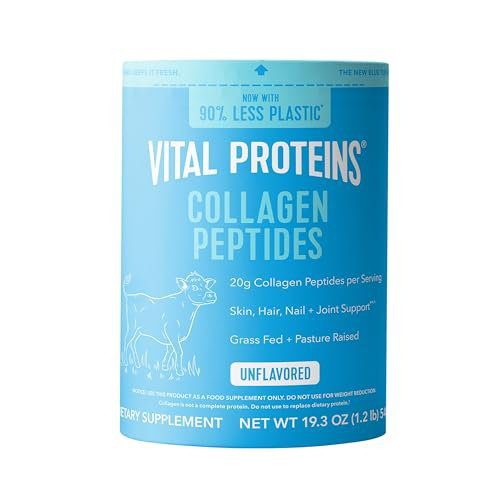
Vital Proteins Collagen Peptides Powder – Grass Fed Collagen Peptides for Hair, Nail, Skin, Bone & Joint Health, Unflavored, 27 Servings
Benchmark unflavored collagen peptide with third-party testing and clean sourcing, dissolves in coffee without clumping.
For collagen-curious readers: A basic unflavored collagen peptide powder, Vital Proteins remains the benchmark because of third-party testing, clean sourcing, and the fact that it dissolves in coffee without clumping. Use 10–15 g/day if joint or sarcopenia support is your goal; 2.5–5 g/day for skin outcomes alone. Skip if you're already hitting 1 g/kg protein from varied sources and expecting dramatic transformation, the evidence is real but modest.
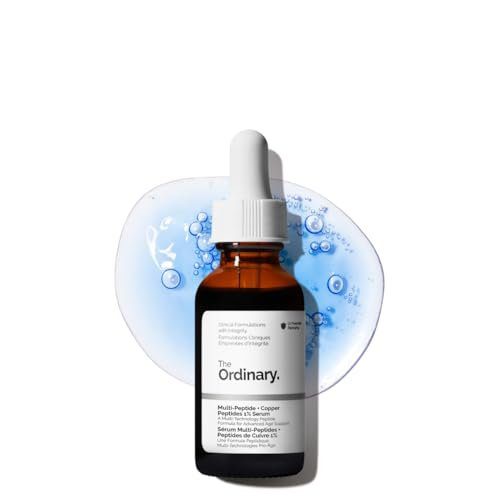
The Ordinary Multi-Peptide + Copper Peptides 1%, GHK-Cu Anti-Aging Serum for Fine Lines and Skin Elasticity, 1 Fl Oz
Accessible entry point into cosmetic peptides, layers after water-based actives and before oils without disrupting a basic routine.
For topical-curious readers: The Ordinary's Multi-Peptide + Copper 1% serum is the accessible route into cosmetic peptides. Layer after water-based actives, before oils and creams. Don't pair with direct vitamin C or strong acids in the same routine, copper chelates with those. Skip if your skincare basics (sunscreen, a retinoid if tolerated) aren't in place yet, adding a peptide serum to a weak base won't rescue it.
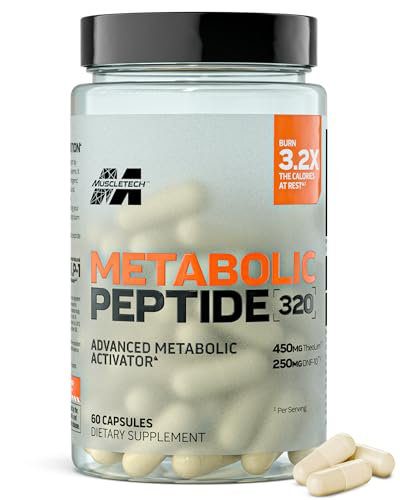
MuscleTech Metabolic Peptide 320 – Advanced Metabolic Activator Supplement Supports Natural GLP-1 Release for Weight Management & Energy Enhancement with TheoLim & DNF-10, 60 Count
Recovery-focused blend of hydrolyzed collagen plus amino acids aimed at post-training joint comfort, a convenience buy not a first pick.
For recovery/joint readers: A legal recovery-focused peptide blend (MuscleTech's Recovery Peptide or similar) built on hydrolyzed collagen + amino acids aimed at post-training joint comfort. Lower-evidence than plain collagen for the price, so it's a "convenience purchase" rather than a first recommendation.
For deeper commercial picks by category, start with Best Collagen Peptides in 2026 or the broader Best Peptide Supplements You Can Actually Buy in 2026.
As an Amazon Associate, I earn from qualifying purchases. Product recommendations are based on real reviews and independent research.
Frequently asked questions
What is the difference between a peptide and a protein?
Both are chains of amino acids, just different lengths. Peptides are typically 2–50 amino acids; proteins are longer. Functionally, peptides often act as signaling molecules (collagen fragments, hormones, growth-factor mimics), while proteins are structural or enzymatic. The same raw material can produce either depending on how far the manufacturer hydrolyzes it, which is exactly what "hydrolyzed collagen" means.
Are peptides legal in the US in 2026?
Depends on the peptide. Oral collagen peptides and topical cosmetic peptides (GHK-Cu, Matrixyl) are fully legal. FDA-approved peptide drugs are legal with a prescription. Several peptides, BPC-157, TB-500, CJC-1295, Ipamorelin, and others, sit on the FDA's 503A Category 2 list and are not eligible for routine compounding. An April 2026 FDA advisory-panel review is expected to reassess part of that list later in the year.
Do collagen peptides actually work for skin?
Yes, modestly, and the evidence is reasonable. Multiple RCTs (Proksch 2014 at n=69 and n=114) show 20–30% improvements in eye-wrinkle volume and skin elasticity versus placebo after 8 weeks at 2.5–5 g/day. The effect is real but not transformative, and it stacks on top of, not instead of, good sun protection and adequate dietary protein.
How fast do peptides work?
Varies by type and goal. Oral collagen shows skin effects at 4–8 weeks, joint effects at 12–24 weeks (Clark 2008). Topical GHK-Cu shows measurable wrinkle changes at 8 weeks. GLP-1s show weight loss within weeks of reaching therapeutic dose but continue losing for many months (68–72 weeks in STEP 1 and SURMOUNT-1).
Are peptides safe to inject?
FDA-approved injectable peptides (semaglutide, tirzepatide, tesamorelin) are safe to inject when prescribed and administered correctly. Non-prescription "research peptides" bought online are a very different question, product identity, purity, and potency are unverifiable, and the FDA has flagged safety concerns. The answer to "can I inject BPC-157 I bought from a website?" is: not responsibly, no.
Can peptides help with weight loss without a prescription?
Only indirectly. Oral collagen may preserve muscle during a deficit (Zdzieblik-style effect in sarcopenia populations). The meaningful weight-loss peptides, semaglutide, tirzepatide, and cousins, are prescription-only for a reason. Grey-market GLP-1s bought online carry quality and legal risk.
What does "research peptide" mean?
It's a labeling convention used by vendors to sell compounds that aren't approved for human use. The label technically reads "for research purposes only, not for human consumption." In practice the buyer is often a consumer, which is the legal problem the FDA has been chasing.
What's the honest best starting peptide?
For most readers without a specific medical indication: a 2.5–5 g daily collagen peptide powder if skin is the goal, or a basic copper-peptide or Matrixyl serum if cosmetic layering is the goal. Both are evidence-backed enough to justify the spend, inexpensive enough that a failed experiment doesn't sting, and carry effectively zero regulatory or safety risk.
If you are managing a protocol like this, StackMyMed (our companion app) keeps your doses, timing, and interaction checks in one place. It does not replace medical advice — bring the log to your clinician.
Conclusion: the bottom line on peptides
Peptides aren't one thing. They're four things sharing a name, a well-studied dietary supplement category, a moderate-evidence cosmetic category, a gold-standard prescription-drug category, and a murky grey-market mess. The confusion in the marketing is deliberate and profitable. The clarity you need is simple: figure out which category your peptide is in, and treat it accordingly.
Food-derived peptides are a reasonable spend for the right person. Topical cosmetic peptides are a low-stakes experiment. FDA-approved peptide drugs are a doctor conversation. Research peptides bought online are a skip.
Next steps:
- If you want a commercial starting point, read Best Collagen Peptides in 2026: 8 We'd Actually Buy
- If your interest is skincare, start with Copper Peptides (GHK-Cu) Explained
- If you're wondering about legal sourcing, see Where to Buy Peptides Legally in 2026
- If you specifically arrived here curious about BPC-157 or similar research compounds, read BPC-157: What the Research Actually Says before doing anything else
Related reading
- Best Collagen Peptides in 2026: 8 We'd Actually Buy (and 3 to Skip), the honest commercial shortlist for Category 1
- Copper Peptides (GHK-Cu) Explained: Why Every Skincare Brand Is Suddenly Obsessed, the cosmetic-peptide hub
- Best Peptide Supplements You Can Actually Buy in 2026 (Legally, On Amazon), cross-category buyer's guide
- BPC-157: What the Research Actually Says (and Why the FDA Keeps Enforcing), the research-peptide flagship
- Which Peptides Are Actually FDA-Approved? The 2026 List, regulatory reference
- Where to Buy Peptides Legally in 2026, legal sourcing hub
This article is for informational purposes and not medical advice. Peptides, especially those marketed for therapeutic use, can interact with medications and health conditions. Consult a licensed physician before starting any supplement, particularly if you are pregnant, nursing, taking prescription medications, or managing a chronic condition.
