
If your stomach feels “off” more often than you’d like – bloating after meals, irregular bathroom habits, or a sensitive gut that seems to react to everything – the right gut health supplements can help, especially when they’re matched to your specific symptoms. The catch is that “gut support” is not one thing. Different ingredients work through different pathways: adding helpful bacteria, feeding them, or helping you break down food more comfortably. This article breaks down what to take, what to skip, and how to build a simple, science-informed plan.
Summary / Quick Answer
The best gut health supplements usually fall into 4 categories, and the “best” choice depends on your goal:
- Probiotics (specific strains): May help with bloating, diarrhea, and IBS-type symptoms when the strain and dose match the issue.
- Prebiotics (targeted fibers): Feed beneficial gut bacteria and may improve regularity, but can worsen gas if you ramp up too fast.
- Postbiotics: Non-living bacterial compounds that may support comfort and the gut-brain connection, often with fewer side effects.
- Digestive enzymes (sometimes with greens powders): Can reduce meal-related discomfort for some people, especially with heavier meals.
A practical starting point: choose one primary product (a probiotic or synbiotic), add fiber slowly, and reassess after 4-8 weeks. For strain-specific picks, see our best probiotics comparison.
Gut health supplements: what actually works (and for whom)
Most people shop for gut support as if the gut is one simple organ. It’s more like a busy neighborhood – stomach acid, bile, enzymes, the intestinal lining, and the gut microbiome all influence how you feel day to day.
That’s why the same supplement can feel life-changing for one person and useless (or gassy) for another. The goal is to match the tool to the problem.
The 5 main categories (with the “why” behind each)
Here’s a quick framework you can use before you buy anything.
| Supplement type | What it does | Who it’s best for | Common watch-outs |
|---|---|---|---|
| Probiotics | Adds live microorganisms | IBS-type symptoms, diarrhea, travel gut issues | Wrong strain = no effect |
| Prebiotics | Feeds beneficial microbes | Constipation, low fiber diets | Gas/bloating if increased too fast |
| Synbiotics | Probiotic + prebiotic | People who want a “two-in-one” | Still may cause gas early |
| Postbiotics | Microbial byproducts (non-living) | Sensitive guts, gut-brain goals | Product quality varies |
| Digestive enzymes | Helps break down food | Meal-related heaviness, occasional discomfort | Not a fix for chronic GI disease |
Research consistently shows that strain specificity matters for probiotics. A well-studied strain at an effective dose is more meaningful than a random mix with a huge CFU number. Consumer health reviews summarize this pattern clearly, including in Healthline’s evidence-based probiotic guide and BBC Good Food’s probiotic supplement review methodology.
If you are stacking a few supplements for this, StackMyMed (our companion app) tracks what you actually take, schedules the best time for each one, and flags any combinations worth a second look.
Actionable takeaway
Before choosing a product, write down your top goal:
- “Less bloating after meals”
- “More regular bowel movements”
- “Support during/after antibiotics”
- “IBS-type symptoms”
- “General digestive comfort + immune support”
Then pick one supplement category that best matches that goal. If bloating is your main issue, start with our targeted guide to the best probiotics for bloating.
Probiotics and synbiotics: how to choose strains, CFUs, and formats

Garden of Life Probiotics for Men, Dr Formulated 50 Billion CFU 15 Probiotics for Digestive Health + Organic Prebiotic Fiber, Colon & Immune Support, Daily Gas Relief, Shelf Stable, 30 Capsules
Garden of Life Dr. Formulated Probiotics for Men delivers 50 billion CFU from 15 diverse probiotic strains in a once-daily shelf-stable capsule, formulated specifically to support men’s digestive health, colon function, and immune response. The formula includes Lactobacilli and Bifidobacteria plus organic prebiotic fiber, with no refrigeration needed for convenience.
If you’ve ever stared at a probiotic label and thought, “Is 100 billion CFUs automatically better?” you’re not alone. CFUs (colony-forming units) matter, but they’re not the main driver of results.
What tends to matter more:
- Strain (the full name, not just the genus)
- Dose used in studies
- Delivery (capsule tech, survival through stomach acid)
- Consistency (daily use long enough to judge)
Many reputable products land in the range of roughly 10-60 billion CFUs per serving, which aligns with what you’ll see in consumer-facing evidence summaries like Fortune’s overview of top probiotic supplements and clinical-oriented roundups.
Strain specificity: the part most labels hide in plain sight
A probiotic name should look like this: Lactobacillus rhamnosus GG (genus + species + strain)
That last part (GG) is the strain identifier. It’s often the difference between “promising evidence” and “unknown.”
Examples frequently discussed in gut research and summaries include:
- Lactobacillus rhamnosus GG: studied for diarrhea support and IBS-related outcomes in multiple human trials.
- Bifidobacterium longum strains (including CECT variants): studied for bloating and comfort in certain populations.
For a practical breakdown of how to interpret labels and pick a product, use our probiotic dosage and timing guide.
Probiotic formats: delayed-release, shelf-stable, and liquids
A high-quality product should clearly state:
- CFU count at end of shelf life (not just “at manufacture”)
- Storage requirements (shelf-stable vs refrigerated)
- Third-party testing and GMP manufacturing
Liquid probiotics can work for some people who dislike capsules, but stability and dosing consistency matter. Capsules with delayed-release or acid-resistant technology may improve survival through stomach acid.
Quick “buying checklist” (visual)
- Does it list full strains (not just “Lactobacillus blend”)?
- Does it give a CFU count with clear timing?
- Does it mention GMP and independent testing?
- Does it match your goal (bloating vs diarrhea vs general support)?
- Can you commit to 4-8 weeks of consistent use?
Actionable takeaway
Choose one probiotic or synbiotic with clearly listed strains and a realistic dose. Track 2 symptoms (for example: bloating score 1-10, stool frequency) for 30 days before you switch products.
Prebiotics, fiber, and “fibermaxxing”: when feeding your microbiome helps (or backfires)
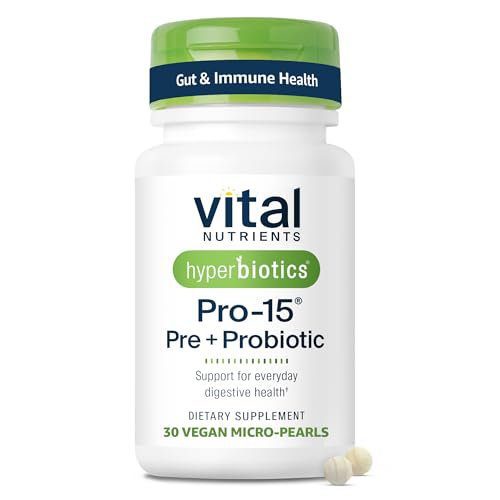
Hyperbiotics Vital Nutrients Pro-15 Prebiotics and Probiotics for Women and Men | 15 Science Backed Strains | Supports Occasional Constipation, Diarrhea, Gas & Bloating | 30 Vegan Time Release Pearls
Hyperbiotics PRO-15 stands out with its 15 diverse strains and patented Bio-tract technology for superior stomach acid survival, earning a solid 4.5-star rating from over 12,400 Amazon reviews where users frequently highlight reduced bloating and better regularity. While pricier at around $26, its refrigeration-free convenience and targeted upper GI delivery make it a strong affiliate pick for those seeking premium probiotic support backed by consistent positive feedback.
A lot of gut discomfort starts with a simple gap: not enough fermentable fiber. Prebiotics are specific fibers that your gut microbes use as fuel, which can shift the microbiome over time.
This matters because gut microbes don’t just “live there.” They produce compounds that interact with the gut lining, immune signaling, and even motility. In other words, feeding the right microbes can change how the system behaves.
Interest in fiber is rising fast. Industry reporting notes that a large share of consumers are actively trying to increase fiber intake, driving trends like “fibermaxxing,” as covered in NutritionInsight’s gut health trends report.
The common mistake: adding fiber too quickly
Prebiotic fibers can be extremely helpful, but they’re also the most likely to cause temporary gas and bloating – especially if your baseline fiber intake is low.
Think of it like turning on a compost machine. If you dump in too much at once, you’ll smell it.
Prebiotic options you’ll see on labels
Common prebiotic ingredients include:
- Inulin (often effective, but can be gassy for some)
- Partially hydrolyzed guar gum (PHGG) (often better tolerated)
- Resistant starch
- Psyllium husk (more of a bulking fiber, still helpful for regularity)
If you have IBS or are FODMAP-sensitive, inulin can be a problem. PHGG or psyllium may be gentler starting points, but individual response varies.
A simple ramp-up plan (visual)
| Week | What to do | What to watch |
|---|---|---|
| 1 | Add 2-3 g/day of a gentle fiber | Gas, cramping, stool changes |
| 2 | Increase by 1-2 g/day if tolerated | Bloating after meals |
| 3-4 | Hold steady and assess | Regularity, comfort |
| 5-8 | Adjust dose or switch type | Symptom trend, not daily noise |
Actionable takeaway
If you want to try prebiotics, start low and go slow. Pair them with water and meals, and give your gut at least 2-4 weeks before judging results.
Postbiotics, enzymes, and greens powders: smart add-ons for comfort and consistency
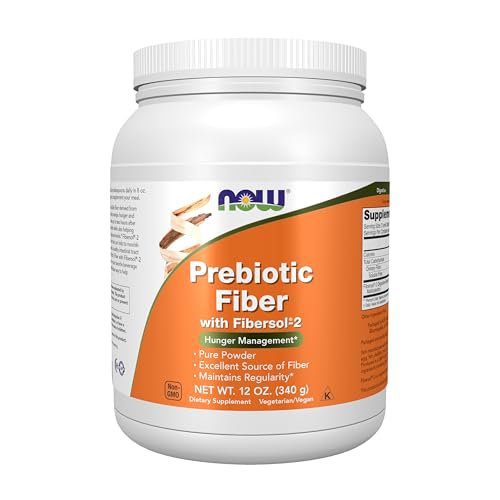
NOW Foods Supplements, Prebiotic Fiber with Fibersol-2, derived from Non-GMO corn, Powder, 12-Ounce
NOW Foods Prebiotic Fiber with Fibersol-2 is a powder derived from non-GMO corn that acts as a prebiotic to nourish gut bacteria and fits into discussions on gut health support. Each serving delivers 11g soluble fiber in a 12-ounce container with about 28 servings. It mixes tasteless into drinks without altering flavor.

Zenwise Health Digestive Enzymes with Bromelain & Papaya – Multi Enzymes Digestion Supplement with Probiotics & Prebiotics for Gut Health, Gas & Bloating Relief – Men & Women – 180 Vegetarian Capsules
Zenwise Health Digestive Enzymes combines bromelain, papaya, probiotics, and prebiotics in a 180-capsule bottle designed to support digestion and reduce bloating. The formula works within hours, with users reporting smoother digestion and less gas, though you need to take one capsule before meals for best results.
Not everyone does well with live bacteria supplements. Some people feel more bloated, especially early on. That’s where postbiotics and enzymes can be useful.
Postbiotics are compounds produced by beneficial microbes (or inactivated microbes and their components, depending on the definition used). Since they’re not live organisms, they can be easier to formulate and sometimes better tolerated.
Interest in postbiotics and next-generation “biotics” is growing, including for the gut-brain connection, as discussed in NutritionInsight’s coverage of emerging gut ingredients.
Digestive enzymes: who they may help most
Digestive enzymes are not the same as probiotics. They don’t change your microbiome directly. They help you break down food components that may otherwise ferment or sit heavily.
They may be useful if:
- You feel overly full after normal-sized meals
- You get discomfort after higher-fat or higher-protein meals
- You notice symptoms tied closely to specific foods
They’re not a substitute for diagnosing lactose intolerance, celiac disease, or inflammatory bowel disease. If symptoms are persistent, medical evaluation matters.
Greens powders: convenient, but read the label carefully
Some greens powders combine:
- concentrated plant ingredients
- added fiber
- probiotics
- digestive enzymes
This can be convenient for people who struggle to eat enough plant variety. But “greens” doesn’t automatically mean gut-friendly. Some formulas are heavy on fermentable fibers or sugar alcohols that can worsen bloating.
Interaction check (visual)
Before stacking products, check for:
- Fiber + probiotic + prebiotic all at once (higher chance of gas early)
- Magnesium (can loosen stools depending on form and dose)
- Iron (often rough on the gut, may cause constipation)
If you take multiple supplements, use our nutrient interactions guide to avoid combinations that commonly cause GI side effects.
Actionable takeaway
If probiotics make you feel worse, consider a “comfort-first” approach: digestive enzymes with meals, then consider postbiotics or a lower-dose probiotic later.

A practical 4-8 week protocol (plus common mistakes to avoid)
Gut supplements work best when you treat them like a short experiment, not a random grab bag. The microbiome can shift, but it usually takes consistency and time.
A realistic expectation for many people is 4-8 weeks to notice steadier improvements, especially for bloating patterns and regularity. Day-to-day changes can be noisy, so focus on trends.
The 4-step protocol (visual)
| Step | Weeks | What to do | Why it works |
|---|---|---|---|
| 1. Pick one “anchor” | 1-2 | Choose a probiotic or synbiotic | Limits variables so you can judge effect |
| 2. Add gentle fiber | 2-4 | Add a low dose prebiotic or psyllium | Supports long-term microbiome changes |
| 3. Support meals | 1-8 | Use enzymes as needed with trigger meals | Reduces discomfort while habits improve |
| 4. Reassess | 6-8 | Keep, adjust, or switch strains | Prevents “supplement hopping” |
For a more detailed plan you can follow week by week, see our gut health supplement protocol.
Common misconceptions that waste time and money
Mistake 1: “Higher CFUs always mean better results.”
CFUs can matter, but strain and delivery matter more. A smaller dose of a studied strain can outperform a massive, generic blend.
Mistake 2: “Probiotics alone fix everything.”
If your diet is very low in fiber, you may be adding bacteria without feeding them. Many people do better with a combined approach (synbiotic or probiotic plus gradual fiber).
Mistake 3: “If it doesn’t work in 3 days, it never will.”
Some benefits are fast (like certain diarrhea support). Others, like bloating patterns and regularity, often take weeks.
Mistake 4: “All greens powders are the same.”
Some contain ingredients that can trigger gas in sensitive people. Always check for fermentable fibers and sweeteners.
When to get medical input instead of self-treating
Consider professional evaluation if you have:
- unexplained weight loss
- blood in stool
- persistent severe pain
- ongoing diarrhea or constipation that doesn’t improve
- symptoms that wake you at night
Actionable takeaway
Run one controlled experiment at a time. Keep a simple log (food triggers, stool pattern, bloating score), and reassess at week 6 before switching.
Conclusion
The best gut support rarely comes from a single “miracle” product. The most reliable approach is matching the supplement type to your goal, choosing strain-specific probiotics when appropriate, and increasing fiber slowly enough that your gut can adapt.
If you want help narrowing options, start with our best probiotics comparison and then use the probiotic dosage and timing guide to set up a consistent routine. For bloating-specific picks, the best probiotics for bloating guide can help you choose more confidently.
As an Amazon Associate, I earn from qualifying purchases. Product recommendations are based on real reviews and independent research.
