
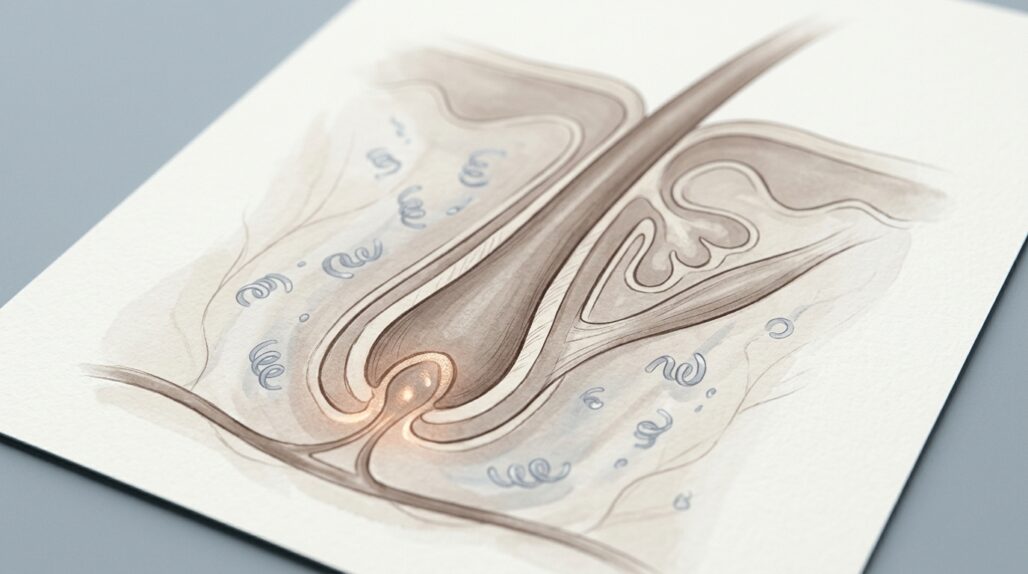
If you have been scrolling hair-loss TikTok and seeing copper peptide scalp serums appear in every other before-and-after post, the short answer is: the mechanism has plausible biology behind it, the actual human scalp RCT evidence is thin, and the existing regulatory-approved treatments (minoxidil, finasteride) have far stronger trial backing. Copper peptides for hair are reasonable to try if you have realistic expectations, but they are not a substitute for a proper hair-loss evaluation or the treatments that actually have published efficacy data. You will also get an honest look at what the research shows, why the category has surged despite thin evidence, and which three scalp serums make sense if you still want to experiment.
Affiliate disclosure: this article contains affiliate links. As an Amazon Associate, UsefulVitamins.com earns from qualifying purchases at no extra cost to you.
Summary / Quick Answer: do copper peptides actually grow hair?
The mechanism is real (fibroblast and dermal-papilla signaling in lab models). The human scalp evidence is limited. Copper peptides are a reasonable adjunct if your expectations are appropriate and your hair loss does not have a medical cause that needs physician evaluation. Here is the honest break-down.
Reasonable to try
- Early or mild hair thinning where you want to stack multiple low-risk interventions
- Anyone already using minoxidil looking for an adjunct with different proposed mechanism
- Skin-barrier or scalp-health concerns that might benefit from GHK-Cu's general signaling effects
Not reasonable as a replacement for
- Minoxidil for androgenetic alopecia (minoxidil has FDA approval and large-scale RCT backing)
- Finasteride for male-pattern hair loss (when prescribed appropriately)
- A dermatologist evaluation if hair loss is sudden, patchy, or accompanied by scalp changes
Skip if
- Your hair loss has a medical cause (thyroid, iron deficiency, autoimmune, drug-induced, telogen effluvium)
- You expect visible regrowth in weeks rather than months
- You are considering this as a primary treatment for diagnosed alopecia
Decision shortcut
- Realistic adjunct experiment: Skin Perfection GHK-Cu Hair Serum, 12 weeks minimum
- Routine-friendly daily scalp treatment: Neurogan Copper Peptide Hair Serum
- Lowest-commitment test of the peptide category: The Ordinary Multi-Peptide (lash and brow SKU)
What the research actually shows for copper peptides on scalp
The mechanism story is well-supported in cell culture. In Pickart et al. 2015 (PMID 26236730), the authors review how GHK-Cu stimulates fibroblast proliferation and collagen synthesis, modulates dermal matrix production, and exhibits antioxidant and anti-inflammatory activity in skin cells. Dermal papilla cells (the cluster of fibroblast-like cells at the base of each hair follicle that regulate hair-growth cycling) express similar receptors and respond to similar signaling pathways, which is the mechanistic bridge from "works in skin" to "might work on hair."
The human scalp evidence is where the story thins out. Published RCTs specifically testing topical GHK-Cu on human scalp for hair regrowth are few, small, and mostly either industry-funded or underpowered. One area where evidence is stronger is wound healing and post-hair-transplant recovery, where GHK-Cu has been studied in small trials for scalp healing quality. Regrowth of hair in androgenetic alopecia specifically has thin published data.
What this means in practice: the mechanism story you will hear on TikTok (copper peptides wake up dormant follicles) is drawn from in vitro work and adjacent dermal research, not from published human scalp RCTs. The real question is not whether GHK-Cu does something to dermal papilla cells in a petri dish (it does) but whether a topical serum at typical concentrations delivers enough of it through the scalp stratum corneum to the follicle base to produce measurable regrowth.
Actionable takeaway: The biology is interesting. The clinical evidence for hair specifically is not strong enough to recommend copper peptides as a primary hair-loss treatment. Treat them as an adjunct or experiment, not a replacement for evidence-backed options.
Why the TikTok surge
Understanding the cultural moment helps calibrate expectations. Three things converged.
Minoxidil fatigue. Minoxidil works, but it requires continuous indefinite use, has a rebound shedding phase early in treatment, and makes some users uncomfortable (scalp irritation, foam texture, hair feel). The search for alternatives is real, and copper peptides became one of the leading candidates.
Skincare-to-scalp crossover. The skin-care community's embrace of peptides generally, and copper peptides specifically for dermal density, created an organic crossover when users started applying their face serums to receding hairlines. The content that resulted was shareable regardless of whether the outcomes held up under controlled observation.
Before-and-after content dynamics. Hair regrowth content rewards dramatic framing. Lighting, angle, and timeline selection can make ordinary seasonal variation look like treatment effects. Copper peptide before-and-afters are often honest attempts but vulnerable to the usual before-and-after biases that affect all hair and skincare content.
Any supplement category that gets marketed this aggressively deserves skepticism. The cultural moment is not evidence of efficacy; it is evidence of demand for alternatives, which the market is responding to faster than the clinical literature.
Actionable takeaway: Use the surge as a signal that something interesting is happening in the market, not as proof that the products work. The current evidence base would not support this much confidence if the topic were being evaluated purely on published trial data.
Copper peptides vs minoxidil: honest comparison
If you are deciding between treatments, the comparison to minoxidil is the one that matters.
Minoxidil is FDA-approved for androgenetic alopecia at 2 percent and 5 percent topical formulations (Rogaine and generics), with decades of placebo-controlled RCTs showing modest but reliable regrowth in a subset of users. The mechanism involves vasodilation at the follicle and extension of the anagen (growth) phase of the hair cycle. The evidence base is one of the strongest in consumer hair care.
Copper peptides lack FDA approval for hair loss specifically and do not have equivalent trial backing. The proposed mechanism (dermal papilla signaling, collagen matrix support, antioxidant effect on follicle) is plausible and biologically reasonable but not established in clinical outcomes at the scale or quality of minoxidil data.
The honest framing is not "choose one." Copper peptides and minoxidil work through different proposed mechanisms and can be stacked if your scalp tolerates both. The question is what you use as your foundation. Minoxidil is legitimate for hair loss, but the tradeoff is continuous long-term use and early shedding phase. Copper peptides make a reasonable adjunct if you are already using minoxidil or if your loss is mild and early. Copper peptides as a standalone first-line treatment, without minoxidil or a dermatologist evaluation, is not supported by the evidence.
Actionable takeaway: If hair loss is concerning enough to buy a treatment, the treatment with the strongest evidence should be the floor of your routine. Copper peptides are better as a second-layer adjunct than as a first-line replacement.
Who this is reasonable to try
Three buyer profiles where copper peptide scalp serums make sense.
Early or mild thinning. If you notice slight thinning at the crown, widening part, or hairline and you want to try a low-commitment intervention before escalating to minoxidil or dermatologist visits, copper peptides are low-risk. Treatment is topical, inexpensive relative to clinical alternatives, and safe at normal use patterns.
Minoxidil stackers. If you already use minoxidil and want to add a second-mechanism adjunct, copper peptides are a reasonable addition. Apply at a different time than minoxidil (morning vs night works) to avoid formulation interactions. Expect modest additive benefit at best.
Scalp-health-focused users. If your concern is scalp barrier, sensitivity, or post-treatment recovery (after microneedling or hair transplant), GHK-Cu's better-established wound-healing and barrier-supporting activity justifies the experiment more than its hair-regrowth story does.
Three buyer profiles where copper peptides are the wrong tool.
Sudden or patchy hair loss. Alopecia areata, telogen effluvium, and other non-androgenetic causes of hair loss need dermatological evaluation. A scalp serum is not the right tool and delaying evaluation costs you time.
Medical-cause suspicion. Thyroid dysfunction, iron deficiency, certain medications, and postpartum or stress-related shedding have specific medical workups. Bloodwork and clinical evaluation come first.
Primary treatment expectations. If you expect copper peptides to work like minoxidil at 4 months and be your only intervention, the evidence base will disappoint you.
Actionable takeaway: Match the treatment to the diagnosis. Copper peptides are a reasonable adjunct or low-stakes first trial for appropriate cases, not a diagnostic substitute or a first-line intervention for moderate to severe loss.
Our 3 scalp serum picks
If copper peptides for hair are right for your situation, these are the three worth ranking.
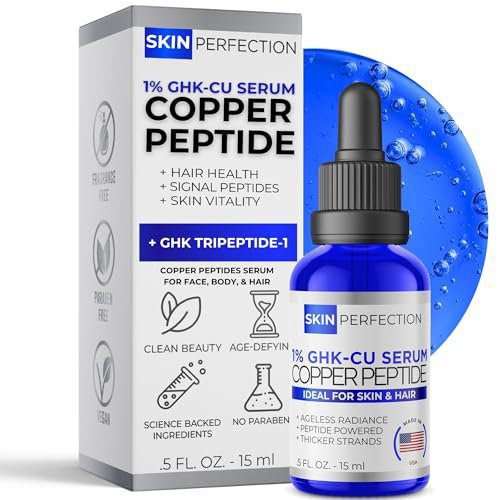
Skin Perfection GHK-CU Copper Peptides Serum for Face & Hair – Copper Peptide for Skin, Hair & Scalp – 1% Blue Liquid for Face, Neck, Body, and Scalp – Multi-Use Serum Booster with Dropper 0.5 fl oz
Most-cited scalp-focused pick with disclosed GHK-Cu concentration, designed as a scalp serum rather than a repurposed face product, with packaging that preserves peptide stability.
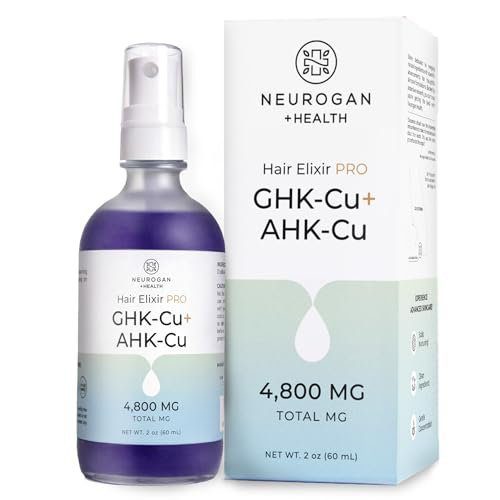
Neurogan GHK-Cu + AHK-Cu Hair Serum Pro – Lightweight Scalp Serum with Dual Copper Peptides – Daily Hair & Scalp Use, Cosmetic Product
Routine-friendly pick with a peptide blend including GHK-Cu, designed to be applied to scalp between washes without heavy texture or strong scent.
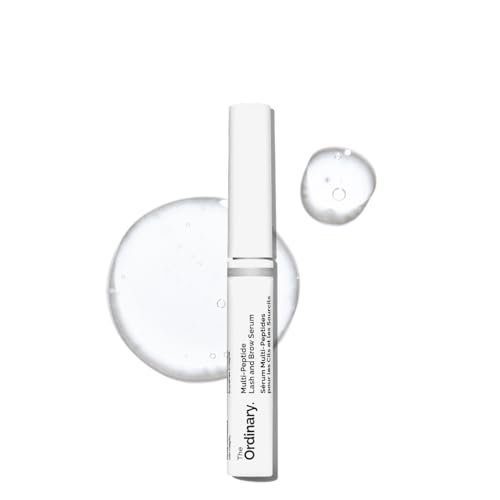
The Ordinary Multi-Peptide Lash and Brow Serum, Peptide-Powered Formula for Thicker, Fuller Looking Lashes & Brows, 0.16 Fl Oz
Crossover pick repurposed from the lash and brow category, useful as an entry-point test of the Ordinary peptide blend before committing to scalp-specific products.
FAQ
How long before I can expect to see anything? The honest timeline is 12 to 16 weeks of daily use before meaningfully evaluating whether there is any visible benefit. Hair grows roughly half an inch per month, so any regrowth signal needs months to become visible at the crown or part line. Anything you notice in the first 4 to 6 weeks is likely seasonal variation or confirmation bias, not treatment effect.
Can I use copper peptides with minoxidil? Yes, but space them. Apply one in the morning and one at night, or allow at least 60 minutes between applications. Simultaneous application may affect the formulation chemistry of both products. Stacked use is reasonable and reported as well-tolerated in most user reports, though the additive clinical benefit is not well-quantified.
Is it safe for a sensitive scalp? Copper peptides are generally well-tolerated topically. Start with every-other-day application for the first week to check for irritation, then move to daily. If you experience scalp redness, itch, or increased flaking, discontinue and consult a dermatologist.
Will it help a receding hairline? If the hairline recession is androgenetic (hereditary pattern), copper peptides alone are unlikely to reverse it. They may slow it modestly as an adjunct. For visible hairline regrowth, minoxidil or finasteride are the treatments with actual evidence; copper peptides are a complement at best.
Can men and women both use it? Yes. Both hair-loss patterns (androgenetic alopecia in men, female pattern hair loss) involve dermal papilla signaling, and topical copper peptides are mechanistically neutral across sexes. Specific product marketing often targets one sex or the other, but the chemistry does not care.
What about at-home microneedling plus copper peptides? This combination shows up often in online routines. Microneedling creates temporary scalp permeability that may increase peptide penetration. The practice requires sterile technique and carries scalp-irritation and infection risk if done improperly. Consult a dermatologist before combining. The research on this specific combination is early.
If you are managing a protocol like this, StackMyMed (our companion app) keeps your doses, timing, and interaction checks in one place. It does not replace medical advice — bring the log to your clinician.
Conclusion: the bottom line on copper peptides for hair
The real question is not whether copper peptides are popular, but whether the evidence supports the popularity. Right now it does not, cleanly. The mechanism is plausible, the in vitro work is well-established, and the scalp-specific human RCTs are thin. That does not make the category fraudulent; it makes it experimental.
For early or mild thinning, for minoxidil stackers, or for scalp-health concerns that go beyond hair growth, copper peptide scalp serums are a reasonable low-risk experiment. For moderate-to-severe hair loss, for suspected medical causes, or as a first-line treatment expectation, they are the wrong tool.
Next steps
- Start with the foundation: Copper Peptides (GHK-Cu) Explained: Why Every Skincare Brand Is Suddenly Obsessed
As an Amazon Associate, I earn from qualifying purchases. Product recommendations are based on real reviews and independent research.
