
GHK-Cu appears on product pages, Reddit skincare threads, and dermatologist TikToks as the copper peptide that resets your skin's DNA, regrows thinning hair, and rebuilds collagen better than anything short of tretinoin. Claims scale from plausible to extraordinary depending on who is talking. Is there real science underneath the marketing, or is this another skincare molecule that looks impressive on a label and disappoints in the mirror?
Affiliate disclosure: this article contains affiliate links. As an Amazon Associate, UsefulVitamins.com earns from qualifying purchases at no extra cost to you.
The mechanism is real, the in-vitro data is genuinely compelling, and there is human-trial support for skin — though narrower and more nuanced than most product pages will tell you. Verdict: GHK-Cu is a legitimate cosmetic active worth including in a serious anti-aging routine, with the strongest evidence for topical skin applications and much weaker human evidence for hair; no injectable or oral form is FDA-approved, and gut digestion makes oral peptides an implausible delivery route.
Summary: What You Need to Know About GHK-Cu
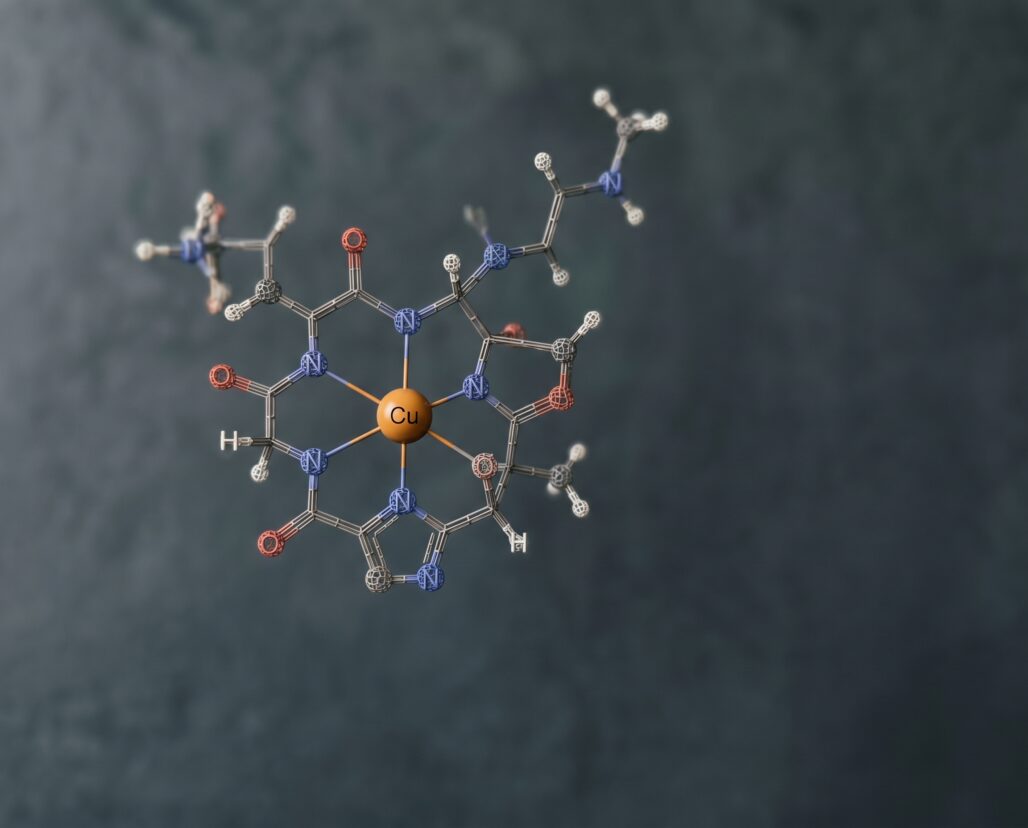
What it is: A naturally occurring tripeptide (glycine-histidine-lysine) that binds copper(II) ions, found in human plasma, saliva, and urine.
What it does in cell culture: Stimulates collagen, elastin, and glycosaminoglycan synthesis; modulates metalloproteinase activity; activates antioxidant pathways; promotes fibroblast and keratinocyte proliferation.
What it does in human trials: Modest but real improvements in fine lines, skin elasticity, and photoaging markers in controlled topical studies; patient-reported skin quality improvements post-laser resurfacing (though objective measures in that trial did not reach significance).
Hair evidence: Promising in-vitro and animal studies; no large, well-powered human RCTs for topical GHK-Cu alone.
Best use case: A topical serum or moisturizer ingredient at concentrations of 1-5%, ideally as a complement to retinoids and SPF rather than a replacement.
Where marketing oversteps: Claims of "resetting DNA," guaranteeing hair regrowth, or matching injectable peptide effects from a topical cream.
What GHK-Cu Actually Is
GHK-Cu starts with GHK — glycyl-L-histidyl-L-lysine — a tripeptide first isolated from human plasma albumin in the early 1970s by biochemist Loren Pickart. The original observation was straightforward: something in young human plasma stimulated aging rat liver tissue to synthesize proteins at a rate resembling younger liver. Pickart traced that activity to this three-amino-acid sequence, now well-characterized in plasma, saliva, and urine but measurably lower in concentration as humans age past 60.
The molecule becomes GHK-Cu when it coordinates with a copper(II) ion. Copper binds specifically at the histidine imidazole nitrogen and the two flanking amino groups, forming a stable complex with an affinity for copper comparable to albumin's own copper transport site — which is why researchers believe GHK functions in part as a copper-delivery vehicle in vivo. This matters because copper is an enzymatic cofactor that almost every collagen-crosslinking and antioxidant reaction in skin depends on.
Think of GHK as a key and copper as the voltage: separately, each has limited effect; together, they unlock enzymatic processes that a peptide or a mineral alone cannot activate. That analogy is imperfect, as all metaphors are, but it captures why the copper coordination matters mechanistically rather than just chemically.
GHK-Cu belongs to the carrier-peptide subcategory — a category explained in more depth in the copper peptides overview. To understand how it compares to signal peptides like Matrixyl and enzyme-inhibiting peptides across the full peptide landscape, see the overview of peptides for skin.
Mechanism: Gene Expression and ECM Signaling
The mechanism of GHK-Cu is more interesting than most skincare actives, and also more frequently misrepresented. Here is what the research actually shows.
Collagen and ECM synthesis. A landmark 1988 in-vitro study by Maquart et al. (PMID 3169264) showed GHK-Cu stimulates collagen synthesis in cultured fibroblasts at concentrations as low as 10 picomolar, with peak effect at 1 nanomolar. The response was independent of changes in cell number, meaning this was a direct signaling effect rather than a simple proliferation artifact. GHK-Cu also stimulates production of dermatan sulfate, chondroitin sulfate, and decorin — the glycosaminoglycans and proteoglycans that give the extracellular matrix its structural resilience alongside collagen fibers.
Metalloproteinase modulation. GHK-Cu does not simply tell cells to make more collagen. It modulates both matrix metalloproteinases (MMPs, which break down collagen) and their inhibitors (TIMPs), creating a remodeling rather than an additive effect. This dual action is why researchers describe it as a "tissue remodeling" signal rather than purely a "collagen-boosting" one — a meaningful distinction.
Growth factors and anti-inflammatory signaling. The 2008 review by Pickart (PMID 18644225) documents GHK-Cu's stimulation of vascular endothelial growth factor (VEGF), fibroblast growth factor 2 (FGF-2), and nerve growth factor (NGF), alongside suppression of transforming growth factor beta-1 (TGF-beta-1) and tumor necrosis factor alpha (TNF-alpha). Blocking TGF-beta-1 is particularly relevant to wound healing — TGF-beta-1 excess drives scar formation, and reducing it shifts the healing response toward regeneration. Superoxide dismutase activity increases as well, which accounts for the antioxidant observations in vitro.
Gene expression breadth. A 2015 Pickart et al. review (PMID 26236730) synthesized genomic data suggesting GHK can influence upward of 4,000 human genes. This figure circulates widely in marketing copy, and it deserves context: those analyses were conducted using bioinformatics tools on existing gene datasets, not through direct experimental intervention in human subjects. The finding is scientifically interesting — it suggests GHK's signaling reach is unusually broad for a three-amino-acid molecule — but "influencing 4,000 genes" in a database analysis is not the same as demonstrating that topically applied GHK-Cu alters those genes in your skin. The distinction matters.
Critically, the antioxidant and anti-inflammatory actions documented in the 2012 review (PMID 22666519) are consistent across multiple labs, which gives the mechanism a more credible foundation than compounds backed by a single research group.
Topical Skin Evidence: What Human Trials Actually Show
The cell-culture picture for GHK-Cu is compelling. The human trial picture is more limited — which is true of nearly every cosmetic peptide — but not empty.
Photoaging and fine lines. Multiple industry-sponsored studies conducted in the 1990s and early 2000s found topical GHK-Cu formulations produced measurable improvements in fine lines, skin laxity, and hyperpigmentation over 12-week trial periods, with effect sizes in the range of 15-30% improvement on standardized skin aging scales. These studies were performed with proper control arms and objective skin measurement tools (optical profilometry, cutometer elasticity measurement). The limitation is that most were sponsored by cosmetic companies with a commercial stake in GHK-Cu products, and few have been independently replicated to the standard of pharmaceutical trials.
Post-laser resurfacing. A more rigorous, independently published RCT by Miller et al. 2006 (PMID 16847171) randomized 13 patients following circumoral CO2 laser resurfacing to GHK-Cu skincare versus standard post-procedure care. Computer analysis and blinded evaluator assessments found no statistically significant differences between groups for erythema resolution or objective wrinkle improvement at 12 weeks. The only significant finding was patient-reported skin quality satisfaction (p = 0.04 on a validated questionnaire). The sample size was small, and the context — post-laser skin — may not generalize to routine anti-aging use. But it is the strongest independently published trial to date and should temper expectations.
Actionable takeaway: GHK-Cu applied topically is unlikely to produce dramatic, visible changes in a few weeks. The more realistic expectation, based on the available evidence, is a gradual improvement in skin texture, elasticity, and fine-line depth over consistent use of months — in the range of results associated with other well-researched cosmetic actives, not in the range of prescription retinoids or procedural treatments.
The broader context for how topical peptides compare with retinoids and other evidence-based actives is covered in what are peptides and how do they work.
Hair Follicle Evidence: Promising but Thin
GHK-Cu appears in haircare marketing almost as often as in skincare, and the biological rationale is genuine — copper is required for the melanogenesis and keratinization that sustain healthy hair follicles, and GHK-Cu's pro-proliferative effects on dermal papilla cells are a plausible mechanism for hair support.
Animal evidence. Trachy et al. 1991 (PMID 1809108) demonstrated that peptide-copper complexes stimulate hair follicle growth in C3H mice, an established in-vivo model for hair cycle research. The effect was observable histologically. This is relevant preclinical data, not proof that the same effect occurs in human scalp at the concentrations achievable with topical products.
In-vitro human tissue. A 2007 study by Pyo et al. (PMID 17703734) tested AHK-Cu (alanyl-histidyl-lysine copper — a close structural analog of GHK-Cu) on ex-vivo human hair follicles and cultured dermal papilla cells. At concentrations of 10^-12 to 10^-9 M, AHK-Cu stimulated measurable hair follicle elongation and dermal papilla cell proliferation, with favorable shifts in Bcl-2/Bax ratio and reduced caspase-3 — markers of reduced apoptosis. Importantly, the reduction in apoptotic dermal papilla cells did not reach statistical significance at the p < 0.05 threshold at most concentrations tested.
What is missing. There are no large, well-powered, independently replicated randomized controlled trials specifically testing topical GHK-Cu (or AHK-Cu) as a standalone treatment for androgenetic alopecia or diffuse hair thinning in humans. A 2020 study (PMID 32983753) examined intradermal injection of a multi-ingredient formulation containing copper tripeptide alongside several growth factors and found significant improvements in alopecia — but this is not isolatable to GHK-Cu alone, and it used injections rather than topical application.
Actionable takeaway: Copper peptide shampoos and scalp serums are a reasonable addition to a hair-support regimen and carry minimal risk. Do not expect them to replace minoxidil or finasteride for pattern hair loss — the evidence gap between those treatments and GHK-Cu topicals is substantial. For context on what the evidence actually supports for hair loss, including which ingredients have RCT backing, see peptides for hair loss.
Formulation Considerations and Product Picks
Not all copper peptide products are equivalent. The form of copper, the concentration, and the vehicle all determine how much active GHK-Cu actually reaches viable skin cells.
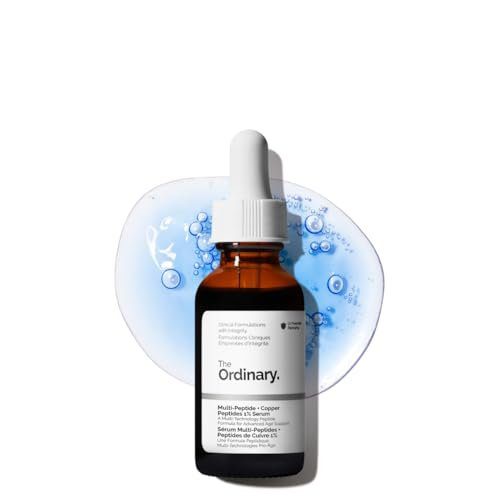
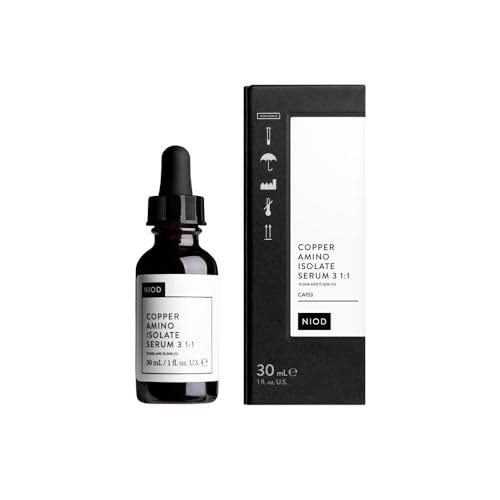
Copper source matters. GHK-Cu (glycyl-histidyl-lysine copper) is the original complex studied in most of the research above. Copper bisglycinate (a simpler copper chelate) and copper PCA (copper coordinated with pyrrolidone carboxylic acid) appear in some products and can deliver bioavailable copper, but they lack the tripeptide signaling component of GHK-Cu. PCA-Cu and bisglycinate may function as copper-delivery vehicles to support enzymatic processes, but they are not the same molecule as GHK-Cu and should not be assumed to replicate its full biological effects.
Concentration. Most published research used concentrations in the nanomolar to low-micromolar range in vitro. In topical formulations, effective concentrations are typically cited at 1-5% (listed as "copper tripeptide-1" on ingredient labels). Products listing copper peptide far down in the ingredient list — below most preservatives and fragrance compounds — likely contain too little to replicate research findings.
Vehicle and stability. GHK-Cu is sensitive to acidic and alkaline pH extremes and can be destabilized by vitamin C (ascorbic acid) at low pH. Combining a high-dose vitamin C serum and a GHK-Cu serum in the same routine can reduce efficacy of both; alternating morning (vitamin C + SPF) and evening (GHK-Cu serum) is a practical way to avoid this interaction. Look for packaging that limits air and light exposure — opaque or airless pump packaging preserves copper peptide stability better than open jars.
What to look for: Copper tripeptide-1 listed within the first ten ingredients; neutral to slightly acidic formulation pH (around 5.5-7); packaging that minimizes oxidation.
Where the Marketing Oversteps
A skeptic's read of GHK-Cu marketing finds several claims that go well beyond what the evidence actually supports.
"Resets your DNA." The 4,000-gene figure is real data from a bioinformatics analysis, but using it to claim topical GHK-Cu "resets" gene expression in living human skin is a leap the original research does not support. Gene databases reflect potential regulatory relationships; they do not confirm that applying a serum to your face activates all of them.
Hair regrowth guarantees. In-vitro follicle elongation and mouse studies establish biological plausibility. They do not establish that massaging a copper peptide shampoo into your scalp will reverse androgenetic alopecia. Any brand making such claims is running ahead of the data.
"Clinically proven" without qualification. Many copper peptide products cite clinical support that turns out to be in-vitro cell culture, single-armed before-after photography, or company-sponsored studies never published in peer-reviewed journals. The only independently published, peer-reviewed RCT in human skin (PMID 16847171) found no objective differences at 12 weeks in its primary endpoints.
Oral GHK-Cu supplements. Oral peptides are broken down into individual amino acids by stomach acid and proteases before they reach circulation in meaningful intact form. Oral GHK-Cu supplements have no established clinical evidence base for skin or hair effects, and the gut-digestion problem makes the proposed mechanism physiologically implausible. This is not a fringe position — it represents scientific consensus on oral peptide bioavailability.
Actionable takeaway: When evaluating a copper peptide product, ask for the specific form of copper used, its concentration in the finished formula, and any peer-reviewed clinical data rather than company-sponsored "studies." A product that cannot answer those three questions is relying on category credibility, not its own evidence.
Frequently Asked Questions
Can I use GHK-Cu with retinol? Yes. GHK-Cu and retinol address different aspects of skin aging and work through complementary mechanisms — GHK-Cu via ECM remodeling and copper delivery, retinol via retinoic acid receptor signaling and cellular turnover. Using retinol in the evening and GHK-Cu the following morning (or alternating evenings) is a practical approach. Some formulations now combine both; if using separate products, check that the GHK-Cu product is not highly acidic (below pH 4), which can degrade the copper complex.
Can I use GHK-Cu with niacinamide? Yes. Niacinamide is compatible with copper peptides at most formulation pH ranges. The older claim that niacinamide and copper form an inhibitory complex is not supported by the current formulation science when both are at typical cosmetic concentrations.
Is GHK-Cu safe during pregnancy? Copper peptide serums have a favorable safety profile in the general adult population, but there is no specific reproductive safety data for topical GHK-Cu. Defer to your OB-GYN on any new active ingredient during pregnancy or nursing. Injectables of any kind should be avoided without direct physician supervision.
What about injectable GHK-Cu? Injectable forms of GHK-Cu are sold in research-peptide markets outside pharmaceutical regulation channels. These are not FDA-approved for any indication, have no established dosing or safety protocols in humans for cosmetic use, and carry meaningful risks associated with unregulated compounded injectables. This article is about topical cosmetic formulations only.
How long until I see results from a topical GHK-Cu serum? The industry-sponsored trials that showed measurable improvement ran 12 weeks. A realistic minimum trial period for any topical anti-aging active is 8-12 weeks of consistent daily use.
As an Amazon Associate, I earn from qualifying purchases. Product recommendations are based on real reviews and independent research.
Tracking a protocol like this? Our companion app, StackMyMed, lets you log doses, schedule them, and check interactions across everything you take — alongside, never instead of, your clinician’s guidance.
Conclusion
GHK-Cu occupies a well-earned position near the top of the evidence ladder for cosmetic peptides. The mechanism is mechanistically coherent and supported by decades of cell-culture and biochemical research. The topical skin evidence in humans is real, if narrower and more modest than brand marketing suggests. The hair evidence is promising but not yet at a level that justifies strong claims. Formulation quality varies enormously across products that all carry the "copper peptide" label.
For most people building an anti-aging skincare routine, GHK-Cu serum is a sensible complement to retinoids and broad-spectrum sunscreen — not a replacement. For those exploring it for hair, it is a low-risk addition to an evidence-based regimen, as long as expectations are grounded in preclinical rather than clinical confidence. And for anyone considering injectable or oral forms marketed outside the pharmaceutical system: the evidence does not justify the risk.
This article is for informational purposes and not medical advice. Peptides, especially those marketed for therapeutic use, can interact with medications and health conditions. Consult a licensed physician before starting any supplement, particularly if you are pregnant, nursing, taking prescription medications, or managing a chronic condition.
As an Amazon Associate, I earn from qualifying purchases. Product recommendations are based on real reviews and independent research.
