
Everyone seems to have an opinion about which drug is better. Endocrinologists debate trial endpoints. Reddit threads run for hundreds of comments comparing injections and nausea episodes. Pharmacies can barely keep either in stock. If you have been prescribed one of these medications — or are trying to understand a conversation your doctor is having — it is worth cutting through the noise and looking at what the data actually shows. So, which is better?
The honest answer: the trials show tirzepatide (Mounjaro) outperforming semaglutide (Ozempic) on HbA1c reduction and weight loss in the most rigorous direct comparison available, but that headline number does not determine which drug is right for any individual patient. Tolerance, insurance coverage, contraindications, and physician judgment are the variables that matter most at the prescription level. What follows is a clear-eyed look at both drugs, using the FDA labels and the clinical trial record.
Summary
- Ozempic is semaglutide, a GLP-1 receptor agonist, FDA-approved for type 2 diabetes (glycemic control and cardiovascular risk reduction in adults with T2D and established CVD). It is not FDA-approved as Ozempic for weight loss — that is Wegovy, a separate product with separate labeling.
- Mounjaro is tirzepatide, a dual GIP and GLP-1 receptor agonist, FDA-approved for type 2 diabetes (glycemic control in adults and pediatric patients 10 years and older). Off-label use for weight loss occurs in clinical practice but is not the labeled indication for Mounjaro — that is Zepbound.
- Both carry a boxed warning for thyroid C-cell tumors, are contraindicated in personal or family history of medullary thyroid carcinoma (MTC) or Multiple Endocrine Neoplasia syndrome type 2 (MEN 2), and share warnings about acute pancreatitis.
- In SURPASS-2 (NCT03987919), a 40-week head-to-head randomized trial, all three tirzepatide doses (5, 10, and 15 mg) produced statistically superior HbA1c reductions and greater weight loss than semaglutide 1 mg.
- GI side effects — nausea, diarrhea, vomiting — are broadly similar between the two drugs, though rates vary by dose and escalation schedule.
- Neither drug is a supplement. Both require a prescription and ongoing physician supervision.
Branding: Four Names, Two Molecules
Before comparing outcomes, it is worth getting the brand architecture straight, because conflating these names leads to real confusion about what is approved for what.
Semaglutide is sold under three brand names with three distinct FDA approvals: Ozempic (injectable, type 2 diabetes, approved 2017), Rybelsus (oral tablet, type 2 diabetes, approved 2019), and Wegovy (injectable, chronic weight management, approved 2021). Ozempic and Wegovy contain the same active ingredient at different approved doses and for different indications. They are not interchangeable at the prescription level.
Tirzepatide is sold under two brand names: Mounjaro (injectable, type 2 diabetes, approved 2022) and Zepbound (injectable, chronic weight management and obstructive sleep apnea, approved 2023). Same active ingredient, different labeled indications.
This article compares Ozempic vs. Mounjaro — the T2D-labeled versions. The weight-loss-labeled versions (Wegovy and Zepbound) are covered separately in Wegovy vs. Zepbound. Full molecule-level trial programs and dosing are in the semaglutide complete guide and tirzepatide complete guide.
Mechanism: Single Target vs. Dual Target
The most fundamental difference between these drugs is pharmacological, and it matters because it shapes both the efficacy outcomes and the side-effect profile.
Semaglutide is a selective GLP-1 receptor agonist. GLP-1 (glucagon-like peptide-1) is an incretin hormone released from the gut in response to food. It has three primary effects: stimulating insulin secretion in a glucose-dependent manner (meaning the insulin boost is tied to blood glucose levels, which limits hypoglycemia risk under normal conditions), suppressing glucagon from pancreatic alpha cells, and slowing gastric emptying. The gastric-emptying effect is responsible for both the post-meal satiety benefit and a significant portion of the nausea that patients experience, especially during dose escalation.
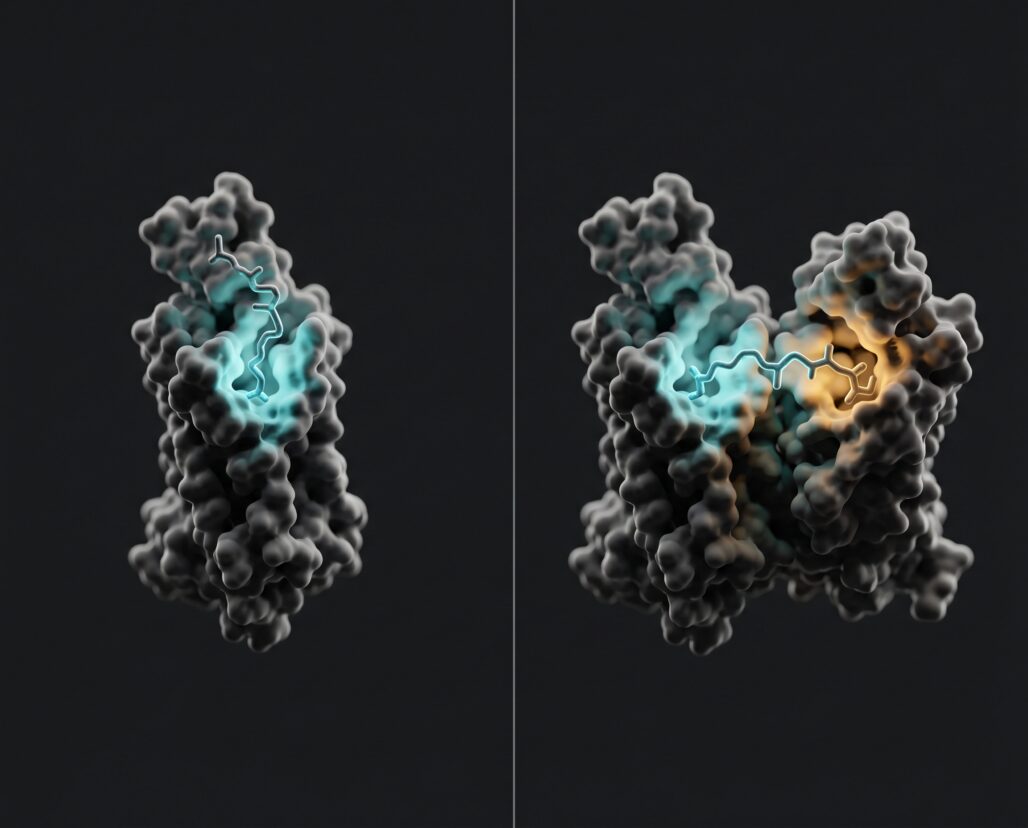
Tirzepatide binds and activates both the GLP-1 receptor and the GIP (glucose-dependent insulinotropic polypeptide) receptor. GIP is the other major incretin hormone. On its own, GIP's physiological role in weight regulation is complex — in isolation, GIP receptor activation has historically been associated with fat storage, not fat loss. The combination of GIP and GLP-1 receptor co-activation in tirzepatide appears to work differently than either receptor targeted alone. The current mechanistic hypothesis, supported by the SURPASS trial program, is that dual receptor activation produces additive or synergistic effects on insulin secretion, greater suppression of appetite, and potentially more favorable distribution of metabolic effects across tissues. Mounjaro's prescribing information describes the mechanism as tirzepatide "selectively bind[ing] to and activat[ing] both the GIP and GLP-1 receptors."
Think of it this way: semaglutide works through one well-characterized pathway; tirzepatide adds a second. Whether the added pathway's contribution is additive or synergistic is still being studied, but the SURPASS clinical data suggest a meaningful additional effect on both glycemia and body weight.
Head-to-Head Trial Data: SURPASS-2
The most important piece of evidence here is SURPASS-2 (NCT03987919), a 40-week, open-label, randomized phase 3 trial published in the New England Journal of Medicine in August 2021. It enrolled 1,879 adults with type 2 diabetes inadequately controlled on metformin, randomized 1:1:1:1 to tirzepatide 5, 10, or 15 mg or semaglutide 1 mg once weekly. Baseline mean HbA1c was 8.28%, weight 93.7 kg, age 56.6 years.
HbA1c reduction from baseline at 40 weeks:
- Tirzepatide 5 mg: -2.01 percentage points
- Tirzepatide 10 mg: -2.24 percentage points
- Tirzepatide 15 mg: -2.30 percentage points
- Semaglutide 1 mg: -1.86 percentage points
All three tirzepatide doses achieved both noninferiority and statistical superiority over semaglutide. The between-group differences ranged from -0.15 percentage points for the 5 mg dose (p=0.02) to -0.45 percentage points for the 15 mg dose (p<0.001). The 10 and 15 mg doses also pushed the mean HbA1c well below 7.0%, the common clinical target, with higher proportions of patients reaching that threshold than on semaglutide.
Weight loss from baseline at 40 weeks (least-squares mean vs. semaglutide):
- Tirzepatide 5 mg: -1.9 kg additional
- Tirzepatide 10 mg: -3.6 kg additional
- Tirzepatide 15 mg: -5.5 kg additional
All three differences were statistically significant (p<0.001). In absolute terms, the tirzepatide 15 mg group lost roughly 11-12 kg from baseline over 40 weeks, compared to roughly 6-7 kg on semaglutide 1 mg — a clinically meaningful gap.
These are the trial numbers. It is important to note that SURPASS-2 used semaglutide at 1 mg, which is the standard T2D maintenance dose but not the maximum approved dose (which is 2 mg). Whether semaglutide at 2 mg would narrow the gap with tirzepatide is an open question that the existing trial design does not answer.
Side Effects Compared
Both drugs produce a similar profile of gastrointestinal adverse events. The SURPASS-2 data and the individual prescribing information tell a consistent story.
In SURPASS-2, nausea rates across all groups were:
- Tirzepatide 5 mg: 17%
- Tirzepatide 10 mg: 19%
- Tirzepatide 15 mg: 22%
- Semaglutide 1 mg: 18%
Diarrhea rates: 13-16% (tirzepatide doses) vs. 12% (semaglutide). Vomiting: 6-10% vs. 8%. The rates were broadly similar across the four arms, with no dramatic safety separation. GI events were mostly mild to moderate and concentrated during the dose-escalation period, which is a consistent finding across GLP-1 class drugs.
Across Mounjaro's pivotal trials, nausea occurred in 12-18%, diarrhea in 12-17%, vomiting in 5-9%, and decreased appetite in 5-11% — with GI adverse reactions collectively in 37-44% of Mounjaro patients vs. roughly 20% in placebo arms. Semaglutide's label shows comparable rates: nausea 11-20%, diarrhea 9-10%, vomiting 6-8%.
Beyond GI effects, both drugs share several warnings that deserve specific attention:
Acute pancreatitis has been reported with both. The Mounjaro label cites an incidence of 0.23 per 100 patient-years with tirzepatide vs. 0.11 with comparators in clinical trials. Both labels instruct discontinuation if pancreatitis is suspected based on persistent severe abdominal pain.
Hypoglycemia risk is low when either drug is used alone in T2D, because both stimulate insulin in a glucose-dependent manner. That changes when either drug is combined with insulin or sulfonylureas — dose reductions of those agents are typically required.
Heart rate increases modestly with both. Tirzepatide produces a mean increase of 2-4 beats per minute; semaglutide shows a mean increase of 1-3 bpm. Both labels flag sinus tachycardia as a reported event.
Renal impairment has been reported during initiation and escalation of both drugs, likely from GI-driven dehydration. Both labels recommend monitoring kidney function during dose escalation, especially in patients with pre-existing renal disease.
Diabetic retinopathy complications are flagged in the semaglutide label based on SUSTAIN-6 data (NCT01720446), where they occurred at a hazard ratio of 1.76 versus placebo — thought to reflect rapid glucose normalization in patients with pre-existing retinopathy, not direct drug toxicity. The tirzepatide label notes retinopathy was not studied in patients with active eye disease.
Pregnancy: both labels state that animal studies show fetal harm and that use during pregnancy should only occur if the potential benefit justifies the potential risk. The standard clinical guidance is to discontinue both drugs before planned pregnancy, given the lack of adequate human safety data.
One caution specific to Mounjaro: tirzepatide's gastric-emptying delay may reduce absorption of oral hormonal contraceptives. The Mounjaro label recommends switching to a non-oral method or adding a barrier method for four weeks after initiation and after each dose escalation. The semaglutide label does not include this caution.
Shared Boxed Warning: Thyroid C-Cell Tumors
Both drugs carry the same class of boxed warning — the highest level of safety alert the FDA applies to prescription drug labeling. The relevant language from the Mounjaro label: "In both male and female rats, tirzepatide causes dose-dependent and treatment-duration-dependent thyroid C-cell tumors at clinically relevant exposures. It is unknown whether MOUNJARO causes thyroid C-cell tumors, including medullary thyroid carcinoma (MTC), in humans."
The same uncertainty applies to semaglutide. Both labels contraindicate use in patients with a personal or family history of MTC and in patients with MEN 2. If a thyroid mass or serum calcitonin elevation is detected at any point, the label for both drugs recommends evaluation. Patients should report any neck lumps, hoarseness, or trouble swallowing to their prescriber without delay.
Human relevance of the rodent finding has not been established. No post-market signal of excess MTC has been formally confirmed in GLP-1 class drugs. But the contraindication stands, and it is not negotiable at the prescribing level.
Cost, Access, and Compounded Versions
Both are brand-name prescription drugs with U.S. list prices typically above $900-$1,000 per month without coverage. Actual cost depends on insurance formulary, whether the T2D indication is covered (versus off-label weight-loss use, which many plans exclude), and manufacturer savings programs offered by Novo Nordisk and Eli Lilly. Formulary placement and prior authorization requirements change frequently — verify with your pharmacy before assuming coverage.
A caution about compounded versions: during periods when branded supply was short, compounding pharmacies produced tirzepatide and semaglutide compounds. The FDA has issued explicit public warnings about both. Compounded drugs are not FDA-approved — they have not been evaluated for safety, efficacy, or quality under the same standards as branded products. The FDA has warned specifically about unapproved salt forms of semaglutide (semaglutide sodium, semaglutide acetate) that do not have the same chemical structure as the active ingredient in Ozempic or Wegovy. Anyone using or considering compounded versions of either drug should discuss the regulatory status with their prescribing physician.
Side-by-Side Comparison Table
| Property | Ozempic (semaglutide) | Mounjaro (tirzepatide) |
|---|---|---|
| Molecule type | GLP-1 receptor agonist | Dual GIP + GLP-1 receptor agonist |
| Manufacturer | Novo Nordisk | Eli Lilly |
| T2D FDA approval | 2017 | 2022 |
| Weight-loss-labeled brand | Wegovy | Zepbound |
| Approved route | Subcutaneous injection | Subcutaneous injection |
| Starting dose | 0.25 mg weekly x 4 wks | 2.5 mg weekly x 4 wks |
| Max approved dose (T2D) | 2 mg weekly | 15 mg weekly (adults) |
| SURPASS-2 HbA1c reduction | -1.86 pp (1 mg dose) | -2.01 to -2.30 pp (all doses) |
| SURPASS-2 weight difference vs. sema | Reference | -1.9 to -5.5 kg more |
| Nausea rate (trial data) | ~18% | 17-22% |
| Boxed warning (thyroid) | YES — MTC risk, MEN 2 contraindication | YES — MTC risk, MEN 2 contraindication |
| Pancreatitis warning | YES | YES |
| Pregnancy | Discontinue; animal fetal harm | Discontinue; animal fetal harm |
| Oral contraceptive interaction | Not flagged | YES — add barrier for 4 wks at initiation and each escalation |
| Cardiovascular outcomes data | YES — SUSTAIN-6, CVOT | In development (SURPASS-CVOT) |
Takeaway for this table: the mechanism and regulatory status differ at a foundational level. The outcomes data favor tirzepatide in a direct head-to-head. The safety profiles are similar but not identical. None of this substitutes for an individualized clinical conversation.
Frequently Asked Questions
Is Ozempic FDA-approved for weight loss? No. Ozempic (semaglutide injection) is FDA-approved for type 2 diabetes only, covering glycemic control and cardiovascular risk reduction in adults with T2D and established cardiovascular disease. Wegovy (also semaglutide, different dosing) is the FDA-approved weight-management product. Physicians can and do prescribe Ozempic off-label for weight loss, but that is a physician judgment outside the labeled indication.
Is Mounjaro FDA-approved for weight loss? No. Mounjaro (tirzepatide injection) is FDA-approved for type 2 diabetes. Zepbound (also tirzepatide) is the FDA-approved weight management and obstructive sleep apnea product. Same molecule, different label.
Which drug has more evidence behind it? Semaglutide has a longer track record — first approved in 2017, with more than ten SUSTAIN trials and dedicated cardiovascular outcomes data. Tirzepatide's SURPASS program is robust and includes a direct head-to-head trial, but dedicated cardiovascular outcomes data is still maturing.
Can I take either of these drugs if I have a thyroid condition? A personal or family history of medullary thyroid carcinoma (MTC) or Multiple Endocrine Neoplasia type 2 (MEN 2) is an absolute contraindication to both drugs. Other thyroid conditions require individual physician assessment. Do not interpret absence of those two specific diagnoses as clearance — this is a conversation for your prescribing doctor, who has access to your complete medical history.
What happens when I stop? Both drugs lose their glucose-lowering and appetite-suppressing effects after stopping. HbA1c and weight tend to return toward pre-treatment levels without ongoing use and maintenance of diet and lifestyle changes. Neither drug is a one-time intervention.
What about compounded tirzepatide or semaglutide? The FDA has warned explicitly against compounded versions of both molecules. They are not FDA-approved, and some contain salt forms or inactive ingredients not present in the branded drugs. Discuss this with your physician before using any compounded version.
If you are managing a protocol like this, StackMyMed (our companion app) keeps your doses, timing, and interaction checks in one place. It does not replace medical advice — bring the log to your clinician.
Conclusion
Ozempic and Mounjaro both work — the trial evidence is clear on that point. In the only rigorous head-to-head comparison available, SURPASS-2, tirzepatide outperformed semaglutide on HbA1c reduction and weight loss at all three doses tested, while producing a similar GI side-effect profile. That is meaningful information for physicians managing type 2 diabetes. It is not a blanket recommendation for every patient.
The right drug for a given patient depends on factors the trials cannot resolve: formulary coverage, tolerance to GI side effects during dose escalation, contraindication history, and other concurrent medications. No article makes that call. What it can do is give you an accurate picture of the evidence so the conversation with your prescribing physician starts from the same factual foundation.
If you are considering GLP-1 class medications more broadly, peptides for weight loss covers how these prescription options fit into the wider pharmacological and lifestyle landscape.
This article is for informational purposes and not medical advice. Peptides, especially those marketed for therapeutic use, can interact with medications and health conditions. Consult a licensed physician before starting any supplement, particularly if you are pregnant, nursing, taking prescription medications, or managing a chronic condition.
