
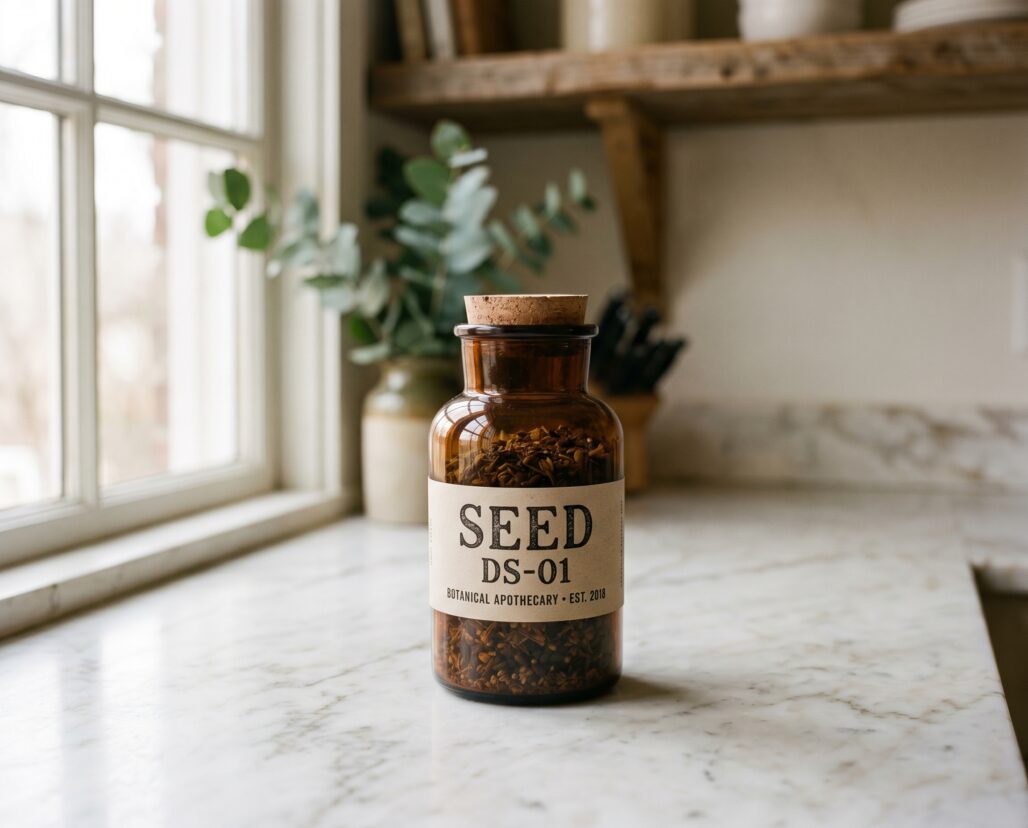
If you've seen Seed DS-01 on Instagram and wondered whether it's worth $49.99 a month, here's the honest answer: it can be — for a narrow slice of buyers. The ViaCap delivery system is real engineering, the 24-strain formula is well-documented, and Seed invests meaningfully in research partnerships. But the 4× premium over solid Amazon alternatives is harder to defend than the marketing copy suggests, and several of the brand's headline claims land in "plausible, not proven" territory. This review walks through exactly what you're buying, what the evidence actually says, how the cost math pencils out, and the one scenario where the price is genuinely justified — plus the larger scenario where it isn't.
Affiliate disclosure: this article contains affiliate links. As an Amazon Associate, UsefulVitamins.com earns from qualifying purchases at no extra cost to you.

Quick answer: is Seed DS-01 worth it?
Most readers: no — not at $50/mo when strong alternatives exist at $15-30/mo.
- Best for: People with documented microbiome disruption (post-antibiotic, post-illness) who want a well-researched multi-strain formula and are willing to pay the DTC premium for the delivery engineering
- Not ideal for: Anyone who is generally healthy, already eating a high-fiber diet, or unwilling to commit to a monthly billing cycle with friction to cancel
- What to look at before buying: Whether your goal is strain diversity (Seed is strong here) or raw CFU count (Seed is not the leader) — these are different questions
- Decision shortcut: If you'd spend $50/mo on the brand confidence alone, Seed earns it. If you want the best probiotic per dollar, it doesn't.
What's in the bottle
DS-01 delivers 24 strains in a 2-part nested capsule. The outer capsule contains a prebiotic blend (Indian pomegranate, non-fermenting polyphenols) that feeds the bacteria before it reaches the gut. The inner capsule holds the probiotic strains themselves. Seed reports 53.6 billion AFU (Active Fluorescent Units) at manufacture — which is where the first note of skepticism is warranted.
AFU is Seed's chosen measurement, distinct from the industry-standard CFU (Colony Forming Units). AFU uses flow cytometry to count live cells. CFU counts cells capable of forming a colony on a growth plate. Both have limitations: CFU misses cells that are alive but not culturable; AFU counts cells that are alive but may not be viable for colonization. The difference is real, but it also means you can't do a clean apples-to-apples AFU vs CFU comparison when shopping. Seed knows this — the AFU metric creates a moat that makes direct comparisons harder for consumers.
The 24 strains span Lactobacillus, Bifidobacterium, and Lacticaseibacillus genera. Notably, several strains have strain-specific human clinical data. That's meaningful — most probiotic brands list genus and species but not strain-level identifiers. Strain specificity matters because L. rhamnosus GG behaves differently from L. rhamnosus HN001, even though both are "L. rhamnosus" on the label.
Marketing claims vs reality
Seed leads its homepage with three pillars: gut health, whole-body benefits, and microbiome science. Each claim deserves a specific read.
"Clinically studied strains" — accurate but requires context. Seed references published RCTs and mechanistic studies for its included strains. However, those studies were often conducted on individual strains at doses and delivery conditions different from the DS-01 formulation. A study on L. plantarum 299v at 10 billion CFU/day doesn't automatically validate a 24-strain formula at 53.6 billion AFU total.
"ViaCap technology protects strains through stomach acid" — plausible, not unique. Delayed-release capsule technology (including DRcaps and HPMC-based systems) predates Seed's commercial launch. Multi-piece capsule-in-capsule designs have been in the enteric coating space for over a decade. Seed's implementation is well-executed, but it isn't proprietary in any fundamental sense, and the 2020 clinical trial Seed cites for viability (conducted by Seed-affiliated researchers) hasn't been independently replicated at scale.
"Whole-body benefits — skin, heart, gut" — here's where the brand outruns its evidence. The mechanistic logic connecting gut microbiome composition to skin barrier or cardiovascular markers is legitimate. The gap is dose-response data in healthy adults, specifically for DS-01. Broad claims require broad evidence. Seed has the right direction; it doesn't yet have the receipts for the full range of systems it names.
The real question isn't whether probiotics work — it's whether DS-01 works better, at this price point, for your specific situation.

Real-user reports
The Seed community on Reddit is unusually vocal — in both directions.
Positive: "Three weeks in and my bloating is down noticeably. I've tried a dozen probiotics; this is the only one where I felt something change." — r/probiotics, March 2025
Positive: "The packaging is annoyingly good. I resent paying $50 for it but I've been on it for four months and my digestion is genuinely better than it was on VSL#3." — r/Supplements, January 2025
Negative: "Took it for 90 days, felt zero difference. Switched to Florastor at $30/mo and actually noticed less GI upset on antibiotics. Seed is a beautifully marketed product." — r/probiotics, November 2024
Negative: From Trustpilot (4.1 stars, 1,200+ reviews): "Cancellation was a multi-step process. Got offered 25% off and a free month before they'd process it. Not a dealbreaker but be aware."
The pattern: genuine positive outcomes for people with active GI disruption; weaker returns for people who are generally healthy and hoping for systemic upgrades.
Cost math
- DS-01: $49.99/mo = $599.88/yr = $1.67/day
- Per-serving cost: $1.67 (1 capsule per day)
Compared to the closest Amazon alternatives:
| Product | Monthly cost | CFU/AFU | Strains | 3rd-party verified |
|---|---|---|---|---|
| Seed DS-01 | $49.99 | 53.6B AFU | 24 | Internal (Seed-affiliated) |
| Visbiome High Potency | $65-90 | 450B CFU | 8 | Yes (physician-dispensed) |
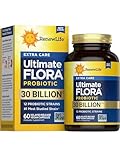
| Garden of Life Dr. Formulated | ~$18 | 50B CFU | 16 | NSF Non-GMO |
| Culturelle Digestive Daily | ~$15 | 10B CFU | 1 | Yes (L. rhamnosus GG) |
| NOW Foods 50 Billion | ~$15 | 50B CFU | 10 | GMP certified |
The honest read: Seed at $49.99/mo vs NOW Foods at $15/mo is a 3.3× premium for 2.4× more strains and a more sophisticated delivery system. The delivery engineering has real value for survivability of strains through gastric acid; whether that value equals $35/mo more is a personal call, not a settled clinical fact.
Visbiome sits above Seed at $65-90/mo and delivers 450 billion CFU in a medical-grade 8-strain formula used in clinical research for IBS and IBD. If you have a diagnosed GI condition, Visbiome's clinical pedigree is stronger. If you don't, that CFU count is largely irrelevant — your gut doesn't have room to host 450 billion new residents, and most are excreted within days.

Cancellation friction
Seed allows cancellation at any time, but the path is not a single click. As of early 2026, the process runs through the Seed member portal, requires navigating to account settings, and surfaces a retention flow offering one month free plus a 25% discount before completing the cancellation.
There is no phone call required, which is a relative plus. But you should plan to set a calendar reminder before your next billing date if you decide to trial and cancel. Seed bills on a fixed cycle; if you cancel after the order has processed, you're in the current month regardless.
There is no cancellation fee. The refund window is 30 days from your first order only — repeat-subscription charges are not refundable after the billing date.
The subscription ships every 30 days unless you cancel through the member portal before the next charge processes. This is a commitment, not a reminder service.
How your body actually handles this stack
The 6-axis framework applied to DS-01:
Form bioavailability. This is where Seed's engineering investment has the clearest ROI. Standard probiotic capsules lose a meaningful percentage of viable organisms crossing the stomach's low pH environment. Seed's nested ViaCap design — an outer prebiotic capsule that swells and protects the inner probiotic capsule through the gastric phase — is mechanistically sound. The outer capsule also delivers fermentable substrate directly to the colon alongside the bacteria, which is logical co-factor design. Whether the advantage over a well-formulated enteric-coated competitor is worth $35/mo more, we don't know; the head-to-head survivability data hasn't been published in a peer-reviewed format that isn't Seed-funded.
Stack bomb critique. Twenty-four strains in one capsule is primarily a marketing number. Clinical probiotic research is almost entirely conducted on single strains or small combinations (3-5 strains) at defined doses. No RCT has demonstrated additive or synergistic benefit across 24 simultaneous strains. The strains may not antagonize each other, but the idea that 24 are all "working together" isn't supported by mechanism data. Think of it like adding 24 apps to a phone simultaneously — they might all run, but the ones you're relying on may not get the resources you assume they're getting.
Timing considerations. Seed recommends taking DS-01 with or without food. The clinical preference for most lactobacillus strains is 30 minutes before a meal or with a small amount of fat (which slows gastric emptying, reducing acid exposure time). Seed's ViaCap design partially compensates for this — the protective capsule buys time — but the "any time" instruction is convenience framing, not optimal chemistry. If you're paying $50/mo, take it before breakfast.
Competitive absorption. The prebiotic blend (Indian pomegranate-derived polyphenols, non-fermenting) is a thoughtful inclusion. Polyphenols feed Bifidobacterium preferentially, which tracks with the Bifidobacterium-heavy strain roster. This is co-factor logic done correctly, in contrast to many competitors that include FOS (fructooligosaccharides) at levels that cause gas and bloating in sensitive individuals.
Saturation kinetics. At 53.6 billion AFU for a healthy adult gut containing roughly 100 trillion organisms, DS-01's daily dose is a small fraction of existing microbial population. This is normal — you're seeding, not replacing. Don't expect dose-linear effects; the colonization outcome depends on your existing microbiome, diet, and antibiotic history.

Who it's for / who should skip
DS-01 earns its price when you have a specific, documented reason to prioritize strain-level research and delivery engineering over raw CFU count. Post-antibiotic microbiome disruption, recent GI illness, or a history of poor results from simpler formulas are the scenarios where paying for Seed's infrastructure makes sense. The strain-specific clinical references are real; the delivery system is genuinely more sophisticated than a standard gelatin capsule.
Skip DS-01 if you're generally healthy, eat 25+ grams of fiber per day, and have no history of GI disruption. The strain diversity won't move the needle meaningfully beyond what a $15/mo multi-strain formula provides, and the $35/mo difference buys a lot of fiber-rich food that will do more for your microbiome than any capsule. If '#1 rated on social media' is the main reason you're considering it, that's marketing budget talking, not evidence.

Amazon top pick: Garden of Life Dr. Formulated Probiotics
If you want multi-strain coverage without the DS-01 subscription overhead, Garden of Life Dr. Formulated Probiotics is our recommendation.
Why we picked it: NSF Non-GMO certified, 50 billion CFU across 16 strains including Lactobacillus and Bifidobacterium species with documented strain identifiers, shelf-stable (no refrigeration required after opening). Formulated by David Perlmutter, M.D. — a named, credentialed formulator is meaningfully more accountable than a generic "research team."
Form/dose: Live cultures at 50 billion CFU at time of manufacture, 16 probiotic strains, with certified organic prebiotic fiber blend.
The trade-off: No nested ViaCap delivery engineering. Standard vegetarian capsule, which means gastric survivability is lower than DS-01's design. If your stomach acid is a known issue, or you've had poor results with standard-capsule probiotics, the delivery gap matters.
Who skips: Anyone with a physician-recommended specific strain protocol (use that instead). Also skip if you need refrigeration-stable transport for travel — this product ships ambient but is best stored cool.
Actionable takeaway: At roughly $18/mo vs Seed's $49.99/mo, the 2.8× price gap is hard to justify on evidence alone. Start here unless you have a documented reason to prioritize Seed's delivery engineering.
As an Amazon Associate, I earn from qualifying purchases. Product recommendations are based on real reviews and independent research.
Seed.com mention
Seed.com — $49.99/mo direct from brand. We'll add our affiliate link once approved.
Internal links cluster
For a head-to-head comparison between Seed and Visbiome across clinical use cases, see DTC Greens Powder Cost & Ingredient Comparator.
Current pricing for Seed DS-01 and the main Amazon alternatives is tracked in DTC Supplement Subscription Pricing Reference 2026.
If you're managing GI side effects from GLP-1 medications and looking for a probiotic to support gut motility, see our related guide: our cluster on this category — best-probiotic-for-glp1-gi-issues.
For brand-level alternatives to Seed that are available without a subscription, see our buyer guide: Seed probiotic alternatives on Amazon. For a direct strain-by-strain comparison, see Seed vs Visbiome: which formula is right for your gut?.
Settled on one? StackMyMed (our companion app) lets you scan the label and log it into your routine, then watches for overlaps and interactions across your whole cabinet.
Conclusion: the bottom line on Seed DS-01
Seed DS-01 is a well-designed probiotic from a brand that takes formulation seriously. The ViaCap delivery system is legitimate engineering — not unique, but better than a standard gelatin capsule. The 24 strains include species with strain-level clinical data, which puts DS-01 ahead of most pharmacy-shelf competitors on transparency.
The honest gap: $49.99/mo is 3.3× the cost of a solid multi-strain alternative on Amazon, and the clinical evidence for that premium is "plausible and promising," not "proven in your population." For healthy adults with no GI disruption, the premium isn't justified by outcome data.
Next steps:
- If you have post-antibiotic GI disruption, start with DS-01 for 60 days and evaluate — the delivery engineering and strain diversity give you the best shot at measurable results
- If you're generally healthy, start with Garden of Life Dr. Formulated ($18/mo) or NOW Foods 50 Billion ($15/mo), add fiber to your diet, and save $35/mo
- If you have a diagnosed GI condition (IBS, IBD, Crohn's), Visbiome's physician-grade formula and clinical trial pedigree are a stronger starting point than Seed
- Before subscribing to anything, confirm you can cancel without a phone call — Seed passes this test; many DTC probiotic brands don't
This article is for informational purposes and not medical advice. Probiotics — especially multi-strain formulas marketed for therapeutic use — can interact with medications and health conditions. Consult a licensed physician before starting any supplement, particularly if you are pregnant, nursing, taking prescription medications, or managing a chronic condition.
As an Amazon Associate, I earn from qualifying purchases. Product recommendations are based on real reviews and independent research.
Editorial independence note: UV earns affiliate commissions from Amazon and (selectively) from DTC brand affiliate programs. Commissions never determine our recommendations — top picks are chosen first; affiliate links are added second. Read our full methodology and editorial independence policy →
