
If you injured a tendon and someone on Reddit told you BPC-157 fixes it, the honest answer is: maybe in mice. The compound does some genuinely interesting things in animal models — accelerated tendon cell migration, improved load-to-failure scores, faster return of function — and the proposed mechanisms are plausible enough that researchers are paying attention. But when you search for a randomized human trial showing that injectable peptides heal tendons faster than standard rehab, you come away almost empty-handed. That gap between animal promise and human proof is the central tension in every peptide-for-recovery conversation, and it is worth understanding before you spend money or take on regulatory risk.
Summary / Quick Answer: Do Peptides Actually Speed Up Injury Recovery?
The most studied injectable peptides (BPC-157, TB-500) have compelling animal evidence and almost no rigorous human trial data. Collagen peptides taken with vitamin C before exercise have real human RCT support for tendon and joint health — and that is where the honest recovery conversation should start.
- Best for: People with tendinopathy or joint pain who want a supplement with actual human evidence behind it (collagen peptides + vitamin C)
- Not ideal for: Athletes who are subject to anti-doping testing — both BPC-157 and TB-500 are on the World Anti-Doping Agency Prohibited List
- What to look for: Hydrolyzed collagen or gelatin supplement, 10-15 g per dose, taken roughly 60 minutes before a structured rehab session, with vitamin C included or added separately
- Decision shortcut: If a recovery peptide requires injection and is sold as a "research chemical," the human evidence pipeline is essentially empty; the regulatory risk is real; and a simpler, legal option likely does just as much
Why Peptides for Recovery Are Trending
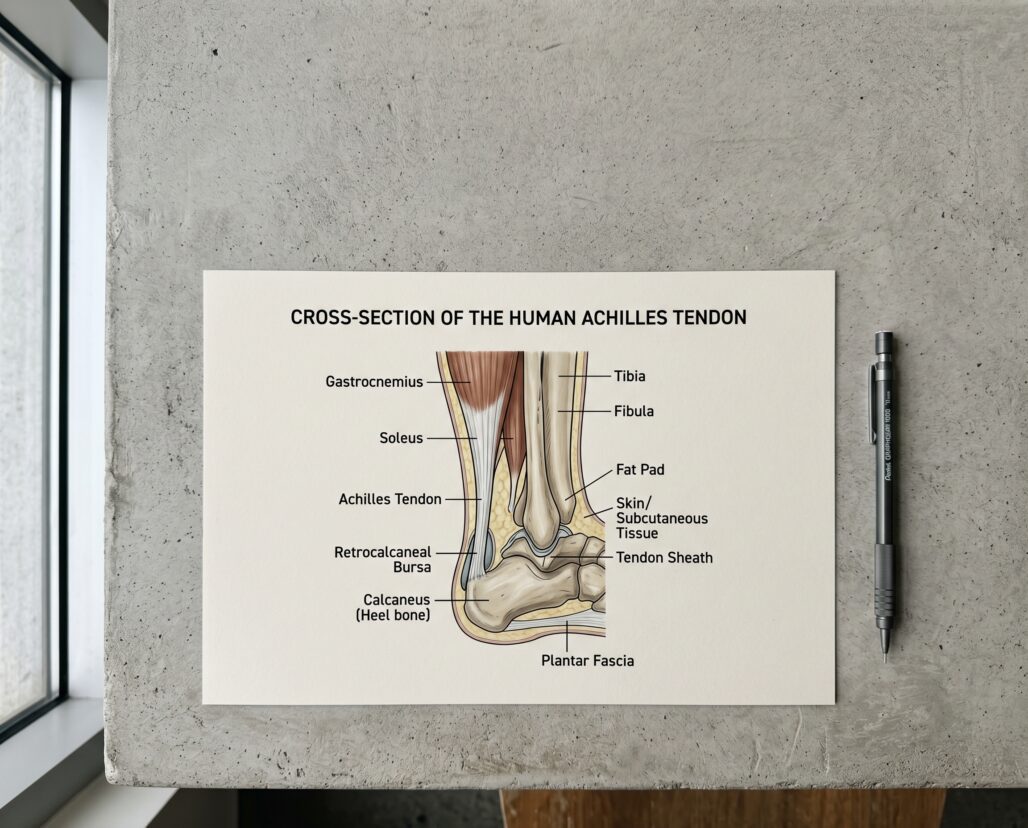
The appeal follows a straightforward logic. Tendons, ligaments, and cartilage are slow healers. Their blood supply is poor, their cell turnover is sluggish, and standard medicine does not offer much beyond rest, physical therapy, and time. Anyone who has sat out a season with Achilles tendinopathy understands the frustration. When online communities started sharing stories about BPC-157 injections accelerating that timeline, the idea spread quickly.
Peptides are short chains of amino acids — the same building blocks that make up every protein in your body, including collagen, the structural scaffold of tendons and ligaments. The hypothesis is that certain peptide sequences act as biological signals, telling cells to repair, migrate, or synthesize connective tissue faster. In theory, that is an elegant approach. The difficulty is moving from theory and rat data to evidence in injured humans, and that transition has not happened yet for most of the compounds attracting online attention. To understand the full context of what peptides are and how they work, the overview of what peptides actually are is worth reading first.
BPC-157: What the Animal Evidence Shows, and Why Human Trials Are Missing
BPC-157 (body protection compound 157) is a synthetic pentadecapeptide — 15 amino acids — originally derived from a sequence found in human gastric juice. It has been studied in animal models since the early 1990s, and the preclinical literature is genuinely substantial. A 2010 study in rats published in the Journal of Physiology and Pharmacology (Sikiric et al., PMID 21030672) found that BPC-157 promoted outgrowth of tendon fibroblasts from tendon explants, improved cell survival under stress, and stimulated in vitro migration of tendon cells via the FAK-paxillin signaling pathway. Other animal studies showed that treated rats had higher load-to-failure scores in Achilles tendon testing compared to untreated controls.
The proposed mechanisms include upregulation of growth hormone receptors in tendon fibroblasts and promotion of angiogenesis — new blood vessel formation — which would logically help a tissue that normally receives poor blood flow. If you wanted to design a molecule to help tendons heal, the profile looks promising on paper.
Animal models tell us a peptide CAN do something, not that it WILL in humans. The gap between a rat Achilles tendon and a human one involves a different immune environment, different tendon architecture, and dramatically different loading patterns. A 2025 systematic review (PMID 40756949) identified 36 studies on BPC-157 and orthopedic outcomes: 35 were preclinical, meaning conducted in animals or cell cultures. The single human study identified was a retrospective case series of 12 patients with chronic knee pain who received an intraarticular injection — 7 reported relief lasting more than six months. That is promising anecdote, not a controlled trial.
BPC-157 is NOT FDA-approved and is not a legal dietary supplement in the US. It is sold as a "research chemical" and is not approved for human use. The absence of FDA approval means no standardized manufacturing oversight, no verified dosing, and no safety monitoring. BPC-157 is also on the World Anti-Doping Agency Prohibited List under S2 (Peptide Hormones, Growth Factors, Related Substances and Mimetics), meaning any athlete subject to testing faces a potential ban.
TB-500: Similar Profile, Similar Problems
TB-500 is a synthetic analog of a fragment of thymosin beta-4, a naturally occurring peptide involved in cell migration, wound healing, and muscle repair. The animal evidence suggests it can accelerate dermal wound closure and may play a role in muscle cell recruitment following injury (PMID 10469335). Two Phase 2 clinical trials examined thymosin beta-4 in stasis ulcers and pressure wounds — not tendon or musculoskeletal injuries — and found it shortened healing time. One small retrospective study combined TB-500 with BPC-157 in knee injections, with 14 of 16 patients reporting pain relief, but that study lacks a control group.
The real question is not whether thymosin beta-4 does something in biology, it is whether the synthetic fragment TB-500, injected at athlete doses with no clinical trial guidance, does what its promoters claim in tendons and ligaments. That question has no rigorous answer.
TB-500 is NOT FDA-approved and is not a legal dietary supplement in the US. It is sold as a "research chemical" and is not approved for human use. In 2023, the FDA classified thymosin beta-4 as a Category 2 bulk drug substance, barring its inclusion in compounded medications due to insufficient human data and safety concerns. TB-500 is also prohibited by WADA under S2, covering growth factors and growth factor modulators, making it a banned substance in competitive sports regardless of jurisdiction.
Collagen Peptides and Vitamin C: Where Actual Human Evidence Lives
This section covers ground that the injectable peptide community tends to skip over, and that is a mistake. Hydrolyzed collagen peptides — taken orally, available in grocery stores, and entirely legal — have accumulated a meaningful body of human trial data over the past decade, and the findings are relevant to anyone recovering from tendon or joint injury.
The most cited mechanistic study comes from Shaw et al. (2017, PMID 27852613). This was a randomized, double-blind crossover trial in which healthy men consumed 5 g or 15 g of vitamin C-enriched gelatin, or a placebo, one hour before a short bout of rope-skipping. Blood samples measured circulating amino acids and a marker of collagen synthesis (the amino-terminal propeptide of collagen I). The 15 g gelatin group showed collagen synthesis markers roughly double those of placebo, and the serum enrichment was sufficient to increase collagen content in engineered ligaments studied ex vivo. The timing matters: consuming the supplement approximately one hour before exercise primes the circulation so that the connective tissue sees elevated building blocks during the mechanical loading stimulus.
That mechanism finding connects to several clinical trials in injured populations:
- Clark et al. (2008, PMID 18416885): Athletes with activity-related joint pain taking 10 g of collagen hydrolysate daily for 24 weeks reported significantly less pain during walking, standing, and lifting compared to placebo.
- Zdzieblik et al. (2017, PMID 28177710): 5 g per day of specific collagen peptides over 12 weeks produced a 38.4 percent pain reduction versus 27.9 percent in the placebo group in activity-related knee pain.
- Praet et al. (2019, PMID 30609761): 5 g collagen combined with eccentric calf-strengthening exercises improved clinical scores in Achilles tendinopathy by 12.6 points versus 5.3 points in the exercise-only group.
The collagen peptide story is legitimate, but the tradeoff is that results are modest and require weeks to months of consistent use combined with exercise. These are not acute pain fixes. They appear to support collagen remodeling in connective tissue over time, which is exactly what slow-healing tendons need.
Practical protocol: 10-15 g of hydrolyzed collagen or gelatin with a source of vitamin C, taken 45-60 minutes before a rehab or exercise session. The vitamin C requirement is not optional — it is a cofactor for the enzymes that assemble collagen's triple helix structure, and studies using vitamin C-enriched formulations consistently show superior outcomes.
For a broader look at how collagen peptides compare to other peptide supplement categories, the guide to the best peptide supplements covers the evidence landscape across product types.
GHK-Cu: Wound Healing Data, Mostly Topical
GHK-Cu (glycine-histidine-lysine copper complex) is a tripeptide naturally produced in the body and measurable in blood, saliva, and urine. Its wound healing properties have been studied since the 1990s, primarily in skin applications. A 1993 animal study (PMID 8227353) found that GHK-Cu injected into rat wound chambers increased collagen synthesis at twice the rate of non-collagen proteins. A 2013 study examining dermal healing found accelerated wound closure in preclinical models, with some limited human data in wound dressing applications (PMID 23050815).
The honest assessment: GHK-Cu has the strongest evidence in topical skin applications, where it is an ingredient in some dermatological products. The leap from skin wound healing to tendon or ligament repair in humans has not been made in controlled trials. Most of what circulates online about GHK-Cu and musculoskeletal recovery is extrapolated from skin biology and animal data. It is not in the same category as injectable BPC-157 in terms of community interest, but it has similar limitations in terms of human musculoskeletal evidence.
Standard Recovery Protocols: The Underrated Baseline
Before concluding that unproven research chemicals are necessary, it is worth being direct about what the evidence does support for tendon and joint recovery.
Graduated loading is the closest thing tendinopathy has to a proven treatment. A controlled clinical trial published in Sports Medicine Open (PMID 36538166) found that 12 weeks of high-load tendon exercise in Achilles tendinopathy produced significant increases in tendon stiffness and cross-sectional area, alongside clinical improvements. The mechanism is straightforward: tendons remodel in response to mechanical load, and completely offloading an injured tendon often slows rather than accelerates recovery.
Protein intake matters for reducing muscle atrophy during immobilization and supporting repair. A systematic review in Nutrients found that adequate dietary protein — whether from food or supplementation — reduces disuse-related muscle wasting during injury-enforced rest and supports recovery of function. The amino acids most relevant to connective tissue (glycine, proline, hydroxyproline) are the same ones concentrated in collagen supplements, which is part of why the collagen-plus-exercise protocol has biological credibility.
Sleep is a legitimate recovery variable. Research consistently shows that sleep deprivation reduces protein synthesis rates and impairs tissue repair at the cellular level. For most people recovering from a soft tissue injury, optimizing sleep is both free and more evidence-supported than any injectable research chemical. The interaction between adequate sleep, protein intake, and loading creates the biological environment in which connective tissue remodels — and no peptide supplement bypasses that foundation.
Creatine monohydrate deserves a mention here as one of the most robustly studied compounds for preserving muscle mass during periods of reduced activity. During an injury that requires partial immobilization, muscle atrophy compounds the problem — you lose connective tissue function and lose the muscular support around the injured joint simultaneously. Creatine does not repair tendons, but the evidence for limiting disuse atrophy is stronger than the evidence for any injectable peptide currently marketed for recovery.
The real question is not whether BPC-157 is interesting, it is whether adding an unregulated injectable to an already-optimized program of loading, sleep, and protein actually moves the needle. There is currently no human trial data to answer that question.
FAQ
Is BPC-157 legal to buy?
In the US, BPC-157 is not approved by the FDA as a drug or dietary supplement. It is sold by some vendors as a "research chemical." Purchasing it for personal use exists in a legal grey area, but using it carries regulatory risk, no quality guarantees, and no clinical dose guidance.
Can collagen supplements rebuild a torn tendon?
No supplement rebuilds a structural tear. Collagen peptides appear to support ongoing remodeling and collagen synthesis in intact but compromised connective tissue, particularly when combined with appropriate loading. A partial or complete tear typically requires medical evaluation and, in many cases, surgical intervention or structured physical therapy.
How long do collagen peptides take to work for tendons?
The controlled trials showing clinical benefit ran for 12-24 weeks. Connective tissue has a slow metabolic turnover, and results should not be expected in days or weeks. Consistency matters more than dose escalation.
Will BPC-157 get me banned from competition?
Yes, if you are subject to WADA-code testing. Both BPC-157 and TB-500 are on the WADA Prohibited List (S2) and are banned in-competition and out-of-competition.
What is the difference between collagen peptides and gelatin?
Both provide the same amino acid profile. Gelatin is cooked collagen that gels when cooled; hydrolyzed collagen has been enzymatically broken down further and dissolves in cold liquid. Nutritionally, they are equivalent for the purposes of connective tissue support.
Conclusion: The Bottom Line on Peptides for Injury Recovery
The peptides generating the most online enthusiasm for injury recovery — BPC-157 and TB-500 — have a genuine scientific rationale and compelling animal data. They also have almost no rigorous human trial evidence, no FDA approval, a clear WADA prohibition, and no quality control from unregulated vendors. Using them means accepting substantial unknowns for an uncertain benefit.
The peptide category that actually has human trial support is the unglamorous one: oral collagen peptides, ideally hydrolyzed, taken with vitamin C before exercise. The effect size is modest, the timeline is long, and the marketing is boring — but the evidence is real. Combined with graduated loading, adequate protein, and consistent sleep, collagen peptides represent a genuinely evidence-informed recovery support strategy.
Next steps:
- Start with the foundational overview: what peptides are and how they work — worth reading before evaluating any specific compound
- Compare how recovery peptides fit into the broader supplement category in the best peptide supplements guide
- If your goal is muscle preservation alongside connective tissue recovery, the evidence breakdown in peptides for muscle growth covers the overlap and the tradeoffs
This article is for informational purposes and not medical advice. Peptides, especially those marketed for therapeutic use, can interact with medications and health conditions. Consult a licensed physician before starting any supplement, particularly if you are pregnant, nursing, taking prescription medications, or managing a chronic condition.
