
Affiliate disclosure: this article contains affiliate links. As an Amazon Associate, UsefulVitamins.com earns from qualifying purchases at no extra cost to you.
If you're searching for the best supplements for summer hydration, you have probably scrolled through enough LMNT, Liquid IV, and DripDrop ads to wonder whether plain water is suddenly obsolete.
Quick Answer: which electrolytes actually matter in summer, and for whom?
For most adults, drink to thirst, salt your food, eat fruit and dairy, and reserve a structured electrolyte product for sweat-heavy training, heat exposure over 90 minutes, or acute GI illness. When you do reach for a packet, sodium is the headline nutrient; potassium and magnesium are supporting roles, and a small amount of glucose helps your gut actually absorb the salt.
- Best for: outdoor workers in heat, athletes training over 60 to 90 minutes in warm weather, anyone losing visible sweat-salt stains on shirts and hats, travelers with diarrhea or vomiting, postpartum and breastfeeding parents in hot climates, and older adults with low thirst drive.
- Not ideal for: sedentary adults on a normal summer day who already eat a typical Western diet (which usually exceeds the 2,300 mg sodium ceiling without help), people with hypertension, heart failure, chronic kidney disease, or on sodium-restricted diets, and endurance athletes drinking large volumes of plain water plus salt packets without a plan.
- What to do FIRST: weigh yourself before and after a long outdoor session if you actually want to know your sweat rate, eat real food with salt, drink to thirst the rest of the day, and only formalize an electrolyte protocol when the session demands it.
What summer hydration actually means
Hydration is not a vague wellness state. It is a balance between the water and electrolytes you take in and the volume you lose through sweat, urine, stool, and respiration. In summer, the variable that shifts is sweat. Sweat is hypotonic relative to plasma: mostly water with a smaller load of sodium, chloride, potassium, and trace minerals. Heavy sweaters can lose well above 1,000 mg of sodium per liter of sweat, while light sweaters cluster closer to 400 to 700 mg per liter, per the 2007 ACSM position stand on exercise and fluid replacement (Sawka et al.). Potassium losses are smaller, typically 300 to 500 mg per liter, and magnesium losses are smaller still.
Dehydration is not the only failure mode. The mirror-image risk, exercise-associated hyponatremia, is well-documented in endurance athletes who drink large volumes of plain water without salt during long events. The Third International Exercise-Associated Hyponatremia Consensus (Hew-Butler et al., 2015) makes the point bluntly: drinking to thirst, not to a schedule, is the safer default for the majority of athletes, and overdrinking has killed people. The opposite tail of risk, hypernatremia, mostly shows up in older adults with blunted thirst drive and impaired access to fluids, especially during heatwaves.
Standard guidance from the ACSM and the National Athletic Trainers Association is straightforward: for sessions under about 60 minutes in moderate heat, plain water is fine for almost everyone. For sessions over 60 to 90 minutes in heat, or for heavy sweaters at any duration, a beverage providing roughly 300 to 700 mg sodium per liter plus a modest carbohydrate concentration improves both fluid retention and performance. Older adults, children, and anyone with a chronic condition affecting fluid balance need an individualized plan, not a podcast-recommended packet.
The electrolytes with the strongest evidence
Sodium (and chloride)
Sodium is the single most important electrolyte for replacing what you lose in sweat. It drives plasma volume retention through osmotic pull, it triggers thirst at the right moment, and through co-transport with glucose it accelerates intestinal water absorption. The chloride paired with it matters mostly as a counter-ion and as part of stomach acid production.
What the trials show: the ACSM position stand and the 2014 Cheuvront and Kenefick review converge on the same range. Beverages providing 460 to 1,150 mg sodium per liter (20 to 50 mmol/L) outperform plain water for fluid retention during prolonged sweat losses, and the upper end is where heavy sweaters and endurance athletes belong. Below 300 mg per liter, the benefit over water shrinks fast. Above about 1,500 mg per liter, palatability and gastric tolerance drop without further performance benefit.
- Dose used in guidelines: 300 to 700 mg sodium per liter for general athletes; up to 1,000 to 1,200 mg per liter for heavy sweaters in heat or events over two hours
- Form to look for: sodium chloride and sodium citrate are the practical workhorses; citrate is gentler on the stomach
- Skip if: you have hypertension, heart failure, chronic kidney disease, or your clinician has you on a sodium-restricted diet; the average US adult already consumes 3,400 mg of sodium daily against an NIH ODS chronic disease risk reduction intake of 2,300 mg
If your dietary intake is already above the RDA ceiling (and for most adults it is), more salt is not better. The supplement that helps is the one that closes a real gap during a specific high-sweat episode. Most days, that gap does not exist.
Actionable takeaway: sodium is the headline electrolyte in summer hydration, but the dose belongs to the session, not the day. If you are not sweating heavily, you are not closing a sodium gap.
Potassium
Potassium is the dominant intracellular cation. It supports nerve conduction, muscle contraction, and the renal handling of sodium. Sweat losses are real but smaller than sodium, and the NIH ODS Potassium Fact Sheet sets the adult adequate intake at 2,600 to 3,400 mg per day, a range most adults under-meet because we eat too few fruits, vegetables, beans, and dairy.
What the trials show: there is no RCT proving that potassium powders prevent cramps in athletes. Whole-food potassium, especially from bananas, oranges, potatoes, yogurt, and beans, supports both hydration status and blood pressure, with a stronger and more replicable evidence base. Most US dietary patterns cover about 60 to 70% of the RDA, so closing the gap with food is realistic.
- Dose used in sports beverages: 100 to 300 mg potassium per liter, sufficient to offset typical sweat losses without exceeding renal capacity
- Form to look for: potassium citrate or potassium gluconate in beverages; whole-food sources for daily intake
- Skip if: you have chronic kidney disease, take ACE inhibitors, ARBs, potassium-sparing diuretics, or have an arrhythmia history; clinically dangerous hyperkalemia almost always involves an at-risk kidney, not a healthy one
Magnesium
Magnesium is a cofactor in over 300 enzymatic reactions, including ATP regeneration and neuromuscular signaling, and it is the electrolyte most consistently under-consumed in US adults relative to the RDA (310 to 420 mg per day depending on sex and age). Sweat losses are small in absolute terms, but the NIH ODS Magnesium Fact Sheet makes the broader point that a meaningful fraction of US adults run chronically below the requirement, regardless of season.
What the trials show: RCTs on magnesium for exercise-associated cramping are mixed and small. The signal is stronger for nighttime cramps, sleep quality, and migraine prophylaxis than for acute sweat-driven cramping. For a deeper read on form choice and sleep applications, see our best magnesium for sleep breakdown.
- Dose used in trials: 200 to 400 mg of elemental magnesium per day
- Form to look for: magnesium glycinate (gentlest, well-absorbed) or magnesium citrate (mildly laxative, can help if you are also constipated and dehydrated)
- Skip if: you have advanced kidney disease, use magnesium-containing antacids, or take certain antibiotics or bisphosphonates within 2 hours of dosing
Glucose (the absorption helper)
A small amount of glucose in your hydration drink does something specific and worth knowing: it activates the sodium-glucose cotransporter 1 (SGLT1) in your small intestine, dragging sodium and water across the gut wall together. This is the mechanism that powers oral rehydration salts. The classic work was done by Robert Murray and colleagues in the 1980s and codified into WHO Oral Rehydration Salts (Murray, 1987 review on gastric emptying and fluid absorption and successor studies).
The WHO reduced-osmolarity ORS now uses 13.5 g glucose, 2.6 g sodium chloride, 1.5 g potassium chloride, and 2.9 g trisodium citrate per liter (about 245 mOsm/L). Pedialyte and DripDrop ORS sit close to this. LMNT is a different design choice: high sodium, zero carbohydrate, banking on the assumption that you will drink it with food.
- Dose: 13 to 25 g carbohydrate per liter is enough to engage SGLT1 without slowing gastric emptying
- Form to look for: glucose or a glucose-fructose blend in dehydration recovery; pure stevia or zero-carb mixes for daily sip-on use only
- Skip if: you are diabetic and managing carbohydrate strictly without a clinician; sugar-laden sports drinks for sedentary teenagers are also a habit worth dropping
Calcium
Calcium plays a real but smaller role here. Sweat losses are minor compared with the daily 1,000 to 1,200 mg RDA, and dairy, fortified plant milks, and leafy greens cover the requirement for most adults. Extra calcium in a hydration drink is not where the evidence sits.
Where the popular products honestly land
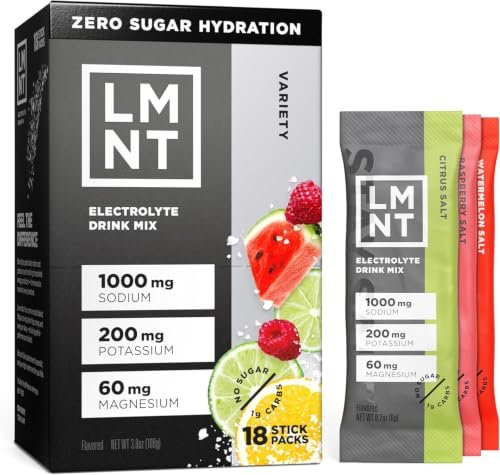
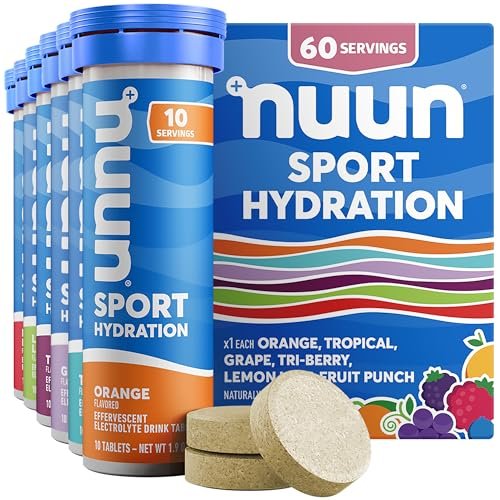
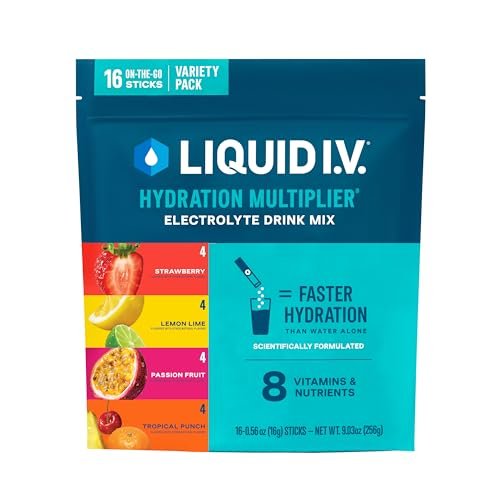
LMNT is high-sodium (about 1,000 mg per stick, no carbohydrate) and aggressively priced. The high-sodium design fits heavy sweaters, ketogenic dieters who run lower on sodium, and people doing long sessions in heat. It is not a sensible daily default for sedentary adults already exceeding 3,000 mg sodium from food. Liquid IV's Hydration Multiplier is lower-sodium and higher-carbohydrate, closer to a watered-down ORS than a pure sweat-replacement drink; the multivitamin layer is largely marketing. DripDrop ORS sits closest to the WHO formula and is the most defensible choice for genuine dehydration (illness, heat, athletic depletion). Pedialyte does the same job in a less-fashionable package. Nuun tabs are lower-sodium fizzy options that work well for light to moderate sessions; Skratch Labs Sport Hydration Mix sits in the ACSM-friendly middle of the range.
A supplement brand can look impressive on a label and still miss the basics. The real question isn't which packet has the loudest marketing, it's which formulation matches your actual sweat losses on the day.
What to look for when buying
- Sodium content per serving, stated in mg, not as a vague "electrolyte blend"
- Glucose or carbohydrate disclosure: present (13 to 25 g/L) for genuine ORS-style rehydration; absent for pure salt-replacement during eating
- Third-party testing: NSF Certified for Sport is the practical standard for athletes screened for banned substances; USP Verified is the better marker for general consumer trust
- Ingredient simplicity: avoid proprietary blends without per-ingredient mg disclosure, and skip products marketed as "performance multivitamins" that quietly carry minimal electrolytes
- Dosing strategy: one serving covers a normal training bottle; two or three may be appropriate for heavy sweaters or longer events; daily un-targeted use is rarely justified
When supplements are not enough
Electrolyte powders are an adjunct to drinking-to-thirst, eating salt with meals, and pacing your heat exposure. Stop self-treating and see a clinician promptly if you experience any of the following: confusion, severe headache, repeated vomiting, the inability to keep fluids down for more than 12 hours, dark urine that does not clear with rehydration, a temperature above 39.4°C (103°F), syncope (passing out), seizure activity, or chest pain. In older adults, heatstroke can present with confusion before classic dehydration signs and is a medical emergency, per CDC heat-related illness guidance. Endurance athletes whose post-race weight is higher than pre-race weight, with headache or confusion, should be evaluated for hyponatremia, not given more water.
FAQ
Do I need an electrolyte packet every day in summer?
Almost certainly not. The average US diet already exceeds the 2,300 mg sodium ceiling, covers most of the potassium gap with a couple of servings of fruit and dairy, and supplies most of the magnesium most adults need (though not all). Daily electrolyte powders are a habit looking for a problem. Reserve them for sessions, heat, illness, or sustained outdoor work.
Is LMNT too salty for normal people?
It is not dangerous for healthy adults, but it is mismatched to most daily use. One stick provides about 1,000 mg sodium, which is appropriate for heavy sweaters or long sessions in heat. If you are sedentary, on a Western diet, or have hypertension, you are layering a high-sodium packet on top of an already high-sodium baseline.
How much water is too much?
Hydration to thirst is the safest default for adults. The exercise-associated hyponatremia consensus warns that drinking ahead of thirst, especially during endurance events, raises the risk of dilutional hyponatremia, which can be severe. There is no benefit to forcing eight glasses on a calm office day if you are not thirsty.
Can I just use brine from a jar of olives or a cup of bone broth?
You can. Olive brine and bone broth deliver sodium plus potassium in a food matrix that your gut handles well. They are not as portable or precise as a packet, but they are real food, and most adults do well on them. The choice is logistics, not biochemistry.
Should I ask my doctor about a blood test?
Yes, if you have unexplained fatigue, frequent cramps, hypertension, kidney concerns, or you take diuretics. Ask your doctor about a basic metabolic panel including sodium, potassium, magnesium, and creatinine before assuming you are low on any of these. Blood work changes the question.
Conclusion: the bottom line on best supplements for summer hydration
The honest summary is short. Sodium is the headline electrolyte you actually lose meaningful amounts of in sweat, and a structured electrolyte drink with 300 to 700 mg of sodium per liter, a modest amount of glucose to activate SGLT1, and 100 to 300 mg of potassium per liter matches the ACSM guidance for endurance sessions and heat. Magnesium and calcium are real but secondary. For most adults on most days, food and water cover the requirement without a packet, and high-sodium powders are best treated as situational tools, not daily rituals. Standard of care is heat-acclimation, drinking to thirst, salting your food, and protecting sleep. The supplements layer on top of that base, they do not replace it.
Next steps
- If you train over 60 minutes in heat or do hard outdoor work, weigh yourself before and after one typical session and use the lost-pound number to size your replacement plan
- Ask your doctor about a basic metabolic panel if you cramp often, run high blood pressure, or take diuretics, before reaching for daily packets
- For more on form selection in the magnesium category, see our best magnesium for sleep breakdown, and for sweat-loss planning in long sessions, see our guide to the best supplements for marathon training; the methodology behind our picks is documented in our how we review supplements page, by Sarah Thompson, RD
This article is for informational purposes and not medical advice. Electrolyte supplementation can interact with blood pressure medications, diuretics, and kidney conditions. Consult a licensed physician before starting any supplement, particularly if you are pregnant, nursing, taking prescription medications, managing a chronic condition, or caring for an older adult at risk of heat-related illness.
Reviewed by Sarah Thompson, Registered Dietitian, focused on vitamin and mineral nutrition.
Top picks on Amazon
As an Amazon Associate, I earn from qualifying purchases. Product recommendations are based on real reviews and independent research.
