
Affiliate disclosure: this article contains affiliate links. As an Amazon Associate, UsefulVitamins.com earns from qualifying purchases at no extra cost to you.
If you have searched for whether ubiquinol is actually worth three times the price of regular CoQ10, you have probably noticed that almost every brand selling the premium form claims it is 4 to 8 times more bioavailable.
Quick Answer: CoQ10 vs ubiquinol, which form should you actually buy?
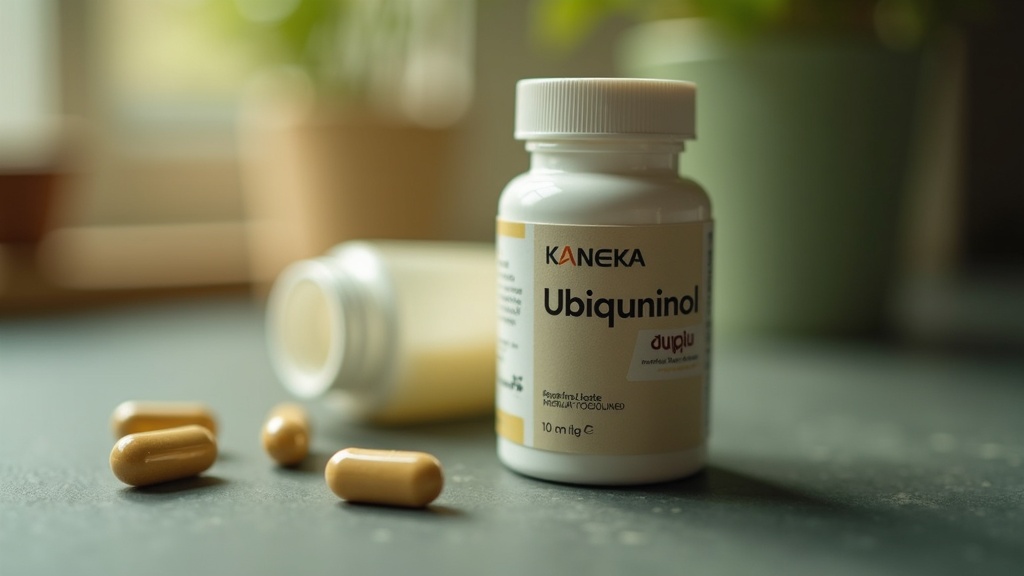
The 1-sentence honest answer: for most healthy adults under 60 with no cardiovascular history, standard CoQ10 (ubiquinone) taken with a fatty meal is the form to buy; ubiquinol only earns its 2 to 3 times higher price tag if you are 60+, on a statin, or have a clinician-managed cardiovascular indication.
Best for standard CoQ10 (ubiquinone) with fat:
- Healthy adults under 60 doing general antioxidant or mitochondrial support
- Migraine prophylaxis users (the Sandor 2005 trial used ubiquinone 100 mg three times daily)
- Anyone cost-sensitive who can reliably take the dose with a meal containing 10+ grams of fat
Best for ubiquinol:
- Adults age 60 and older where endogenous ubiquinone-to-ubiquinol reduction capacity declines
- Statin users with persistent muscle symptoms whose clinician supports a CoQ10 trial
- Heart failure or advanced cardiovascular disease patients in collaborative care with a cardiologist
Skip both forms if you are pregnant or nursing without OBGYN approval, on warfarin without an INR monitoring plan with your prescriber, or expecting CoQ10 to do anything measurable for Parkinson disease (the two largest human trials were null at supplemental doses).
What to do FIRST: look at your age, your statin status, and what you actually eat with your morning capsule. Most CoQ10 absorption failures are not about the form. They are about taking a dry capsule with coffee on an empty stomach.
What bioavailability actually means for CoQ10
Coenzyme Q10 is a lipid-soluble quinone that lives in the inner mitochondrial membrane and shuttles electrons between Complex I, Complex II, and Complex III of the electron transport chain (ETC). When it accepts an electron, it cycles through a semiquinone radical intermediate and ends up in the reduced form, ubiquinol. When it donates that electron to cytochrome c via Complex III, it returns to the oxidized form, ubiquinone. Inside a functioning mitochondrion, the molecule is constantly redox-cycling. The two "forms" you see on supplement shelves are simply different starting points of the same cycle.
The bioavailability problem is that CoQ10 is a large (863 Da), highly lipophilic molecule with poor water solubility. It is absorbed via the same lymphatic route that handles dietary fat, which is why every credible CoQ10 trial instructs subjects to take the dose with a meal. Once absorbed, it has to cross the enterocyte membrane, get packaged into chylomicrons, drain through the thoracic duct, and eventually reach plasma. From plasma, it has to be taken up by peripheral tissues and incorporated into mitochondrial membranes. Every step of that path is fat-dependent.
The proxy metric most trials use is plasma CoQ10 concentration, usually reported as area under the curve (AUC) over 24 to 48 hours, or as Cmax (peak plasma level). What plasma CoQ10 does not directly measure is intramitochondrial CoQ10 in the tissue you care about (heart, brain, skeletal muscle), and that translation gap is one of the honest soft spots in the literature.
Two more terms matter. Ubiquinone is the oxidized form, classic CoQ10, the yellow crystalline powder used in most cheap softgels. Ubiquinol is the reduced form, an orange-red oil that is unstable in air and needs nitrogen-flushed encapsulation. The patented stabilized ubiquinol on the market is almost entirely produced by Kaneka in Japan, which is why the Kaneka name appears so often on premium labels.
The forms compared
Standard CoQ10 (ubiquinone)
Plain ubiquinone is what every CoQ10 supplement sold before about 2007 contained. Chemically it is the oxidized quinone form, dissolved in a soybean or rice bran oil base inside a softgel, or pressed into a dry tablet that absorbs poorly. The bioavailability claim is essentially "1x reference"; this is the form against which every other form is compared. Cost in 2026 runs roughly $0.15 to $0.30 per 100 mg dose for reputable third-party-tested brands.
Once absorbed, ubiquinone has to be reduced to ubiquinol by the body before it can act as an antioxidant or accept electrons. This reduction happens via the NQO1 enzyme pathway (NAD(P)H quinone dehydrogenase 1) and via several other tissue-specific reductases. In healthy adults under 40, this reduction step is fast and efficient. In older adults and people with certain chronic conditions, reduction capacity declines, which is the mechanistic reason ubiquinol may outperform in older readers.
Ubiquinol (Kaneka pre-reduced)
Ubiquinol is the reduced form, pre-converted before you swallow it. The claim is that by skipping the reduction step, ubiquinol bypasses one rate-limiting absorption barrier and produces higher plasma concentrations. In Failla et al. 2014, 12 healthy adults received single 200 mg doses of ubiquinone or ubiquinol in a crossover design, and ubiquinol produced roughly 2 to 3 times higher AUC at 24 hours. Subsequent studies in older adults and in people with absorption challenges have reported larger differences (sometimes 4x), particularly in subjects whose baseline reduction capacity is impaired.
Kaneka is the patent holder for the only stabilized ubiquinol form. When a label says "Kaneka Ubiquinol" or carries the Kaneka quality seal, that is the studied ingredient. Generic "ubiquinol" without that designation may be a lookalike or may degrade to ubiquinone in the bottle. Cost runs $0.40 to $1.00 per 100 mg active dose.
Solubilized or emulsified CoQ10 (Q-Gel, MicroActive, BioActive)
A third category exists between standard and ubiquinol: solubilized ubiquinone. These products use proprietary emulsification systems (Q-Gel uses a hydrosoluble lipid carrier; MicroActive uses a beta-cyclodextrin complex; various liposomal preparations exist) to pre-disperse the molecule and improve enterocyte uptake. The Pravst et al. 2020 review in Nutrients compared multiple formulations and found that well-designed solubilized ubiquinone preparations achieved plasma concentrations comparable to ubiquinol, at roughly half the cost. The trial coverage is thinner than for ubiquinol, but the mechanism is sound and the price-per-effective-mg is often better.
| Form | Relative Bioavailability | Typical Active Dose | Cost Per 100 mg Dose |
|---|---|---|---|
| Standard ubiquinone (oil softgel) | 1.0x (reference) | 100 to 200 mg with fat | $0.15 to $0.30 |
| Solubilized ubiquinone (Q-Gel, MicroActive) | 2 to 3x | 100 mg | $0.25 to $0.50 |
| Kaneka ubiquinol | 2 to 4x | 100 mg | $0.40 to $1.00 |
The RCT evidence per form
The bioavailability gap between ubiquinone and ubiquinol is best documented in Failla 2014, a small crossover study (n=12 healthy adults) measuring 24-hour plasma AUC after a single 200 mg dose. Ubiquinol produced approximately 2 to 3 times higher plasma concentration. The trial is small and acute, not a chronic-dosing or clinical-outcome study, and the population was healthy young adults whose endogenous reduction capacity was intact. That last detail matters: in a population where reduction is the rate-limiting step, the ubiquinol advantage in the same study design would likely be larger.
For clinical outcomes in heart failure, Mortensen et al. 2014 (Q-SYMBIO) is the cleanest published trial. The investigators randomized 420 NYHA class III-IV heart failure patients to 100 mg ubiquinone three times daily or placebo for 2 years, on top of standard care. The CoQ10 arm showed reduced major adverse cardiovascular events (MACE) and improved functional class. Q-SYMBIO used ubiquinone, not ubiquinol, which is a useful counterweight to the marketing assumption that ubiquinol is automatically the form heart patients need. In active heart failure with low circulating CoQ10, both forms appear to deliver therapeutically relevant tissue levels at high enough doses.
For statin-associated muscle symptoms (SAMS), the evidence is genuinely mixed. The Tomasetti et al. 2019 review walks through the trial landscape: some RCTs find CoQ10 reduces statin muscle pain, others find no separation from placebo. Mechanistically the case is strong (statins inhibit HMG-CoA reductase, which is upstream of both cholesterol and CoQ10 synthesis), but the trial heterogeneity in dose, form, statin type, and outcome measure makes the literature messier than the marketing implies. The practical guidance from cardiology practice: a CoQ10 trial at 100 to 200 mg/day is reasonable for symptomatic statin users, with the understanding that CoQ10 is an adjunct to statin therapy, never a replacement.
For Parkinson disease, the honest answer is humbling. Shults et al. 2002 reported a slowing of functional decline at 1,200 mg/day ubiquinone in early PD. The follow-up QE3 trial by Beal et al. 2014 randomized 600 early PD patients to placebo, 1,200 mg/day, or 2,400 mg/day CoQ10 for 16 months and was stopped early for futility. No clinical benefit. The translation from rodent neuroprotection signals to human PD outcomes did not hold. Anyone buying CoQ10 for Parkinson disease prevention is reading past the RCT evidence.
Cost-vs-bioavailability decision matrix
The honest math: if ubiquinol is 2 to 4 times more bioavailable but 2 to 3 times more expensive, the cost per absorbed milligram is roughly comparable to standard ubiquinone, sometimes slightly better, sometimes slightly worse, depending on the brand and the absorption assumption you use. Solubilized ubiquinone often wins the cost-per-active-milligram comparison outright, but is less widely available.
When the premium form genuinely pays off: age 60+ (reduction capacity declines with age, documented in multiple aging cohorts), diagnosed cardiovascular disease in clinician-managed care, statin users with persistent muscle symptoms whose clinician supports a CoQ10 trial, post-bariatric surgery patients with impaired lipid absorption, and women in fertility treatment where ubiquinol is the form used in IVF protocols at the reproductive endocrinologist's direction.
When the cheap standard form is fine: healthy adults under 60 taking CoQ10 as general antioxidant or mitochondrial support, migraine prophylaxis users taking the standard 100 mg three-times-daily regimen, and anyone whose reduction capacity is intact and who reliably takes the dose with a fat-containing meal.
A simple way to judge whether you are in the "premium worth it" category (without a PhD): are you over 60, on a statin, or supervised by a cardiologist for a CV condition? If yes to any one, the ubiquinol premium is a reasonable expense. If no to all three, you are paying for marketing.
How to choose the right form for your goal
If you are a healthy adult under 60 doing general supplementation
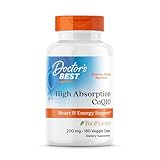
Choose standard ubiquinone, 100 mg per day, taken with the most fat-containing meal of your day. Doctor's Best CoQ10 100 mg with BioPerine and Jarrow Formulas Q-Absorb (Q-Gel solubilized) are both widely available on Amazon at the standard form price point. The Q-Gel format adds a modest absorption boost at a small premium and is a reasonable compromise.
If you are over 60 doing general healthy aging supplementation
Ubiquinol becomes defensible here, even without a specific clinical indication. The endogenous reduction capacity decline is real and is the mechanistic reason for the form change. 100 mg per day of Kaneka ubiquinol with a fat-containing meal is a reasonable baseline. Brands carrying the Kaneka Ubiquinol designation include Jarrow Formulas QH-absorb and Qunol Mega Ubiquinol.
If you are a statin user with muscle symptoms
Talk to your prescriber first. CoQ10 is an adjunct to statin therapy and is not a substitute. The clinical literature supports a 100 to 200 mg/day trial of CoQ10 (form not definitively established in the trial data) for 8 to 12 weeks, with the statin continued at the prescribed dose. If symptoms improve and the statin remains tolerated, the trial worked. If not, the statin choice itself may need revisiting with your clinician.
If you have diagnosed heart failure or coronary artery disease
This is a clinician-managed scenario, not a do-it-yourself one. The Q-SYMBIO regimen was 100 mg ubiquinone three times daily on top of standard heart failure care. Discuss CoQ10 supplementation with your cardiologist before adding it, especially because of the warfarin interaction discussed below.
If you are using CoQ10 for migraine prophylaxis
Either form works. The trial-tested regimen is 100 mg three times daily, ideally with meals. Most consumer bottles are 30 to 100 mg per capsule and are dosed once daily, which is one third of the studied regimen. The dose-trial-supplement gap is the most common reason migraine users report no benefit. Take the trial dose or do not bother.
If you are a woman in fertility treatment
Defer to your reproductive endocrinologist. Ubiquinol is the form most commonly used in IVF protocols for oocyte quality support, typically at 200 to 600 mg per day. This is not a self-prescribing scenario.
FAQ
Is the difference between CoQ10 and ubiquinol actually meaningful or is it just marketing?
It is real but narrower than the marketing implies. The 2 to 4x bioavailability advantage is documented, but it only translates into a clinical difference in populations where the endogenous reduction step is impaired (age 60+, certain disease states). For a healthy 30-year-old, paying 3x more for ubiquinol mostly funds the supplement company.
Can I take CoQ10 on an empty stomach?
No, or at least not with any expectation that it will work. CoQ10 absorption is fat-dependent regardless of form. Take it with the largest fat-containing meal of your day.
Why does the dose on my bottle look smaller than the dose in the trials?
Because consumer bottles are dosed for general supplementation, not clinical-trial reproduction. Q-SYMBIO used 300 mg/day (split). Migraine trials used 300 mg/day (split). Parkinson trials used 1,200 to 2,400 mg/day. Most consumer bottles deliver 30 to 100 mg per day. If you are pursuing a clinical outcome, you usually need 3 to 10 capsules per day at consumer doses, which is a real cost consideration.
Does CoQ10 interact with any medications?
Yes. According to the Drugs.com CoQ10 monograph, CoQ10 can decrease the anticoagulant effect of warfarin (it has structural similarity to vitamin K and may reduce INR), so coadministration requires an INR monitoring plan with your prescriber. CoQ10 is commonly used alongside statins specifically because statins deplete endogenous CoQ10 synthesis; this is an additive, not a problematic, interaction. Anyone on prescription medication should review the full interaction profile with their clinician or pharmacist.
Is the Kaneka name actually meaningful or is it just a brand label?
In this case, yes, the brand designation is meaningful. Kaneka is the patent holder for the stabilized ubiquinol production process used in essentially all published ubiquinol bioavailability research. A product labeled "Kaneka Ubiquinol" is the studied form. Generic "ubiquinol" without that designation may be a different (or degraded) molecule.
Taking this alongside other products? StackMyMed (our companion app) logs your full stack, finds the optimal timing for each dose, and flags interactions, so you are not tracking it all by hand.
Conclusion: the bottom line on CoQ10 bioavailability
For most healthy adults under 60, standard CoQ10 (ubiquinone) taken with a fatty meal is the form to buy. The 2 to 4 times higher plasma concentration produced by ubiquinol is real, but in a population whose endogenous reduction capacity is intact, that absorption advantage does not reliably translate into a clinical difference. The premium ubiquinol price is best justified in adults age 60 and older, statin users with muscle symptoms whose clinician supports a CoQ10 trial, and people with diagnosed cardiovascular disease in collaborative care with a cardiologist. The dose-trial-supplement gap is the most consistent failure mode across the category: consumer doses are typically one quarter to one third of the doses used in the published outcome trials, and form is a less important decision than dose.
If you are buying for general healthy aging and not for a specific clinical indication, the cost-effective stack is 100 mg of standard ubiquinone (or solubilized ubiquinone for a modest absorption boost) with breakfast that contains real fat. Anything more expensive than that, in a healthy 30 or 40-year-old, is funding marketing rather than improving outcomes.
Next steps:
- Read our supplement review methodology to see how we evaluate bioavailability claims and assign confidence levels to form comparisons.
- Visit Maria Rodriguez's author page for more nutrient-form deep dives on the mitochondrial and nootropic side of the supplement market.
- For an adjacent topic where CoQ10 sometimes shows up in clinician protocols, see our guide to the best supplements for fatty liver, which covers the overlapping mitochondrial-dysfunction context.
Reviewed by Maria Rodriguez, MS Nutrition Science, focused on cognitive and mood biochemistry.
This article is for informational purposes and not medical advice. CoQ10 can interact with warfarin and other prescription medications, and the clinical use of CoQ10 in heart failure or statin-associated muscle symptoms should be discussed with a licensed clinician. Consult a licensed physician before starting any supplement, particularly if you are pregnant, nursing, taking prescription medications, or managing a chronic condition.
Recommended Products


As an Amazon Associate, UsefulVitamins.com earns from qualifying purchases at no extra cost to you. We only recommend products supported by published research or third-party testing.
