
Affiliate disclosure: this article contains affiliate links. As an Amazon Associate, UsefulVitamins.com earns from qualifying purchases at no extra cost to you.
If you're trying to figure out whether D2 or D3 is the right vitamin D form, and whether the oil softgel, tablet, or sublingual spray matters at all, the short answer is: for most adults, an oil-based D3 softgel taken with a meal containing some fat is the form with the cleanest absorption data and the lowest cost per active microgram, and D2 is the inferior choice when D3 is affordable. The bigger question is whether you should be supplementing at all and what your baseline 25-hydroxyvitamin D level is.
The conversion factor is identical for D2 and D3: 1 mcg = 40 IU. Convert a label figure here.
Summary / Quick Answer: which vitamin D form gives the best absorption per dollar?
For general supplementation in a healthy adult, an oil-based D3 softgel at 1,000 to 2,000 IU daily, taken with a meal containing at least 10 grams of fat, is the form that wins on both bioavailability and cost per active microgram.
- Best for the general supplementing adult: D3 cholecalciferol oil softgel, lanolin-derived, 1,000 to 2,000 IU per dose, roughly $0.02 to $0.10 per dose at warehouse pricing.
- Best for vegans: lichen-derived D3, structurally identical to lanolin D3, at roughly $0.30 per dose.
- Not ideal for most adults: D2 ergocalciferol. It works in prescription repletion at 50,000 IU weekly (Drisdol), but mg-for-mg D2 raises serum 25(OH)D roughly 30% less than D3 in the Tripkovic 2012 meta-analysis.
- Skip: premium sublingual sprays at 5 to 10 times the softgel price. The "faster absorption" marketing is not supported by replicated head-to-head data versus standard oral D3.
- Decision shortcut: form matters less than baseline 25(OH)D status, fat content of the meal taken with the dose, and whether you actually need to supplement under the relevant guideline.
What bioavailability means for vitamin D
Vitamin D is a fat-soluble seco-steroid. Both D2 (ergocalciferol, from UV-irradiated plant or yeast sterols) and D3 (cholecalciferol, from UV-irradiated lanolin or lichen) are inactive precursors. They reach circulation through chylomicron incorporation during fat absorption in the small intestine, then enter the lymphatic system. That lipid-dependent route is why a low-fat meal blunts absorption.
Once in circulation, vitamin D is hydroxylated in the liver to 25-hydroxyvitamin D (25(OH)D), the storage and measurement form with a half-life of roughly 15 days. A second hydroxylation in the kidney produces 1,25-dihydroxyvitamin D (calcitriol), the active hormone. Clinical assays measure 25(OH)D in ng/mL or nmol/L, and that number is the proxy for vitamin D status.
The rule of thumb is that each 100 IU of daily oral D3 raises serum 25(OH)D by roughly 1 ng/mL at steady state, with the response curve flattening above 4,000 IU daily. The Endocrine Society's 2011 Clinical Practice Guideline defines deficiency as 25(OH)D below 20 ng/mL and insufficiency as 20 to 29 ng/mL, while the Institute of Medicine sets a lower threshold of 20 ng/mL as sufficient for skeletal health in the general population. Those two thresholds are the source of most public confusion about who should supplement.
Trials in this space measure 25(OH)D response at 4 to 12 weeks of steady-state daily dosing, sometimes with single-dose AUC for acute pharmacokinetic comparisons. Bolus dosing at 50,000 IU weekly has different pharmacology than daily 1,000 to 5,000 IU, and the literature has to be read with that distinction in mind.
The forms compared
D3 cholecalciferol, oil-based softgel
The reference standard. Lanolin-derived D3 dissolved in olive, MCT, or coconut oil and encapsulated in a softgel. Doses commonly run 1,000, 2,000, 4,000, or 5,000 IU per softgel. The oil base preloads the fat-soluble vitamin into a lipid carrier, which is the form chylomicrons handle most efficiently. Lanolin D3 and lichen-derived D3 are structurally identical and behave the same in absorption studies; the difference is cost and dietary source, not bioavailability.
D3 cholecalciferol, dry tablet or powder
Same molecule, different delivery. D3 powder is pressed into a tablet or filled into a capsule without oil. The Grossmann 2010 trial compared oil-based, powder, and emulsion D3 formulations head-to-head and found that the oil-based form produced the highest 25(OH)D response over 12 weeks at matched 50,000 IU monthly dosing. Powder absorption is real but consistently runs below oil-based even with a fatty meal.
D2 ergocalciferol
The plant or yeast form, made by UV-irradiating ergosterol from fungi like Saccharomyces cerevisiae. It is the form historically used as a prescription product (Drisdol, 50,000 IU capsules) for documented deficiency repletion, partly because regulatory framing predates the widespread availability of D3.
The bioavailability is the catch. The Tripkovic 2012 meta-analysis pooled 7 head-to-head trials and found that D3 raised serum 25(OH)D roughly 1.7 times more than D2 on a microgram-for-microgram daily dose, and that the gap was larger with bolus dosing. D2 is not pharmacologically inert. It just produces a smaller and shorter 25(OH)D rise than D3 at the same dose.
Sublingual D3 spray
D3 dissolved in a flavored oil base and dispensed as a metered spray. Marketing claims faster onset because the mucosal route theoretically bypasses first-pass hepatic metabolism, but vitamin D does not undergo significant first-pass loss given its lymphatic absorption route. The 25(OH)D rise from sublingual D3 at matched doses runs broadly comparable to oral oil-based D3 in the small studies that exist, with no replicated advantage to justify the typical 5 to 10 times higher per-dose cost.
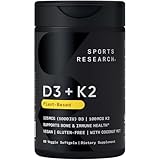
D3 plus K2 (MK-7) combination
A rational pairing for adults specifically concerned about calcium handling. Vitamin K2 (menaquinone-7) activates osteocalcin and matrix Gla protein, which respectively help direct calcium into bone and away from arterial walls. The Schwalfenberg 2017 review outlines the mechanistic case. The combination does not improve D3 absorption, but it addresses a downstream calcium-routing question that pure D3 does not.
Form comparison table
| Form | Relative Bioavailability (25(OH)D response) | Typical Dose | Approximate Cost per 1,000 IU |
|---|---|---|---|
| D3 oil-based softgel (lanolin) | 1.0x (reference) | 1,000–5,000 IU | $0.01–$0.03 |
| D3 oil-based softgel (lichen, vegan) | 1.0x | 1,000–5,000 IU | $0.10–$0.30 |
| D3 dry tablet or powder | ~0.7–0.9x | 1,000–5,000 IU | $0.01–$0.03 |
| D2 ergocalciferol | ~0.6x (mg-for-mg daily) | 1,000 IU or Rx 50,000 IU weekly | $0.01–$0.02 |
| Sublingual D3 spray | ~1.0x | 400–1,000 IU per spray | $0.10–$0.40 |
| D3 + K2 MK-7 combination | 1.0x (D3 unchanged); adds K2 | 1,000–5,000 IU D3 + 90–180 mcg MK-7 | $0.15–$0.40 |
The RCT evidence per form
The Tripkovic 2012 meta-analysis is the cleanest reference for the D2-versus-D3 comparison. Across 7 trials, daily D3 outperformed daily D2 by an average of roughly 1.7-fold on serum 25(OH)D response, with the absolute gap widening at higher doses and at bolus dosing. The mechanism is plausibly faster 25-hydroxylation of D3 in the liver and longer half-life of D3-bound 25(OH)D versus D2-bound. The clinical implication is that if you are choosing between D2 and D3 at the supplement counter, D3 is the better tool. The exception is the Drisdol use case, where a clinician has prescribed weekly D2 specifically because that is the regulatory product available in many US pharmacies.
The Grossmann 2010 trial settled the oil-versus-powder question for D3. Over 12 weeks of monthly 50,000 IU dosing, the oil-based form produced the highest mean 25(OH)D, emulsion was intermediate, and powder was lowest, with absolute gaps of roughly 15 to 20 ng/mL between oil and powder.
For the clinical outcome question, the Manson VITAL trial tested 2,000 IU/day vitamin D3 versus placebo over a median 5.3 years in roughly 25,800 adults aged 50 and older and reported no significant effect on the primary endpoints of invasive cancer or major cardiovascular events. Secondary analyses in the Hahn 2022 follow-up found a reduced incidence of autoimmune disease, with the strongest signal in the combined D3-plus-omega-3 arm.
The USPSTF 2021 statement gives Grade I (insufficient evidence) for routine vitamin D screening in asymptomatic community-dwelling adults. The same body gives Grade B for vitamin D supplementation to prevent falls in adults 65 and older at increased risk, which is the firmest population-level recommendation that exists. The Endocrine Society 2011 guideline takes a more aggressive position on screening and repletion in at-risk populations (older adults, darker-skinned individuals, malabsorption patients, post-bariatric patients) and is the dominant framework in most US primary care.
Actionable takeaway: for documented deficiency under 20 ng/mL, repletion is a clinician-managed decision (commonly 50,000 IU weekly D2 or D3 for 6 to 8 weeks, then a maintenance dose). For fall prevention in adults 65 and older at increased risk, USPSTF supports 800 to 1,000 IU daily D3. For everyone else, the supplement question is modest adjunctive signal at the margin of a standard preventive care regimen that's already doing most of the work.
Cost-vs-bioavailability decision matrix
The math that matters is dollars per 1,000 IU of effectively absorbed D3, not dollars per bottle. Once you adjust for form bioavailability, the cost spread between oil softgel D3, dry tablet D3, and prescription D2 collapses to a small window, while sublingual spray and lichen vegan D3 sit at meaningful premiums.
A 500-count bottle of standard D3 softgels at 2,000 IU per softgel from Kirkland Signature or Nature Made runs roughly $10 to $14, near $0.01 to $0.02 per 1,000 IU. Sublingual D3 sprays at matched dose run $0.10 to $0.40 per 1,000 IU, a 5 to 20 times markup for an absorption profile that is at best comparable. Lichen-derived vegan D3 softgels run $0.10 to $0.30 per 1,000 IU, a real premium but the only viable vegan option that delivers the better-absorbed form.
The D3+K2 combination earns its premium when the supplementing adult has a specific reason to care about calcium routing into bone rather than soft tissue: adults on bone-health protocols, postmenopausal women with osteopenia not yet on bisphosphonates, and adults combining vitamin D supplementation with high dietary calcium. For a generally healthy adult taking 1,000 IU D3 for baseline insurance, the K2 add-on is optional.
For the 1,000 to 2,000 IU daily insurance dose in adults without prescription-grade indications, a warehouse-tier D3 softgel covers the goal at the lowest possible cost. The bioavailability gap between Kirkland Signature and a premium practitioner-channel D3 softgel is essentially zero.
How to choose the right form for your goal
If you're a generally healthy adult supplementing for baseline insurance and you have not had your 25(OH)D measured, choose a 1,000 to 2,000 IU D3 oil softgel from a warehouse-tier brand and take it with a meal that includes some fat. Kirkland Signature, Nature Made, and Doctor's Best are widely available USP Verified or quality-tested options.
If you have documented vitamin D deficiency under 20 ng/mL, work with your clinician on a repletion protocol. The common framework is 50,000 IU weekly D3 or D2 for 6 to 8 weeks followed by a 1,000 to 2,000 IU daily maintenance dose, with a follow-up 25(OH)D at 3 months. The high-dose phase needs clinical oversight.
If you are 65 or older and your clinician has identified increased fall risk, USPSTF supports 800 to 1,000 IU daily D3 as a Grade B preventive intervention. An oil softgel at this dose runs less than $20 per year.
If you are pregnant, the typical OB-GYN guidance runs 600 to 2,000 IU daily D3, but the specific target should come from your OB-GYN based on baseline status. Do not self-titrate above 2,000 IU in pregnancy without consulting your OB-GYN.
If you are vegan, choose a lichen-derived D3 softgel. The cost premium is real but the form is bioavailability-equivalent to lanolin D3 and is the better choice than D2 even at the higher per-dose price.
If you have a documented malabsorption condition (cystic fibrosis, inflammatory bowel disease, celiac, post-bariatric surgery), the rules change. Higher doses, oil-based forms, and sometimes prescription D2 or D3 in a fat-containing meal are the standard adjustments under clinical oversight.
If you are tempted by a premium sublingual D3 spray, the absorption data does not justify the price premium for the typical use case.
Actionable takeaway: form choice matters less than three other things, baseline 25(OH)D status, whether the dose is taken with a meal containing fat, and whether your clinical scenario warrants supplementation at all under USPSTF or Endocrine Society framing.
FAQ
Is D2 a scam? No. D2 raises 25(OH)D in a dose-dependent way and is the basis of the prescription Drisdol repletion regimen. It just raises 25(OH)D roughly 30% less per microgram than D3 in daily dosing per the Tripkovic 2012 meta-analysis, which is why D3 is the better OTC choice when both are available.
Do I really need to take vitamin D with food? Yes, for meaningful absorption. The often-cited Mulligan and Licata 2010 observational analysis found that adults who took vitamin D with the largest meal of the day increased 25(OH)D by roughly 50% over those who took it on an empty stomach. A meal with at least 10 grams of fat is the practical threshold.
Why does my doctor want me on weekly 50,000 IU Drisdol instead of daily D3? Drisdol is the FDA-approved prescription product for documented deficiency repletion and is what many US pharmacies stock. The weekly bolus regimen has decades of clinical use. Daily D3 at lower doses is a defensible alternative but is a clinician judgment, not a self-substitution.
Can I overdose on vitamin D from a supplement? Yes, at sustained high doses. Daily intakes above 4,000 IU should generally be clinician-monitored, and intakes above 10,000 IU sustained for months have been associated with hypercalcemia in case reports. The IOM upper tolerable intake is 4,000 IU daily for adults.
Drug-supplement interaction notes
Per Drugs.com and the NIH ODS vitamin D fact sheet for health professionals, notable interactions include thiazide diuretics (hydrochlorothiazide, chlorthalidone), which can additively raise serum calcium with vitamin D supplementation and have been linked to hypercalcemia in case reports, and calcium channel blockers (verapamil, diltiazem), where vitamin D-induced hypercalcemia can theoretically alter cardiac conduction. Digoxin has the most clinically relevant pairing: vitamin D-induced hypercalcemia can increase digoxin toxicity risk, and patients on digoxin should have calcium and 25(OH)D monitored if supplementing above 1,000 to 2,000 IU daily. Glucocorticoids reduce vitamin D activation, and orlistat plus bile-acid sequestrants reduce fat absorption and can lower vitamin D uptake. At the 1,000 to 2,000 IU daily maintenance dose in adults without these concurrent medications, clinically significant interaction risk is low. Patients on any of the above regimens should review supplementation with their prescriber.
If this is one of several products you take, StackMyMed (our companion app) scans each label and tallies your true daily total of every vitamin — an easy way to spot a quiet overlap.
Conclusion: the bottom line on vitamin D bioavailability
For the majority of readers supplementing vitamin D, the form question lands in a narrower window than the marketing suggests. An oil-based D3 softgel from a warehouse-tier brand covers the baseline insurance dose at roughly $0.02 per 1,000 IU and matches the bioavailability of the most expensive premium options. D2 is the inferior OTC choice when D3 is affordable, though it earns its place in the prescription Drisdol repletion regimen. Dry tablets absorb less than oil softgels even with a fatty meal. Sublingual sprays are overpriced for the absorption signal they deliver. D3+K2 combinations earn their premium only when a specific calcium-routing concern justifies the K2 component.
The honest comparison is not "premium form versus cheap form." It is "what is my baseline 25(OH)D, what does the relevant guideline say about my situation, and am I taking the dose with a meal that has enough fat." Form drift, empty-stomach dosing, and skipping the lab test that would tell you whether to supplement at all are the three failure modes worth worrying about. Brand prestige is not.
Next steps:
- Review how we evaluate supplements for the testing framework used in this article.
- Read more from Michael Ward, MD MPH on guideline-anchored chronic disease supplementation.
- For dosing, food sources, sun exposure, and the broader role of vitamin D in chronic disease prevention, see the complete guide to vitamin D.
Reviewed by Michael Ward, MD MPH, Preventive Medicine, focused on guideline-based chronic disease management.
This article is for informational purposes and not medical advice. Vitamin D supplements can interact with thiazide diuretics, calcium channel blockers, digoxin, glucocorticoids, and fat-absorption-altering medications, and high sustained doses can cause hypercalcemia. Consult a licensed physician before starting any supplement, particularly if you are pregnant, nursing, taking prescription medications, or managing a chronic condition.
Recommended Products

As an Amazon Associate, UsefulVitamins.com earns from qualifying purchases at no extra cost to you. We only recommend products supported by published research or third-party testing.
