
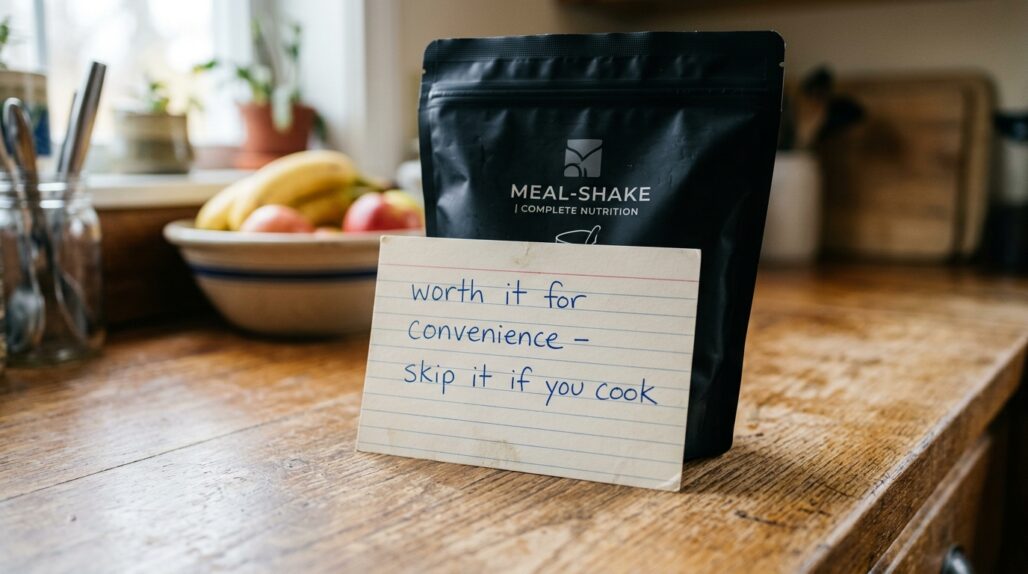
Affiliate disclosure: this article contains affiliate links. As an Amazon Associate, UsefulVitamins.com earns from qualifying purchases at no extra cost to you.
Before you buy
You are not really deciding whether Ka'Chava is "healthy." Almost any decent meal-replacement shake clears that bar. The actual question is narrower: is around $4.66 a serving a fair trade for what's in the bag?
Ka'Chava sells a feeling. Amazonian superfoods, an "ancient wisdom" backstory, a sleek black bag, and a list of 85-plus ingredients that reads like a rainforest inventory. The marketing is genuinely excellent. It is also most of what the premium pays for.
This review does the math the brand would rather skip. What it costs, what's really inside, what you can't see on the label, and what a sharper shopper buys instead. For the bigger picture, our roundups of supplements for energy and fatigue and the best multivitamins compared put one product in context.
What Ka'Chava actually is, per serving
Strip the romance and Ka'Chava is a plant-based meal-replacement powder. One serving is two scoops, roughly 62 grams. According to the brand's own ingredients page, that gets you:
- 240 calories
- 25 g protein from pea and brown rice, plus coconut and oat "plant milks"
- 22 g carbohydrate and 6 g fiber
- 6 g sugar (4 g added)
- 6 g fat (2.5 g saturated)
- A spread of vitamins and minerals at meaningful daily-value percentages
That is a respectable macro profile for a meal stand-in. The protein lands where a good shake should, and the fiber is fine. Nothing here is bad for you.
But look at what does the real work: protein, fiber, calories, and a multivitamin's worth of micronutrients. Those four things earn their keep. The maca, chlorella, adaptogens, and mushroom blend are where the price and the storytelling live.
For reference, adult protein needs sit near the RDA of 0.8 g per kg of body weight, with active people aiming higher, as Harvard Health spells out. So 25 g per serving is a solid contribution. It is also no more than a $1 scoop of plain pea protein gives you. The amount and quality of the protein matter; the brand on the bag does not.
The proprietary-blend problem
Here is the part that should bother any value hunter.
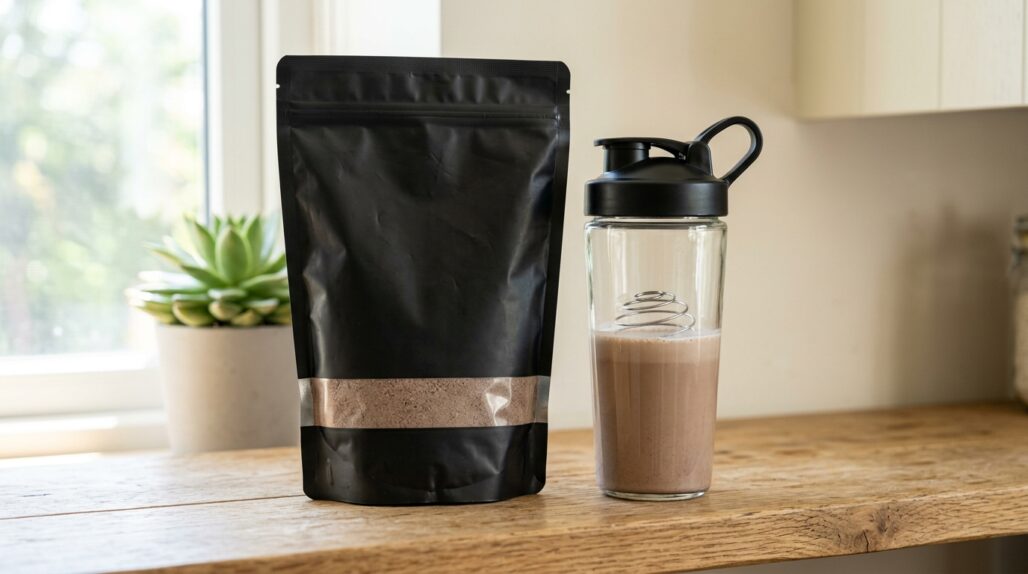
Ka'Chava lists its ingredients inside several named "blends": plant proteins and plant milks, greens and superfoods, fiber and probiotics, adaptogens, antioxidants, and so on. Inside each blend you get a list of ingredients but not the individual doses.
So you know maca root and chlorella are in there. You have no way to tell whether you're getting a clinically meaningful gram of each or a token sprinkle for the label.
This is one of the oldest moves in the supplement playbook. A proprietary blend lets a brand name 30 exciting ingredients while quietly using whatever amount is cheapest. The protein and the vitamins have to hit their stated numbers, because those are declared. The "superfoods" mostly are not.
When you read "85-plus superfoods," translate it: some unknown, possibly trivial, amount of 85-plus things. It isn't dangerous. It just isn't transparent, and you're paying premium money for ingredient quantities you cannot verify. That undisclosed dosing is one of the patterns we flag in our supplement safety red flags guide.
Quality and third-party testing
Credit where it's due. Ka'Chava is not a fly-by-night operation.
On its Quality and Safety page, the company says it tests at multiple stages with third-party labs, screening for allergens, toxins, aflatoxins, pesticides, microbials, potency, purity, and heavy metals, and that it manufactures in the USA. Its Help Center states the product is third-party tested and has tested below FDA Interim Reference Levels for lead.
Now the asterisk. Plant-based protein powders as a category carry more heavy metals than whey, because plants pull lead and cadmium out of the soil. In October 2025, Consumer Reports tested 23 protein powders and shakes and found plant-based options averaged about nine times the lead of dairy-based ones.
Read that carefully, though: that report did not test Ka'Chava. It describes the category, not this product.
Separately, the consumer advocate Tamara Rubin (Lead Safe Mama) published a 2025 test reporting that a Ka'Chava matcha flavor was positive for lead, cadmium, and arsenic. Verification is limited here. The post is from an advocacy site, and the specific lab figures were not fully clear to us, so we will not put a number on it. Treat it as a flag worth knowing, not a settled scandal.
The honest read: Ka'Chava tests more than many competitors and stays under FDA lead limits by its own account, but "under the limit" is not "zero." Any plant powder you drink daily deserves a glance at the brand's testing claims, and the same transparency standard should apply to dosing, which is exactly what the proprietary blends withhold.
The cost-per-serving math
This is where it falls apart.
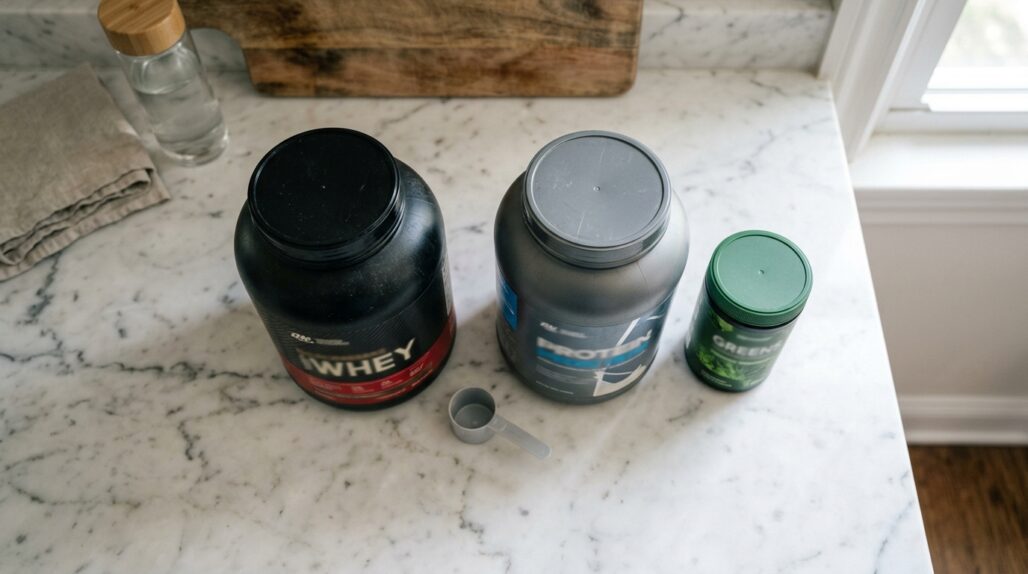
Let's rebuild Ka'Chava's useful parts from the shelf. What it genuinely gives you that matters is about 25 g plant protein, 6 g fiber, a greens hit, and multivitamin-level micronutrients. Replicate that and compare:
| Factor | Ka’Chava (one-time) | Ka’Chava (subscription) | DIY stack |
|---|---|---|---|
| Cost per serving (as of writing) | ~$4.66 | ~$3.99 | ~$1.50-$3.00 combined |
| What you get | 25 g protein, greens, vitamins, fiber, one scoop | Same, on a recurring shipment | 20-30 g protein, a greens powder, full daily micros |
| Dose transparency | Low, superfoods hidden in blends | Low, same blends | High, you see every dose |
| Convenience | Highest, one scoop | Highest, auto-delivered | Lower, three products to mix |
Plant protein powders run roughly $0.60-$2.00 a serving. A solid greens powder is roughly $0.80-$2.00. A no-frills multivitamin is pennies, often $0.10-$0.30 a day.
Stack all three and you land near $1.50-$3.00 a serving while knowing exactly how much of each thing you're swallowing. If you already eat real meals, drop the greens and the multivitamin and a protein scoop alone can run under a dollar.
Ka'Chava costs more and tells you less. You're paying a premium of a dollar or two per serving for one scoop and a better story. Over a month of daily use, that's an easy $30 to $60 of vibe tax.
Who Ka'Chava suits, and who overpays
Nobody should pretend this product has no audience. Convenience has real value for the right person.
Buy it if you genuinely skip meals, you've tried a DIY routine and never stuck with it, and one grab-and-go scoop is the difference between something balanced and a gas-station pastry. For that person, $4.66 to reliably replace a skipped lunch beats the alternative. The taste is good too, which matters for sticking with it.
You're overpaying if you cook, you already own a protein tub, you read labels, or the word "adaptogen" makes you reach for your wallet on faith. Assemble a protein-and-greens routine yourself and the premium all-in-one is money lit on fire.
And if the "85 superfoods" are your reason for buying? That is the exact part you cannot dose-verify, and the part you most overpay for.
Where to buy and the smarter value pick
If you've decided convenience wins, buy Ka'Chava. No shame in it.
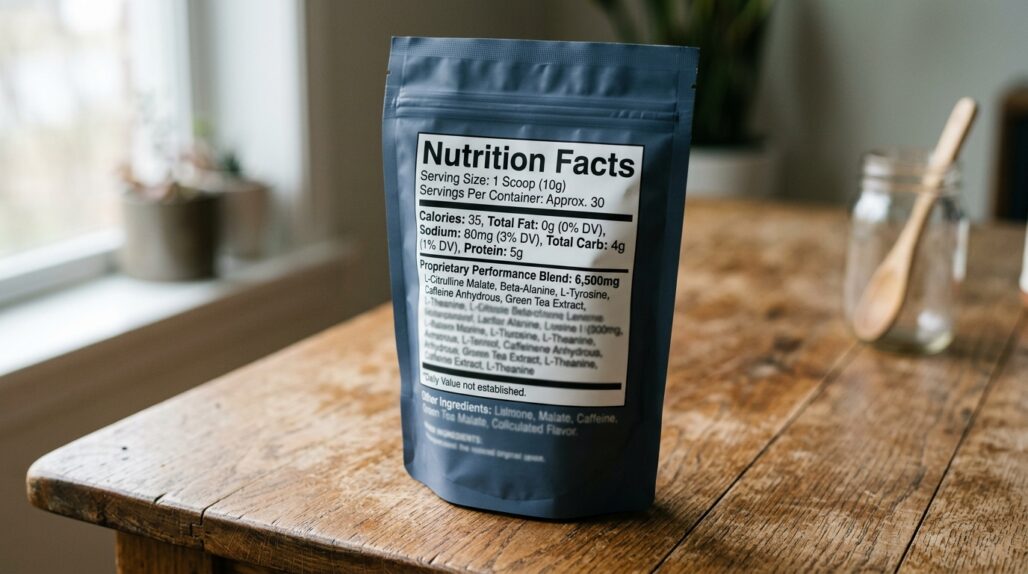
For most people, though, the smart-money move is the DIY stack: a transparent, well-dosed plant protein, a greens powder with doses you can actually read, and a cheap daily multivitamin. Same job, lower cost, full transparency. Our notes on the B-vitamins your multivitamin should cover help you judge whether a given product is doing real work or just listing names.


As an Amazon Associate, UsefulVitamins.com earns from qualifying purchases at no extra cost to you.
UsefulVitamins earns a commission from qualifying Amazon purchases at no extra cost to you. It never changes our verdict. We just told you to buy the cheaper option.
FAQ
Is Ka’Chava actually worth the money? For most people, no. It is a good-tasting, convenient plant shake, but at around $4.66 a serving you pay a premium for branding and undisclosed superfood doses. It earns its price mainly when one-scoop convenience reliably replaces meals you would otherwise skip.
How much protein is in one serving of Ka’Chava? About 25 grams of plant protein from pea and brown rice, per the brand’s nutrition facts, alongside 240 calories, 6 g fiber, and 6 g sugar. Solid, but a plain pea-protein scoop matches it for far less.
Why can’t I see how much maca, chlorella, or mushrooms are in it? Those ingredients sit inside proprietary blends, which list ingredients without individual doses. You know they’re present, not in what quantity, so you can’t tell a meaningful amount from a trace.
Is Ka’Chava safe and tested for heavy metals? Ka’Chava says it third-party tests for heavy metals and stays below FDA Interim Reference Levels for lead. Plant proteins as a category carry more heavy metals than whey, and a 2025 independent advocacy test flagged a matcha flavor, though specific values are hard to verify. It looks reasonably safe, but below the limit is not zero.
What’s a cheaper alternative to Ka’Chava? A do-it-yourself stack of plain plant protein, a greens powder, and a basic multivitamin covers the same useful nutrition for roughly $1.50 to $3.00 a serving, versus around $4.66, while letting you see every dose.
Can Ka’Chava replace a meal? Yes, it’s designed to. With 240 calories and 25 g protein it works as a light meal or a hearty snack. One shake is light for a full meal for many people, so you may want to pair it with whole food.
The verdict
Ka'Chava isn't a scam and it isn't junk. It is a competent plant shake wrapped in world-class marketing, and the marketing is most of what the premium buys.
The protein is fine, the taste is good, and the testing is better than the bottom of the barrel. But the proprietary blends hide the very superfoods you're paying up for, and a protein-plus-greens-plus-multivitamin stack does the same nutritional job for half to a third of the price.
So the call is simple. Worth it only if convenience is genuinely the deciding factor and you'll actually use it to replace skipped meals. Everyone else is paying a vibe tax. If you cook, read labels, or care about your doses, skip it and build the cheaper stack.
Before you sign up for a recurring charge, run the same skeptical pass on the rest of your shelf. Keep our supplement red flags in mind, and see how a standalone option performs in our multivitamins comparison before you let one black bag do the whole job.
This article is general information, not medical advice. Supplements can interact with medications and conditions, and meal-replacement shakes are not right for everyone. Talk to a clinician, pharmacist, or registered dietitian before making personal decisions. Prices, formulas, and testing claims change, so verify current details on the brand's official page before buying.
Reviewed by the UsefulVitamins Editorial Team.
