
Introduction
Yes – modern ashwagandha research supports real benefits for stress, anxiety, sleep, and some hormone-related symptoms, with a safety profile that looks strong for most healthy adults when used appropriately. The confusing part is that results vary by dose, extract type, and who’s taking it. This article breaks down what the best clinical trials and meta-analyses actually show, what’s still uncertain, and how to use ashwagandha in a practical, low-risk way. You’ll also learn where the safety debates come from and how to interpret them.
Summary / Quick Answer
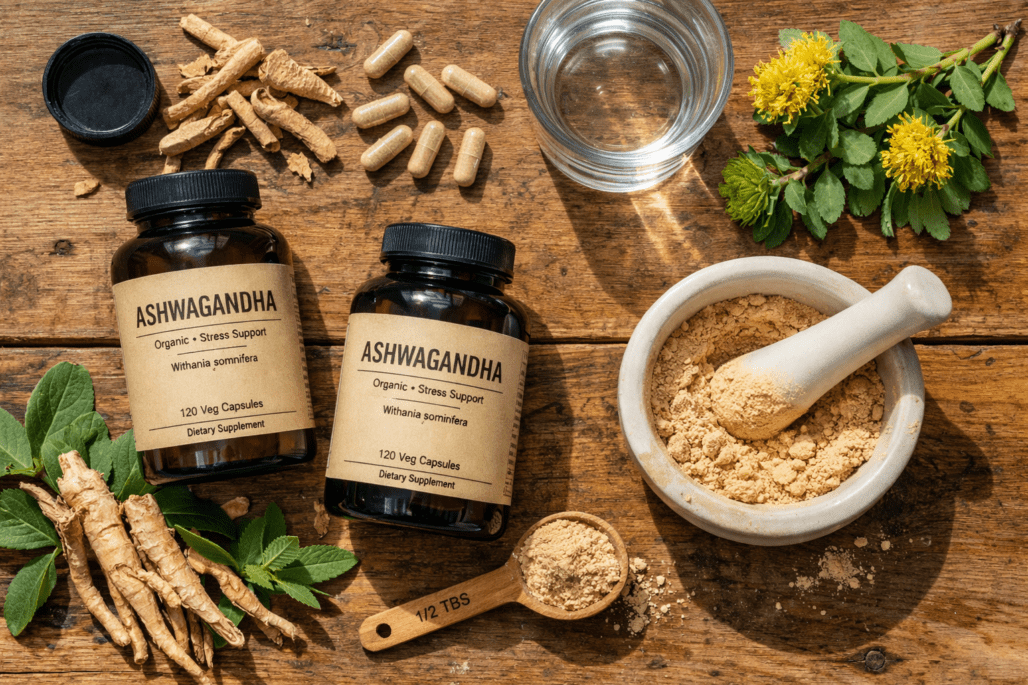
What does ashwagandha research say? It’s one of the better-studied adaptogenic herbs for stress-related outcomes, with mostly mild side effects in trials.
Quick takeaways (snippet-friendly):
- Stress, anxiety, depression: A recent meta-analysis of 22 studies reported large improvements across stress, anxiety, and depression scores, with a dose-dependent relationship for stress reduction (see PubMed abstract here).
- Safety: A 2026 safety update reviewing clinical and toxicity data describes ashwagandha as unusually well tolerated, with mild GI upset or headache as the most common issues (review here).
- Special populations: A 2026 pregnancy trial found improved hemoglobin and sleep quality without adverse events (trial here).
- Practical use: Most studies run 8-12 weeks, often using standardized root extracts rather than leaf.
Ashwagandha Research on Stress, Anxiety, Sleep, and Mood (What the Data Really Shows)
If you’ve ever felt “tired but wired,” you already understand the appeal. Ashwagandha is typically discussed as an adaptogen, meaning it may help the body respond to stress rather than simply sedate you. But does that idea hold up when you look at clinical outcomes?
A major meta-analysis indexed on PubMed found ashwagandha supplementation significantly improved stress, anxiety, and depression measures, with particularly strong effect sizes reported and a linear dose-response relationship for stress relief. You can read the citation details in the PubMed record here. While effect sizes in herbal research can look surprisingly large (sometimes due to differences in scales, study design, and participant selection), the direction of effect is consistent: many trials show people feel less stressed and sleep better.
What “stress support” usually looks like in trials
Most studies use standardized extracts and track:
- Perceived stress scores (often PSS)
- Anxiety and mood questionnaires
- Sleep quality and sleep onset
- Sometimes cortisol (especially morning cortisol)
If you’re building a broader plan, it helps to compare ashwagandha to other evidence-backed options. Useful Vitamins has a guide to supplements to lower cortisol that places herbs, nutrients, and lifestyle tools side-by-side.
Visual: outcomes commonly measured in ashwagandha trials
| Outcome area | Common tools used | What improves most often |
|---|---|---|
| Stress | PSS, stress VAS, cortisol | Perceived stress, sometimes cortisol |
| Anxiety | GAD-style scales, state-trait tools | Anxiety scores in many trials |
| Mood | Depression questionnaires | Mild-to-moderate symptoms |
| Sleep | PSQI, sleep diaries | Sleep quality and sleep onset |
A practical way to interpret the evidence
Think of ashwagandha like a “stress thermostat helper.” It’s not a switch that turns stress off. It may shift your baseline, so stressful days feel more manageable and sleep comes easier.
Still, not everyone responds. Real-world reports are mixed, and the gap between “clinical average” and “personal experience” is real. A 2026 discussion of user stories highlights how expectations, product quality, and individual variability can shape perceived results (summary here).
If anxiety is your main target, consider using ashwagandha as part of a structured plan rather than a single supplement experiment. The Useful Vitamins anxiety supplement protocol shows how to sequence options and track response.
Safety, Side Effects, and Why Regulators Still Debate It
People usually ask the same question first: “Is it safe?” Based on current clinical data, ashwagandha appears well tolerated for most healthy adults when used in typical study ranges. In a 12-month clinical study referenced in a 2026 safety literature update, adverse events were uncommon and mild (mostly nausea, digestive upset, or headache), and none required intervention. That safety review is available here.
So why does it sometimes show up in headlines as controversial?
The short answer: case reports, product variability, and “which part of the plant”
The same 2026 update discusses how:
- Most publications do not raise toxicity concerns.
- Some concerns cluster around specific extracts, higher-alkaloid preparations, or leaf compounds.
- Regulatory bodies may take a cautious stance when rare adverse events appear in post-market reports.
From a consumer perspective, the most actionable lesson is this: root extracts are the best-studied and generally the safest bet. Leaves contain different phytochemicals, and safety predictions vary by compound class.
Common side effects (and what to do)
Most side effects reported in trials are mild:
- GI upset (nausea, loose stools)
- Headache
- Drowsiness in some people
If you’re prone to sedation or already take calming products, the drowsiness piece matters. Useful Vitamins covers this interaction risk in ashwagandha and sedative medications, including what to watch for and when to avoid stacking.
Visual: safety checklist before you start
- Choose: standardized root extract from a reputable brand
- Avoid stacking: multiple sedating agents at once (unless clinician-guided)
- Start low: increase only if you tolerate it well
- Stop and reassess if you develop persistent GI symptoms, unusual fatigue, rash, or new/worsening anxiety
- Check meds: ask a pharmacist if you take antidepressants, sedatives, thyroid meds, or complex regimens
<
What about liver or thyroid concerns?
This is where the conversation gets messy. The safety update notes that liver concerns appear in a small fraction of the literature and are not supported by most clinical trial findings, but regulators may still flag signals when they see rare cases. In practical terms:
- Don’t treat “rare” as “impossible.”
- Don’t treat “a case report” as “proof it’s common.”
If you have liver disease, thyroid disease, or unexplained lab abnormalities, it’s worth involving your clinician before supplementing.
Hormones, Menopause, Fertility, and Pregnancy: What We Know (and What We Don’t)
Ashwagandha is often marketed for “hormone balance,” but that phrase can mean almost anything. The better question is: which hormone-related outcomes have human data behind them?
Menopause symptom relief
A clinical review available on PubMed Central reports that ashwagandha supplementation in menopausal women was associated with improvements in Menopause Rating Scale (MRS) scores and shifts in reproductive hormones (estradiol up, FSH/LH down). You can explore the paper here.
That does not make ashwagandha a replacement for hormone therapy. It suggests it may be a supportive option for some symptoms, especially when stress and sleep disruption are part of the picture.
Pregnancy: the most misunderstood topic
You’ll still find warnings online that ashwagandha is unsafe in pregnancy. Some of that caution traces back to concerns about very high doses or specific preparations. But newer human data complicates the story.
A 2026 clinical trial in pregnant women found that 12 weeks of ashwagandha root extract improved:
- Hemoglobin (greater increase vs. standard care alone)
- Perceived stress (meaningful reduction)
- Sleep quality and duration
with no adverse events and no negative effects on liver, kidney, or thyroid markers in that study. Read the full trial here.
Visual: hormone-related areas with human evidence
| Life stage / goal | What studies suggest | What to keep in mind |
|---|---|---|
| Menopause | Symptom scores may improve; some hormone shifts | Not a stand-in for medical therapy |
| Pregnancy (limited data) | Hemoglobin, stress, sleep improved in one trial | Still needs replication; clinician guidance |
| Testosterone (mixed contexts) | Some trials show increases | Effects vary by baseline and dose |
Medication metabolism and hormone-adjacent effects
The 2026 safety update also notes potential variability in cytochrome P450 interactions, such as CYP2B6 inhibition and CYP3A4 induction in certain contexts. That’s a technical way of saying: some people may process medications differently when adding ashwagandha. If you’re on a narrow-therapeutic-index drug or multiple prescriptions, don’t guess.
How to Use Ashwagandha: Dose, Form, Timing, and Stacking Wisely
Even strong ashwagandha research can’t help you if the product choice is poor or the plan is chaotic. Most positive trials share a few patterns: standardized extracts, consistent daily dosing, and outcomes tracked over weeks.
Root powder vs. standardized extracts
- Root powder is traditional, but dosing can be less precise.
- Standardized root extracts are common in trials because they deliver consistent amounts of key compounds.
The safety literature update emphasizes differences between root and leaf chemistry and suggests root phytochemicals have a more reassuring safety profile overall (review here).
How long does it take to notice effects?
Many people expect a same-day calming effect. Trials more often show improvements over 2 to 8+ weeks, especially for perceived stress and sleep quality. A 12-month study discussed in the safety update suggests longer-term use can remain well tolerated for many users, though most RCTs still cluster around 8-12 weeks.
Visual: a simple “trial period” plan
- Pick one product: standardized root extract from a reputable brand
- Start low for 7 days (especially if you’re sensitive to supplements)
- Track 3 metrics daily: sleep quality, stress level, daytime energy
- Reassess at week 4: continue, adjust, or stop
- Cycle or pause if you’re unsure you still need it after 8-12 weeks
Smart stacking (without turning your cabinet into a chemistry set)
Ashwagandha is often combined with other adaptogens. If you’re curious about that category, see Useful Vitamins’ guide to adaptogenic mushrooms for a research-based comparison and how people typically use them.
Two stacking cautions matter most:
- Sedation stacking: If you combine ashwagandha with sleep aids, antihistamines, benzodiazepines, or other calming supplements, drowsiness can creep up. Review the details in ashwagandha and sedative medications.
- “More is better” thinking: The meta-analysis suggests dose matters, but that doesn’t mean pushing high doses is the safest path. Use the lowest amount that gives you a measurable benefit.
<
Who is most likely to benefit?
Based on current trial patterns and real-world use, the best candidates tend to be people with:
- High perceived stress and stress-related sleep disruption
- Mild anxiety symptoms (not acute panic or severe psychiatric illness)
- Menopausal symptoms where sleep and stress are major drivers
If your main issue is high cortisol-like symptoms (wired at night, midsection weight gain, poor recovery), it can help to frame ashwagandha as one tool inside a broader plan. Useful Vitamins’ supplements to lower cortisol guide can help you choose what to try first and what to avoid combining.
Conclusion
Ashwagandha research is stronger than most people expect: meta-analyses show meaningful improvements in stress-related outcomes, and updated safety reviews describe mostly mild side effects in clinical trials. The most consistent wins show up in perceived stress, anxiety symptoms, and sleep quality, especially with standardized root extracts used for 8-12 weeks.
The practical next step is simple: choose a reputable root extract, start low, track a few outcomes, and avoid stacking sedating agents without a plan. If anxiety is the main goal, consider following a structured approach like this anxiety supplement protocol. If stress physiology is the bigger theme, compare options in supplements to lower cortisol.
