
Affiliate disclosure: this article contains affiliate links. As an Amazon Associate, UsefulVitamins.com earns from qualifying purchases at no extra cost to you.
What "accurate" actually means for a home test
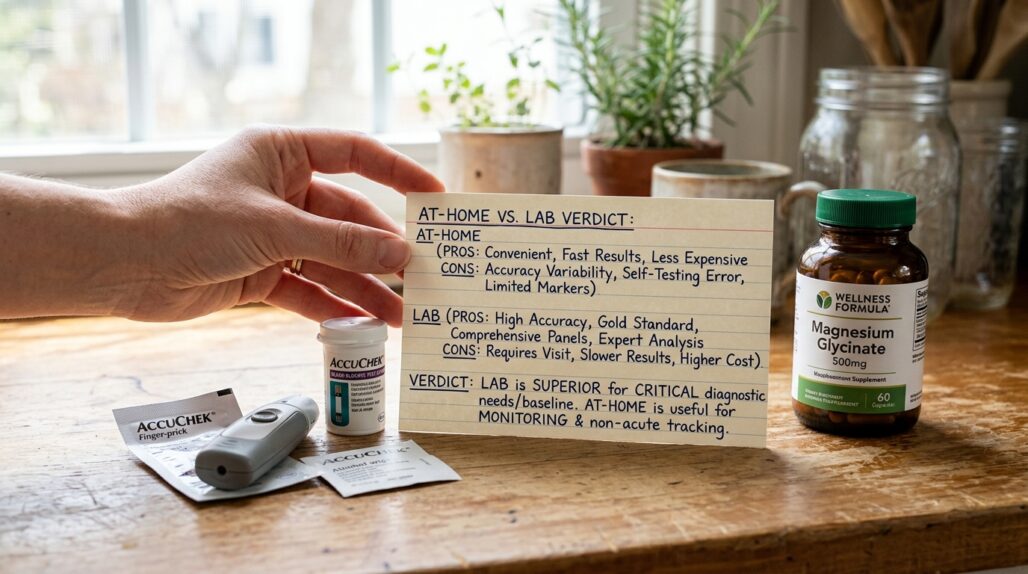
When people ask whether at-home blood tests are accurate, they usually mean two different things at once. One is whether the lab gets the right number from the sample you sent. The other is whether the sample you collected fairly represents what is in your blood. Those are separate problems, and most at-home kits handle them very differently.
The first part is well covered. The good kits ship your sample to a lab certified under the Clinical Laboratory Improvement Amendments (CLIA) – the same federal standard a hospital lab runs under. CLIA was passed in 1988 to set quality standards for all human laboratory testing so results are accurate, reliable and timely no matter where the test is performed, and the program is jointly run by CMS, the FDA and the CDC. If the box names a CLIA-certified lab, the analysis step is held to the same bar as a clinic draw.
The second part is where home testing earns its caveats. You are the phlebotomist now, and a finger-prick is a smaller, messier sample than a vein draw.
CLIA, finger-prick and dried blood spot: the honest version
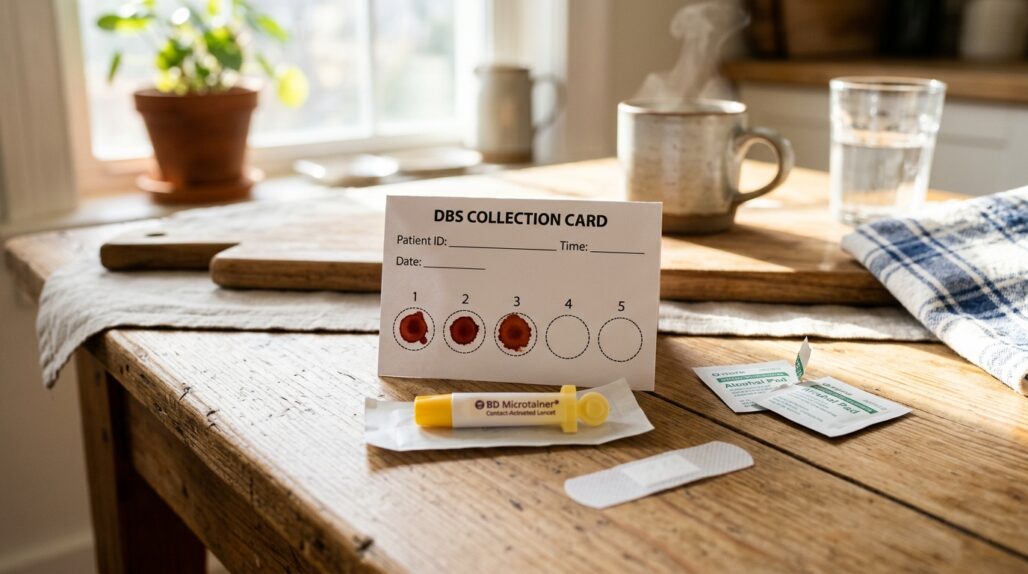
A finger-prick gives capillary blood, often dropped onto a card as a dried blood spot (DBS). For some markers that is genuinely good enough. For others it is not.
The collection step adds noise. Self-collected capillary samples hemolyze (the red cells break and leak) far more often than a clean vein draw – one line of lab studies puts self-collected finger-prick hemolysis above 10 percent versus under 2 percent for professionally drawn venous blood, and a meaningful share of home samples get rejected outright for being too small or clotted. That does not make the lab wrong. It means a bad collection produces a bad number, or no number, and you may not know which.
So the practical rule is simple. A home test is as accurate as its weakest link, and that link is usually the drop of blood, not the lab.
What a CLIA certificate does and does not tell you:
- It does tell you the lab meets federal quality and proficiency standards for the testing it performs.
- It does not tell you the kit’s collection method has been validated for your specific marker.
- It does not make the result diagnostic. The FDA notes that direct-to-consumer tests have historically had limited premarket review, and it has flagged accuracy concerns for some consumer tests in its guidance on direct-to-consumer testing.
Which markers are reliable at home – and which are not
Not all markers travel well in a dried drop. Here is where the evidence is strong, and where it is thin.
Reliable enough to screen and track at home:
- Vitamin D (25-OH-D). One of the best-validated home markers. In paired-sample studies, dried blood spot 25(OH)D tracks venous serum closely – correlation around r = 0.92 to 0.93. The standard reference, per the NIH Office of Dietary Supplements, treats 25(OH)D below 30 nmol/L (12 ng/mL) as deficient and 50 nmol/L (20 ng/mL) or above as adequate for most people.
- Omega-3 index. This is the one number you cannot guess from your fish-oil dose. It measures the EPA+DHA percentage of red-cell membranes, and the dried-spot method is the method the research itself uses. The 10-cohort analysis by Harris and colleagues placed an index above 8 percent in the lowest-risk band for coronary heart disease death.
- HbA1c. A1C reflects roughly three months of average glucose, so it does not swing with one bad sample. Validated point-of-care and home A1C systems run close to lab values, though an individual reading can differ from the true value by up to about a full percentage point.
- Ferritin. Usable for screening iron stores, with one important asterisk below.
Better done at a clinic:
- Full lipid panels, electrolytes (potassium especially), a complete blood count, comprehensive metabolic panels and most hormone panels are sensitive to hemolysis and sample handling. Capillary self-collection introduces clinically meaningful discrepancies for several of these, so a venous draw is the right call.
- Anything where the result would start, stop or change a prescription. That is a doctor’s lab, not a kit.
A note on ferritin: it is an acute-phase reactant. Inflammation, infection or recent illness can raise ferritin even when your iron stores are actually low, masking a deficiency. That is a biology problem, not a home-test problem – a clinic draw has the same blind spot – but it is a reason to read a ferritin number in context rather than acting on it alone. Our guide on reading a ferritin result, optimal versus normal, walks through it.
How to choose: the three jobs a home test does
UsefulVitamins is reader-supported. We may earn a commission from the kits below, at no extra cost to you. We only list tests run in CLIA-certified labs.

As an Amazon Associate, UsefulVitamins.com earns from qualifying purchases at no extra cost to you.
Think about the job before the brand. The picks above fall into three roles, and the table makes the trade-offs plain.
| Type of kit | Best job | What it measures | Accuracy notes |
|---|---|---|---|
| Single-marker at-home test | Confirm or track one specific number | One marker, clearly defined (for example 25-OH-D) | Highest signal-to-noise; well-validated for vitamin D in a CLIA lab |
| Broad at-home panel | A wide screening snapshot in one go | Many markers from one small sample | Convenient, but more markers means more chances a finger-prick reads off; confirm anything abnormal |
| Omega-3 index test | A number you genuinely cannot estimate | Red-cell EPA+DHA percentage | Dried-spot method matches the research method; stable, not diet-of-the-day sensitive |
If you want the per-marker deep dives, we keep separate buyer's guides for the best at-home vitamin D test, the best at-home omega-3 index test, and the best at-home iron and ferritin test. This page is the hub; those pages compare specific kits.
How to make a home result trustworthy
Most accuracy failures are avoidable. The collection is the part you control.
- Follow the timing rules. Some markers want a morning sample or a fasting state. Read the insert before you lance.
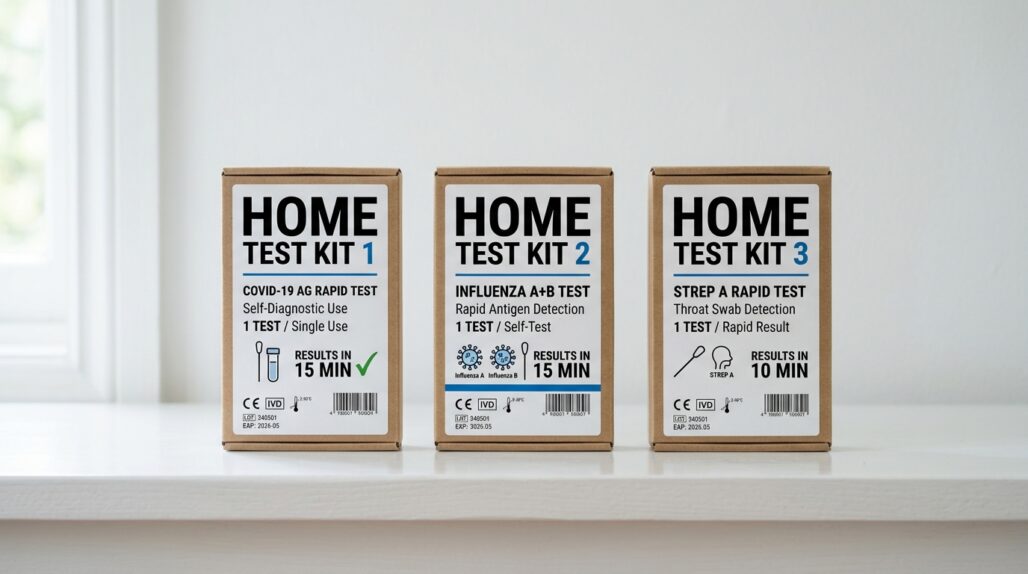
- Warm the hand and fill the card fully. A cold finger and a stingy drop are the two most common reasons a dried blood spot gets rejected. Let the drops fall; do not smear.
- Stay hydrated. Dehydration concentrates blood and can nudge several values.
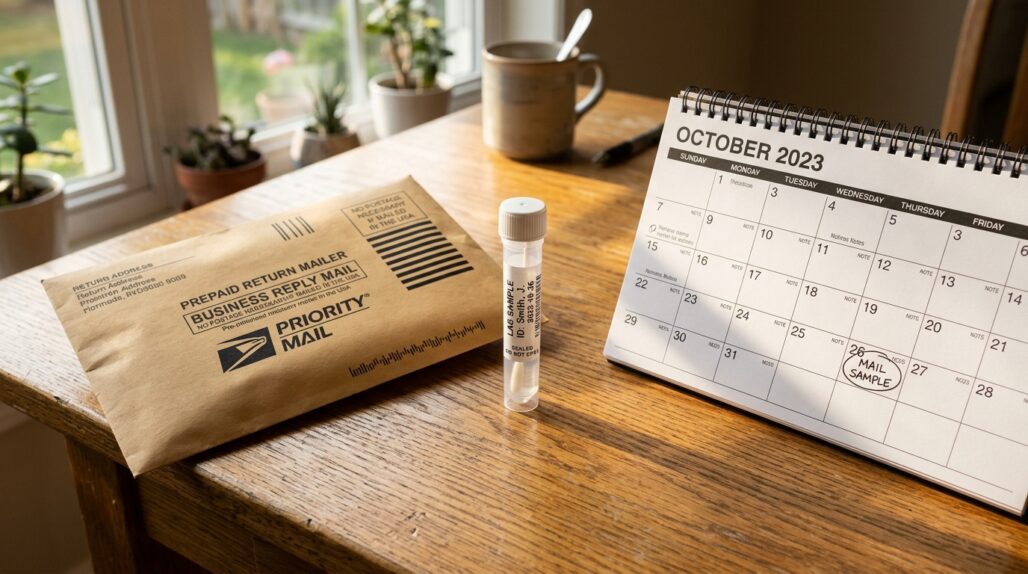
- Mail it back same-day. Old or heat-soaked samples degrade. Use the prepaid mailer promptly.
- Re-test the same way each time. If you are tracking a trend, keep the kit, the time of day and the conditions consistent so the change you see is real, not method drift.
If a number surprises you, the right next move is rarely "buy a supplement." It is to confirm with a doctor-ordered venous test before you act. A single odd reading from a tricky drop of blood is not a diagnosis.
When to skip the kit and see a doctor
At-home tests are screening and tracking aids. They are not a substitute for clinical testing, and they cannot tell you why a number is off. Talk to a doctor, and use a clinic lab to confirm, in these cases.
- A result is very high or very low, or it would change a real decision (starting iron, adjusting a medication, ruling out disease).
- You have symptoms – persistent fatigue, weight loss, breathlessness, bone pain, chest pain – rather than simple curiosity about a number.
- You are pregnant, on a blood thinner, or managing a diagnosed condition. (High-dose omega-3, for instance, is worth a conversation with your doctor if you are on anticoagulants.)
- A ferritin reading looks normal but you feel iron-deficient, or it looks high and you have been recently ill – inflammation can distort it.
Nothing here diagnoses anyone or tells you to start or stop a medication. That is your doctor's call, made with a confirmatory lab test.
FAQ
Are at-home blood tests as accurate as lab tests? For the analysis step, yes – if the kit uses a CLIA-certified lab, the same federal quality standard applies. The weak link is collection: a small or hemolyzed finger-prick sample can produce a wrong or unusable result, so treat a home number as a screen to confirm, not a final answer.
What does CLIA-certified mean on a test kit? It means the lab processing your sample meets federal standards for accuracy, reliability and proficiency, overseen by CMS, the FDA and the CDC. It is a meaningful quality signal for the lab. It does not make a direct-to-consumer test diagnostic, and it says nothing about how good your collection was.
Which markers are most reliable to test at home? Vitamin D (25-OH-D), the omega-3 index and HbA1c are well validated for finger-prick or dried-blood-spot collection, and ferritin is usable for screening. Full lipid panels, electrolytes, blood counts and most hormones are better drawn at a clinic.
Can a finger-prick test be wrong? Yes, usually from collection rather than the lab. Self-collected capillary samples hemolyze more often than vein draws, and a poor sample can read off or be rejected. Warming the hand, filling the card fully and mailing same-day cut the risk a lot.
Should I act on an abnormal at-home result? Not on its own. Confirm any abnormal or decision-changing result with a doctor-ordered venous test. At-home tests flag a possible issue; a clinician and a confirmatory lab decide what it means and what to do.
Why can my ferritin look normal when I still feel run down? Ferritin is an acute-phase reactant, so inflammation or recent illness can raise it and hide low iron stores. The clinic draw has the same limitation. Read ferritin in context and confirm with a doctor if symptoms persist.
The bottom line
A modern at-home blood test, run by a CLIA-certified lab, is accurate enough to screen and track the markers that travel well in a finger-prick – vitamin D, the omega-3 index, HbA1c and, with a caveat, ferritin. The lab is rarely the problem; the drop of blood is. Collect carefully, re-test the same way each time, and treat the number as a flag.
Then take one step. Pick the single-marker kit that answers your question, or jump to the per-marker guide that fits your number. And confirm anything abnormal or decision-changing with a doctor-ordered lab test before you change a supplement or a medication. This is education, not diagnosis – the real decisions belong with your doctor.
This article is for general education and is not medical advice. At-home tests are screening aids, not a substitute for clinical testing or a doctor's diagnosis. Talk to a qualified clinician before changing any supplement or medication, and confirm abnormal results with a doctor-ordered lab test.
Reviewed by the UsefulVitamins Editorial Team.
