
If you're on Mounjaro or Zepbound and searching for the best hydration supplements for tirzepatide, the short answer is: LMNT Recharge is the daily-driver pick for most users — zero sugar, high sodium, and a clean formula that doesn't conflict with your weight-loss goals. But tirzepatide users face a specific hydration challenge that semaglutide users don't: faster early weight loss curves mean more rapid fluid and electrolyte shifts, and reduced appetite compounds the sodium deficit more acutely. This guide ranks six products against that tirzepatide-specific context, flags one product that looks right on the surface but isn't, and explains where the WHO Oral Rehydration Solution standard fits in. You will also get a value-comparison breakdown, because $1.50 per serving adds up fast on a drug you're already paying a lot to stay on.
Affiliate disclosure: this article contains affiliate links. As an Amazon Associate, UsefulVitamins.com earns from qualifying purchases at no extra cost to you.
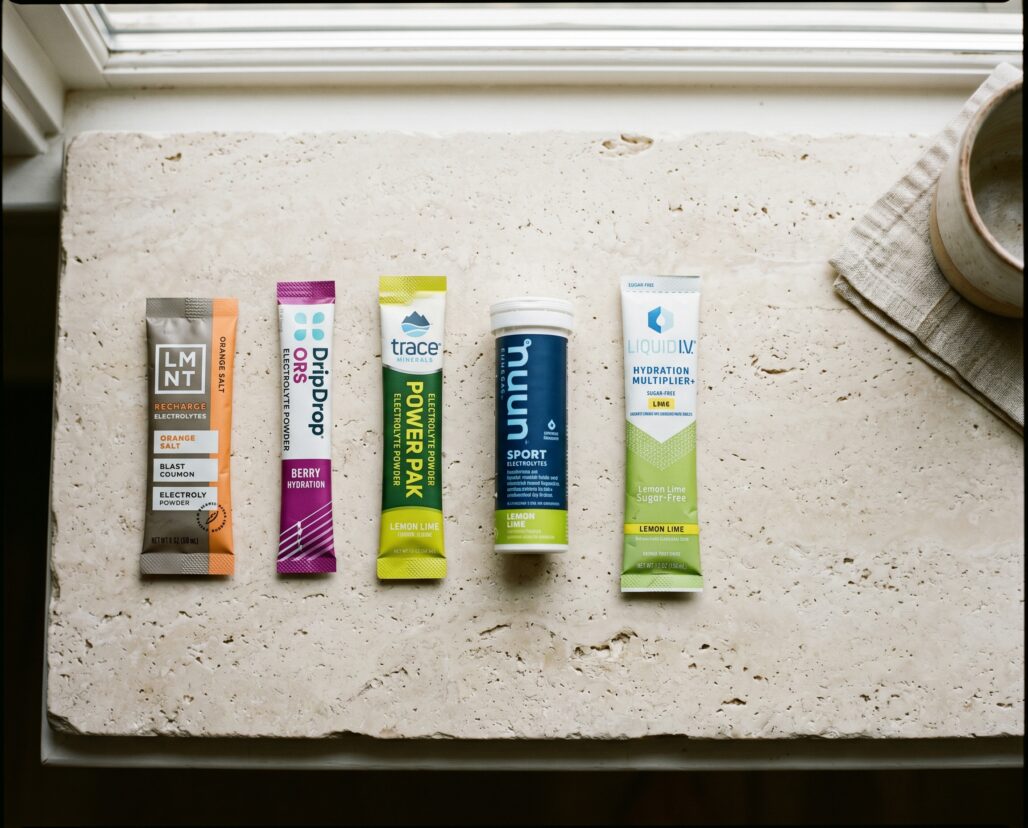
Quick answer: best hydration supplement for tirzepatide users
Top Pick: LMNT Recharge (zero sugar, 1,000 mg sodium, daily maintenance)
- Best for: Active Mounjaro or Zepbound users managing daily fluid intake during titration; athletes combining tirzepatide with training; low-carb users who want no sugar in their hydration stack
- Not ideal for: Anyone on a physician-ordered sodium restriction; users in acute vomiting episodes where ORS-calibrated glucose matters most
- What to check before buying: Your daily sodium ceiling from food; whether you have a cardiovascular or renal condition that limits sodium intake
- Decision shortcut: For acute dehydration from vomiting, DripDrop ORS is the better emergency tool. For daily proactive hydration, LMNT. For athletes on tirzepatide who exercise regularly, Trace Minerals Power Pak covers the budget angle at $0.50 per serving.
Table of contents
- Why tirzepatide raises the hydration stakes
- How we picked
- Comparison table
- Top picks
- Top Pick: LMNT Recharge
- Premium: DripDrop ORS
- Budget pick: Trace Minerals Electrolyte Stamina Power Pak
- Best for athletes: Ultima Replenisher
- Best low-sodium option: Nuun Sport
- Skip these
- How to use hydration supplements on tirzepatide
- Who should and should not use electrolyte supplements on tirzepatide
- FAQ
- Conclusion: the bottom line on hydration for tirzepatide users
Why tirzepatide raises the hydration stakes {#why-tirzepatide-raises-hydration-stakes}
Tirzepatide is a dual GIP/GLP-1 receptor agonist, which means it hits two appetite-suppressing pathways simultaneously. That is the mechanism behind its stronger weight-loss outcomes compared to semaglutide in head-to-head SURMOUNT trials, but it is also why early-titration dehydration risk is meaningfully higher. Faster weight loss means more rapid loss of glycogen-bound water (roughly 3 g of water per gram of glycogen), and reduced food intake means less dietary sodium and potassium arriving through normal eating. Layer nausea and reduced thirst signal on top of that, and you have a scenario where fluid and electrolyte deficits accumulate faster than most users expect.
Think of it like a bank account where the withdrawals run faster than usual: the balance looks fine until it suddenly doesn't. Plain water helps, but it does not replace the electrolytes — primarily sodium and potassium — that regulate fluid movement across cell membranes. Without adequate sodium, extra water intake can actually worsen the imbalance.
The WHO Oral Rehydration Solution standard provides a useful benchmark here: 75 mEq/L sodium, 20 mEq/L potassium, and 75 mmol/L glucose, calibrated for efficient intestinal co-transport of fluid and electrolytes. Most consumer sports drinks were formulated for sweating athletes, not for people managing drug-induced GI stress and rapid early weight loss. The deviation from ORS ratios varies significantly by product — and knowing where each product sits on that spectrum is more useful than any marketing claim on the label.
For a broader look at tirzepatide's mechanism and common side effects, see our full tirzepatide complete guide.
How we picked {#how-we-picked}
We started with the six highest-reviewed electrolyte products on Amazon matching the query terms: LMNT, Liquid IV Sugar Free, Nuun Sport, Ultima Replenisher, DripDrop ORS, and Trace Minerals Electrolyte Stamina Power Pak. Filters applied: clearly disclosed sodium and potassium per serving on the label, no proprietary blends masking electrolyte doses, and sugar content evaluated specifically against GLP-1/GIP user goals. Each product was scored against the WHO ORS sodium-potassium-glucose ratios to identify which are genuinely rehydration-calibrated and which are flavored water with a sodium footnote. Cost per serving was calculated from current Amazon multi-pack pricing. We did not conduct lab testing; selections are based on label transparency, published formulations, and ConsumerLab data where available.
Comparison table {#comparison-table}
| Brand | Sodium per serving | Potassium per serving | Sugar per serving | Cost per serving | ORS-aligned? | Best for |
|---|---|---|---|---|---|---|
| LMNT Recharge | 1,000 mg | 200 mg | 0 g | ~$1.50 | Partial (no glucose) | Daily maintenance, low-sugar users |
| DripDrop ORS | 330 mg | 195 mg | 7 g | ~$1.25 | Yes (closest match) | Acute dehydration, vomiting episodes |
| Trace Minerals Power Pak | 600 mg | 200 mg | 0 g | ~$0.50 | Partial (no glucose) | Budget-conscious athletes |
| Ultima Replenisher | 55 mg | 250 mg | 0 g | ~$0.85 | No (very low sodium) | Athletes prioritizing potassium balance |
| Nuun Sport | 300 mg | 150 mg | 1 g | ~$0.75 | No (low sodium) | Sodium-restricted users, mild nausea |
| Liquid IV Hydration Multiplier Sugar Free | 500 mg | 310 mg | 0 g | ~$1.50 | Partial (lower sodium than original) | Users who want Liquid IV without added sugar |
| Liquid IV Hydration Multiplier (original) | 500 mg | 380 mg | 11 g | ~$1.50 | Partial (excess sugar) | Not recommended for GLP-1/GIP users |
Sodium and potassium values from manufacturer nutrition facts labels. Cost per serving based on Amazon pricing as of April 2026 for multi-pack sizes. ORS-aligned = within reasonable range of WHO ORS ratios for sodium, potassium, and glucose; partial = matches some parameters but not all.
Top picks {#top-picks}
Top Pick: LMNT Recharge
Sodium per serving: 1,000 mg
Potassium per serving: 200 mg
Sugar per serving: 0 g
Cost per serving: ~$1.50
Best for: Daily proactive hydration during tirzepatide titration; active users and athletes; low-carb and ketogenic approaches combined with tirzepatide
Why we picked it: LMNT's value is in what it does not contain as much as what it does. Zero sugar means no conflict with the metabolic goals you are on tirzepatide to achieve. The 1,000 mg sodium addresses the single most common electrolyte gap in tirzepatide users — reduced food intake means less dietary sodium, and the GIP/GLP-1 dual mechanism accelerates fluid loss from glycogen depletion. LMNT also discloses its full formula with no proprietary blends: sodium as sodium chloride, potassium as potassium chloride, magnesium as malate (60 mg). That transparency matters when you are managing a prescription drug and need to know exactly what is in your hydration stack.
The trade-off: LMNT's 1,000 mg sodium is high. For reference, the WHO ORS equivalent in a standard 500 mL serving is roughly 475 mg sodium. LMNT is calibrated for high-output scenarios (athletes, keto dieters, people sweating significantly), which is often the right profile for active tirzepatide users but is not appropriate for users on cardiac or renal sodium restrictions. The zero-glucose formula also means intestinal co-transport is less efficient than an ORS-calibrated product during active vomiting. For acute illness scenarios, DripDrop is the right tool.
Skip if: You have physician-ordered sodium restriction for hypertension, heart failure, or chronic kidney disease. Also skip if you are actively vomiting and need the glucose-assisted sodium absorption that ORS-calibrated products provide.
Actionable takeaway: LMNT is the daily-maintenance pick for most tirzepatide users. Add it proactively on high-nausea days and post-workout sessions rather than waiting for dehydration to become symptomatic.
Premium: DripDrop ORS
Sodium per serving: 330 mg
Potassium per serving: 195 mg
Sugar per serving: 7 g
Cost per serving: ~$1.25
Best for: Acute dehydration from vomiting or diarrhea; early titration weeks with significant GI events; anyone who wants the nearest consumer approximation of WHO ORS
Why we picked it: DripDrop is the only product in this comparison developed with explicit reference to WHO ORS standards. Its sodium-potassium-glucose ratio is calibrated for maximal intestinal co-transport — the mechanism that enables your gut to absorb water efficiently when nausea is limiting voluntary fluid intake. For tirzepatide users in the first four to eight weeks of titration, when GI adverse events are most frequent and most intense, a product calibrated for clinical rehydration scenarios rather than gym performance is worth the $1.25 price point. You are not drinking this for its pleasant flavor; you are using it because the formula is designed to work when your GI system is compromised.
The trade-off: At $1.25 per serving, DripDrop costs $37.50/month at once daily — more than the drug's copay in some programs. It is not designed for daily long-term use; it is the acute-episode tool. The seven grams of sugar are clinically intentional (glucose drives sodium co-transport) but are not what most tirzepatide users want in their daily hydration. DripDrop's sodium is also lower than LMNT, making it less effective at restoring sodium balance from extended reduced food intake.
Skip if: You are managing low-grade, stable nausea without significant vomiting. In that case, LMNT or Nuun Sport covers your needs at lower cost. Reserve DripDrop for the worse days.
Actionable takeaway: Buy a box of DripDrop for your tirzepatide side-effect kit and keep it alongside your injection supplies. When vomiting has occurred more than twice in 24 hours, reach for DripDrop. Otherwise, use LMNT.
Budget pick: Trace Minerals Electrolyte Stamina Power Pak
Sodium per serving: 600 mg
Potassium per serving: 200 mg
Sugar per serving: 0 g
Cost per serving: ~$0.50
Best for: Cost-conscious tirzepatide users; athletes who go through electrolyte packets daily; anyone who wants meaningful sodium without paying LMNT prices
Why we picked it: Trace Minerals Power Pak delivers the highest sodium per serving in this comparison — 600 mg — at $0.50 per packet. That is one-third the cost of LMNT for a similar sodium contribution. The zero-sugar formula avoids the GLP-1/GIP user pitfall of inadvertently adding sugar to a hydration stack. Trace Minerals also includes a broader micronutrient panel than most competitors (B vitamins, vitamin C), which is a practical benefit for tirzepatide users whose reduced food intake may limit micronutrient intake from whole foods.
The trade-off: "Trace minerals" on the label is accurate — the product includes 72 ionic trace minerals from concentrated seawater, which sounds impressive but is not the reason to buy it. The actual rehydration value comes from the disclosed sodium and potassium. Broader trace mineral supplementation is not well-supported by clinical data as a daily necessity for most adults, and you should not buy this product specifically for the trace mineral component. Also, at $0.50 you are getting what you pay for in terms of flavor quality — it is functional, not enjoyable.
Skip if: You prioritize taste and palatability. Trace Minerals Power Pak is a utilitarian product. If you have a history of difficulty sticking with supplements because of flavor, LMNT's flavor variety has a real retention advantage despite the 3x price difference.
Actionable takeaway: For athletes on tirzepatide who go through one to two electrolyte packets per day, the cost difference between LMNT and Trace Minerals adds up to $30-40 per month. At identical sugar content (zero) and comparable sodium, Trace Minerals is a defensible budget substitution.
Best for athletes: Ultima Replenisher
Sodium per serving: 55 mg
Potassium per serving: 250 mg
Sugar per serving: 0 g
Cost per serving: ~$0.85
Best for: Active tirzepatide users who exercise regularly and whose primary concern is potassium balance rather than sodium replacement; users who already get adequate dietary sodium and need electrolyte support without adding more
Why we picked it: Ultima Replenisher's potassium-forward profile (250 mg potassium vs only 55 mg sodium) fills a specific gap that other products in this comparison do not address well. Tirzepatide-driven weight loss is associated with increased urinary potassium excretion — and while most consumer electrolyte products correctly prioritize sodium, potassium deficiency is an underappreciated contributor to muscle cramps, fatigue, and cardiac irregularity in active users who exercise on a caloric deficit. Ultima is also among the cleaner-formula options in this category: stevia-sweetened, zero sugar, plant-based colorings, certified vegan.
The trade-off: At 55 mg sodium per serving, Ultima is not a rehydration product in any meaningful sense for tirzepatide users with significant fluid losses. Using it as your primary hydration supplement during high-nausea tirzepatide weeks is like putting a spoiler on a car that does not have an engine — it looks sport but it does not help. Ultima's sodium content is so low that it provides minimal benefit if sodium depletion is the core issue, which it typically is in GLP-1/GIP users who are eating less.
Skip if: Your primary hydration challenge is acute dehydration, vomiting, or significant sodium deficit from reduced food intake. In those scenarios, LMNT or DripDrop is the right product. Use Ultima as a training-session add-on, not as the main hydration intervention.
Actionable takeaway: Consider combining Ultima (potassium-forward, low sodium) with dietary sodium or a small amount of salt water on heavy training days if your sodium intake is already adequate. It is an unusual niche product but it fills a gap the other picks do not cover.
Best low-sodium option: Nuun Sport
Sodium per serving: 300 mg
Potassium per serving: 150 mg
Sugar per serving: 1 g
Cost per serving: ~$0.75
Best for: Tirzepatide users on physician-ordered sodium restrictions; mild nausea days when you want something more palatable than plain water; users managing borderline hypertension who still need electrolyte support
Why we picked it: Nuun Sport occupies the middle ground that the other picks in this comparison do not cover well: moderate sodium (300 mg), minimal sugar (1 g, functionally negligible), tablet form that dissolves in any water bottle, and a price point below $1.00 per serving. For tirzepatide users whose cardiologist has set a sodium ceiling, LMNT's 1,000 mg is off the table, and Nuun is one of the few products in this category that provides meaningful potassium (150 mg) without overshooting sodium. The tablet form is also useful — it is harder to accidentally double-dose a dissolvable tablet than to accidentally dump two stick packs into a shaker.
The trade-off: Three hundred milligrams of sodium is maintenance-level supplementation, not therapeutic rehydration. If you are losing significant fluid to tirzepatide-induced vomiting or diarrhea, Nuun Sport does not cover the deficit. It is also lower in potassium than you might want for active exercise days. Think of Nuun as the baseline for low-nausea days, not the go-to for GI distress days.
Skip if: You have no sodium restriction and are experiencing significant GI adverse events. In that case, LMNT or DripDrop gives you meaningfully more electrolyte replacement per serving. Nuun is appropriate specifically for the users who need a sodium ceiling.
Actionable takeaway: If your doctor has specifically discussed sodium limits with you in the context of your cardiovascular or renal health, Nuun Sport is the default pick here. For everyone else, LMNT covers the bases better.
Brands and products to skip {#skip-these}
Skip: Liquid IV Hydration Multiplier (original, not Sugar Free)
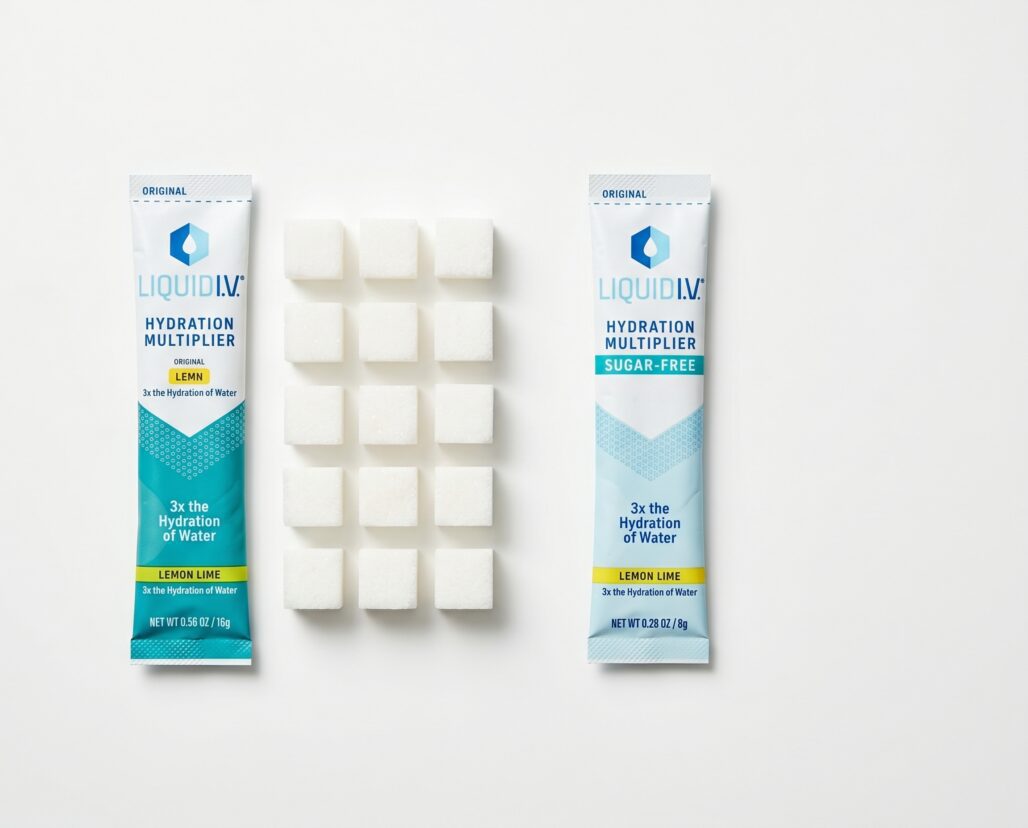
The original Liquid IV Hydration Multiplier contains 11 grams of sugar per serving. For tirzepatide users, that is a direct conflict: you are on a dual GIP/GLP-1 agonist specifically to reduce caloric and sugar load, and adding 11 g of sugar three times a week to "hydrate better" undermines that goal in a minor but unnecessary way. The original formula also does not align particularly well with WHO ORS ratios — it is a slightly better version of a sports drink, not a clinical rehydration tool.
The Sugar Free version is materially different and is a legitimate product — lower sodium than the original (500 mg vs 500 mg, the sodium is similar actually but the sugar and formula positioning differ). If you have already bought Liquid IV because it is popular, switch to the Sugar Free version and know that it is not equivalent to DripDrop ORS or LMNT in terms of hydration efficacy. The "Cellular Transport Technology" marketing on the label refers to the glucose-sodium co-transport mechanism — which is real science but is also the mechanism that makes DripDrop better at it with a more ORS-calibrated formula.
The honest move is: if Liquid IV is what you reach for because it is familiar, buy the Sugar Free version and supplement with additional sodium elsewhere (a pinch of salt in water). Do not pay the same $1.50 per serving for the original when the sugar is actively working against your tirzepatide goals.
Skip: Any electrolyte product with a proprietary blend hiding electrolyte doses
If the nutrition facts panel lists a "Hydration Blend" or "Electrolyte Matrix" without disclosing the exact milligrams of sodium and potassium per serving, skip it. You cannot evaluate whether a product will address your specific electrolyte deficit if the label does not tell you how much sodium and potassium it contains. '#1 best-seller on Amazon' should never be the only reason to buy an electrolyte supplement, particularly when you are managing a prescription GIP/GLP-1 agonist and need to understand exactly what you are consuming. Every product in the picks above discloses its full electrolyte panel. Hold any new product to the same standard.
How to use hydration supplements on tirzepatide {#how-to-use}
Timing matters more than most tirzepatide users realize. The first 24-48 hours after each weekly injection tend to be the highest-nausea window — this is when the drug's peak plasma concentration coincides with gastric emptying delays. Proactive electrolyte intake in the 12 hours before and the morning after injection is more effective than reactive hydration after nausea peaks. By the time you feel thirsty and nauseated simultaneously, replacing fluids is harder because your gastric motility is already slowed.
Practical guidance:
- Day before injection: Add one LMNT (or equivalent) to your afternoon or evening water intake
- Injection day: Start with 8-12 oz water before the injection; keep DripDrop on hand in case vomiting occurs
- Day after injection: If nausea is active and eating is minimal, space electrolyte intake across small sips (4-8 oz every 30-60 minutes) rather than drinking a full serving at once
- Non-nausea days: One serving of LMNT or Nuun Sport daily during the active titration phase is generally appropriate for adults without sodium restrictions; adjust downward if dietary sodium is already substantial
- Exercise days: Additional electrolyte intake around training sessions is warranted if you are sweating — tirzepatide users exercising on a caloric deficit are more vulnerable to intra-workout electrolyte drops than non-medicated athletes
A note on WHO ORS glucose: the glucose in DripDrop and similar ORS-calibrated products is not a sugar indulgence, it is the mechanism that makes intestinal sodium and water absorption work under nausea conditions. Seven grams of glucose in the context of acute vomiting is clinically appropriate. It does not represent a significant caloric deviation from your tirzepatide program.
For a broader look at managing side effects across the GLP-1 class, see our guide to peptide side effects and management strategies.
Who should and should not use electrolyte supplements on tirzepatide {#who-it-is-for}
Strong fit:
- Adults on Mounjaro or Zepbound in the first 8-12 weeks of titration, when GI adverse events are most common
- Active users who combine tirzepatide with regular exercise and are losing electrolytes through both drug-reduced intake and sweat
- Users whose food intake has dropped significantly (eating less than half of previous caloric volume) and who are not compensating with electrolyte-rich foods
Consider carefully:
- Users with hypertension, heart failure, or chronic kidney disease: high-sodium products like LMNT and Trace Minerals Power Pak are not appropriate without physician clearance; Nuun Sport is a better starting point
- Users taking medications that affect potassium (ACE inhibitors, ARBs, potassium-sparing diuretics): excess potassium supplementation from concentrated sources carries real risk; confirm with your prescriber before adding potassium-containing electrolyte supplements
Skip electrolyte supplements entirely if:
- Your physician has placed you on a strict fluid restriction (rare but relevant for certain cardiac or renal conditions)
- You are managing diagnosed hyperkalemia; potassium-containing electrolyte products are contraindicated
FAQ {#faq}
How much sodium do tirzepatide users actually need per day?
There is no tirzepatide-specific clinical guideline for electrolyte supplementation. General guidance for adults is 1,500-2,300 mg sodium per day. Tirzepatide users who are eating significantly less than usual and experiencing GI losses may find the lower end of that range difficult to meet from food alone — an electrolyte supplement providing 300-1,000 mg sodium can help bridge that gap. Discuss specific targets with your prescribing physician if you have a cardiovascular or renal condition.
Is Liquid IV Sugar Free the same as regular Liquid IV?
No. The Sugar Free version eliminates the 11 grams of sugar and slightly adjusts the electrolyte ratios. The sodium is similar (around 500 mg) but the overall formula is not equivalent — the glucose-sodium co-transport benefit of the original formula is reduced when glucose is removed. For tirzepatide users, Sugar Free is the version to choose if you prefer Liquid IV; for therapeutic rehydration during active vomiting, DripDrop ORS is more clinically calibrated.
Can I combine electrolyte supplements with anti-nausea medications sometimes prescribed alongside tirzepatide?
Electrolyte supplements are generally compatible with ondansetron (Zofran) and promethazine, which are occasionally prescribed for GLP-1/GIP-related nausea. There are no known direct electrolyte interactions with these medications. However, if your nausea is severe enough to require prescription anti-emetics, also discuss electrolyte replacement strategy with your physician — that level of nausea warrants medical oversight of your hydration, not just a consumer electrolyte supplement.
How is tirzepatide dehydration risk different from semaglutide?
Tirzepatide's dual GIP/GLP-1 mechanism produces faster early weight loss curves in most users compared to semaglutide-only agents. Faster weight loss means more rapid glycogen depletion and glycogen-bound water loss in the first few weeks. Combined with similar nausea and reduced appetite, the early-titration dehydration risk is compressed into a shorter window. This is not a reason to avoid tirzepatide — it is a reason to be more proactive about electrolytes in weeks two through eight specifically.
What is the WHO ORS standard and does it matter for tirzepatide users?
The WHO Oral Rehydration Solution standard (75 mEq/L sodium, 20 mEq/L potassium, 75 mmol/L glucose) was developed for managing cholera and severe diarrheal illness in clinical settings. Most tirzepatide users do not need clinical-grade ORS therapy; they need better daily electrolyte maintenance. The ORS standard is a useful reference point because it tells you which consumer products were designed with intestinal absorption science in mind (DripDrop) versus which were designed for athletes (LMNT) versus which are essentially lightly salted flavored water (most of the rest). Knowing that distinction helps you choose the right tool for the right scenario.
Is there a value alternative to LMNT for daily use?
Yes. Trace Minerals Electrolyte Stamina Power Pak delivers 600 mg sodium and 200 mg potassium per serving at $0.50 — one-third the cost of LMNT. The formula is zero-sugar and the sodium load is meaningful. Taste quality is lower, but for users who are primarily looking at cost-per-effective-dose over a 12-week titration period, that $1.00/day difference accumulates to over $80 in savings. The budget pick earns its spot in this comparison.
Can I just add salt to water instead of buying electrolyte supplements?
You can. One-quarter teaspoon of fine sea salt in 16-20 oz water provides roughly 500-600 mg sodium. Add a small amount of potassium (cream of tartar, or a potassium chloride salt substitute) and you have a DIY version that costs under $0.10 per serving. The tradeoff: no flavoring, less precise dosing, and no magnesium unless you add it separately. For users on long-term tirzepatide who find the branded product cost adds up, the DIY approach is a legitimate option. For users managing active GI distress, the glucose and ratio calibration in DripDrop ORS is something a salt-and-potassium DIY cannot replicate.
Conclusion: the bottom line on hydration for tirzepatide users {#conclusion}
Tirzepatide users face a more acute early-dehydration window than the broader GLP-1 user population, and the right hydration supplement depends on which part of that window you are managing. For daily maintenance during titration, LMNT Recharge is the pick for most users — zero sugar, high sodium, clean label. For acute vomiting episodes, DripDrop ORS is the ORS-calibrated option worth keeping on hand. For budget-focused active users, Trace Minerals Power Pak covers the electrolyte bases at one-third the cost of LMNT. Skip regular Liquid IV (the sugar is unnecessary), skip products with hidden proprietary blends, and match your product to the scenario.
Next steps:
- Add LMNT or your chosen daily electrolyte to your weekly injection prep routine — proactive beats reactive
- Keep DripDrop separately for high-nausea days
- Read our broader tirzepatide guide for a complete look at managing the drug's side effect profile
- If you are also managing exercise on tirzepatide, see our companion guide to the best pre-workout supplements for GLP-1 users
As an Amazon Associate, I earn from qualifying purchases. Product recommendations are based on real reviews and independent research.
Related reading
- Best Electrolyte Drink for GLP-1 Nausea — our nausea-management focused companion guide covers semaglutide and the broader GLP-1 class
- Tirzepatide Complete Guide — mechanism, dosing, side effects, and what to expect across the titration schedule
- GLP-1 Peptide Side Effects and How to Manage Them — the full evidence picture for common adverse events across the class
- Best Pre-Workout for GLP-1 Users — if you are exercising on tirzepatide, hydration pairs with pre-workout strategy
This article is for informational purposes and not medical advice. Peptides — especially those marketed for therapeutic use — can interact with medications and health conditions. Consult a licensed physician before starting any supplement, particularly if you are pregnant, nursing, taking prescription medications, or managing a chronic condition.
As an Amazon Associate, I earn from qualifying purchases. Product recommendations are based on real reviews and independent research.
