

Affiliate disclosure: this article contains affiliate links. As an Amazon Associate, UsefulVitamins.com earns from qualifying purchases at no extra cost to you.
If you are searching for the best magnesium breakthrough alternatives, you are probably already looking at the $45 BiOptimizers bottle, doing the math on a year of supply, and wondering whether the "7 forms in one capsule" pitch actually buys you anything that a $15 bottle of glycinate from the pharmacy does not.
Quick Answer: which alternatives actually match the formula

The 2 to 3 we'd start with first:
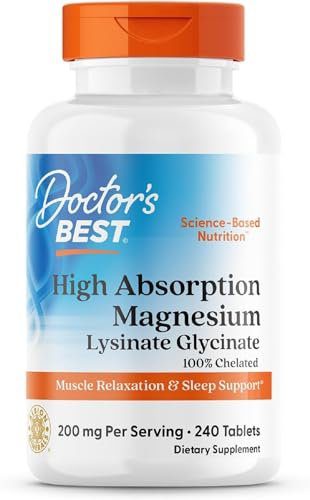
- Doctor's Best High Absorption Magnesium Glycinate at 200 mg elemental per 2 caps, around $15 a bottle: uses a TRAACS-branded chelated glycinate raw material, ConsumerLab-verified label claim history, and lands you within the same elemental dose range as a 248 mg Magnesium Breakthrough capsule for roughly one-third the price.
- A Doctor's Best Glycinate plus Doctor's Best Magnesium Citrate pair, around $25 combined: two forms cover the two clinical jobs people actually buy magnesium for, calmer evenings and softer stools, and is what most clinicians would recommend before stacking 5 more forms on top.
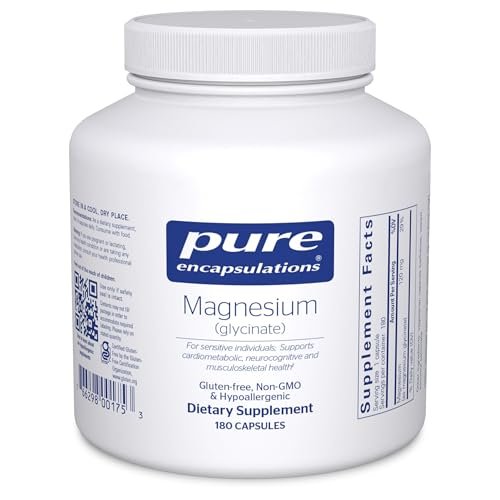
- Pure Encapsulations Magnesium Glycinate at 120 mg per capsule, around $30: practitioner-tier label trust, third-party-tested glycinate, the cleanest option if you want one bottle and one form without thinking about it.
Who should NOT start with these:
- Anyone with stage 3 or worse chronic kidney disease should not take any oral magnesium supplement without nephrology review. The kidney is the main route of magnesium excretion, and when filtration is impaired the supplemental dose can stack into the toxic range.
- Anyone on a digoxin, bisphosphonate, tetracycline, or fluoroquinolone regimen needs to space the magnesium dose 2 to 6 hours away from those medications per the NIH ODS magnesium fact sheet, because magnesium reduces absorption of all four drug classes.
Do FIRST, before any supplement: look at your plate. The average US adult diet covers about 60 to 70 percent of the magnesium RDA, which means most people are roughly 100 to 150 mg short per day, not 400 mg short. A handful of pumpkin seeds is 150 mg. A cup of cooked black beans is 120 mg. A square of 80 percent dark chocolate is 60 mg. The supplement is closing a gap, not building the foundation. Food first, then the lowest dose that closes the remaining gap.
What Magnesium Breakthrough actually is
Magnesium Breakthrough by BiOptimizers is a capsule blend marketed at the premium end of the magnesium market, currently around $45 to $50 for a 30-day bottle at 2 capsules a day. The hook is "all 7 forms of magnesium in one bottle," and the label lists magnesium chelate, citrate, bisglycinate (often called glycinate), malate, sucrosomial, taurate, and orotate. Total elemental magnesium per daily serving is roughly 248 mg, which sits comfortably below the 350 mg upper limit for supplemental magnesium set by the Institute of Medicine.
The pitch is that each form has a slightly different absorption profile and a slightly different tissue affinity, and that combining all 7 hedges your bets across muscle, brain, heart, and gut. The product is real. The label is third-party tested, the elemental dose is in a reasonable range, and the company has been transparent about its raw material sourcing. The argument against it is not quality. The argument is cost per elemental milligram and clinical necessity.
The RDA for magnesium is 320 mg per day for adult women and 420 mg for adult men, per the NIH Office of Dietary Supplements. National dietary intake data show the average US adult lands around 240 to 290 mg per day from food alone, which puts most adults in a small-gap situation, not a deep-deficiency situation. A 200 to 300 mg supplement plus a moderate-magnesium diet closes the gap. The 7-form mix is not closing a different gap than a single-form glycinate at the same elemental dose closes. It is just costing more to do it.
A useful analogy: this is like buying a 7-blade pocket knife when you only ever open the corkscrew and the screwdriver. The other blades are real, but you are not using them, and you paid for them.
What the bioavailability evidence actually says

Magnesium is absorbed through both passive paracellular transport across the small intestine and active transport via TRPM6 and TRPM7 channels. Absorption is highest at low intake (around 80 percent of dose) and falls to 20 to 30 percent at higher intake, which is why splitting a 400 mg supplement into two 200 mg doses can recover more total magnesium than taking it all at once.
A frequently cited comparative study by Coudray and colleagues in magnesium-depleted rats compared ten magnesium salts and found that organic forms, including glycinate, citrate, gluconate, and lactate, were absorbed slightly better than inorganic oxide and sulfate. Differences between the organic forms themselves were modest, on the order of 5 to 15 percent, and not consistently significant across endpoints.
In humans, the relevant signal is that magnesium oxide is the form with clearly worse absorption (often cited around 4 percent in older studies, though more recent work suggests it is higher than that). Glycinate, citrate, malate, and taurate are all in a similar mid-range of bioavailability with no single form showing a robust advantage in head-to-head human trials of healthy adults.
Translation: the "7 forms add up to more absorption" claim does not have a clean human RCT behind it. The absorption advantage of organic chelated forms over magnesium oxide is real and documented. The advantage of seven organic forms over one organic form is not.
What each of the 7 forms is actually known for
- Bisglycinate (glycinate): glycine-chelated magnesium, gentle on the gut, often used for sleep and anxiety because glycine itself has mild calming effects on the central nervous system. The form with the most clinical traction for the sleep/calm use case.
- Citrate: organic acid salt, mild osmotic laxative effect, useful at higher doses for occasional constipation, well absorbed, and the cheapest organic form per gram.
- Malate: malic-acid-chelated magnesium, sometimes marketed for fibromyalgia and muscle fatigue based on small trials that have not consistently replicated.
- Taurate: taurine-chelated magnesium, some interest in cardiovascular endpoints based on rat work and small human pilots; human RCT evidence is thin.
- Orotate: orotic-acid-chelated magnesium, similar story to taurate, mostly studied in cardiac patient populations in small European trials.
- Chelate (general): umbrella label often referring to a generic amino-acid-chelated magnesium; functionally overlaps with glycinate.
- Sucrosomial: a phospholipid-encapsulated magnesium, marketed for absorption in patients with gut issues; a few small absorption studies exist, mostly funded by the patent holder.
For most healthy adults, the only forms with meaningful clinical track records are glycinate and citrate. Malate is reasonable. Taurate and orotate are speculative. Sucrosomial is a niche delivery technology.
The cheaper alternative stacks, ranked by cost per elemental milligram
Below is the practical ranking. Cost per elemental milligram is the only honest unit. Capsule count is not. Form-count is not.
Doctor's Best High Absorption Magnesium Glycinate
Why it earns the top pick: Doctor's Best uses Albion's TRAACS-branded bisglycinate raw material, which has its own published bioavailability data, and the bottle is ConsumerLab-verified at label claim in multiple test rounds. The standard dose is 200 mg elemental magnesium per 2 capsules. At roughly $15 for 240 capsules, the cost per elemental milligram lands around 6 to 7 percent of what a Magnesium Breakthrough capsule costs per elemental milligram. The form is the one that has the strongest case for the sleep, anxiety, and gut-tolerance use cases that most readers are actually buying magnesium for.
Skip if: you are looking for the laxative effect, in which case citrate is the cleaner choice.
Doctor's Best Magnesium Citrate, paired with the glycinate above
Why this pair matches the formula: citrate covers the regularity-and-occasional-constipation use case that glycinate does not. Two forms cover the two distinct clinical jobs people buy magnesium for. The combined cost is around $25 a month. That is roughly half the cost of a Magnesium Breakthrough bottle and is what most clinicians would recommend before adding more forms on top.
Skip if: your stools are already on the loose side. Citrate can push you into uncomfortable territory at higher doses.
Pure Encapsulations Magnesium Glycinate
Why it earns the practitioner pick: Pure Encapsulations is one of the brands physicians routinely carry in clinical practice because its label-claim verification record is consistently clean. The cost is higher than Doctor's Best at around $30 for 90 capsules at 120 mg elemental per capsule, but the per-elemental-milligram cost still lands well below Magnesium Breakthrough.
Skip if: you are paying out of pocket and not picking up your bottle through a clinical dispensary. Doctor's Best gets you the same form for less.
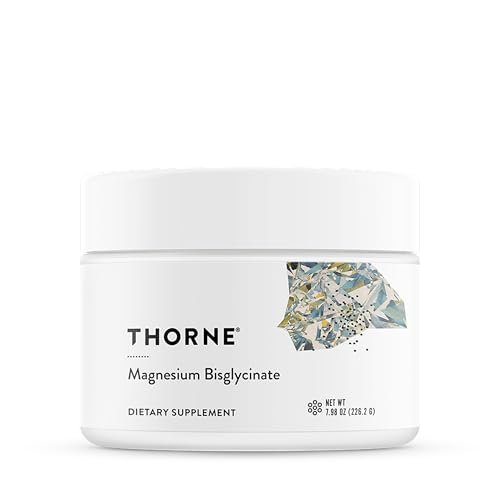
Thorne Magnesium Bisglycinate
Why it makes the list: Thorne carries NSF Certified for Sport status on a portion of its line, which matters if you are a tested athlete subject to anti-doping screens. The cost is around $25 for a bottle, similar to Pure Encapsulations, with a comparable bioavailability story. The form is straight glycinate.
Skip if: you do not need the NSF certification and want a lower per-dose cost.
BulkSupplements Magnesium Glycinate Powder
Why it earns the cost pick: unflavored powder, no encapsulation overhead, sold by the kilogram. Cost per elemental milligram is the lowest in this list, often around half of Doctor's Best. The tradeoffs are taste (it is mildly chalky), dose accuracy (you need a small scale or an accurate scoop, since glycinate is bulky), and label trust (BulkSupplements has had mixed ConsumerLab results historically, so look at the most recent assay).
Skip if: you do not want to weigh doses or stir powder into water.
KAL Magnesium Glycinate and Solaray Magnesium Glycinate
Why they make the list: both are reliable mid-tier brands sold in most US health-food retailers at roughly $15 to $20 a bottle. Same form, similar dose ranges per cap, no notable third-party flags. These are reasonable defaults if you are picking up a bottle at a grocery store.
Skip if: you want documented third-party assay records like Doctor's Best or Pure Encapsulations carry.
Designs for Health Magnesium
Why it makes the list: Designs for Health is a practitioner-dispensed brand with a dedicated magnesium glycinate product line, often around $30 per bottle. Useful if you already have a relationship with a functional medicine clinic that carries them.
Skip if: you have no clinic relationship and would have to pay full retail.
What to look for when buying
A short decision shortcut:
- Elemental milligrams per serving, not compound milligrams. A 1,000 mg "magnesium glycinate" capsule contains around 100 to 140 mg of elemental magnesium, not 1,000 mg. Read the supplement facts panel for the elemental figure.
- Single form unless you have a clinical reason for two. Glycinate for calm-and-sleep. Citrate if you also need the gut-motility effect. Anything beyond that pair is not closing a different gap for most adults.
- Third-party testing markers. ConsumerLab Approved, NSF Certified for Sport, USP Verified, or a published independent assay on the brand site. At least one of these.
- Split your dose. Magnesium absorption is saturable. A 200 mg evening dose and a 200 mg morning dose recovers more total magnesium than a single 400 mg evening dose.
- Take it with food if it irritates your stomach. Glycinate rarely does; oxide and citrate sometimes do.
When supplements are not enough
Magnesium supplementation is for filling small dietary gaps and supporting mild symptoms. It is not a treatment for diagnosed magnesium deficiency, chronic diarrhea-driven losses, refractory hypomagnesemia in hospitalized patients, or eclampsia. If you have persistent muscle cramps that are not resolving with a reasonable supplemental dose, persistent tingling or numbness, unexplained heart rhythm changes, chronic loose stools, or you are on a proton pump inhibitor long-term (which depletes magnesium), ask your doctor about a serum magnesium and a red blood cell magnesium test. Serum magnesium can be normal even when intracellular stores are low, and a clinician can interpret both together. Stop self-treating and book the visit when the symptom does not match the supplement.
Frequently asked questions
Do I really need 7 forms of magnesium? For most adults, no. The "7 forms" framing is marketing. Glycinate covers the calm and sleep use case. Citrate covers the gut-motility use case. The other five forms either overlap functionally with those two or have thin clinical evidence in healthy adults.
Is magnesium oxide as bad as people say? It is poorly absorbed compared with organic forms like glycinate and citrate, but it is not useless. It is still useful as an osmotic laxative because the unabsorbed magnesium pulls water into the gut. For raising body magnesium status, choose an organic form.
Can I take magnesium and calcium together? Yes, but space them by a couple of hours if you are taking high doses of both, because they compete for absorption. The typical 200 mg magnesium dose alongside a normal calcium-containing meal is fine.
Will magnesium make me sleep through the night? A modest glycinate dose taken 30 to 60 minutes before bed has small-trial evidence for improved subjective sleep quality in adults with mild insomnia, on the order of a 10 to 15 minute reduction in time to fall asleep. It is not a sleep medication and should not be treated as one. For deeper coverage of the sleep angle, see our best magnesium supplement for sleep guide.
Should I get a magnesium blood test before supplementing? If you have symptoms that fit deficiency, yes. Ask your doctor about a blood test for serum magnesium and a red blood cell magnesium before assuming you are low. For most healthy adults with no symptoms, the 200 to 300 mg supplemental dose is below the upper limit and a reasonable empirical trial without testing first.
Conclusion: the bottom line on best magnesium breakthrough alternatives
The 7-forms-in-one-bottle pitch is a marketing story, not a clinical requirement. Two forms, glycinate and citrate, cover the use cases most adults are actually buying magnesium for. A $15 bottle of Doctor's Best glycinate, or a glycinate-plus-citrate pair at around $25, lands you at the same elemental dose range as a Magnesium Breakthrough bottle for one-third to one-half of the cost. BiOptimizers makes a real product with real third-party testing. The argument is not against quality. The argument is that paying premium for forms you do not clinically need is not the same as paying for absorption you cannot otherwise get. Match the supplemental dose to the gap left by your diet, pick the form that fits the symptom you are trying to soften, and put the saved money somewhere with a larger return.
For deeper guidance on which single-form magnesium product makes the best stand-alone pick, see our best magnesium supplement overall guide. For the sleep-specific angle, see our best magnesium for sleep write-up. For how we evaluate every supplement in this cluster, see how we review supplements and the broader work of Sarah Thompson, RD.
Next steps:
- Add up your daily magnesium from food first (pumpkin seeds, beans, leafy greens, dark chocolate, almonds) before picking a supplement dose.
- Start with one organic form, glycinate at 200 mg elemental, and add citrate only if you also want the gut-motility effect.
- Read the supplement facts panel for elemental milligrams, not compound milligrams.
This article is for informational purposes and not medical advice. Magnesium supplementation can interact with prescription medications including bisphosphonates, tetracyclines, fluoroquinolones, and digoxin, and is not appropriate at typical supplemental doses for people with stage 3 or worse chronic kidney disease. Consult a licensed physician before starting any supplement, particularly if you are pregnant, nursing, taking prescription medications, or managing a chronic condition.
Reviewed by Sarah Thompson, Registered Dietitian, focused on vitamin and mineral nutrition.
Top picks on Amazon
As an Amazon Associate, I earn from qualifying purchases. Product recommendations are based on real reviews and independent research.
