
If you’re looking at spermidine supplements for healthy aging, the short answer is: the best options tend to deliver a consistent, tested dose (often 5-15 mg), use a form you tolerate (wheat germ extract vs synthetic), and publish quality signals like third-party testing. Spermidine is a natural compound found in foods, but most diets don’t reliably reach the amounts used in supplement protocols. This guide compares top products, explains what spermidine may do (and what it can’t promise), and helps you choose a dose and format that fits your goals and budget.
Summary / Quick Answer: Best spermidine supplements (what to buy and why)
The best spermidine supplements are the ones that match your dose target, allergen needs, and quality standards – not necessarily the highest milligram number.
Quick picks (based on dose, form, and value):
| Category | Product example | Typical dose | Best for |
|---|---|---|---|
| Best overall (balanced) | OMRE (wheat germ) | 10 mg | People who prefer a food-derived source |
| Best budget | Double Wood (synthetic) | 10 mg | Value + high stated purity, no wheat |
| Best high-dose | Toniiq Spermidine+ | ~22 mg | Experienced users who want higher potency |
| Best gummy | Neurogan Gummies | 25 mg | Those who won’t take capsules consistently |
| Best low-dose natural | spermidineLIFE | 1 mg | Conservative dosing or stacking protocols |
Most practical starting point: 5-10 mg daily with food for 2-4 weeks, then reassess. If you’re gluten-sensitive or avoid wheat, consider synthetic spermidine.
What spermidine is (and why longevity researchers care)
Spermidine is a naturally occurring “polyamine,” a small molecule your cells use for basic maintenance tasks. It’s present in foods like wheat germ, soybeans, mushrooms, and aged cheeses. Interest in spermidine isn’t new, but it has grown fast because of its relationship with autophagy – the cellular clean-up process that breaks down damaged proteins and worn-out cell parts.
Think of autophagy like a recycling program inside your cells. When it runs well, cells clear clutter more efficiently. When it slows down (which tends to happen with age), cellular “junk” can accumulate. That’s the core idea behind why spermidine is discussed alongside other longevity-focused strategies like fasting or calorie restriction.
What the science says so far (strong signals, limited human trials)
Most of the strongest evidence comes from mechanistic research and animal models. In humans, the evidence is still developing, with a mix of observational studies (dietary intake and outcomes) and early-stage trials.
A helpful overview for non-specialists is the Nature-focused 2026 review summary on spermidine and healthy aging, which explains why spermidine is considered promising while also emphasizing that definitive clinical outcomes in humans are not yet settled.
Actionable takeaway: Treat spermidine as a “long game” supplement. If it helps, changes are more likely to show up over months (sleep quality, recovery, perceived vitality) rather than days.
Food vs capsules: why supplements exist at all
Food sources are real, but amounts vary widely and are hard to track. Many people also don’t eat wheat germ or fermented foods regularly.
Here’s a practical comparison:
| Source | Pros | Cons |
|---|---|---|
| Food (wheat germ, mushrooms, soy) | Adds fiber and micronutrients | Hard to dose; intake varies day to day |
| Wheat germ extract supplements | “Food-derived” positioning | Wheat allergen/gluten concerns for some |
| Synthetic spermidine (trihydrochloride) | Avoids wheat; consistent dosing | “Natural” preference may be lower |
Actionable takeaway: If you want predictable dosing, supplements are the simpler route. If you’re sensitive to wheat, synthetic forms can reduce that risk.
Spermidine supplements: benefits, expectations, and who they’re best for
OMRE Wheat Germ Extract Spermidine 30 Capsules
Insufficient search results to verify the product on Amazon.com, including ASIN, ratings, reviews, or price; the manufacturer’s site describes OMRE Spermidine as a 10mg wheat germ extract supplement for cellular autophagy with a 30-day supply, but no Amazon-specific or third-party validation is available to support an affiliate recommendation[1].
Double Wood Supplements Spermidine 120 Capsules
Recommended as the best budget option, this product offers a high stated purity and a synthetic source of spermidine.
Toniiq Spermidine+ 120 Capsules
Unable to locate the specific Toniiq Spermidine+ 120 Capsules product on Amazon.com or verify its ASIN based on available search results; Toniiq’s website offers similar Spermidine products (e.g., 5mg 120 capsules at $44.41 with perfect small review sample and 21mg 60 capsules), claiming benefits for healthy aging, cognition, and heart health with in-house testing, but lack of Amazon data and third-party validation limits recommendation confidence—consider direct purchase from manufacturer or further research[1][2]
Neurogan Organic Spermidine Gummies 30 Count
This gummy option is perfect for those who prefer not to take capsules consistently, providing an easy way to consume spermidine.
spermidineLIFE Natural Spermidine Supplement 30 Capsules
This product is suitable for conservative dosing or stacking protocols, making it a good low-dose natural option.
Most people searching for spermidine want one thing: support for aging well. The best way to think about spermidine is not as a “longevity pill,” but as a compound that may support cellular housekeeping pathways associated with healthy aging.
Potential benefits (what’s plausible vs what’s proven)
Research suggests spermidine may help support:
- Cellular renewal and stress resistance through autophagy signaling
- Cardiovascular aging markers (based largely on preclinical data and observational intake studies)
- Brain aging and memory (promising but still emerging in humans)
Many supplement roundups summarize these themes, including the product and dosing comparisons in Innerbody’s spermidine supplement review and WellnessPulse’s longevity supplement overview. These are not clinical guidelines, but they can help you see common dosing ranges and how brands differ.
Reality check: If a label implies guaranteed lifespan extension, that’s not supported. Human clinical endpoints (like reduced disease risk) are still being studied.
Who may benefit most
Spermidine supplements are most often used by:
- Adults 40+ focused on long-term maintenance
- People who already have the basics in place (sleep, protein intake, movement)
- Those building a structured longevity routine and tracking how they feel
On the other hand, it’s smart to talk with a clinician first if you are pregnant, breastfeeding, managing a chronic condition, or taking medications. Also confirm the source if you have wheat allergy or celiac disease.
Visual checklist: “Are you a good candidate?”
Use this quick self-check:
| If you… | Spermidine may be worth considering |
|---|---|
| Want a cellular-health focused supplement | Yes |
| Can’t consistently eat spermidine-rich foods | Yes |
| Expect quick, dramatic results in 1-2 weeks | Probably not |
| Have wheat allergy or celiac disease | Only with careful product selection |
| Prefer a minimalist supplement plan | Start low dose or skip |
Actionable takeaway: Spermidine tends to make the most sense when it’s one piece of a broader plan. If you’re also exploring NAD+ pathways, see this guide to NAD+ supplements to understand what overlaps and what doesn’t.
How to choose the best spermidine supplement (quality, form, and testing)
A spermidine label can look simple, but the details matter. Two products can both say “10 mg” yet differ in source, excipients, and quality controls.
1) Decide on source: wheat germ extract vs synthetic
Most products fall into two camps:
- Natural wheat germ extract: Often chosen for “food-derived” preference. Some reviewers argue it may be better absorbed in real-world use, but head-to-head human bioavailability data is limited.
- Synthetic spermidine (often trihydrochloride): Chosen for consistent purity and to avoid wheat.
If you care about nutrient forms more broadly, this primer on bioavailable nutrient forms helps you evaluate when “natural” matters and when testing and consistency matter more.
2) Look for third-party testing and manufacturing standards
Because spermidine is typically taken daily for months, quality signals are not optional.
Prioritize:
- Third-party testing (identity, heavy metals, microbes)
- GMP manufacturing
- Clear allergen statements
- Transparent dosing per serving (not “proprietary blends”)
A practical reference point for how brands present these details can be seen in OMRE’s spermidine supplement comparison article and Neurogan’s spermidine guide.
3) Match the format to adherence (capsule vs gummy vs powder)
The best supplement is the one you actually take.
| Format | Pros | Cons |
|---|---|---|
| Capsules | Simple dosing, usually fewer additives | Some people dislike swallowing pills |
| Gummies | Easy adherence | More ingredients, sometimes added sugars |
| Powders | Flexible dosing | Taste and measuring can reduce consistency |
Actionable takeaway: If you miss capsules, a gummy may be “better” even if it’s not the purest option. Consistency beats perfection.
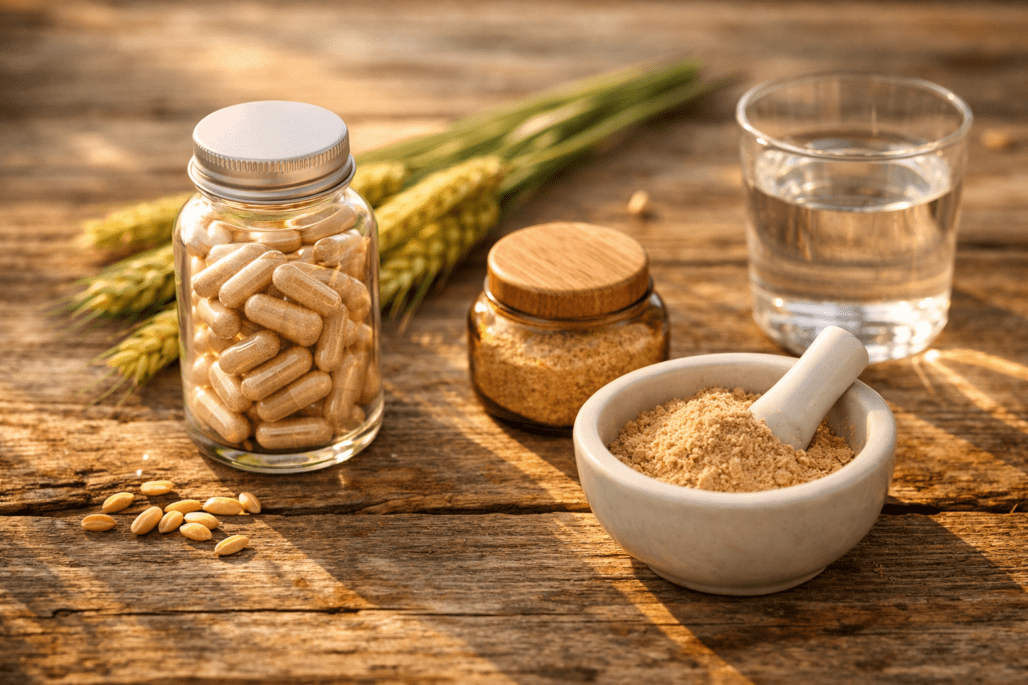
Spermidine dosage: how much to take, when to take it, and common mistakes
Dosage is where most confusion happens. Many top products range from about 1 mg up to 25 mg per serving. More is not automatically better, especially when human outcome data is still developing.
A practical dosing framework (for most healthy adults)
A conservative, commonly used approach:
- Start: 5-10 mg once daily with food for 2-4 weeks
- Continue: 10-15 mg daily if well tolerated and aligned with your goals
- Reassess: after 8-12 weeks (sleep, recovery, digestion, training tolerance)
Some people choose to cycle (for example, several months on and a short break). There is no universal evidence-based cycling schedule, but cycling can be a practical way to evaluate whether you notice a difference.
If you’re stacking supplements: Be careful not to change five variables at once. Use a structured approach like this guide to supplement stacking so you can tell what’s actually helping.
When to take spermidine
Most users do fine taking it:
- With food (often easier on the stomach)
- Morning or midday (routine matters more than timing)
If a product causes mild nausea, try taking it with a larger meal or splitting the dose.
Common mistakes that waste money
Here are the patterns that show up repeatedly:
-
Chasing the highest dose immediately
Higher-dose products (20-25 mg) can be useful, but they’re not automatically superior for first-time users. -
Ignoring the source and allergens
Wheat germ extracts can be a problem for some. Synthetic sources may be a better fit if you’re sensitive. -
Expecting “longevity feelings” in a week
If spermidine helps, it’s usually subtle and gradual.
Visual: dose and decision guide
| Your goal | Suggested range | Notes |
|---|---|---|
| First-time user | 5-10 mg/day | Start here, track tolerance |
| Maintenance | 10-15 mg/day | Common “middle” range |
| Experienced user testing higher potency | 15-25 mg/day | Consider only if you tolerate it well |
Actionable takeaway: Start lower than you think, then move up only if you have a reason. That approach saves money and reduces side effects.
Best spermidine supplements in 2026: top picks compared (dose, value, and fit)
Most shoppers want a simple comparison: “Which one should I buy?” The right answer depends on your constraints: wheat vs synthetic, capsule vs gummy, and how much you’re willing to pay per month.
Below is a practical comparison based on commonly listed serving sizes, typical market pricing, and brand positioning from major supplement reviewers.
Comparison table: top options and who they’re for
| Product (example) | Dose per serving | Source/form | Best for | Watch-outs |
|---|---|---|---|---|
| OMRE Spermidine | 10 mg | Wheat germ extract | “Food-derived” preference | Wheat allergen concern |
| Double Wood Spermidine | 10 mg | Synthetic (trihydrochloride) | Budget + wheat-free | Verify testing docs per batch if possible |
| Toniiq Spermidine+ | ~22 mg | Blend (synthetic + rice germ) | High-dose users | High dose may be unnecessary for beginners |
| Neurogan Gummies | 25 mg | Wheat germ | People who need gummies | Extra ingredients vs capsules |
| spermidineLIFE | 1 mg | Wheat germ | Low-dose protocols | Higher monthly cost for lower dose |
For quick product context and pricing examples, see Innerbody’s “best spermidine supplement” roundup and a retailer listing showing a common 5 mg capsule format. Use these as reference points, not as medical recommendations.
How to think about “value” without obsessing over price per mg
Price-per-mg can be useful, but it can also mislead. A cheaper product is not a better deal if:
- you won’t take it consistently,
- it lacks quality testing,
- it uses a form you don’t tolerate.
Actionable takeaway: Pick one product you can take daily for 8-12 weeks. Consistency is the real “value multiplier.”

Conclusion: the smart way to start with spermidine
Spermidine supplements are best approached as a steady, long-term habit, not a quick fix. The most reliable strategy is to choose a tested product, start with a moderate dose (often 5-10 mg), and give it enough time to judge whether it fits your routine and goals. If you’re wheat-sensitive, synthetic spermidine can be a practical alternative.
Next step: if you’re building a broader longevity plan, pair this with a clear framework for supplement stacking and compare adjacent options like NAD+ supplements. If your main goal is performance and recovery rather than aging, you may get more immediate ROI from evidence-forward muscle-building supplements.
As an Amazon Associate, I earn from qualifying purchases. Product recommendations are based on real reviews and independent research.
