
Affiliate disclosure: this article contains affiliate links. As an Amazon Associate, UsefulVitamins.com earns from qualifying purchases at no extra cost to you.
Supplements do not stop your jaw from grinding the way a switch does. What they can do is lower the muscle tension and the bedtime stress that feed it, so the habit has less fuel. That is a real but partial effect, and the most honest version of this page also hands you the parts that cost nothing.
Why your jaw clenches and grinds at night
Bruxism is the medical name for clenching and grinding your teeth, and it comes in two flavors. Awake clenching is usually a stress habit: you catch yourself with your teeth pressed together at the desk or in traffic. Sleep bruxism is different – it is a sleep-related movement disorder where the jaw muscles fire in bursts while you are out cold, and you have no idea it is happening until your partner hears it or your dentist spots the wear.
Both share a common driver. Stress and anxiety are the most consistent links, which is why the Mayo Clinic lists tension and anxiety at the top of its bruxism causes. The jaw muscles sit in a state of low-grade overactivity, and at night that neuromuscular hyperexcitability shows up as clenching and grinding.
That is the lever supplements pull on. Magnesium and B-vitamins are involved in how calm or twitchy a muscle and nerve are; L-theanine works on the pre-sleep arousal that keeps the system wound up. None of them coat your enamel or splint your jaw. They aim at the tension, not the teeth.
A few things make it worse, and they are worth knowing before you buy anything. Caffeine, alcohol, smoking and recreational stimulants all raise the odds of grinding, and so do some medications. The NHS self-help advice for teeth grinding puts cutting caffeine and alcohol on the same footing as relaxation – that is your free fix, and it is below.
The picks: 3 supplements that target the tension
A quick honesty note before the list. The direct evidence that any pill reduces measured grinding in adults is thin. Most of what we have is a small, uncontrolled magnesium pilot, plus stronger trials on the things grinding is built from – sleep quality and stress. So read these as supports for the driver, not a cure for the symptom.


As an Amazon Associate, UsefulVitamins.com earns from qualifying purchases at no extra cost to you.
Some links below are affiliate links. If you buy through them we may earn a small commission at no extra cost to you, and it never changes which products we pick or how we grade them.
1. Magnesium glycinate – the top pick
Magnesium acts as a gatekeeper at the NMDA receptors that drive excitatory nerve signaling, and it is needed for normal muscle relaxation. The theory for bruxism is straightforward: a calmer, less excitable nervous system means jaw muscles that are less primed to fire at night.
Here is the honest grade. The direct human evidence is weak. The most-cited study is a small 2011 pilot in a handful of people with no control group, so it cannot tell us much. What is better supported is the indirect path: magnesium can improve sleep quality, especially in people who are short on it, and bruxism is a sleep-linked problem. So you are treating the soil, not the weed.
Why glycinate and not citrate. Magnesium glycinate is gentle on the gut – the glycine carrier means it is far less likely to send you running for the bathroom than citrate or oxide, which pull water into the bowel. For a bedtime supplement you want the calm form, not the laxative one. The glycine itself is mildly relaxing, which is a bonus at night.
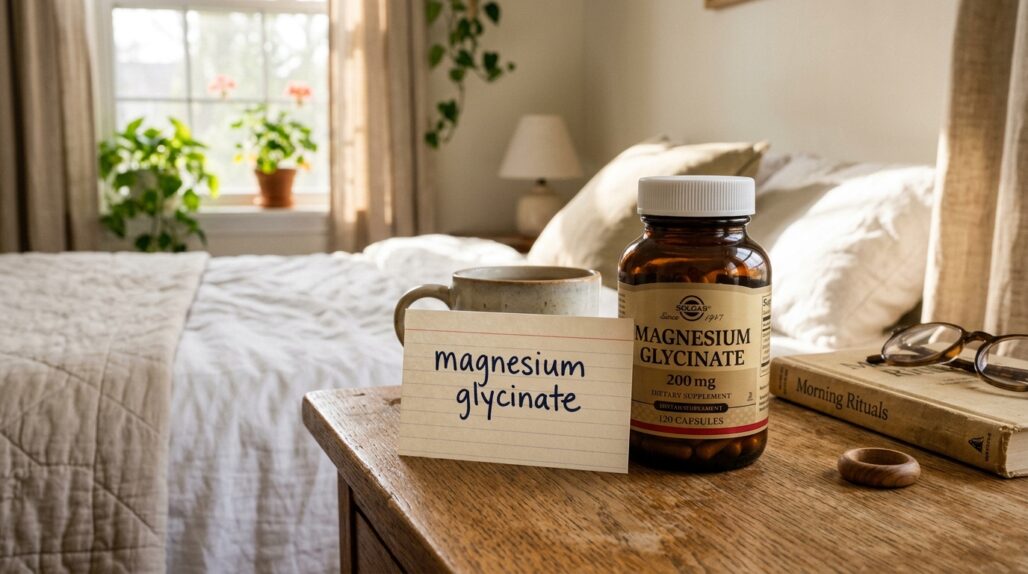
Dose and timing: around 200-300 mg of elemental magnesium roughly 60 minutes before bed. The NIH Office of Dietary Supplements sets the upper limit for supplemental magnesium at 350 mg a day, separate from what you get in food, so there is no reason to megadose. Read the label for elemental magnesium, not the compound weight: many “magnesium glycinate 400 mg” products (including the one above) supply only about 60 mg elemental per capsule, so reaching 200-300 mg elemental can take 3 to 5 capsules. Count the elemental total and keep it under the 350 mg a day supplemental limit. Best for people whose grinding rides along with restless, light sleep or general muscle tightness. If you want to size your dose, our complete guide to magnesium walks through forms and amounts, and the best magnesium for anxiety roundup covers the calming end of the spectrum.
One caution: magnesium can interact with some antibiotics, bisphosphonates and other drugs by binding them in the gut, so space it a couple of hours apart and check with a pharmacist if you take regular medication.
2. B-complex with active B6 and B12 – the supporting cast
B-vitamins are the maintenance crew for the nervous system. B6 helps build neurotransmitters like serotonin and dopamine, and B12 keeps nerve cells working properly. Low B-vitamin status can leave nerves more irritable, which is the loose logic for using them when a stress-linked muscle habit is the problem.
Be clear on the grade. There is no solid adult trial showing a B-complex reduces teeth grinding. What you can point to is its established role in normal nerve function and stress metabolism, and the fact that people under chronic stress burn through B-vitamins faster. Treat this as a reasonable foundation if your diet is patchy or you are running on stress, not as a proven bruxism fix.
Look for a complex with the active, methylated forms – methyl-B12 and P-5-P (the active B6) – which skip a conversion step in the body. Take it with breakfast, since B-vitamins can be mildly energizing and are not what you want at lights-out. Our magnesium guide pairs naturally with a B-complex, and many people stack the two.
The real caution is B6. Long-term high-dose B6 can cause nerve damage (a tingling neuropathy), so avoid standalone megadoses and keep total B6 sensible – a standard B-complex is plenty. More is not better here.
3. L-theanine – for the wound-up, can't-switch-off type
L-theanine is an amino acid from tea that promotes a calm, alert state without sedation. It is the one pick on this list with a halfway decent trial behind it, though again that trial measured stress and sleep, not grinding.
In a randomized, placebo-controlled crossover study of 30 adults, 200 mg of L-theanine a day for four weeks improved sleep-quality scores and lowered trait anxiety compared with placebo. A separate crossover trial found L-theanine blunted the stress response to a mental challenge. So the grade is moderate for stress and sleep, but indirect for bruxism – it works on the arousal that feeds clenching, not the jaw itself.
Dose: 100-200 mg in the evening, on its own or alongside magnesium. It is well tolerated and non-habit-forming. Best for the person whose mind races at bedtime and whose jaw is tight from a tense day. Our best L-theanine supplements guide covers brands and dosing, and if racing thoughts are the bigger problem, see supplements for racing thoughts at bedtime.
| Supplement | Evidence | Typical dose | Best for |
|---|---|---|---|
| Magnesium glycinate | Weak direct (small pilot); moderate for sleep quality | 200-300 mg elemental, ~60 min before bed | Restless, light sleepers with muscle tightness |
| B-complex (active B6/B12) | Weak/supportive; no direct bruxism trial | One standard complex with breakfast | Patchy diet or high ongoing stress |
| L-theanine | Moderate for stress and sleep; indirect for grinding | 100-200 mg in the evening | A racing mind and tense jaw at bedtime |

The free fix: where supplements stop and habits start
This is the part single-brand blogs skip, and it is the part that does the heavy lifting. Supplements reduce the tension driver. They do nothing to protect your enamel. That job belongs to a guard and your daytime habits, and both can cost nothing or close to it.
- Cut caffeine and alcohol first. Both raise grinding odds, and stopping caffeine by early afternoon is the single change most likely to help. This is the cheapest experiment you can run.
- Run a daytime clench check. Several times a day, settle your jaw into the resting position: tongue resting on the roof of your mouth, teeth apart, lips together. Your teeth should only touch when you eat. Catching awake clenching takes the load off the muscles before night.
- Massage the masseter. Press the thick muscle at the angle of your jaw with two fingers and make slow circles for a minute or two. A warm cloth on the jaw before bed helps tight muscles let go.
- Build a real wind-down. The NHS puts breathing exercises, regular exercise and a steady sleep routine on the same level as any treatment. Screens and late stress wind the system up – that is the arousal your L-theanine is fighting, so help it.
- Get a night guard. A dentist-fitted guard is the proven way to stop grinding from wrecking your teeth. Over-the-counter boil-and-bite guards are a cheap stopgap, but a custom one fits better and lasts.
When to see a dentist or doctor
Bruxism can quietly mask or cause a real problem, so do not self-treat past these flags. See a dentist or doctor for worn or cracked teeth, morning jaw pain or headaches, a jaw that clicks or locks (a sign of TMJ trouble), or grinding loud enough to disrupt your or your partner's sleep. You likely need a night guard and an exam, not just supplements.
Also get checked if your teeth have become newly sensitive, if you have ongoing earache with no ear infection, or if the grinding started after a new medication – some drugs trigger it. The Mayo Clinic notes severe bruxism can damage teeth, restorations and the jaw joint, so an early look saves you fillings later. Never start, stop or change a prescription on your own to chase this; raise it with the prescriber instead.
FAQ
Does magnesium actually stop teeth grinding? Not reliably. The direct evidence in adults is weak – one small pilot with no control group. It may ease the muscle tension and improve the sleep that grinding rides on, which is why it is the top pick, but treat it as a modest support, not a cure.
Magnesium glycinate or citrate for bruxism? Glycinate. It is gentle on the gut and the glycine is mildly calming, which suits a bedtime dose. Citrate works for absorption too but is more likely to loosen your stool, which is the opposite of restful.
How long before I notice a difference? Give a calming supplement two to four weeks of nightly use, since the L-theanine sleep data ran over four weeks. If nothing shifts after a month, the driver is probably stress or a sleep issue that needs a different approach.
Can I take all three together? Magnesium and L-theanine pair well at night, and a B-complex fits at breakfast. They have no major conflicts, but add one at a time so you know what is doing what, and check interactions if you take regular medication.
Will supplements replace a night guard? No. Supplements work on the tension behind grinding; a guard physically protects your enamel. If your teeth are already wearing, the guard is the non-negotiable part and the supplements are the optional extra.
Is teeth grinding always caused by stress? Stress and anxiety are the most common links, but sleep apnea, caffeine, alcohol, smoking and certain medications all play a role. If grinding comes with loud snoring or gasping at night, ask about a sleep assessment.
The bottom line
If you try one supplement for jaw clenching, make it magnesium glycinate at night, with L-theanine as a reasonable add-on if a racing mind is the problem. Be realistic: these calm the tension that feeds grinding, and the human evidence for actually reducing measured bruxism is thin, so expect a modest helping hand at best. The parts that reliably move the needle cost nothing – cut caffeine and alcohol, run a daytime jaw check, and build a real wind-down. And if your teeth are worn, your jaw aches in the morning, or it clicks or locks, see a dentist for a guard and an exam before you spend another cent on pills.
This article is for general information and is not medical advice. Supplements can interact with medications and conditions; talk to a doctor, dentist or pharmacist before starting one, especially if you are pregnant, breastfeeding or taking prescription drugs.
Reviewed by the UsefulVitamins Editorial Team.
