
If you’re shopping for vitamin K2 supplements, the biggest decision is not the brand – it’s the form. Most people do best with K2 as MK-7, because it stays in the bloodstream longer and can be taken once daily in microgram doses. MK-4 can still matter in specific cases, but it typically requires much higher milligram dosing and more frequent use. This article breaks down MK-7 vs MK-4, what doses research actually uses, how to spot quality, and who should be cautious – so you can choose a K2 product that fits your bone and heart goals.
Affiliate disclosure: this article contains affiliate links. As an Amazon Associate, UsefulVitamins.com earns from qualifying purchases at no extra cost to you.
Summary / Quick Answer
The best vitamin K2 supplements for most people use MK-7 (90 to 200 mcg daily), ideally from a well-verified all-trans source and taken with a meal that contains fat. MK-7 tends to maintain steadier blood levels than MK-4, which is one reason it’s common in bone-focused formulas.
Quick checklist for choosing vitamin K2 supplements:
- Best all-around form: MK-7 (longer half-life; once-daily dosing)
- Common evidence-based dose: 90 to 200 mcg/day (180 mcg is a frequent “middle” dose)
- When MK-4 may be used: targeted protocols using milligram doses (often clinician-guided)
- Quality markers to look for: “all-trans” MK-7, third-party testing, simple excipients
- How to take it: with food, ideally containing fat; often paired with vitamin D3
- Who must talk to a clinician first: anyone using warfarin or other vitamin K-sensitive anticoagulants
Vitamin K2 (MK-7 vs MK-4): What matters most for results
If vitamin K2 feels confusing, it’s because “K2” is really a family of compounds called menaquinones. The two most common in supplements are MK-7 and MK-4, and they behave differently in the body.
The practical takeaway is simple: MK-7 usually fits real-life routines better. It stays active longer, so it can be taken once daily in microgram amounts. MK-4 clears faster, so it often requires multiple daily doses and much higher total amounts.
Why MK-7 is the default choice in many modern formulas
Research and clinical practice often favor MK-7 because it maintains more stable blood levels over time. That matters because K2’s job includes activating vitamin K-dependent proteins such as:
- Osteocalcin, involved in bone mineralization
- Matrix Gla protein (MGP), which helps regulate calcium handling in blood vessels
A clinician-facing overview from Better Bones comparing MK-7 and MK-4 explains why MK-7’s longer half-life is a key reason it’s commonly used for bone-focused supplementation.
Where MK-4 still fits
MK-4 isn’t “worse.” It’s just different. Some osteoporosis protocols (especially in Japan) have used high-dose MK-4. But those doses are typically measured in milligrams, not micrograms, and they are usually not “casual” supplementation.
If you’re considering MK-4 specifically for a medical condition, it’s worth discussing it with a clinician who can weigh the full picture: diet, vitamin D status, calcium intake, medications, and fracture risk.
Visual: MK-7 vs MK-4 at a glance
| Feature | MK-7 (menaquinone-7) | MK-4 (menaquinone-4) |
|---|---|---|
| Typical supplement dose | 90 to 200 mcg/day | mg-level dosing in some protocols |
| Dosing frequency | Often once daily | Often multiple daily doses |
| Blood level stability | More stable | Less stable |
| Common use case | Bone and vascular support | Targeted high-dose protocols |
Action step: If your goal is a straightforward daily supplement, start by evaluating MK-7 products first.
What the research suggests for bone and cardiovascular support (and realistic dosing)

Sports Research Vitamin K2 as MK-7 100mcg with Coconut MCT Oil – 120 Veggie Softgels (4 Month Supply) Vegan Certified, Non-GMO Verified, Gluten & Soy Free
Sports Research Vitamin K2 as MK-7 at 100mcg per softgel, delivered in coconut MCT oil, provides a 4-month supply in 120 vegan-certified veggie softgels. Product is Non-GMO verified, gluten-free, and soy-free, formulated for bone and heart health support. No Amazon ratings, reviews, pricing, or third-party testing data available in search results.
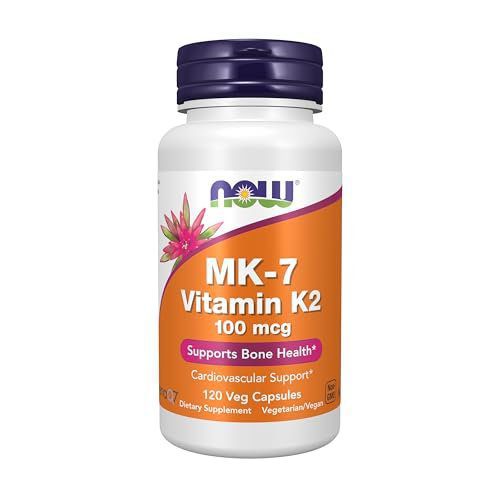
NOW Foods Supplements, MK-7 Vitamin K-2 100 mcg, Cardiovascular Support*, Supports Bone Health*, 120 Veg Capsules
NOW Foods MK-7 Vitamin K-2 delivers 100 mcg per vegetarian capsule, the bioavailable form from natto, in a 120 veg capsule bottle. It supports bone health and cardiovascular function through calcium metabolism. Matches common daily intake levels for these needs.
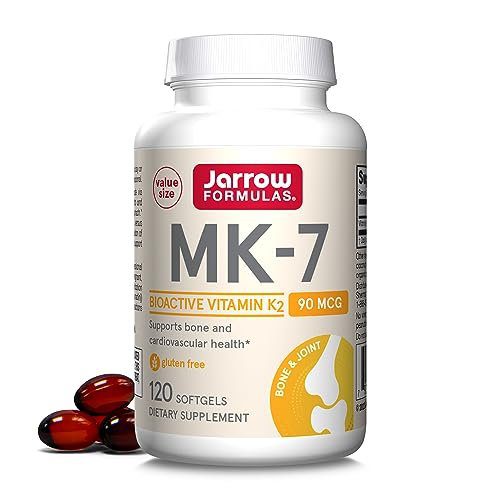
Jarrow Formulas MK-7 90 mcg – Bioactive Form of Vitamin K2-120 Servings (Softgels) – for Bone & Cardiovascular Health – Vitamin K2 MK-7 Dietary Supplement – Gluten-Free
Jarrow Formulas MK-7 delivers 90 mcg of the bioactive MK-7 form of vitamin K2 in 120 softgels, made via natural fermentation from Bacillus subtilis natto for better absorption than K1 from spinach. This gluten-free supplement supports bone building through protein carboxylation and cardiovascular health as a longer-acting K2 variant. Small softgels provide 120 servings with no aftertaste reported by users.
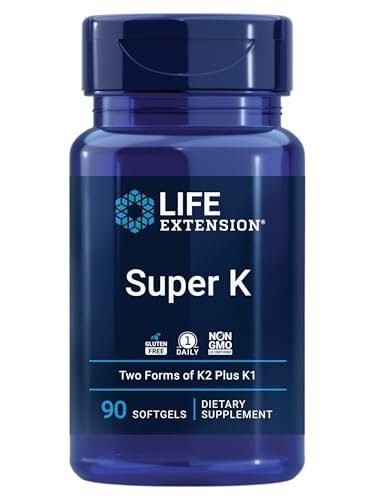
Life Extension Super K, Vitamin K Supplement, 2000 Mcg Vitamin K and 1180 Mcg Vitamin K2, Heart Health, Once-Daily, 90 Softgels
Life Extension Super K combines vitamin K1 with two forms of vitamin K2 (MK-4 and MK-7) in a once-daily softgel, delivering 2000 mcg of K1 and 1180 mcg of K2 per dose. The formula is designed to support calcium distribution for bone strength and cardiovascular function.
Most people take K2 for two overlapping reasons: bone density support and cardiovascular support related to calcium balance. The science is still developing, but there’s enough consistency to make practical choices.
Bone markers and dosing ranges used in studies
Clinical trials commonly use MK-7 in the 90 to 200 mcg/day range, and many products land around 180 mcg. In these doses, studies have reported improvements in markers tied to bone metabolism, including osteocalcin carboxylation, which is one way researchers measure whether vitamin K-dependent bone proteins are being activated.
The same Better Bones MK-7 vs MK-4 overview summarizes how MK-7’s pharmacokinetics (how long it stays in circulation) supports once-daily dosing.
Arterial flexibility and calcium handling
K2 is often discussed alongside arterial calcification because MGP is a vitamin K-dependent protein involved in calcium regulation in blood vessel walls. Some trials link MK-7 intake with measures related to arterial flexibility, though it’s important to keep expectations grounded. Supplements are not a substitute for blood pressure control, lipid management, exercise, and smoking cessation.
For readers building a “bones and arteries” plan, K2 tends to be one piece of a larger foundation:
- Adequate protein
- Strength training and impact exercise (as appropriate)
- Vitamin D sufficiency
- Magnesium and overall mineral balance
- A diet pattern that supports cardiometabolic health
Visual: Practical daily targets (typical supplement use)
- MK-7: 90 to 200 mcg/day, often once daily with food
- Vitamin D3 pairing: common, because D supports calcium absorption while K2 helps regulate where calcium is used
- Calcium: best individualized; “more” is not always better, especially if dietary intake is already high
If you’re already taking D3 and want to tighten up your routine, compare options in UsefulVitamins’ guide to Best Vitamin D Supplements.

Action step: If you’re new to K2, choose MK-7 at 90 to 200 mcg/day and reassess after 8 to 12 weeks alongside vitamin D status and diet.
How to choose high-quality vitamin K2 supplements (labels, isomers, and testing)
A K2 label can look clean and still hide meaningful differences. Two products can both say “MK-7,” yet vary in isomer profile, dosage accuracy, and manufacturing quality.
1) Look for “all-trans” MK-7
MK-7 exists in different structural forms (isomers). Many experts prefer all-trans MK-7, because it’s the form most associated with expected biological activity.
Some branded raw materials emphasize a high all-trans percentage and specific manufacturing methods. For example, the manufacturer information around MK-7 forms discussed by Smeets and Graas (vitamin K2 ingredient background) describes distinctions you may see referenced on labels, such as fermentation-derived MK-7 and purification methods.
You don’t need to chase a trademark. But “all-trans” is a useful quality clue when it’s provided.
2) Prefer third-party testing when possible
Quality testing matters because supplement labels are not always perfectly accurate. Independent testing has found that most vitamin K supplements meet label claims, but not all do.
A helpful example is the testing summarized in the ConsumerLab vitamin K supplement review, which reports that while many products passed, some did not match their labeled amounts.
If a brand shares a current certificate of analysis (COA) or participates in reputable third-party programs, that’s a plus.
3) Check the dose and serving size logic
MK-7’s advantage is that it works in micrograms, not milligrams, for typical daily use. If you see extremely high MK-7 doses, pause and ask why. More is not automatically better, especially if you’re combining multiple products.
4) Choose a form you’ll actually take consistently
Consistency is underrated. If a softgel taken with dinner is the only format you’ll stick to, that beats a “perfect” powder you forget.
Use a simple routine:
- Take K2 with a meal that contains fat
- If you also take D3, consider taking them together
- If you take multiple supplements, organize them with a plan like the Complete Supplement Stacking Guide and refine timing with the Supplement Timing Optimizer
Visual: Label checklist you can screenshot
- MK-7 amount listed in mcg (commonly 90 to 200 mcg)
- “All-trans” stated (if available)
- Third-party testing or COA availability
- Clear allergen info (soy-free if needed)
- Simple excipients (avoid unnecessary blends if sensitive)
Action step: Pick one MK-7 product with a clear dose and testing transparency, and commit to daily use with dinner for a month before changing anything.
Safety, interactions, and common misconceptions (what to ignore and what to take seriously)
Vitamin K2 is generally well-tolerated for many healthy adults, but it’s not “risk-free,” especially when medications enter the picture.
The most important interaction: warfarin
If you take warfarin (Coumadin) or other vitamin K-sensitive anticoagulants, do not start or change K2 supplementation without medical guidance. Vitamin K intake can affect INR management.
For readers who need help understanding how vitamin K intake relates to anticoagulant management, UsefulVitamins has a Warfarin Vitamin K Calculator that can support more informed conversations with your care team.
Common misconceptions worth clearing up
Misconception 1: “All K2 supplements are basically the same.”
They’re not. Dose accuracy, isomer profile, and testing vary. Independent testing like the ConsumerLab vitamin K supplement review highlights why quality control matters.
Misconception 2: “Higher dose is always better.”
Not with MK-7. Many clinical discussions cluster around 90 to 200 mcg/day. More may be unnecessary, and it may complicate supplement stacking.
Misconception 3: “K2 alone fixes osteoporosis.”
K2 may support bone-related proteins, but bone health is multi-factorial. Think training, protein, vitamin D status, and overall nutrition. K2 is a tool, not a standalone solution.
Misconception 4: “MK-7 is ineffective compared to MK-4.”
MK-4 has specific high-dose research contexts, but MK-7’s longer half-life and practical dosing make it a common choice for daily supplementation, as summarized in the Better Bones MK-7 vs MK-4 comparison.
Visual: Who should be cautious (quick screen)
Consider clinician guidance first if you:
- Use warfarin or have INR targets
- Have a history of clotting disorders (ask your clinician)
- Are pregnant or breastfeeding (supplement decisions should be individualized)
- Are planning surgery and have medication changes pending
Action step: If you’re on anticoagulants, treat any K2 change like a medication change – involve your prescriber and monitor appropriately.

Taking this with a multivitamin or other products? Our companion app, StackMyMed, adds up your real daily total of each vitamin across everything you take, so overlaps surface before they push you past a safe limit.
Conclusion: A practical way to pick the right K2 and use it well
For most people, vitamin K2 supplements are simplest and most research-aligned when they use MK-7 in the 90 to 200 mcg/day range, taken with food (and often alongside vitamin D3). MK-4 can still be relevant, but it’s usually a different dosing strategy and often works best under clinician guidance.
The best next step is to choose one quality MK-7 product, take it consistently with a fat-containing meal, and keep your overall plan grounded in the basics: strength training, protein, vitamin D sufficiency, and smart supplement timing.
To tighten up your stack, review the Best Vitamin D Supplements and organize your routine with the Supplement Timing Optimizer.
As an Amazon Associate, I earn from qualifying purchases. Product recommendations are based on real reviews and independent research.
