
Affiliate disclosure: this article contains affiliate links. As an Amazon Associate, UsefulVitamins.com earns from qualifying purchases at no extra cost to you.
Why the cost gap is so wide
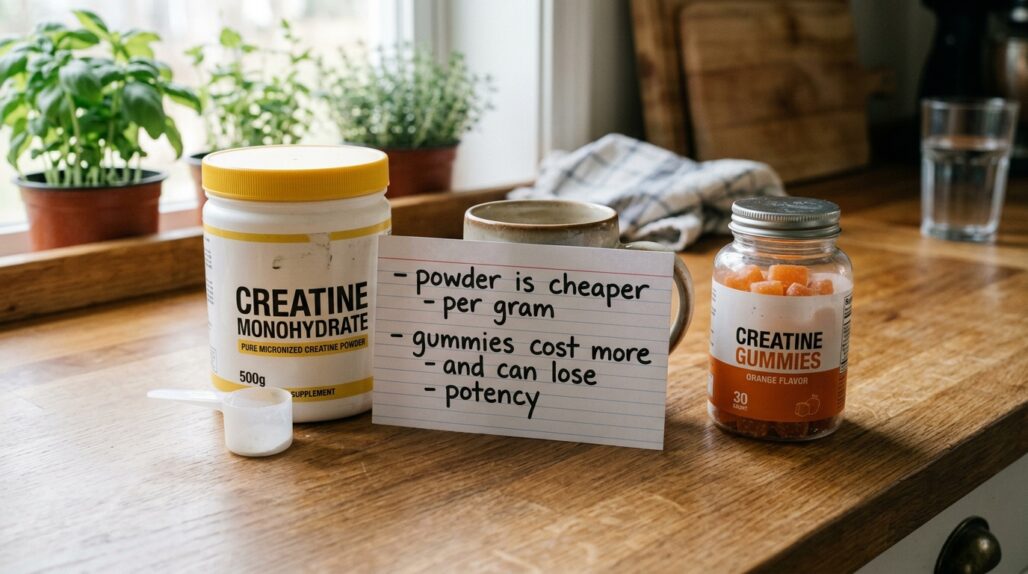
Creatine is one of the most studied supplements in sport, and the effective dose is settled. Most healthy adults do well on 3 to 5 g of creatine monohydrate per day, per the NIH Office of Dietary Supplements.
That dose is identical whether it comes from powder, capsules, or gummies. So the only honest question is which format delivers those grams reliably and cheaply.
On both counts, plain powder wins by a wide margin. Gummies add sugar, flavoring, a gelling agent, and single-wrapped convenience, and you pay for all of it. The active ingredient is the same molecule.
This page is the math and the label checks around that decision. If you want vetted gummy products that actually passed testing, our roundup of creatine gummies that genuinely contain creatine does that work separately.
The cost-per-gram math, worked out
Here is the part the marketing skips. Run the numbers per gram of actual creatine, not per package.
A typical tub of plain creatine monohydrate holds 1,000 g (about 200 servings of 5 g) and often sells for roughly $20 to $40 as of writing, so check the current price. That lands powder at around $0.02 to $0.07 per gram, or roughly $0.10 to $0.40 for a full 5 g serving.
Gummies tell a different story. Reviewers pricing 2025 products found gummy creatine landing around $0.40 to $0.50 per gram, which is roughly $2 to $2.50 for a 5 g serving once you eat enough gummies to get there.
| Format | Typical cost per gram | Cost per 5 g dose | Rough monthly cost |
|---|---|---|---|
| Plain monohydrate powder | ~$0.02 to $0.07 | ~$0.10 to $0.40 | ~$3 to $12 |
| Capsules | ~$0.08 to $0.20 | ~$0.40 to $1.00 | ~$12 to $30 |
| Gummies | ~$0.40 to $0.50 | ~$2.00 to $2.50 | ~$60 to $75 |
The spread is striking. A 5 g daily habit on cheap powder can run around $3 to $12 a month, while the same daily dose from gummies can hit $60 or more. Those figures move with sales and brand, so treat them as a frame, not a quote, and check the current price before you buy.
Over a year that is the difference between roughly $50 and several hundred dollars for the exact same molecule. For most people, that gap is the whole decision.
How many gummies actually equal a scoop
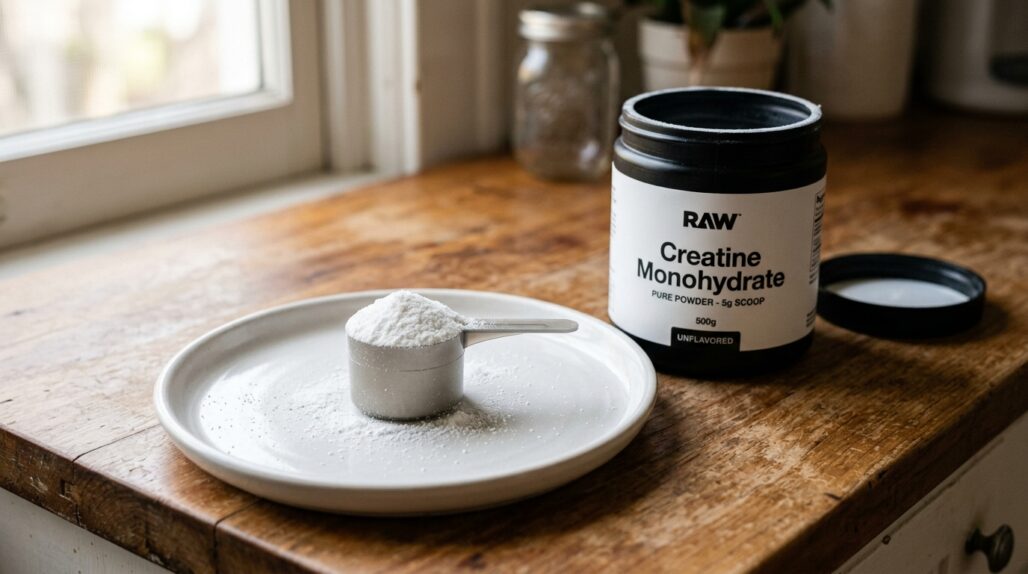
This is where labels matter. A level scoop of powder is a clean 5 g. Gummies fit far less creatine each, so you have to eat several to match it.
Many creatine gummies carry about 1 to 1.5 g per gummy, which means a 5 g target takes roughly 4 to 5 gummies a day. Some lower-dose products need even more.
Read the label two ways before you trust it:
- Creatine grams per serving, not just “per gummy,” and how many gummies make a serving.
- Sugar per serving, since the chews that taste best usually carry the most added sugar across 4 to 5 pieces.
- A third-party testing seal, such as NSF or Informed Sport, which matters more for gummies than for plain powder.
Hitting 5 g through gummies also means accepting whatever sugar rides along. That is fine occasionally, less ideal as a daily lifelong habit. Our deeper guide to creatine walks through dose timing if you want the full picture.
The stability problem nobody mentions
Powder has one quiet advantage that gummies cannot match. Dry creatine monohydrate is very stable. Sealed and kept dry, a tub holds its potency for years.
Creatine in water is the opposite. Once dissolved, especially in heat or acid, it slowly converts to creatinine, a breakdown product with no performance benefit. That is exactly the environment a gummy is made in.
Gummy production needs moisture and heat to set the gel, and many formulas sit at a slightly acidic pH. So some creatine can degrade to creatinine during manufacturing and over shelf life, which is the core risk with this format.
The data here is not theoretical. In 2024, supplement maker NOW Foods ran high-performance liquid chromatography testing on a batch of creatine gummy brands and found that roughly half failed to meet their label claims. NOW reported creatinine in the products that came up short, which points to degradation rather than simple underdosing.
NOW's quality lead noted that "due to the nature of gummy manufacturing, there is a possibility that creatine in gummy formulations may have degraded to creatinine," and flagged the instability of creatine in liquid as a likely contributor. Trade coverage from Nutritional Outlook reached the same takeaway: a meaningful share of gummies tested short, and a few contained little to no usable creatine.
The practical lesson is not "gummies never work." It is that the format raises the odds you are paying for creatinine you cannot use, so a clean third-party test result carries real weight.

Why monohydrate powder is the default
Step back from format for a second. The form of creatine matters more than how it is packaged, and the evidence keeps pointing to one answer.
The International Society of Sports Nutrition position stand calls creatine monohydrate the most studied and effective form, with no convincing evidence that pricier "advanced" versions beat it. Powder is simply the cheapest way to buy that gold-standard ingredient.
You also do not need a loading phase to make powder worth it. A 2025 trial comparing creatine with and without a loading dose is part of a wider body of work showing that 3 to 5 g a day reaches full muscle saturation in about 28 days on its own. Slower than loading, same endpoint.
So the powder routine is straightforward. One level 5 g scoop in water, juice, or a shake, once a day, every day. Whether to take it on rest days too is a fair question, and our piece on taking creatine on rest days covers that.
When gummies still make sense
Honesty cuts both ways. The best supplement is the one you actually take, and a few people genuinely take creatine more consistently as a gummy.
Gummies can be the right call if you travel constantly and hate measuring scoops, if you simply will not stir powder daily, or if taste is the only thing keeping you compliant. Adherence at a higher price beats perfect powder sitting unused.
If that is you, do not buy blind. Choose a tested product, and compare options first using our vetted creatine gummy alternatives on Amazon.
Which one to buy
For most readers the call is simple: buy plain micronized creatine monohydrate powder and pocket the savings. Pick a gummy only if it is the realistic difference between taking creatine and skipping it, and only if it carries a third-party test seal.


As an Amazon Associate, UsefulVitamins.com earns from qualifying purchases at no extra cost to you.
Some links above are affiliate links. If you buy through them, UsefulVitamins may earn a commission at no extra cost to you. We only recommend products that fit the research.
A reasonable shortlist: a value monohydrate powder for everyday use, a micronized powder if you want finer mixing, and a tested gummy if convenience is genuinely the deciding factor for you. Match the pick to your honest habits, not the marketing.
FAQ
How many creatine gummies equal a 5 g powder scoop? It depends on the dose per gummy, but many carry about 1 to 1.5 g each, so a 5 g target usually means roughly 4 to 5 gummies a day. Always read the grams-per-serving line on the label rather than assuming.
Are creatine gummies less effective than powder? The same creatine works the same way in either format, but gummies carry a higher risk of degrading to creatinine during manufacturing. NOW Foods testing found roughly half of the gummy brands it checked fell short of label claims, so a clean third-party test result matters here.
Why are creatine gummies so much more expensive? You are paying for sugar, flavoring, the gel base, and single-serve convenience on top of the creatine. Per gram of actual creatine, gummies can run several times the cost of plain powder.
Does creatine powder go bad? Dry, sealed, and kept away from moisture, creatine monohydrate powder stays stable for years. It only starts converting to creatinine once it sits dissolved in liquid, especially with heat, so mix it fresh rather than leaving a bottle premixed for days.
Do I need a loading dose if I use powder? No. Loading with about 20 g a day for a week works faster, but 3 to 5 g daily reaches the same full muscle saturation in roughly 28 days, which is gentler on the stomach for most people.
Is creatine safe to take every day? For healthy adults, daily creatine monohydrate at recommended doses has a strong safety record in the research. If you have kidney disease, take prescription medication, or are pregnant, ask a pharmacist or doctor before starting any creatine product.
The bottom line
The verdict is not close on cost. Plain creatine monohydrate powder gives you the most-studied form at the lowest price per gram, often a small fraction of what gummies charge for the same daily 5 g.
Gummies earn their place only on taste and adherence, and even then you should pick a third-party tested product to dodge the creatinine problem. If you will actually take the powder, take the powder and keep the difference.
Your next step: grab a tub of plain monohydrate, measure 5 g into water, and make it a daily habit for a month.
This article is general education, not medical advice. It does not replace guidance from your own clinician, and you should not start, stop, or change any supplement or medication based on it. Talk to a pharmacist or doctor about your situation, especially with kidney disease, pregnancy, or prescription medications.
Reviewed by the UsefulVitamins Editorial Team.
