
Affiliate disclosure: this article contains affiliate links. As an Amazon Associate, UsefulVitamins.com earns from qualifying purchases at no extra cost to you.
Why creatine moves the creatinine number
Here is the part that sets off the panic. You start creatine, get routine bloodwork a few weeks later, and your serum creatinine comes back a notch higher than last time. The lab flags it, and "creatinine" sounds a lot like "kidney damage."
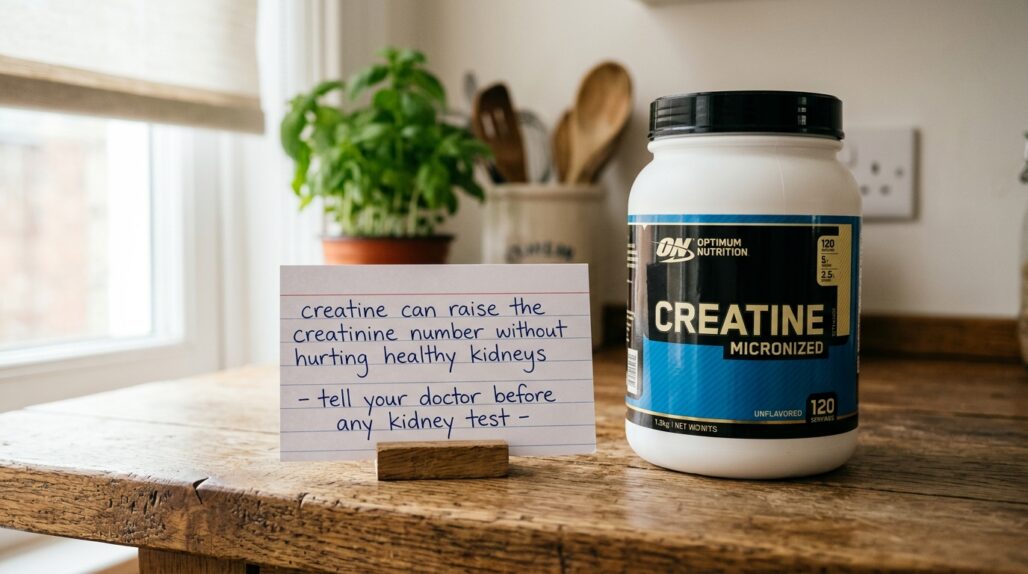
It mostly is not. Creatinine is the breakdown product of creatine. About 2 percent of your total creatine pool converts to creatinine every day and gets cleared by the kidneys. Add more creatine, and you simply make more creatinine.
The International Society of Sports Nutrition put it plainly in its position stand on creatine safety: creatine raises creatinine because creatinine is its metabolic byproduct, not because it harms the kidney. The filter is doing its job. There is just more to filter.
A 2023 narrative review in Nutrients made the same point, noting that a physiological surge of creatinine can appear in the blood after creatine without implying any harm to the kidneys. The molecule that we measure to check the kidney is the same molecule the supplement adds.
Creatinine, eGFR, and cystatin C are not the same thing
This is where most of the confusion lives, so it is worth slowing down.
Serum creatinine is a single waste-product measurement. It is cheap, fast, and useful, but it is influenced by things that have nothing to do with kidney health: your muscle mass, how much meat you eat, and yes, whether you take creatine. The AcuteCareTesting overview of kidney markers describes creatinine as reliable but shaped by muscle-related factors like age, sex, and body size.
eGFR (estimated glomerular filtration rate) is not a separate test. It is a calculation built on your creatinine plus your age and sex. So if creatine nudged your creatinine up, your eGFR can read slightly lower without your actual filtration rate changing at all. The number moved; the kidney did not.
Cystatin C is the useful tiebreaker. It is a small protein made by nearly every cell in your body and cleared by the kidneys, and it is not affected by muscle mass, meat intake, or creatine. That independence is why nephrologists reach for it.
In a large analysis in the New England Journal of Medicine, cystatin C-based estimates predicted kidney-related risk at least as well as creatinine-based ones, and often better in people whose creatinine is skewed by body composition. If your creatinine looks high but a cystatin C check comes back clean, that pattern points at the creatine, not at your kidneys.
If you want the full picture on how the supplement works and why a small creatinine shift is expected, our complete guide to creatine walks through the mechanism in more depth.

What the research actually shows in healthy people
The fear that creatine wrecks kidneys traces back to a handful of old case reports and animal studies. Controlled human trials have not backed it up.
A 2025 systematic review and meta-analysis in BMC Nephrology pooled 21 human trials run between 2000 and 2025. It found that creatine caused a slight, temporary rise in serum creatinine, exactly as the chemistry predicts, with no sign of kidney injury when function was measured with reliable methods.
The high-protein angle gets raised a lot too, since protein and creatine both come up in the same gym conversations. In a 12-week study of resistance-trained men eating a high-protein diet, creatine did not impair kidney function. The combination people worry about did not produce the harm they worry about.
On dosing, the ISSN position stand concluded that supplementation up to 30 grams a day for as long as 5 years was safe and well tolerated in healthy people, across ages from infants to the elderly. Almost nobody needs that much. The standard maintenance dose sits at 3 to 5 grams a day, and whether you take it on training or rest days is its own small question covered in should you take creatine on rest days.
None of this means creatine is risk-free for everyone. It means the specific fear – a normal-kidney person seeing a small creatinine bump – is not evidence of damage.
A realistic timeline for the creatinine bump
Here is roughly how the number behaves around standard use. These are general patterns from the supplement-and-creatinine literature, not a guarantee for any one person.
| Stage | What is happening | Creatinine reading |
|---|---|---|
| Loading days 1 to 7 (if you load) | A short ~20 g/day phase fills muscle stores fast and feeds more creatine into the conversion pathway | Most likely to read higher; the worst time to draw a kidney panel |
| Maintenance weeks 2 to 4 | You settle at 3 to 5 g/day and the daily creatine-to-creatinine turnover stabilizes | May sit modestly above your old baseline and stay there |
| Steady state, ongoing use | Body pool is full; turnover is constant | A new, slightly higher normal that is stable, not climbing |
| After stopping for ~3 to 4 weeks | Muscle stores wash out and turnover falls back | Usually drifts back toward your pre-creatine baseline |
The pattern that should reassure you is a number that goes up a little and then holds steady. The pattern that warrants a closer look is creatinine that keeps climbing over time while you have not changed your dose. The first is metabolism. The second is worth a conversation.
You can skip the loading phase entirely. Loading just gets stores full faster; taking 3 to 5 grams daily from the start reaches the same place in three to four weeks, and it is easier on both your gut and your lab numbers.
Tell your doctor before the blood test
This is the single most useful thing you can do, and it costs nothing.
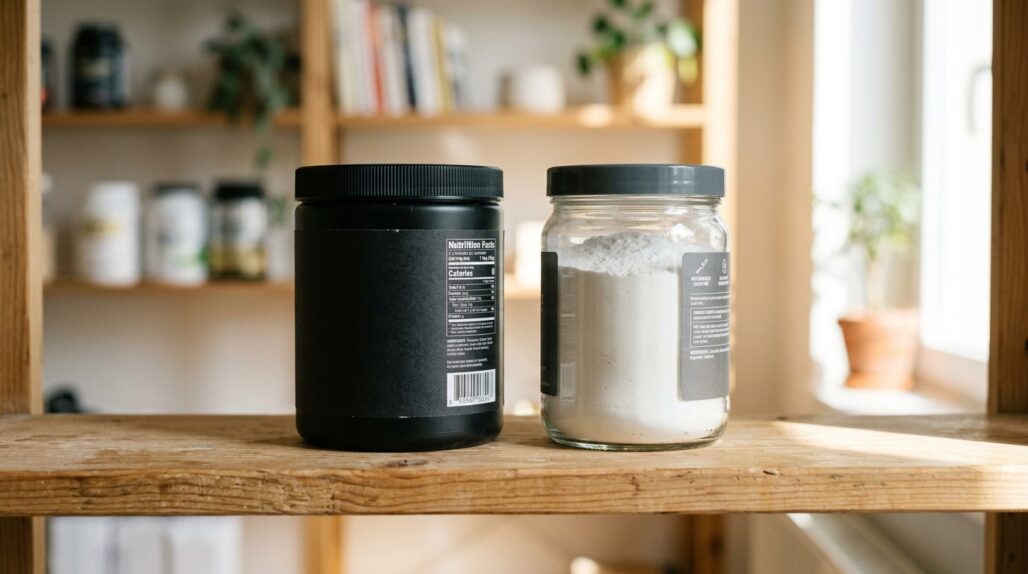
Mention that you take creatine whenever a kidney test is ordered. A clinician who knows that can read an elevated creatinine correctly instead of chasing a false alarm. The Nutrients review specifically flagged that any blood marker shaped by creatine metabolism can produce false positives in supplement users, and recommended interpreting results with that in mind.
If the timing is flexible and you want the cleanest read, some people pause creatine for about a week or two before a routine kidney panel so the result reflects baseline. That is a reasonable personal choice, not a medical instruction. Do not stop or change anything around a test your doctor ordered for a specific concern without asking them first.
If your creatinine looks high and you want certainty, ask whether a cystatin C test is appropriate. Because it ignores muscle and creatine, it can confirm in one draw whether your filtration is genuinely fine.
When a high creatinine is a real red flag
The honest version: creatine raising creatinine is benign in healthy kidneys, and that is the most common scenario by far. But "most" is not "all," and this is a health question, so the cautious lines matter.
Get a clinician involved, rather than self-clearing, if any of these apply:
- Known kidney disease or a low eGFR before you started. The ISSN-adjacent literature notes that people with significantly reduced filtration from pre-existing disease should be cautious with creatine and talk to a doctor first.
- Diabetes, high blood pressure, or a family history of kidney disease, which all change the baseline risk.
- Symptoms alongside the lab number: swelling in the legs or face, foamy or bloody urine, a sharp drop in how much you urinate, or unexplained fatigue.
- A creatinine that keeps rising on a stable dose, or a large jump rather than a small bump.
- Any prescription you take that affects the kidneys, which a pharmacist can review against creatine.
Do not diagnose yourself in either direction. A reassuring blog paragraph cannot rule out kidney disease, and a single flagged number does not confirm it. The point is to read the creatinine in context, with someone who can order the right confirmatory test.
Which creatine to buy
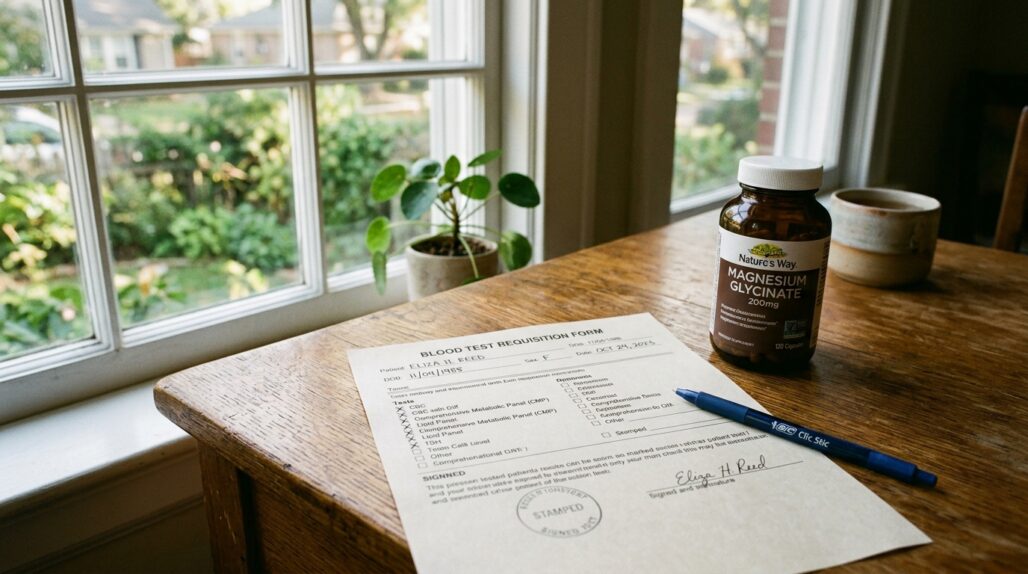
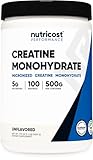
For this whole question, the form barely matters. Creatine monohydrate is the studied form, it is the one behind essentially all the safety data above, and it converts to creatinine the same way no matter what the label costs. Fancy "advanced" forms do not change the creatinine story and usually cost more for no added benefit.
A few sensible picks: plain micronized monohydrate dissolves a little better and can be gentler on the stomach, and a third-party-tested tub gives you confidence about what is actually in the powder. A larger value tub is fine for daily use at 3 to 5 grams. Women weighing up the options can see our notes on the best creatine for women, and the practical math on serving size lives in our creatine dose calculator so you can land on your number without guessing.
UsefulVitamins may earn a commission from purchases made through the links below, at no extra cost to you. We only recommend products we would use ourselves.


As an Amazon Associate, UsefulVitamins.com earns from qualifying purchases at no extra cost to you.
Whichever you choose, the dose does the work. Spending more on a boutique form will not change your labs and will not protect your kidneys any better than the basic powder.
FAQ
Does creatine actually damage your kidneys? In healthy people, the controlled evidence says no. A 2025 meta-analysis of 21 trials found a small, expected rise in serum creatinine with no sign of kidney injury when function was measured properly.
Why did my creatinine go up after starting creatine? Because creatinine is the waste product creatine breaks down into. Adding creatine adds creatinine to your blood even though your kidneys are filtering normally.
Should I stop creatine before a blood test? You do not have to, but telling whoever ordered the test that you take it is essential. Some people pause it for a week or two before a routine kidney panel for a cleaner baseline; do not change anything around a test ordered for a specific concern without asking your doctor.
What test shows my real kidney function if creatinine is skewed? A cystatin C test. It is not affected by muscle mass, meat intake, or creatine, so it can confirm whether your filtration rate is genuinely normal.
Is creatine safe if I already have kidney disease? That is a doctor question, not a self-clear. People with pre-existing kidney disease or a low eGFR should talk to a clinician before using creatine, since the safety data in that group is limited.
Does the form of creatine change the creatinine effect? No. Monohydrate is the studied form, and all forms convert to creatinine the same way. The price of the tub does not change your labs.
The bottom line
A higher creatinine after starting creatine is, in healthy kidneys, the chemistry working as expected: more creatine means more creatinine to filter, not a damaged filter. The studied dose is 3 to 5 grams a day, the safety record at standard intakes is strong, and the form you buy does not change any of it.
The move is simple. Tell your doctor you take creatine before any kidney test, ask about a cystatin C check if a number looks off, and treat known kidney disease, troubling symptoms, or a steadily climbing creatinine as a reason to get a clinician involved. Use the creatine dose calculator to settle on your daily gram count, then keep it boring and consistent.
This article is general education, not medical advice. It does not diagnose, treat, or replace care from a qualified clinician. Talk to a pharmacist or doctor about your own situation, especially if you have kidney disease or take prescription medication.
Reviewed by the UsefulVitamins Editorial Team.
