
Affiliate disclosure: this article contains affiliate links. As an Amazon Associate, UsefulVitamins.com earns from qualifying purchases at no extra cost to you.
If you are searching for the best creatine for women, you have probably already read a dozen Reddit threads claiming creatine is "the most studied supplement on the planet" but only seen it dosed for 220-pound men, and you want to know whether the same 5 grams a day actually applies to you, whether it really causes "creatine bloat," and which form is worth paying for.
Quick Answer: which creatine actually helps women
The 2 to 3 we'd start with first:
- Plain creatine monohydrate, 3 to 5 g per day: the trial-tested dose, the trial-tested form, the cheapest per gram, and the one with by far the largest evidence base in women.
- Micronized creatine monohydrate if you want better water solubility: mechanically the same molecule, just ground to a smaller particle size so it does not settle at the bottom of your shaker. Same outcomes, marginally easier to drink.
- A Creapure-sourced product if label trust matters to you: Creapure is a German-assayed creatine monohydrate raw material that ConsumerLab and independent labs repeatedly find at full label claim with very low contaminant levels.
Who should NOT start with these:
- Anyone with stage 3 or worse chronic kidney disease, or anyone on a known nephrotoxic drug regimen, without prescriber review. Creatine is renally excreted as creatinine and is contraindicated when filtration is already compromised.
- Anyone pregnant or nursing. Small trials exist and the safety signal so far is reassuring, but the dataset is not large enough to push a daily supplement recommendation. Defer to your OBGYN.
Do FIRST, before any supplement: match your protein intake to your training. A woman lifting 3 to 5 times a week with a daily protein intake under roughly 1.6 g per kg of body weight will see a much larger return from fixing food than from adding creatine. Resistance training plus adequate protein is the foundation. Creatine sits on top of that, not in place of it.
What creatine actually is, briefly
Creatine is a nitrogen-containing compound your liver and kidneys synthesize from glycine, arginine, and methionine, and that you also ingest from red meat and fish at roughly 1 to 2 grams a day on a typical omnivore diet. About 95 percent of body creatine sits inside skeletal muscle as phosphocreatine, with a smaller pool in the brain. The phosphocreatine pool regenerates adenosine triphosphate (ATP) during very short, very high-intensity efforts: the first 10 seconds of a sprint, the bottom of a heavy squat, the second to fifth rep of a max-effort set. More phosphocreatine in the cell, more reps before the system runs out.
Women carry baseline muscle creatine stores around 70 to 80 percent of male levels, partly because of smaller muscle mass and partly because dietary intake tends to be lower in populations eating less red meat. Vegetarian and vegan women have the lowest baseline stores and tend to show the largest responses to supplementation. The supplement does not "give you energy" in the caffeine sense. It raises a buffer your muscle and brain pull from during high-demand seconds. The felt effect is one or two extra clean reps at the top of working sets, not stimulant alertness.
The 2017 and 2022 International Society of Sports Nutrition position stands frame creatine monohydrate as the most effective ergogenic nutritional supplement currently available for increasing high-intensity exercise capacity and lean body mass. The updated 2022 ISSN paper by Antonio and colleagues directly addresses common misconceptions in women, including the bloat question, kidney safety in healthy adults, and the absence of any evidence for a hair-loss effect at standard doses. Creatine is not a "standard of care" intervention, because it is not treating a disease. It is a well-tested OTC supplement with a body of human RCT evidence very few other supplements come close to.
The supplements with the strongest evidence
Creatine monohydrate for strength, lean mass, and training quality
Why it helps: monohydrate is the form used in essentially all of the foundational trials. The muscle cell takes creatine up through a sodium-dependent transporter (SLC6A8), incorporates it into the phosphocreatine pool, and uses that expanded pool to regenerate ATP during the first 10 seconds of high-intensity effort. Over a training block, that translates into one or two extra clean reps per heavy set and small but reliable gains in lean mass on top of training alone.
What the trials show: the Smith-Ryan group at UNC has spent a decade running creatine trials specifically in women and consistently shows lean mass and strength gains that are similar in relative terms to gains in men, with smaller absolute numbers because starting muscle mass is smaller. A meta-analysis of resistance-trained adults puts the strength gain across one-rep-max squat and bench around 8 to 14 percent above placebo-plus-training, with similar effect sizes in the female subset. Lean mass gains run roughly 1 to 2 kg over an 8 to 12 week training block above the gain from training alone.
Dose used in trials: 3 to 5 grams per day, every day, including non-training days. A loading protocol of roughly 20 grams per day split into four doses for 5 to 7 days saturates the muscle pool faster but reaches the same ceiling as a daily 3 to 5 gram maintenance dose over 3 to 4 weeks. Cycling is not necessary.
Form to look for: plain creatine monohydrate. Micronized monohydrate is the same molecule with smaller particles; identical outcomes. Creapure-sourced products carry the cleanest independent assay record. Skip "blends" that bury creatine inside a proprietary matrix without listing the elemental creatine grams. A pre-workout listing "3.2 g performance blend" is not 3 to 5 grams of creatine.
Skip if: you have stage 3 or worse chronic kidney disease, are on a nephrotoxic drug regimen, or are pregnant or nursing without OBGYN review.
Creatine monohydrate for postmenopausal bone mineral density
Why it helps: the bone benefit is the most distinct women-specific finding in the literature and is mechanistically tied to the strength-and-loading axis, not a direct osteoblast effect. Creatine supports the muscle force that loads bone during resistance training, and over a long enough block that loading shifts bone mineral density at the hip. Preclinical work hints at direct osteoblast effects through creatine kinase pathways, but the human evidence rides almost entirely on training plus creatine together.
What the trials show: the landmark trial is a 2015 12-month RCT by Chilibeck and colleagues in 47 postmenopausal women, where creatine monohydrate at 7 grams per day combined with supervised resistance training produced a small but statistically significant attenuation of bone mineral density loss at the femoral neck versus placebo plus the same training. The effect was on the order of 1 to 2 percent over a year, small in absolute terms but clinically meaningful in a population where the trajectory is downward. Replication has been mixed. A subsequent shorter trial in early-postmenopausal women found no separation at the spine, which fits with bone biology timelines.
Dose used in trials: 5 to 7 grams per day, combined with a structured resistance training program 3 days per week. Creatine without the training program does not show this bone effect.
Form to look for: monohydrate. The bone trials used plain monohydrate, not HCl or buffered.
Skip if: you are not actually willing to commit to the resistance training. Creatine without the loading stimulus does not move bone density.
Creatine monohydrate for cognitive performance under sleep loss
Why it helps: the brain also uses phosphocreatine for ATP regeneration. Brain creatine stores can be expanded modestly by oral supplementation, though the kinetics are slower and the effect size smaller than in muscle. The cognitive signal is strongest when the brain is energetically stressed: sleep deprivation, high cognitive load, or a vegetarian baseline diet with low circulating creatine.
What the trials show: a 2018 RCT by McMorris and colleagues in sleep-deprived adults found that 20 grams per day for 7 days improved executive function and mood during 36 hours of sleep deprivation versus placebo. Several smaller trials in vegetarians have shown improvement on working memory tasks at 5 gram daily doses over 4 to 6 weeks. Effect sizes are modest and endpoints vary. The honest read: real signal, especially in energetically stressed populations, but creatine is not a felt-stimulant nootropic. It is a buffer that helps the brain when the brain is in trouble.
Dose used in trials: 5 grams per day for daily cognitive support in vegetarians; 10 to 20 grams per day in sleep-deprivation protocols. The high-dose acute work is a research design, not a daily recommendation.
Form to look for: monohydrate.
Skip if: your baseline diet already contains 200 grams or more of red meat or fish per day. The added cognitive benefit shrinks toward noise in already-replete eaters.
Supplements with moderate evidence (consider with caveats)
Creatine monohydrate as an SSRI augmentation in major depression
The mood data is part of why creatine is one of the few "muscle-and-brain" supplements with both lanes well-evidenced. A 2007 open-label pilot by Roitman and colleagues and a 2012 RCT by Lyoo and colleagues specifically in women with major depressive disorder showed that 5 grams per day added to standard SSRI therapy produced a faster and larger improvement in Hamilton Depression Rating Scale scores than SSRI plus placebo. Mechanistically, the depressed brain shows reduced phosphocreatine in dorsolateral prefrontal cortex on magnetic resonance spectroscopy, and supplementation appears to partially correct that through mitochondrial energetics rather than direct neurotransmitter effects. The evidence is small and replication is thin. Creatine is not a treatment for depression; it is an adjunct with mechanism and a small positive signal, and any depressed reader should be on a real treatment plan with a clinician first.
Creatine around the menstrual cycle and during pregnancy
A small but growing literature looks at whether creatine response varies across the menstrual cycle, with some signal that estrogen modulates creatine kinase expression and that the late luteal phase may show slightly larger responses. The trials are small. "Phase-aware" dosing is a research question, not a clinical recommendation. For pregnancy, the maternal-fetal literature is small but reassuring on safety, with interest in creatine as a neuroprotective factor in fetal hypoxia models. No daily-supplement recommendation follows from the current evidence. Defer to your OBGYN.
Popular but evidence-thin: the "alternative" forms
Creatine HCl, buffered creatine (Kre-Alkalyn), creatine ethyl ester, creatine nitrate, and creatine magnesium chelate are marketed as upgrades over plain monohydrate. The evidence does not support that framing. Creatine HCl is more water-soluble, a real chemistry advantage that does not translate into better muscle uptake or better strength outcomes in head-to-head trials. Buffered creatine markets a more stable pH, but the head-to-head trial by Jagim and colleagues found no superiority over monohydrate on any performance or body composition endpoint at equivalent doses. Creatine ethyl ester is the one to actively avoid: it degrades to creatinine in the stomach faster than monohydrate, so a meaningful fraction is never bioavailable as creatine, and it performs worse than plain monohydrate in trials. If you prefer an alternative form for a personal solubility or GI reason, fine. Do not pay a premium expecting better outcomes.
What to look for when buying
Pick creatine monohydrate, ideally micronized, ideally Creapure-sourced or with a recent independent assay. Look for "100 percent creatine monohydrate" on the label and an elemental creatine number per scoop in the supplement facts panel, not just a proprietary blend total. Avoid pre-workout tubs that bury creatine inside a 20-ingredient matrix; per-serving creatine dose is almost always under the trial-tested range. Third-party markers worth paying for: NSF Certified for Sport for athletes who get tested, USP Verified for general label-claim assurance, ConsumerLab's most recent creatine review for brand-level assay results. Skip "amplified," "extreme," "advanced," and "elite" naming; none of those words map to a chemistry difference. Unflavored monohydrate is fine and mixes into protein, oats, yogurt, or water. Take it whenever fits your routine; the "post-workout window" claim is overblown, because muscle saturation depends on consistent daily intake over weeks.
When supplements are not enough
Creatine is not a treatment for any disease. If you are dealing with persistent muscle weakness, unexplained fatigue, mood symptoms that interfere with work or relationships, or bone density loss on a DEXA scan, the next step is a clinician, not a bigger scoop. For mood: if you have suicidal ideation, an inability to function, or persistent symptoms over two weeks, contact your healthcare provider or call the 988 Suicide and Crisis Lifeline in the US. For postmenopausal bone density loss with a DEXA T-score worse than -2.5, the clinician conversation should include whether you meet criteria for pharmacotherapy (bisphosphonates, denosumab, or anabolic agents), with creatine and resistance training as adjuncts, not replacements. For unexplained fatigue in a younger woman, a workup ruling out iron deficiency, hypothyroidism, B12 deficiency, and depression is the appropriate first move.
FAQ
Does creatine cause bloating in women?
It causes a small amount of intramuscular water retention, on the order of 0.5 to 1.5 kg over the first few weeks, especially during a loading protocol. The water sits inside the muscle cell, not under the skin. The scale moves up; the mirror does not show a puffier face or softer waistline. Skipping the load and going straight to 3 to 5 grams a day blunts the visible scale change.
Does creatine affect women's hair or hormones?
The hair-loss claim traces to a single 2009 rugby-player trial that found a short-term DHT rise, never replicated and never tied to actual shedding outcomes. The 2022 ISSN updated position stand reviews this directly and concludes the evidence does not support a hair-loss effect at standard doses. There is no signal for menstrual cycle disruption at trial-tested doses.
Can vegetarians and vegans get enough creatine from food?
No. Plant foods contain essentially no creatine. Vegetarians and vegans run baseline muscle creatine stores around 20 to 30 percent below omnivores and tend to show the largest gains from supplementation.
Do I need to load, or can I skip straight to 5 g a day?
You can skip the load. A daily 3 to 5 gram dose reaches the same saturation ceiling within 3 to 4 weeks; loading just gets you there in a week with more water-weight noise.
Will creatine make me bulky?
No. Lean mass gains from creatine plus training in women run roughly 1 to 2 kg over a 12 week block, sit largely inside the muscle, and come with strength gains most women want. Without a calorie surplus and a structured program, you are not going to "get bulky."
Conclusion: the bottom line on best creatine for women
Plain creatine monohydrate at 3 to 5 grams a day, taken consistently, on a resistance training program with adequate protein, is the single most evidence-backed sports supplement available to women. The women-specific literature now extends from strength and lean mass into postmenopausal bone density, cognitive performance under sleep loss, and mood augmentation as an SSRI adjunct. The bloat story is intracellular water, not subcutaneous puffiness. The hair-loss claim does not hold up to the 2022 ISSN review. The alternative forms are mostly marketing without superior outcomes, and creatine ethyl ester is actively worse. Pick a Creapure-sourced or independently assayed monohydrate, take it daily, and let the training do the work the creatine is helping you do.
Next steps:
- Read how we review supplements so you know what label and assay markers we actually weight.
- If you are in the early postpartum window and weighing whether to restart creatine, our best supplements for postpartum recovery guide walks through the lactation-overlap evidence first.
- See more from Maria Rodriguez for the rest of her nootropic and brain-energy coverage.
This article is for informational purposes and not medical advice. Creatine is well-tolerated in healthy adults but can interact with kidney function and certain medications. Consult a licensed clinician before starting any supplement, particularly if you are pregnant, nursing, taking prescription medications, or managing a chronic condition.
Reviewed by Maria Rodriguez, MS Nutrition Science, focused on cognitive and mood biochemistry.
Top picks on Amazon
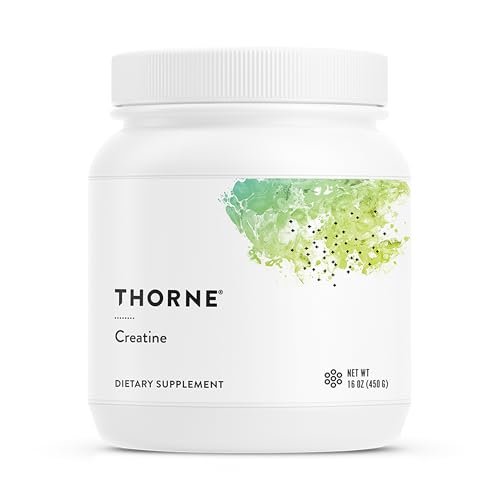
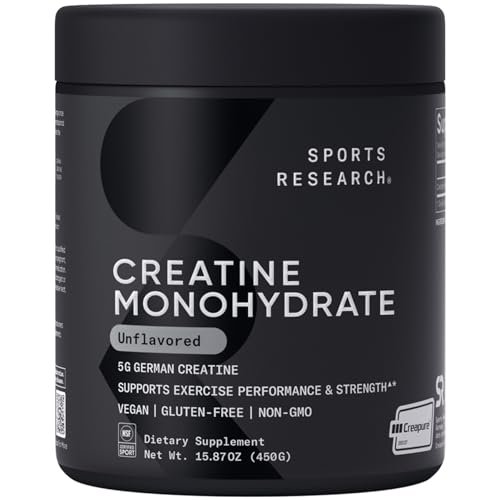
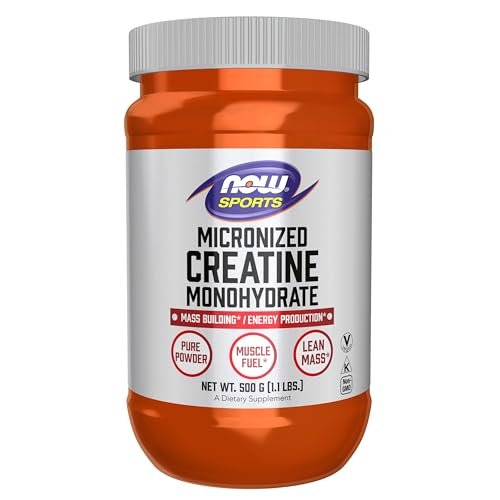
As an Amazon Associate, I earn from qualifying purchases. Product recommendations are based on real reviews and independent research.
