
Affiliate disclosure: this article contains affiliate links. As an Amazon Associate, UsefulVitamins.com earns from qualifying purchases at no extra cost to you.
Before you buy
The real question with Huel is not "is it good nutrition." It mostly is. The question is whether a complete-meal powder is solving a problem you actually have.
Huel sells convenience, not magic. If you regularly skip breakfast or eat a sad desk lunch, a 400-calorie shake with 40g of protein and 27 micronutrients is a clear upgrade over nothing or a vending machine. If you already eat real meals and just want more protein, you are paying a premium for stuff you do not need.
There is also a newer wrinkle. In October 2025, Consumer Reports flagged Huel Black Edition for high lead and cadmium per serving, and Huel pushed back hard with its own lab numbers. That dispute does not make Huel dangerous for a typical adult, but it does change the math for pregnant people and kids. We cover it honestly below.
So read this as a buying decision, not a hype piece. For some people Huel earns its price. For most, a cheaper shake does the same job.
What Huel actually is
Huel is a powdered meal replacement designed to cover everything a meal would – protein, carbs, fats, fiber, and a full vitamin and mineral spread – in one shake. You mix two scoops with water, shake for about 20 seconds, and drink it.
There are two main powders, and people confuse them constantly.
- Huel Powder (v3.1) is the original, oat-based formula. Roughly 30g protein, more carbs, and a small amount of sucralose as the sweetener.
- Huel Black Edition is the higher-protein, lower-carb, oat-free version. 40g protein, fewer net carbs, more fat, and stevia instead of artificial sweetener.
This review focuses on Black Edition, because that is the one most people mean when they search "is Huel worth it," and it is what Huel pushes in retail and on Amazon. The official numbers come straight from the Huel Black Edition product page.
The pitch is "nutritionally complete." That phrase is doing a lot of work, so let's check it.
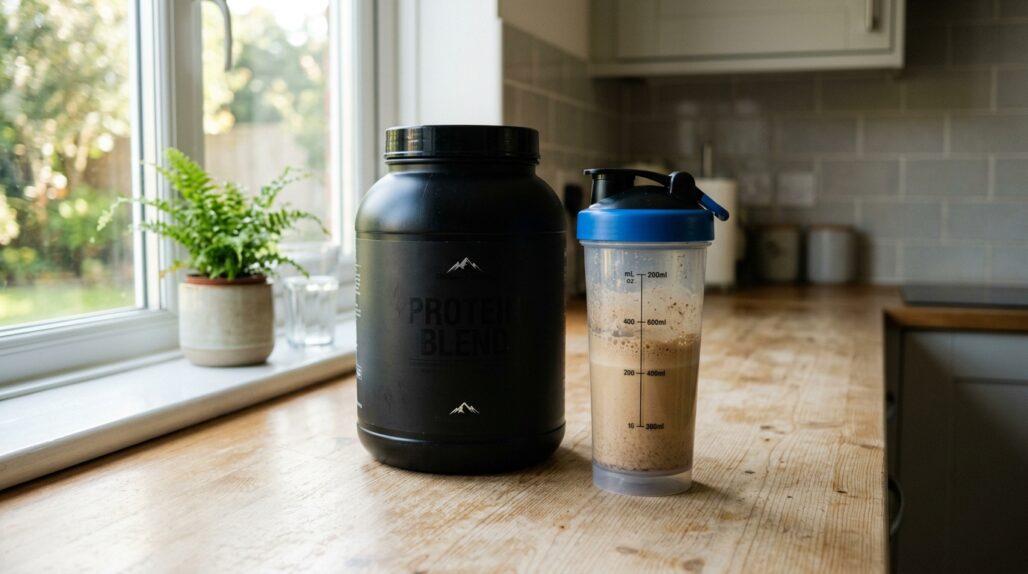
Protein, micronutrients, and fiber per meal
On paper, one Black Edition serving is a legitimately complete meal:
- 40g protein from a pea and brown rice blend
- 400 calories, with reduced carbs and a higher fat share
- 27 vitamins and minerals
- 9 to 11g fiber per serving
- 100% plant-based, gluten-free, no artificial sweeteners
That protein number is the standout. 40g in a single shake beats most ready-to-drink competitors and rivals a chicken breast. The pea-and-rice combination also covers the full amino acid profile, so the "incomplete plant protein" worry does not really apply here.
The 27 micronutrients are the part worth a small reality check. A complete-meal powder spreads its vitamins and minerals across the day's meals, so one shake is not a full daily multivitamin – it is meant to give you roughly a meal's share. If you are using Huel for two of three daily meals, you are getting most of the way there. If it is an occasional thing, treat it as a good meal, not your vitamin program. For specific nutrients you are worried about, the NIH Office of Dietary Supplements fact sheets are a better gut-check than any label.
The fiber is high, and that brings us to the part the marketing photos skip.
Taste, texture, and the fiber adjustment
Honest version: Huel tastes fine, not great. Modern flavors like Chocolate and Vanilla are smooth and mild, a clear improvement over the chalky early batches. It will not feel like a treat, but you can drink it daily without dreading it.
Texture depends on how you make it. Use cold water, shake hard, and let it sit a few minutes and it is creamy. Skip that and it can come out gritty or thick.
The bigger surprise for new users is digestive. With 9 to 11g of fiber per shake, jumping straight to two or three Huel meals a day is a fast way to get bloated and gassy. This is not a defect – it is your gut meeting a lot more fiber than it is used to.
Huel's own guidance, which we agree with, is to start with one meal a day for about a week before adding a second, and to drink plenty of water. Most people find the gas settles within two to four weeks. If you ignore the ramp-up, you will probably blame Huel for something that is really a fiber on-ramp problem.
The heavy-metals question you should not skip
In October 2025, Consumer Reports tested 23 protein powders and shakes and put Huel Black Edition near the top for contamination. Per serving, they reported 6.3 micrograms of lead and 9.2 micrograms of cadmium.
For context, Consumer Reports uses 0.5 micrograms a day as its lead level of concern (based on California's Prop 65), so 6.3 µg is about 1,290% of that benchmark. Their cadmium threshold was 4.1 µg, so 9.2 µg is more than double. The full breakdown is in the Consumer Reports protein powder testing report.
Two things keep this in perspective, and both matter.
First, this is not just a Huel problem. The report found plant-based proteins averaged roughly nine times more lead than dairy-based ones, because plants pull metals from soil. Pea and rice protein are simply higher-risk inputs. If you switch to another plant shake, you have not automatically solved this.
Second, Huel disputes the numbers. On its heavy-metals response page, Huel says its own ISO 17025-accredited lab testing finds 1.5 to 2.2 micrograms of lead per serving, points to the much higher WHO and EFSA tolerance levels, and argues Consumer Reports set an "almost impossibly low" baseline. The lead limits regulators actually enforce in food, summarized by the FDA's guidance on lead in food, sit far above Prop 65's threshold.
So who is right? Probably both, in their own frame. There is no safe known level of lead, but the dose here is small for a healthy adult eating one shake a day – on the order of what you get from everyday foods. The risk is real but modest, and it scales with how much you drink.
Where we draw a hard line: if you are pregnant, breastfeeding, or considering this for a child, do not use a high-cadmium plant shake daily without your doctor's sign-off. Those are exactly the groups where a "small" lead and cadmium load matters most. For everyone else, this is a reason to rotate brands and not live on three Huel shakes a day, not a reason to panic. Our roundup of lower heavy-metal protein powders on Amazon goes deeper on which products tested cleanest.
Cost per meal vs the alternatives
Here is where Huel either justifies itself or does not.
A bag is 17 servings. As of writing, that is about $56.30 one-time (roughly $3.31 a meal) or about $45 on subscription (roughly $2.65 a meal) – check current price, because Huel adjusts it. Against fast food, that is a steal. Against other shakes, it is mid-pack.
| Option | Protein per serving | Calories | Approx. cost per serving | Best for |
|---|---|---|---|---|
| Huel Black Edition | 40g | 400 | ~$2.65 sub / ~$3.31 one-time | High protein, full meal, low artificial ingredients |
| Huel Powder v3.1 | 30g | 400 | slightly less than Black | Balanced all-day nutrition, lower price |
| Soylent Powder | ~20g | 400 | ~$1.51 to $1.66 | Cheapest complete-meal calories |
| Ka’Chava | 25g | 240 | ~$4.66 | Superfood blend, snack-sized, premium price |
The table makes the verdict obvious. Huel gives the most protein per meal of this group, but Soylent delivers the same 400 complete-meal calories for roughly half the cost. Ka'Chava is nearly double Huel's price for fewer calories and less protein – it is a fancier snack, not a cheaper meal. We break down that brand separately in our Ka'Chava worth-it review and the head-to-head Huel vs Ka'Chava comparison.
So Huel is fair value if you specifically want the high protein and clean sweetener profile. If your only goal is cheap complete-meal calories, Soylent wins on price.
Who should buy it, and who should buy cheaper
Buy Huel Black Edition if: you skip meals on a normal week, you want one product that handles protein, fiber, and micronutrients without thinking, and you would rather pay a bit more for stevia over sucralose. For that person, the convenience genuinely earns the price.
Buy something cheaper if: your real goal is just more protein – a plain whey or a budget plant protein costs far less per gram. If you want the lowest cost per full meal, Soylent does the same job for roughly a dollar a serving less.
Look at Amazon options if direct-only shipping and a steep first order bug you. Plenty of complete-meal shakes ship faster and cost less – we line them up in our Huel alternatives on Amazon guide.


As an Amazon Associate, UsefulVitamins.com earns from qualifying purchases at no extra cost to you.
Some links on this page are affiliate links. If you buy through them, UsefulVitamins may earn a small commission at no extra cost to you. It never changes our verdict.
FAQ
Is Huel actually a healthy meal replacement? For a typical adult, yes – one shake gives balanced macros, fiber, and a meal’s share of 27 vitamins and minerals. It is not a daily multivitamin in a glass, and it is not meant to be your only food long-term.
Is the lead in Huel dangerous? Consumer Reports flagged Huel Black Edition for high lead and cadmium in 2025, and Huel disputes those figures with its own lab testing. For a healthy adult drinking one shake a day the dose is small, but pregnant people, nursing mothers, and children should check with a doctor before daily use.
How much does Huel cost per meal? Around $2.65 a meal on subscription and about $3.31 one-time, based on a 17-serving bag, as of writing. Check the current price, since Huel changes it.
What is the difference between Huel Black Edition and regular Huel? Black Edition has more protein (40g vs 30g), fewer carbs, no oats, and uses stevia. Regular Huel Powder is oat-based, higher-carb, and uses a small amount of sucralose.
Why does Huel make some people bloated? Each shake has 9 to 11g of fiber, which is a big jump for many diets. Start with one meal a day, ramp up over a week or two, and drink plenty of water – most people adjust within a month.
Is Huel worth it compared to just eating real food? Real food usually wins on cost and satisfaction. Huel wins on convenience for the meals you would otherwise skip or eat badly, which is exactly when it is worth the money.
The verdict
Huel does what it claims. 40g of protein, 400 balanced calories, and a full micronutrient spread in a shake you can make in under a minute is real convenience, and the stevia-sweetened Black Edition is a clean formula.
But "worth it" depends entirely on the job. If you are replacing skipped meals, Huel earns its roughly $2.65 to $3.31 per serving. If you mainly want protein, cheaper options win, and if you want the lowest cost per complete meal, Soylent beats it outright.
The 2025 heavy-metals report does not make Huel unsafe for most adults, but it is a fair reason to rotate brands rather than live on it – and a real reason for pregnant people and parents to talk to a clinician first. If contamination is your top concern, start with our lowest heavy-metal protein powder picks before committing.
Next step: decide honestly how many meals you actually skip. If it is one or two a day, try a single bag on subscription, start with one meal, and see if the convenience sticks. If you cannot answer that, you probably do not need it.
This article is for general information only and is not medical advice. Supplements and meal replacements can interact with medications and health conditions. Talk to your doctor or a registered dietitian before making them a regular part of your diet, especially if you are pregnant, nursing, or buying for a child.
Reviewed by the UsefulVitamins Editorial Team.
