
Affiliate disclosure: this article contains affiliate links. As an Amazon Associate, UsefulVitamins.com earns from qualifying purchases at no extra cost to you.
Before you buy
In early 2025 the Clean Label Project tested 160 top-selling protein powders and found that 47% exceeded a federal or state safety limit for lead, with 21% running over twice California's Prop 65 level. That headline is real, but it got flattened in the retelling.
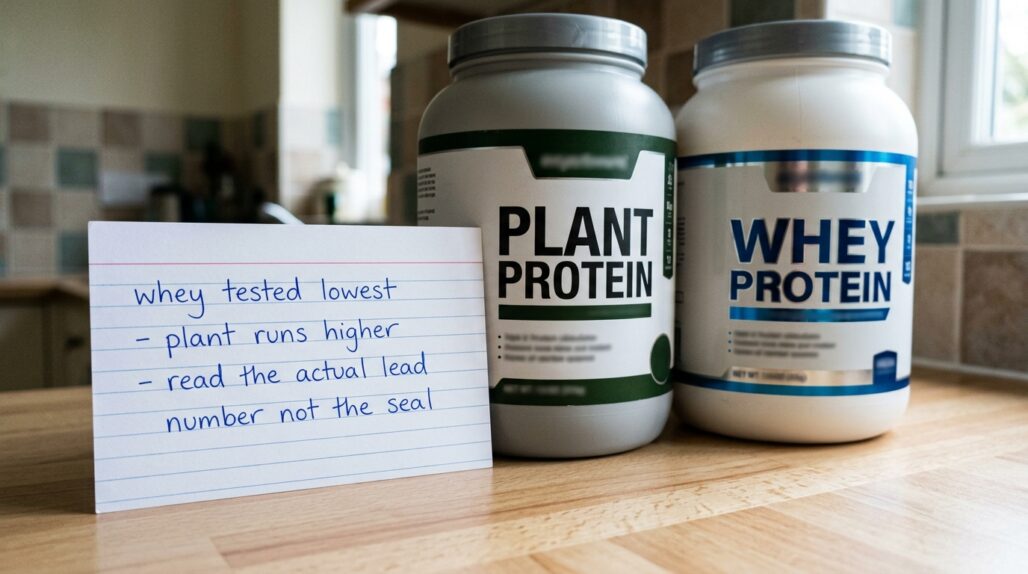
The honest version is more useful: contamination is not random. It tracks with the protein source and the flavor. Whey powders tested low. Plant powders tested high. Chocolate tested worse than vanilla in almost every line.
So the real decision is not "is protein powder safe." It is which kind you buy and which flavor. Get those two right and the lead question mostly takes care of itself.
This guide ranks the picks that actually tested low, explains how to read the seals on the tub (most of them do not mean what you think), and gives you a few buying rules that cut your exposure no matter which brand you grab.
What the 2025 testing actually found
The Clean Label Project's Protein Study 2.0 ran 160 products through an independent lab, ICP-MS for heavy metals, generating tens of thousands of data points. The patterns were consistent enough to be useful.
Plant-based powders were the most contaminated. They carried roughly five times more cadmium than whey-based powders on the same panel. Pea, rice, and hemp pull metals up out of the soil, and that ends up in the scoop.
Organic was not cleaner. Certified-organic products averaged about three times more lead than non-organic ones – mostly because so many organic powders are plant-based. The label that feels safest was the opposite here.
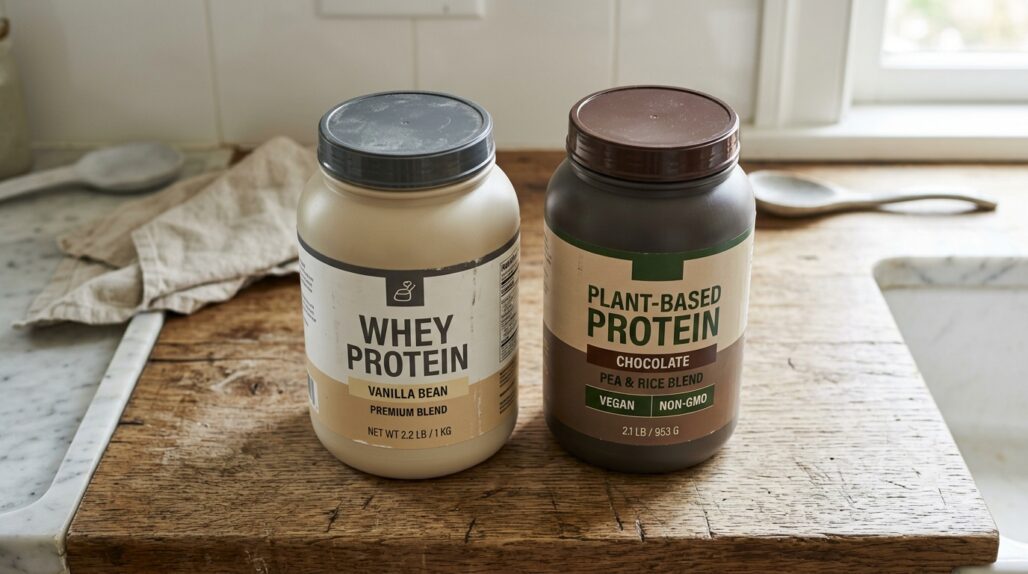
Chocolate was the worst flavor by a wide margin. Cacao concentrates cadmium, so chocolate powders showed dramatically higher cadmium than vanilla in the same brand. If you only change one thing today, switch from chocolate to vanilla or unflavored.
Independent testing from Consumer Reports landed in the same place: dairy-based powders generally had the least lead, and plant-based products averaged several times more. Two large investigations pointing the same direction is about as solid as this category gets.
One caution on the numbers. A "level of concern" is a conservative daily-intake screen, not a poisoning threshold. A single scoop is not going to hurt you. The concern is daily use over years, especially for people who are pregnant or building a kid's diet around shakes.
Why plant and chocolate test higher
It helps to know the mechanism, because it tells you what to avoid even in brands nobody has tested yet.
Plants are the reason. Crops draw lead and cadmium from soil and irrigation water, and protein isolates concentrate whatever was in the raw plant. Whey starts from milk, which sits further up the food chain and picks up less.
- Cadmium loves cacao and certain seeds, so chocolate and some "superfood" blends run high.
- Lead shows up more in root-adjacent and leafy plant material and in some rice protein.
- Arsenic is the one to watch specifically in rice protein and brown-rice blends.
This is why a clean plant powder is possible but not automatic. The brand has to source low-metal raw material and test every lot, not just run one flattering sample for the website.
The picks that tested low
No protein powder is certified "zero." The goal is measurably low and openly tested. These three are the most defensible Amazon-available picks right now.
Naked Whey (the safest default)
Naked Whey is a single-ingredient grass-fed whey – just whey, nothing else in the unflavored version. The brand's product page states it is NSF certified and independently tested, and whey as a category tested lowest in 2025.
A 5 lb tub runs around $99.99 one-time or about $80 on autoship as of writing, for roughly 76 servings – so about $1.05 to $1.32 per serving. Check current price. Buy the unflavored or vanilla, not the Naked Vegan Mass Gainer, a separate plant-based product that posted the single worst lead result, about 1,572% of Consumer Reports' level of concern, in CR's testing.
Truvani (the better plant pick)
If you want plant protein with a paper trail, Truvani is the one with receipts. In Consumer Reports' January 2026 round, Truvani's chocolate plant powder measured 0.46 micrograms of lead per serving, about 93% of CR's level of concern – low for a plant chocolate, and the brand says it tests each lot.
It is pea-based, USDA organic, and priced higher per serving than whey. Buy the vanilla to drop the cadmium further. Verify the current lot test on the brand's results page before you commit to daily use.
OWYN (clean, with a caveat)
OWYN is a pea, pumpkin-seed and chia blend that says it formulates to Prop 65 limits and tests finished product, and in Consumer Reports' earlier 2025 testing the Pro Elite chocolate shake came in at about 88% of CR's level of concern, on the lower-lead end for a plant product, though CR still treated it as a one-serving-a-day product rather than a free pass. Standard tubs start around $45 for 2.2 lb as of writing; check current price.
The caveat for honesty: OWYN settled a 2020 to 2021 California Prop 65 case over lead in some products. That is old, and the brand changed its testing since, but you deserve to know it happened rather than read a glossy roundup that hides it.
| Pick | Protein source | Tested lead signal | Approx. cost / serving | Best flavor to buy |
|---|---|---|---|---|
| Naked Whey | Grass-fed whey, 1 ingredient | Whey category lowest; NSF certified | ~$1.05-$1.32 | Unflavored |
| Truvani | Pea, organic | 0.46 mcg lead/serving (CR, chocolate) | ~$1.80-$2.30 | Vanilla |
| OWYN | Pea, pumpkin, chia | Prop 65 compliant; ~88% of CR concern (Pro Elite chocolate, 2025) | ~$1.30-$1.70 | Vanilla |
| Clean Simple Eats* | Whey | 0.21 mcg lead/serving – lowest CR tested | ~$1.50-$2.00 | Any |
*Clean Simple Eats posted the lowest lead of any powder in CR's January 2026 round but sells mostly direct, not through Amazon. If you shop off-Amazon, it is the literal low-lead winner; on Amazon, Naked Whey is the practical pick.


As an Amazon Associate, UsefulVitamins.com earns from qualifying purchases at no extra cost to you.
UsefulVitamins may earn a commission from purchases made through the links above, at no extra cost to you. It does not change which products we recommend.
How to read the seals on the tub
This is where most buyers get fooled. A certification badge is not a low-lead guarantee – the programs test for different things and set different limits.
- NSF Certified for Sport screens for banned substances plus contaminants including heavy metals, but its lead allowance is relatively generous. A great sign for athletes; not a promise of the lowest possible lead.
- Informed Sport / Informed Choice focuses on anti-doping batch testing and applies a tighter contaminant threshold than NSF in some cases.
- Clean Label Project Purity Award goes to products in the top tier for purity among those tested, but the program does not publish a fixed lead limit, so the badge means "better than most," not "below X."
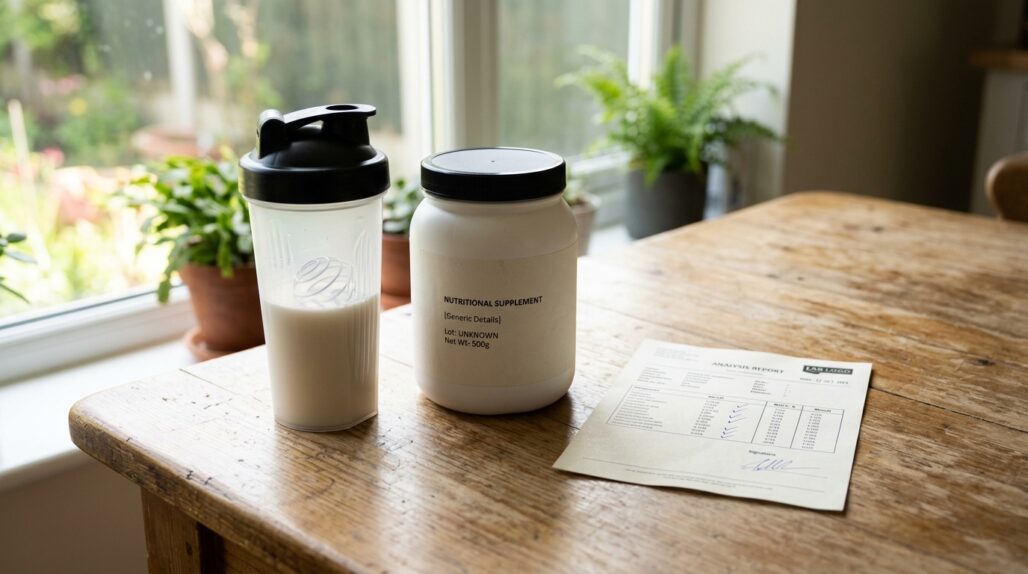
Eurofins, one of the labs behind several of these programs, has a plain-language breakdown of what each certification covers. The takeaway: a seal tells you the brand bothered to test; the actual lead number tells you whether the result is good. When a brand publishes the microgram figure, trust that over any logo.
The FDA's own Closer to Zero program treats lead and cadmium as priorities precisely because there is no safe-and-tidy threshold, only "as low as reasonable." Read certifications in that spirit: lower is the only direction that matters.
Buying rules that cut your exposure
You do not need a chemistry degree. Five habits do most of the work, regardless of brand.
- Default to whey if you can tolerate dairy. It is the lowest-metal category and usually the cheapest per gram of protein.
- Skip chocolate. Vanilla and unflavored consistently test lower on cadmium in the same line.
- Be wary of "organic" plant blends. They averaged more lead in 2025, not less.
- Pick a brand that publishes lot testing, and actually open the report – look for the microgram figure, not just a checkmark.
- Do not megadose. One or two scoops a day from a low-tested product is a non-issue for healthy adults; five scoops of an untested chocolate plant powder is the actual risk.
If you are pregnant, nursing, or feeding shakes to a child, be stricter and talk to your clinician about total daily intake. And if you take prescription medication, it is worth checking how your stack interacts overall – our drug and supplement interaction guide covers what to watch.
How this fits whole-food shakes
A lot of readers asking about heavy metals are not bodybuilders – they drink a meal-replacement shake and want it to be clean. The same rules apply, with a twist.
Meal-replacement blends often lean plant-based and chocolate-forward, which is the worst combination on these panels. That is worth weighing in our Ka'Chava breakdown and the Huel review, since both are plant-heavy formulas.
If you are choosing between the two big names, our Huel versus Ka'Chava comparison looks at nutrition and value side by side. For a pure low-metal goal, though, a plain whey plus real food usually beats any all-in-one plant shake on both contamination and cost.
FAQ
Which protein powder has the lowest heavy metals? In the largest 2025 and 2026 testing, single-ingredient whey powders tested lowest. Clean Simple Eats posted the lowest lead Consumer Reports found, and Naked Whey is the strongest NSF-certified pick widely available on Amazon.
Is plant protein always higher in heavy metals? On average yes – plant powders carried several times more lead and cadmium than whey in 2025. But a well-sourced, lot-tested plant brand in vanilla can still test low, so it is the specific product that matters, not just the category.
Should I stop using protein powder because of lead? No. A single serving is not a health threat. The concern is high daily intake over years, especially during pregnancy or for children, so pick a low-tested product and keep the dose sensible.
Does an NSF or Clean Label seal mean no lead? No. The seals confirm a brand tests and meets a program’s limits, but those limits differ and none promise zero lead. Read the actual microgram figure when a brand publishes it.
Why is chocolate protein worse? Cacao naturally concentrates cadmium, so chocolate powders test much higher than vanilla in the same line. Switching to vanilla or unflavored is the easiest single way to lower your exposure.
Is organic protein powder safer for heavy metals? Not for lead. Certified-organic powders averaged about three times more lead in 2025, largely because so many are plant-based. Organic helps with pesticides, not metals.
The verdict
The scary headline is real, but the fix is boring. Buy whey if you can, buy vanilla or unflavored, and read the actual lead number instead of the badge. Do that and you are already in the safest slice of the market.
For most people the clean default is Naked Whey, unflavored, around a dollar a serving. If you need plant protein, Truvani or OWYN in vanilla are the defensible picks because they publish testing – just verify the current lot before you commit to daily use. Skip chocolate, skip untested organic plant blends, and do not megadose.
Your next step: pick one product above, open its most recent test report, and confirm the lead figure is low before you buy a big tub. If a brand will not show you a number, buy one that will.
This article is for general information and is not medical advice. Supplement contamination levels and prices change; verify current testing and pricing before purchase, and consult a qualified clinician about your own needs, especially during pregnancy or if you take medication.
Reviewed by the UsefulVitamins Editorial Team.
