
Affiliate disclosure: this article contains affiliate links. As an Amazon Associate, UsefulVitamins.com earns from qualifying purchases at no extra cost to you.
Where the hydrogen water hype came from
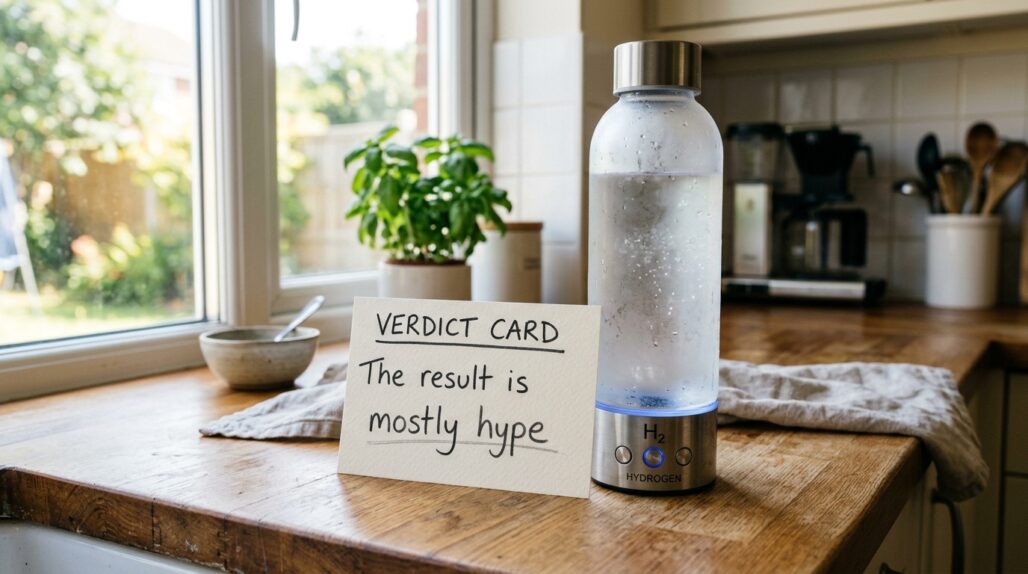
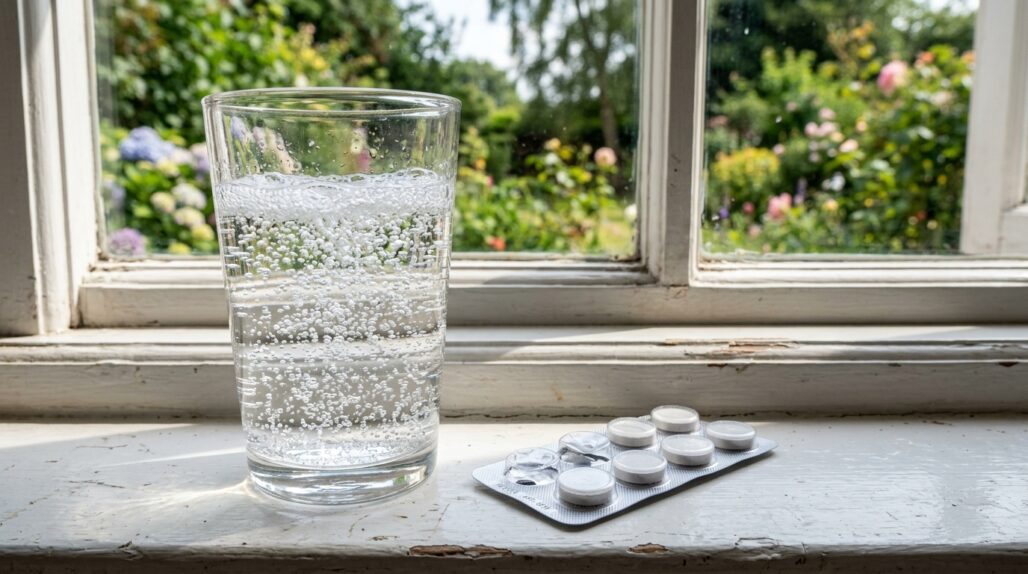
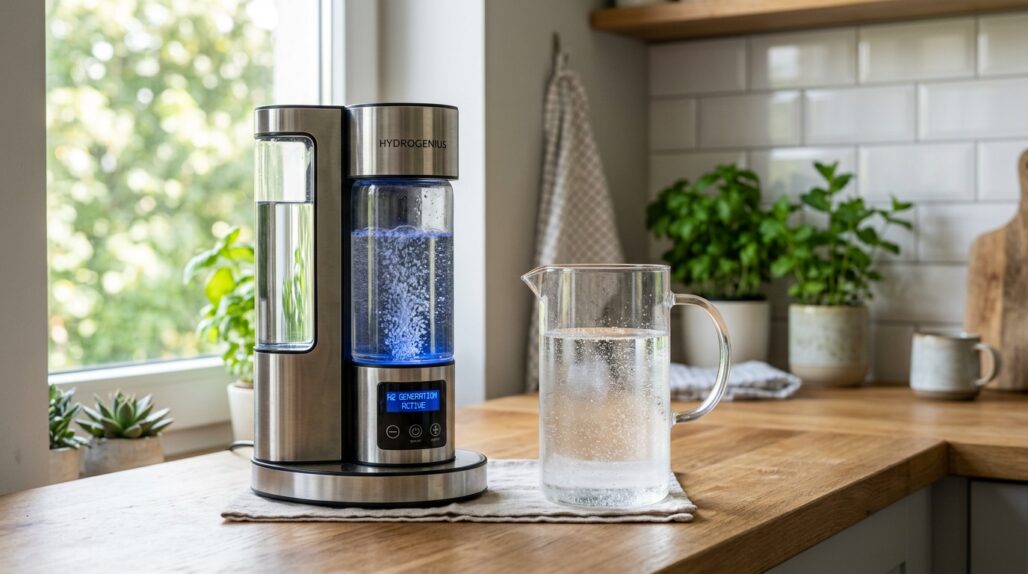
Hydrogen water is regular water with extra molecular hydrogen gas (H2) dissolved into it. That is the whole product. You make it with a fizzing tablet you drop in a glass, a rechargeable bottle that runs an electric current through the water, or a countertop machine that costs as much as a fridge.
The pitch is that dissolved hydrogen acts as a tiny, selective antioxidant. It mops up the most damaging free radicals, the story goes, so you get less oxidative stress, less inflammation, more energy, and faster recovery.
The idea is not pure invention. A 2007 paper in a respectable journal first reported that hydrogen gas could neutralize certain reactive oxygen species in cells. That single mechanism paper launched a whole category. Athletes, biohackers, and wellness influencers ran with it, and the marketing got far ahead of the science.
Here is the honest split. There is a real, plausible mechanism and a small pile of early human data. There is also a much taller pile of marketing claims that the data does not support. Our job is to separate the two.
What the marketing actually claims
Scroll any hydrogen water brand's site and you will see some version of these promises:
- Powerful antioxidant that fights aging and disease
- Reduces inflammation throughout the body
- More energy and sharper focus
- Faster athletic recovery and better endurance
- Detox and better hydration than normal water
Some of these are vague wellness language. Others cross into territory regulators care about. In June 2022 the FDA sent a warning letter to a hydrogen beverage company for claims that its products could protect against radiation damage, treat gastrointestinal disorders, stabilize cholesterol, and help with high blood pressure, heart disease, or COVID-19. The agency called those unapproved drug claims and the products misbranded. You can read the FDA warning letter to H2 Beverages in full.
That is the tell. When the science is solid, you do not need a warning letter to stop you from saying it.
What the human evidence actually shows
This is where it gets interesting, because the answer is not zero. It is just small.
The most useful single source is a 2024 systematic review published in the International Journal of Molecular Sciences, bluntly titled "Hydrogen Water: Extra Healthy or a Hoax?" The authors pulled 25 human studies and read them carefully. Their conclusion, in plain terms: early results are encouraging across several areas, but the evidence is not sufficient for clinical recommendations. You can read the full systematic review on PubMed Central.
The recurring problems they flagged should sound familiar to anyone who reads supplement research:
- Small samples. Many trials had 10 to 50 people. That is enough to spot a signal, not enough to trust it.
- Short duration. Most ran for weeks. Almost nothing tracks years, which is what "anti-aging" would require.
- Weak controls. Some studies lacked a proper placebo group, so you cannot rule out expectation effects.
- Inconsistent dosing. Hydrogen concentration varied wildly between studies, so they are hard to compare.
- Commercial bias. The reviewers openly noted that some studies were supported by hydrogen water product interests.
That last point is not a footnote. Take the trial that brand sites cite most often, a 2020 randomized study in Scientific Reports. It enrolled 38 healthy adults who drank 1.5 liters a day of hydrogen-rich water for four weeks. The hydrogen group showed higher antioxidant potential and less inflammatory gene activity, but only clearly in people aged 30 and over. It is a legitimately interesting result. It was also funded by Coway Co., Ltd., a company that sells water products. You can read the RCT and its funding disclosure yourself.
None of this is fraud. The studies exist, the markers moved, and the authors were upfront about their limits. The problem is the leap from "an antioxidant marker shifted in 20 people over a month" to "this will change your health." That leap has not been earned.
The claim vs the evidence
| The marketing claim | What human studies actually show | Evidence grade |
|---|---|---|
| Powerful antioxidant that fights aging | Antioxidant markers shifted in small short trials; no outcome showing slower aging | Weak / preliminary |
| Reduces whole-body inflammation | Lower inflammatory gene activity in one small RCT, mostly in over-30s; not replicated at scale | Early signal |
| More energy and focus | No reliable human data; effect indistinguishable from placebo in most reads | Unsupported |
| Faster athletic recovery | A few small sports studies hint at less fatigue; results are mixed and depend on athlete level | Mixed / unproven |
| Detox and superior hydration | No evidence; hydration comes from the water itself, not the hydrogen | No evidence |
The pattern is consistent. Lab markers sometimes move. Things you can actually feel or measure in daily life mostly do not. For a balanced lay summary that lands in the same place, Medical News Today's overview of hydrogen water is a fair read.
The dose problem nobody mentions
Even if hydrogen water worked, there is a physics issue most ads skip: hydrogen is the smallest molecule there is, and it escapes water fast.
In an open glass, a meaningful chunk of dissolved H2 can off-gas within minutes. So the concentration printed on a tablet box is the concentration the moment it finishes dissolving in a sealed container, not what reaches your stomach if you sip a glass over twenty minutes at your desk.
This creates a quiet gap between the studies and your kitchen:
- Research trials use controlled, freshly prepared, sealed hydrogen water at known concentrations.
- A tablet dropped in an open glass that you nurse slowly may deliver a fraction of that.
So the practical dose you get is often lower and less consistent than what the (already thin) studies tested. That makes an unproven benefit even less likely to show up for you specifically.
The cost reality
Here is where "expensive tap water" earns its name. Prices move, so check current numbers, but as of writing the rough landscape looks like this:
- Tablets: around $1 to $2 per serving. Drink one daily and you are at roughly $30 to $50 a month, with no end date.
- Rechargeable H2 bottles: often $100 to $300 up front, then electricity and the occasional part.
- Countertop machines and ionizers: frequently $500 to $2,000, sometimes more.
You are paying a premium price for a product whose headline benefits are unproven, while a glass of regular tap or filtered water hydrates you exactly the same. The hydration does not come from the hydrogen. It comes from the water.
If you only wanted clean, good-tasting water, a filter pitcher costs a tiny fraction of a hydrogen machine and solves the actual problem most people have.
What actually helps hydration and recovery
If the real goal is feeling hydrated, recovering from workouts, or keeping energy steady, the evidence points somewhere boring and cheap.
- Water, in enough volume. Plain water is the proven hydration tool. Hydrogen is a rounding error next to just drinking enough.
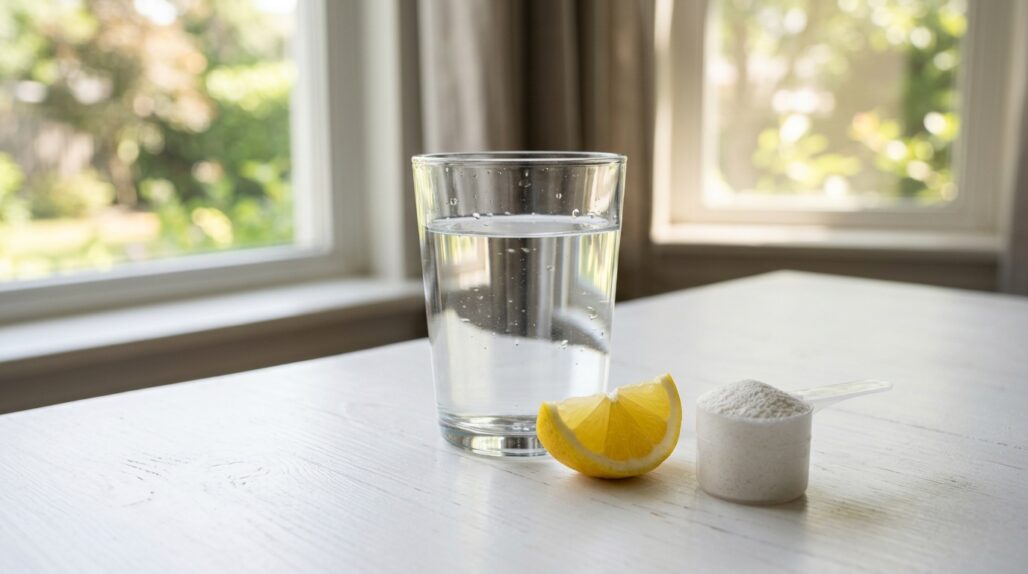
- Electrolytes when you sweat a lot. Sodium, potassium, and magnesium genuinely matter for fluid balance during long or hot training. This is where the science is real, not marketing. Our take on alkaline water vs electrolyte water walks through which "functional water" trends hold up.
- A simple electrolyte routine beats a gadget. If you want the rationale and dosing, see our guide to electrolyte water and our roundup of the best electrolyte powders.
And if "detox" is the word that pulled you toward hydrogen water in the first place, read why we are skeptical of the whole category in do detox supplements actually work. Short version: your liver and kidneys already handle it, and no drink upgrades that job.
If you still want to try it, buy smart
You may want to experiment anyway. That is fine. There is no safety red flag with hydrogen water for healthy people; this is a value judgment, not a danger warning. So if you try it, spend as little as possible to find out whether you notice anything.
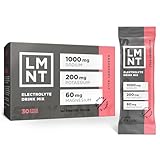


As an Amazon Associate, UsefulVitamins.com earns from qualifying purchases at no extra cost to you.
UsefulVitamins may earn a commission if you buy through these links, at no extra cost to you. It does not change our verdict or which products we flag.
A sensible order of priority:
- Start with electrolytes, because that is the option with real hydration and recovery evidence behind it.
- If you are curious about H2 specifically, a tested tablet is the cheap way to test it on yourself. There is no reason to buy a four-figure machine for an unproven benefit.
- If your real complaint is water quality or taste, a filter pitcher fixes that for very little money.
Whatever you pick, treat any "feels great" effect as a personal trial of one, not proof. Give it a few weeks, decide honestly whether you notice a difference, and stop paying for it if you do not.
FAQ
Is hydrogen water a scam? Not exactly. It is overhyped, not fake. There is a real mechanism and a few small human studies showing marker changes, so calling it an outright scam is unfair. But the big “more energy, anti-aging, detox” claims are unsupported, and the price is high for an unproven payoff.
Is hydrogen water dangerous? No. Molecular hydrogen in drinking water has not shown meaningful safety problems in studies, and the FDA treats hydrogen as generally recognized as safe in beverages. The issue is value, not harm.
Does hydrogen water hydrate you better than regular water? No. Hydration comes from the water itself. The dissolved hydrogen does not improve how well water rehydrates you. If hydration is the goal, plain water plus electrolytes when you sweat is the proven route.
Do hydrogen water tablets or machines work better? Machines can produce higher and more consistent hydrogen levels in a sealed vessel, but since the health benefit itself is unproven, paying hundreds or thousands for a stronger dose of an unproven effect rarely makes sense. A cheap tablet is the low-cost way to test it.
Can hydrogen water help with inflammation or recovery? A small RCT showed lower inflammatory gene activity, mainly in people over 30, and some sports studies hint at less fatigue. The data is early, mixed, and partly industry-funded. It is too thin to count on for recovery.
Should I use hydrogen water to treat a health condition? No. Do not use it as a treatment for any condition, and do not change a prescription or medical plan based on it. If you have a real health concern such as ongoing fatigue, inflammation, or a metabolic issue, talk to a clinician rather than reaching for a wellness drink.
The bottom line
Hydrogen water sits in the "interesting but unproven" bucket. The mechanism is plausible, a handful of small short trials nudged some lab markers, and there is no safety reason to fear it. What is missing is the part that matters: a large, independent, well-controlled trial showing it does anything you would actually notice or that improves a real health outcome. Until that exists, the honest label is early-stage and overhyped.
For nearly everyone, plain water plus electrolytes does more for hydration and recovery, for far less money. If curiosity wins, test it with a cheap tested tablet rather than a pricey machine, and judge it on your own honest results. Start with the proven option and treat hydrogen water as a maybe, not a must.
This article is for general information and is not medical advice. Talk to a qualified clinician before making decisions about supplements, hydration products, or any health condition, especially if you take medication or have an existing diagnosis.
Reviewed by the UsefulVitamins Editorial Team.
