
Affiliate disclosure: this article contains affiliate links. As an Amazon Associate, UsefulVitamins.com earns from qualifying purchases at no extra cost to you.
Where the chlorophyll-water trend came from
In spring 2021, liquid chlorophyll blew up on TikTok. People filmed themselves dropping a dark-green tincture into a glass of water and crediting it for clearer skin within days. The hashtag content racked up hundreds of millions of views.
The claims piled up fast: clear acne, detox the body, kill body odor, boost energy, even help with weight loss. Influencers framed a glass of green water as a morning ritual that fixed everything at once.
That is the pattern with most viral supplements. A cheap, photogenic product gets a stack of before-and-after stories attached to it, and the stories do the selling. The question is whether anything underneath the hype holds up.
Short answer: a little, and not the part you think.
What you are actually drinking
Here is the first thing the marketing skips. Most "liquid chlorophyll" you can buy is not raw plant chlorophyll at all.
It is usually sodium copper chlorophyllin (SCC), a semi-synthetic, water-soluble compound made from chlorophyll. The copper is swapped in for the magnesium that sits at the center of the natural molecule, and the fatty phytol tail is stripped off. Manufacturers use SCC because it is more stable and cheaper, per the Linus Pauling Institute at Oregon State.
That matters because the human research is on chlorophyllin, not the green pigment in your salad. When a brand implies you are drinking "concentrated plants," you are mostly drinking a food-colorant-grade copper compound.
A second detail the ads gloss over: natural chlorophyll is barely absorbed. Roughly 1% to 3% of it makes it across your gut; the rest is broken down by bacteria or passes straight through. So even if plant chlorophyll did something special, your body would not see much of it.
The human evidence, graded honestly
Let me separate what is real from what is marketing.
The strongest evidence is for something nobody on TikTok mentions. A randomized, double-blind, placebo-controlled trial gave 180 adults in Qidong, China, 100 mg of chlorophyllin three times a day for four months. This is a region with heavy dietary aflatoxin exposure from mold-contaminated grains, and aflatoxin drives liver cancer. The chlorophyllin group showed about a 50% drop in a urinary marker of aflatoxin-DNA damage versus placebo. That study, published in the Proceedings of the National Academy of Sciences, is the real human signal.
But read what it shows: chlorophyllin can bind certain carcinogens in the gut and block their absorption in people exposed to a lot of them. That is not a detox glow-up. It is a specific protective effect in a specific high-risk population, and it does nothing for the average person eating a normal Western diet.
Acne is the headline claim, and it falls apart on a close read. The studies people cite were topical chlorophyllin gels, often paired with light therapy, not chlorophyll you drink. One small 2015 trial on adult acne combined chlorophyllin with other ingredients, which makes it impossible to credit the chlorophyll. As the Children's Hospital of Philadelphia puts it, the data are preliminary and mostly from the lab, animals, or tiny human studies. There is essentially no good trial showing that drinking it clears acne.
Body odor is even weaker. A placebo-controlled trial found that 75 mg of oral chlorophyllin three times a day was no better than placebo at reducing fecal odor in ostomy patients. There is one small study in people with trimethylaminuria (a rare "fish odor" metabolic condition) where higher doses helped, but that is a niche disorder, not your gym-bag smell.
Wound healing has a long history, but it is topical and old. SCC ointments have been used on slow-healing pressure and vascular ulcers since the 1950s, mostly in uncontrolled studies. None of that supports drinking it.
So the evidence ladder looks like this.
| The viral claim | What the evidence actually is | Honest grade |
|---|---|---|
| Clears acne when you drink it | Positive studies used topical gels or combined formulas, often with light therapy; no good oral trial | Unsupported for the drink |
| Detoxes the body | Binds aflatoxin in the gut in a high-exposure population (PNAS RCT); not a general “detox” | Real but narrow and off-label |
| Eliminates body odor | Placebo-controlled trial showed no benefit for fecal odor; only a rare metabolic disorder responded | Mostly unsupported |
| Boosts energy and burns fat | No credible human data for either | Unsupported |
| Strong antioxidant from “concentrated plants” | Antioxidant and antimutagen activity is real in lab and animal models; human outcome data is thin | Preclinical, not proven in people |
That is the gap. There is genuine lab and animal antioxidant work, and one solid trial for a problem most readers do not have. The skin, energy, and odor promises that sell the bottle are the parts with the least support.
Is it a scam, or just oversold?
I would not call liquid chlorophyll a scam. A scam implies fraud, and this is a cheap, generally safe product that does some measurable things, just not the ones in the videos. The honest label is oversold.
This is different from a product spiked with hidden stimulants or one that fails heavy-metal testing. The failure here is the marketing, not the bottle.
What you should watch for instead:
- Wild before-and-after claims. Skin transformations "in days" from a green drink are testimonials, not trials.
- Vague "detox" language. A healthy liver and kidneys handle that work. There is no toxin a chlorophyll drink flushes out for a typical person. If you want the longer version, our skeptic piece on whether detox supplements actually work walks through it.
- "Concentrated superfood" framing. Remember most products are food-colorant-grade chlorophyllin, and natural chlorophyll is barely absorbed anyway.
The safety footnote nobody mentions
Liquid chlorophyll is low-risk, which is part of why it spread so easily. After more than 50 years of use, no major toxicity has shown up. But a few real notes are worth knowing.
- Green urine and stool. Harmless, common, and occasionally alarming the first time.
- Mild GI upset or diarrhea, usually at higher doses.
- Possible sun sensitivity. Chlorophyll absorbs light, and sources including WebMD's chlorophyllin monograph note photosensitivity as a potential side effect, especially at higher doses or alongside other photosensitizing meds. The Oregon State review does not flag it as a major concern, so treat it as a "use sunscreen and do not megadose" caution rather than a hard warning.
- Rare case reports of a skin reaction called pseudoporphyria have been tied to self-medicating with chlorophyll derivatives.
None of this should scare you off a normal dose. It should stop you from treating a medical skin problem with green water instead of seeing a clinician. Persistent or cystic acne, unexplained body-odor changes, and anything you would normally take to a doctor still belong with a doctor.
What actually helps, if skin is the goal
If you landed here because of the acne videos, here is where the money goes further.
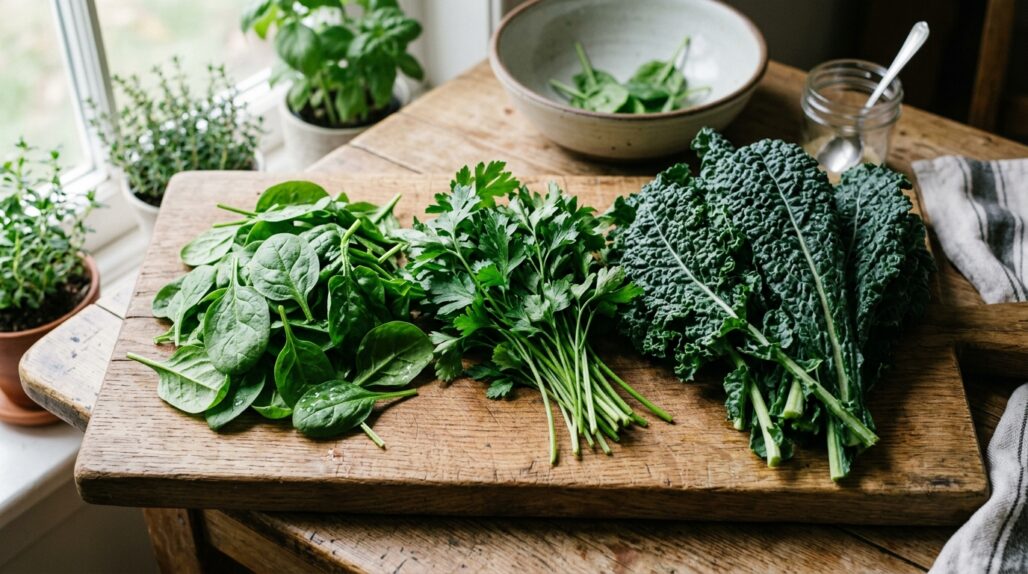
Eat the vegetables the supplement is imitating. Spinach, parsley, kale, and other greens give you chlorophyll plus fiber, vitamins, and plant compounds the drops cannot match. That is the recommendation from the researchers themselves.
Vitamin C has real skin evidence for collagen support and antioxidant protection, far more than chlorophyll does for the same goal. Our complete guide to vitamin C covers doses and forms.
If you want greens without cooking, a tested greens powder is a more honest version of the "drink your plants" idea, though it is still no substitute for produce. We pull apart that exact trade-off in whether greens powders replace vegetables, and we cover lower-calorie options in our roundup of the best greens powders for reduced appetite.


As an Amazon Associate, UsefulVitamins.com earns from qualifying purchases at no extra cost to you.
Some links here are affiliate links. If you buy through them we may earn a commission at no extra cost to you, and it never changes our verdict.
If you still want to try chlorophyll itself, that is fine. Pick a third-party-tested product, keep the dose modest, and treat any benefit as a nice-to-have rather than a guarantee. Just do not skip the vegetables to make room for it.
FAQ
Does drinking liquid chlorophyll clear acne? There is no good human trial showing the drink clears acne. The positive acne studies used topical gels, often with light therapy, and at least one combined chlorophyllin with other ingredients. If skin is your goal, eating vegetables and using evidence-backed care like vitamin C and a clinician-guided routine will do more.
Is liquid chlorophyll a real detox? Not in the way the videos mean. The one strong human study showed chlorophyllin binding aflatoxin in the gut in a high-exposure population in China, which is a specific protective effect, not a general body cleanse. Your liver and kidneys already handle everyday detoxification.
Does chlorophyll stop body odor? The evidence is weak. A placebo-controlled trial found oral chlorophyllin no better than placebo for fecal odor, and only a rare metabolic condition called trimethylaminuria responded in a small study. For everyday odor, it is not a reliable fix.
Is liquid chlorophyll safe? For most people, yes, at normal doses. Expect green urine or stool and possibly mild stomach upset. Some sources flag sun sensitivity, so use sunscreen and avoid megadosing. Skip it during pregnancy or breastfeeding unless your doctor okays it, since safety data there is limited.
What is the difference between chlorophyll and chlorophyllin? Natural chlorophyll is the fat-soluble green pigment in plants and is poorly absorbed (about 1 to 3 percent). Chlorophyllin, or sodium copper chlorophyllin, is a water-soluble, semi-synthetic version made for stability. Most supplements labeled “chlorophyll” actually contain chlorophyllin.
Is it worth the money? For the viral skin and detox claims, no. As a green-tasting addition to your water it is cheap and harmless, but you would get more from eating vegetables, taking vitamin C for skin, or using a tested greens powder for convenience.
The bottom line
Liquid chlorophyll is not a scam, but the reason most people buy it is. The clear-skin, detox, and odor claims that made it go viral are not supported by solid human evidence, and the one strong trial was about something unrelated to any of that.
If you enjoy the taste, drink it. If you came for results, put the money toward vegetables, vitamin C, and a real skin-care plan, and take any persistent skin or odor concern to a clinician rather than a dropper bottle.
This article is for general information and is not medical advice. Talk to a qualified clinician before starting any supplement, especially if you are pregnant, breastfeeding, or taking medication.
Reviewed by the UsefulVitamins Editorial Team.
