
Affiliate disclosure: this article contains affiliate links. As an Amazon Associate, UsefulVitamins.com earns from qualifying purchases at no extra cost to you.
Where the sea moss craze actually started
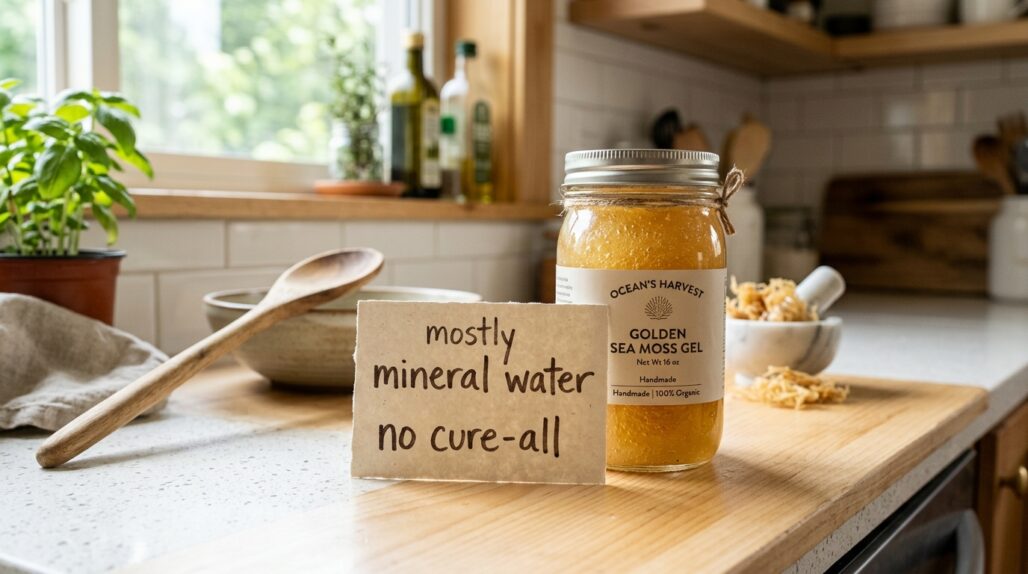
Sea moss had a quiet life as a kitchen thickener for about two hundred years before it became a wellness phenomenon. The plant is a red seaweed, most often Chondrus crispus (Irish moss) or a related species in the genus Gracilaria. Boil it, blend it, and you get the gloopy gel you have seen all over your feed.
The modern hype has two roots. One is the food industry: carrageenan, the gelling agent in a lot of dairy and plant milks, is extracted from these same red algae, which gave sea moss a vague "it's already in everything" credibility. The other is the herbalist Alfredo "Dr. Sebi" Bowman, who claimed sea moss carried 92 of the 102 minerals the body needs. That number gets repeated constantly. It is not from any nutritional database, and nobody has ever shown a human getting meaningful amounts of 92 minerals from a spoon of gel.
From there the claims snowballed. You will see sea moss sold as a fix for thyroid function, immunity, libido, gut health, joint pain, weight loss, and glowing skin. That is a long list for a seaweed. So let's grade it honestly.
What sea moss actually is, nutritionally
Strip away the marketing and sea moss is a low-calorie source of iodine plus small amounts of trace minerals and some soluble fiber. It contains potassium, calcium, magnesium, zinc, and iron, but mostly in modest quantities, because a typical serving of gel is only a tablespoon or two.
The headline nutrient is iodine, and that matters in both directions. Iodine is genuinely essential. Your thyroid needs it to make thyroid hormone, and a deficiency is a real problem in parts of the world. But in countries that iodize salt, most people already get enough, so piling on more is not the favor it sounds like.
Here is the catch that gets buried: the iodine content of sea moss is wildly inconsistent. It swings with the species, the water it grew in, the season, and how it was processed. Operation Supplement Safety, the US Department of Defense program, puts it plainly in its review of sea moss supplements: the levels "can vary considerably," and too much iodine "could negatively affect your thyroid health." So you are dosing a powerful nutrient blind.

The claims versus the human evidence
The cleanest way to look at sea moss is to line up what it promises against what has actually been measured in people. Almost everything in the "evidence" column comes from a test tube or a rodent, not a human trial.
| The claim | What the evidence actually shows | Evidence grade |
|---|---|---|
| Supports thyroid health | It supplies iodine, which the thyroid needs, but excess iodine can cause thyroid dysfunction. No trial shows sea moss improving thyroid outcomes. | Mechanism only, and double-edged |
| Boosts immunity | Some lab and animal work on seaweed compounds suggests antimicrobial and antioxidant activity. No human immunity trials. | In-vitro / animal |
| Clears skin and fights aging | Driven by social media before-and-afters. No controlled human skin study. | Anecdote |
| Improves gut health | It contains soluble fiber, like many plants, but no clinical trial tests sea moss for gut outcomes. | Plausible, untested |
| Raises libido and energy | Folklore. No human data at all. | Anecdote |
Notice the pattern. The strongest thing in that column is "it contains a nutrient your body uses." That is true of a carrot.
The Cleveland Clinic reaches the same conclusion: sea moss has some interesting compounds, but the research is early, mostly preclinical, and does not back the supplement-marketing claims. Operation Supplement Safety is blunter, saying there "isn't enough reliable evidence to confirm whether dietary supplements with sea moss are safe or effective."
So this is not a flat scam in the sense that the powder is fake. It is a real seaweed with real minerals. The problem is that the big promises are unsupported, and the one thing it reliably delivers, iodine, is the thing you most need to be careful with.
The under-discussed risk: too much iodine
This is where sea moss stops being merely overhyped and starts being something to actually watch.
Iodine has a defined safe ceiling. The NIH Office of Dietary Supplements sets the adult RDA at 150 micrograms per day and the tolerable upper intake level at 1,100 micrograms per day. Go over that ceiling regularly and you can push the thyroid in either direction, toward an overactive or an underactive state, and in some people trigger autoimmune thyroid problems.
Now put that next to sea moss. A 2020 risk assessment of red seaweeds found that an ordinary serving of dried Chondrus crispus (about 4 grams a day) did not pose a health risk; it would take a very large amount, on the order of hundreds of grams a day, for Irish moss alone to push iodine past the daily upper limit. But the iodine content varies sharply by species, batch, and processing, so a heavily concentrated or oversized dose can climb toward that ceiling, and you genuinely do not know whether a given spoonful is harmless or far stronger than the last one. The bigger documented overdose risk is standardized kelp and seaweed supplements, as the American Thyroid Association warning below makes clear.
The American Thyroid Association warns that many kelp and seaweed supplements contain iodine at amounts "up to several thousand times higher" than the daily upper limit, and that complementary products containing seaweed should be used only with a doctor monitoring thyroid function.
Some groups should be extra careful:
- Anyone with a thyroid condition (Hashimoto’s, Graves’, nodules, or a history of thyroid surgery).
- Pregnant and breastfeeding people, where both too little and too much iodine can affect the baby.
- People already eating iodine-rich diets (iodized salt, dairy, eggs, fish, seaweed).
None of this means sea moss will hurt a healthy person who tries a little. It means daily, open-ended use of an unlabeled iodine source is a bet you do not need to make. This is health information, not medical advice; if you have any thyroid concern, raise sea moss with your own clinician before starting it.
The other quality problem: heavy metals and labels
Seaweed pulls minerals out of the water it grows in, and that includes the bad ones. Operation Supplement Safety notes that arsenic, mercury, and lead have turned up in seaweeds grown in contaminated waters. Northwestern Medicine flags the same contamination concern.
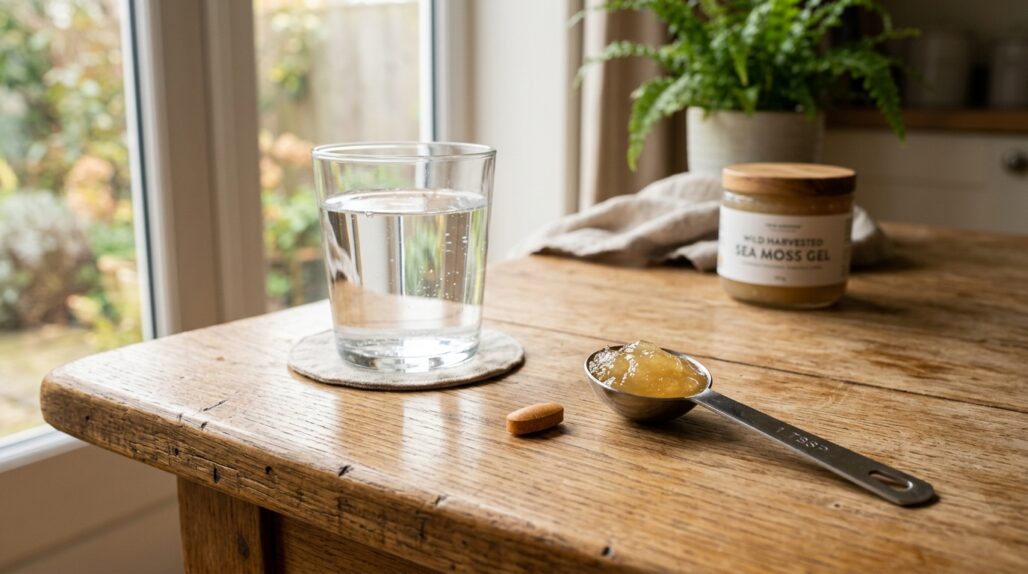
On top of that, supplements in the United States are not pre-approved by the FDA, so what is on the label is the manufacturer's word. Independent reporting has found sea moss products that do not disclose a tested iodine amount per serving at all, which is the single number you most want to know. If a product cannot tell you how much iodine is in a dose, it cannot tell you whether that dose is safe.
How to separate a careful product from a "wild-crafted Atlantic gold" marketing job:
- Third-party tested for heavy metals, with a certificate of analysis you can actually read.
- Iodine listed per serving in micrograms, not “rich in minerals.”
- Named species and harvest source, not a generic “sea moss.”
- No 92-minerals or cure-all claims on the label, which is itself a credibility tell.
Who might genuinely want it, and who should pass
To be fair to the seaweed: if you eat almost no iodine, dislike fish and dairy, and use non-iodized salt, a small, measured amount of sea moss is a plausible way to top up. It is food, and as food it is fine.
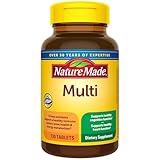
For nearly everyone else, the math does not favor it. You are paying a premium for an inconsistent dose of a nutrient you probably already get, plus a grab-bag of minerals in amounts too small to matter, wrapped in claims no human study supports. A boring multivitamin covers the same minerals at a printed, repeatable dose for a few cents a day, and a quality one includes iodine right at the RDA rather than somewhere between "nothing" and "double the limit."
This is the same pattern we keep running into with trendy "whole-food" supplements. A greens powder does not replace vegetables, and a detox supplement does not detox anything your liver and kidneys are not already handling. Sea moss fits neatly into that group: a real ingredient sold on a story far bigger than its evidence.
If you still want to try it, or what to get instead


As an Amazon Associate, UsefulVitamins.com earns from qualifying purchases at no extra cost to you.
UsefulVitamins may earn a commission if you buy through the links below, at no extra cost to you. It does not change our verdict; we route you to a third-party-tested product or the better-evidence alternative either way.
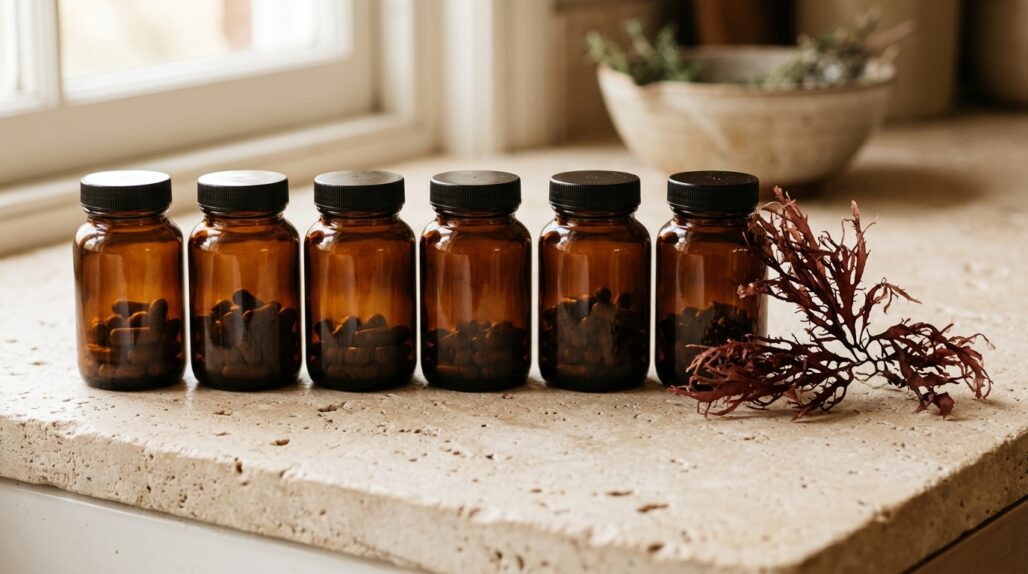
For most readers the honest move is the dose-controlled multivitamin: same minerals, a known iodine amount, lower cost, no guessing. If you have decided you want the seaweed regardless, then the only sensible version is a third-party-tested sea moss that lists its iodine per serving, so you can keep your total intake under the 1,100 mcg ceiling. Even the heavy-metal-tested capsule we point to does not list its iodine per serving in micrograms, so by the article’s own labeling standard it is still an imperfect pick, which is part of why the dose-controlled multivitamin is the better-controlled choice. The gel is fine as a food if you like the texture, but treat it as a minor mineral source, not a treatment for anything. For a wider look at what is actually on the market, see our roundup of tested sea moss supplements.
FAQ
Is sea moss good for your thyroid? Not in the way it is marketed. It supplies iodine, which the thyroid uses, but excess iodine can cause thyroid dysfunction, and sea moss doses are unpredictable. People with thyroid conditions should ask a doctor before taking it.
How much iodine is in sea moss? It varies enormously by species, source, and batch, and many products do not test or disclose it. Risk assessments of red seaweeds find ordinary servings (a few grams a day) do not pose a problem, but because the content is so variable, a heavily concentrated or oversized dose can climb toward the 1,100 mcg adult upper limit, while the RDA is only 150 mcg.
Does sea moss actually clear your skin? There is no controlled human study showing it does. The before-and-after results online are anecdotes. Vitamin C, eating vegetables, and basic skincare have far more support.
Is sea moss gel better than capsules? Neither form fixes the core issues, which are inconsistent iodine and unverified claims. The real differences that matter are third-party testing and whether iodine is labeled per serving, not gel versus capsule.
Can sea moss be contaminated with heavy metals? Yes. Seaweed absorbs whatever is in its water, and arsenic, mercury, and lead have been found in some products. Buy only sea moss with a heavy-metal test you can see.
Is taking sea moss every day safe? For a healthy person, a small occasional amount is likely fine as food. Daily high doses are the concern because of the iodine load. If you want a daily mineral top-up, a dose-controlled multivitamin is the safer, cheaper choice.
The bottom line
Sea moss is real seaweed with real minerals, and that is about as far as the evidence goes. The thyroid, immunity, skin, and libido claims rest on lab dishes, rodents, and testimonials, not on human trials. Meanwhile its one reliable feature, a variable and sometimes high iodine dose, is the part you should treat with respect, especially if your thyroid is anything but textbook.
If your goal is to cover your mineral bases, a tested multivitamin does it for less and at a dose you can actually trust. If you want the seaweed anyway, get one that is third-party tested and labels its iodine, and keep your total intake under the limit. And if you are taking it to manage fatigue, a thyroid issue, or a skin problem, that is a conversation for a clinician, not a jar of gel.
This article is for general information and is not medical advice. Supplements can interact with conditions and medications; talk to a qualified healthcare professional before starting or stopping anything, and never change a prescription on your own.
Reviewed by the UsefulVitamins Editorial Team.
