
Affiliate disclosure: this article contains affiliate links. As an Amazon Associate, UsefulVitamins.com earns from qualifying purchases at no extra cost to you.
Where the "nature's multivitamin" claim came from
Beef organ supplements rode in on the ancestral-eating and carnivore wave. The pitch is simple and a little romantic: our great-grandparents ate the whole animal, nose to tail, and modern diets dropped the organ meats that made traditional eating so nutrient-rich.
So brands freeze-dry or low-heat-dry beef liver, heart, kidney, and spleen, grind them into powder, and pack them into capsules. The most common product is plain desiccated beef liver, often sold as "nature's multivitamin."
That nickname is half true, which is exactly why this category is confusing. Liver really is loaded with nutrients. The question is not whether liver is healthy. It is whether a handful of dried capsules does anything close to what the label implies.
What "desiccated organ" actually means
Desiccated just means dried. Quality brands dehydrate raw liver at low temperatures, usually below about 115F, to spare the heat-sensitive B vitamins, then mill it into powder.
There is no extraction, no standardization, and no added dose. What you get is dried liver, nothing more and nothing less. That is the appeal to the whole-food crowd, and also the catch: the nutrient content tracks whatever was in that batch of liver.
As ConsumerLab notes in its review of desiccated beef liver, the nutrient content varies from product to product, and not every brand tests for contaminants. So "it is just liver" is a feature and a risk at the same time.
Liver is nutrient-dense – here is the dose-reality math
This is the part the marketing gets right. A 3-ounce serving of cooked beef liver is genuinely remarkable:
- Roughly 4,200 micrograms of preformed vitamin A (retinol), many times the daily target
- About 70 micrograms of vitamin B12, against an adult RDA of just 2.4 micrograms per the NIH Office of Dietary Supplements
- Highly absorbable heme iron, plus a large copper load, folate, riboflavin, and choline
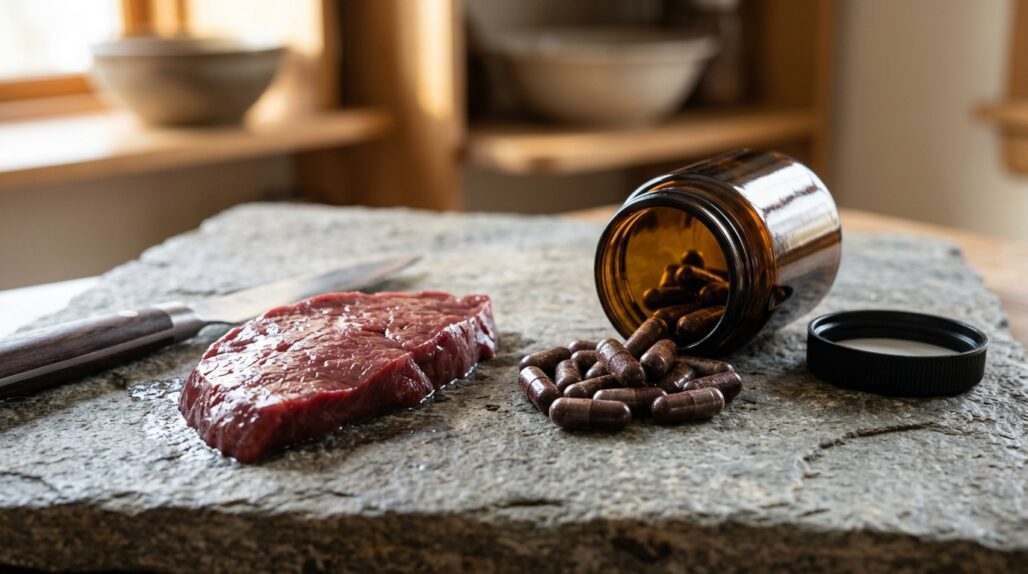
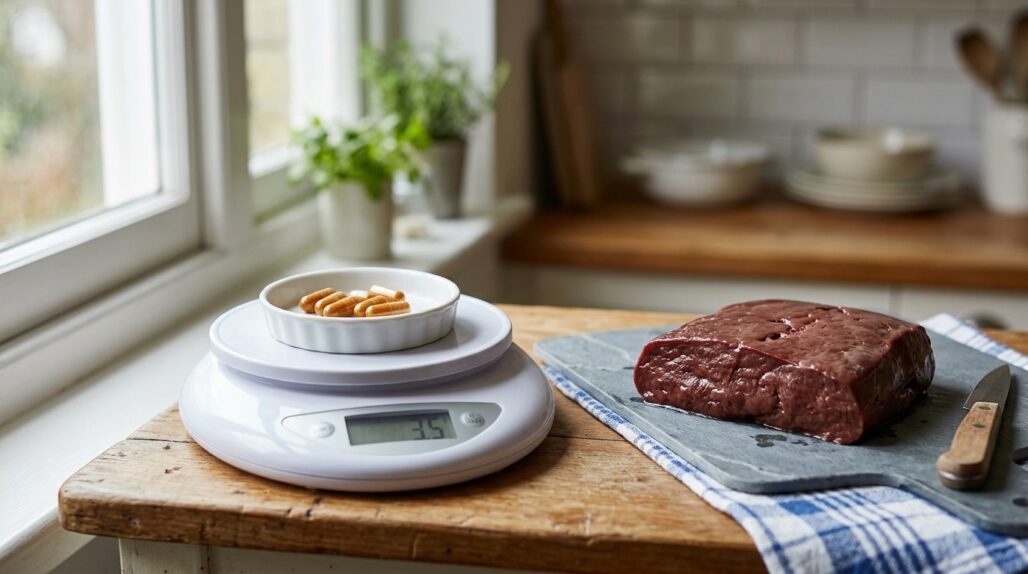
Now the capsules. Most desiccated liver products suggest 3,000 to 6,000 mg per day, usually four to six capsules. That sounds like a lot until you convert it. Drying removes most of the water from liver, but 3,000 mg of powder still works out to roughly half an ounce to one ounce of fresh liver equivalent.
So at a typical daily dose you are getting on the order of 2,000 micrograms of vitamin A, around 30 micrograms of B12, and 3 to 4 mg of iron. Real nutrients, yes. A "multivitamin's worth," sometimes. But to match a single 3-ounce plate of liver you would be swallowing many more capsules than the bottle tells you to take.
The honest framing: the capsules deliver a meaningful micronutrient top-up, not a full serving of liver. If your mental model was "one bottle equals eating organ meat," recalibrate.
| The marketing claim | What the evidence actually supports | Honest grade |
|---|---|---|
| “Nature’s multivitamin in a capsule” | A real but partial micronutrient top-up; a daily dose is roughly half to one ounce of liver, not a full serving | Partly true, overstated |
| “Boosts energy and full-body wellness” | Plausible if you were low in B12 or iron; no trials on the supplement itself showing energy gains in already-replete people | Inferred, not proven |
| “Like cures like – heart for your heart, liver for detox” | No mechanism and no evidence; organ-specific “targeting” is folklore, not physiology | Unsupported |
| “Ancestral, so it must be optimal” | An appeal to tradition; says nothing about whether you personally need it or absorb it better | Marketing, not data |
What the human evidence does and does not show
Here is the line that matters. There are no large randomized controlled trials on desiccated beef organ capsules. None showing they improve energy, athletic performance, fertility, or longevity over an ordinary diet.
What we do have is solid science on the nutrients inside liver. B12, iron, vitamin A, and copper all have decades of research behind them. If you are genuinely low in one of those, correcting it helps, that part is real.
But "the nutrients in liver are well studied" is not the same as "this capsule does what the influencer says." A B12-deficient person feels better when their B12 normalizes. A B12-replete person taking liver pills mostly makes expensive output. The benefit depends entirely on whether you had a gap to fill.
Grade it plainly:
- Human RCT on the supplement: none found
- Nutrient science behind the ingredients: strong and uncontroversial
- "Ancestral cure-all" outcome claims: anecdote and tradition, not data
This is why we land on partial rather than scam. Liver is not fairy dust. The category's problem is overreach, not fakery.
The safety angle most brands skip – vitamin A and copper
Fat-soluble nutrients are the catch with anything liver-based. Your body stores excess vitamin A and copper rather than flushing them, so daily intake can stack up.
The adult tolerable upper intake level for preformed vitamin A is 3,000 micrograms per day, per the NIH Office of Dietary Supplements. A standard liver-capsule dose sits below that on its own. The trouble starts when it adds up: liver pills, plus a multivitamin with retinol, plus eating actual liver, plus a retinoid skincare product.
Chronic excess preformed vitamin A is not theoretical. A review of liver toxicity from vitamin A describes how it accumulates and can damage the liver over time, and StatPearls on vitamin A toxicity lists bone pain, headaches, skin changes, and liver injury at sustained high intakes.
Copper is the quieter concern. Liver is extraordinarily copper-rich, and continuous high intake can be a problem, especially for anyone with a copper-handling condition like Wilson's disease.
Pregnancy is the hard stop. Preformed vitamin A is teratogenic in early pregnancy. The New England Journal of Medicine study on high vitamin A intake found a measurable rise in birth defects among women taking large supplemental doses. If you are pregnant or might become pregnant, do not start a liver supplement without talking to your doctor, and most clinicians steer pregnant patients away from high preformed-vitamin-A products entirely.
The other quiet risk – what the liver filtered
The liver is a filtration organ. It can concentrate heavy metals, pesticides, and environmental residues from the animal's life. Good sourcing lowers that risk, and third-party testing is how you actually verify it.
Plenty of brands lean on "grass-fed" and "New Zealand raised" copy without publishing a contaminant panel. Sourcing language is reassuring marketing. A lab report is evidence. Treat untested organ products with the same skepticism you would any concentrated animal extract.
Who it actually suits, and who should skip
Beef organ capsules make the most sense for a narrow group:
- You eat little or no organ meat and want a whole-food micronutrient top-up
- You tolerate liver's nutrients fine and are not pregnant
- You buy a tested product and track your total vitamin A and copper
They make less sense if:
- You already eat liver, in which case the pills are redundant and stack your vitamin A
- You are pregnant or trying to conceive
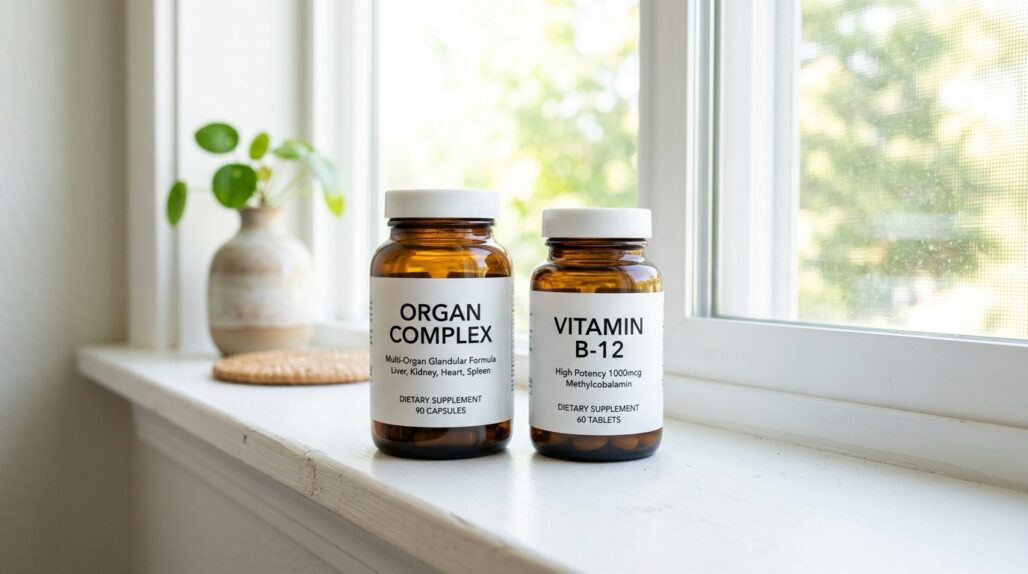
- You have one specific gap, like low B12 or low iron, where a targeted, dose-controlled supplement does the job more precisely and usually cheaper
That last point is the practical fork. If a blood test shows you are low in B12, a measured methylcobalamin or cyanocobalamin dose hits the target exactly. The NIH notes B12 deficiency is common in older adults, vegans, and people on metformin or acid-reducing drugs, and a single targeted supplement addresses it without dragging in a vitamin A and copper load you did not ask for. The same logic applies to iron, which should really be guided by a ferritin test, not guesswork.
Cost versus value
Reputable organ complexes run somewhere around $30 to $50 a month as of writing, so check the current price. That is not outrageous for a tested whole-food product if you genuinely eat no organ meat.
It is poor value if you bought it expecting a full liver serving in a capsule, or if you are paying a premium for "ancestral" branding on an untested powder. And if your real goal is fixing one nutrient, a $10 bottle of B12 or an iron supplement matched to a blood test beats it on every measure that counts.
If you still want to try it, get a tested one
If a whole-food micronutrient top-up appeals to you and you have no contraindication, buy a product that publishes third-party testing for heavy metals and discloses its actual nutrient content. If your real need is one specific nutrient, the targeted alternative below is the smarter, cheaper buy.


As an Amazon Associate, UsefulVitamins.com earns from qualifying purchases at no extra cost to you.
Some links above are affiliate links. If you buy through them we may earn a small commission at no extra cost to you, and it never changes our verdict or which products we flag as tested.
FAQ
Are beef organ supplements the same as eating liver? No. A daily capsule dose is roughly half an ounce to an ounce of liver equivalent, far less than a full 3-ounce serving. They are a partial top-up, not a substitute for the real food.
Can I take beef liver supplements while pregnant? Be careful. Liver is very high in preformed vitamin A, which is teratogenic in early pregnancy. Do not start one without your doctor’s sign-off, and many clinicians advise pregnant patients to avoid high preformed-vitamin-A products.
Will organ capsules give me more energy? Only if you were low in something like B12 or iron to begin with. Correcting a real deficiency helps; taking them when you are already replete mostly does nothing for energy.
Is the vitamin A in a daily dose dangerous? A standard dose alone usually stays under the 3,000 microgram adult upper limit. The risk is stacking it with a retinol multivitamin, actual liver, and retinoid skincare, since vitamin A accumulates rather than clearing.
How do I avoid a contaminated product? The liver filters toxins, so it can concentrate heavy metals. Buy from a brand that publishes third-party contaminant testing rather than one relying only on grass-fed marketing language.
Should I take an organ complex or just a B12 supplement? If you have one known gap, a targeted, dose-controlled B12 or iron supplement is cheaper and more precise. The organ complex makes sense mainly when you eat no organ meat and want a broad whole-food top-up.
The bottom line
Beef organ supplements are a real food in a capsule, not a scam, and liver's nutrient density is the genuine article. But the dose is modest, the "ancestral cure-all" claims run past the evidence, and the stored vitamin A and copper deserve respect, especially in pregnancy.
If you eat no organ meat and want a broad top-up, buy a third-party-tested product and keep an eye on your total vitamin A. If you are chasing one specific nutrient, skip the romance and take the targeted supplement that fixes it directly. For more on that trade-off, see our look at whether multivitamins are a waste of money, our guide to the best beef organ supplements if you do want a tested pick, the best vitamin B12 supplements for a targeted fix, and our complete guide to iron before you treat low energy with guesswork.
This article is for general information and is not medical advice. Supplements can interact with conditions and medications, and nutrient needs are individual. Do not use organ supplements to treat a deficiency or any condition without testing, and route real fatigue, anemia, or pregnancy questions to a qualified clinician.
Reviewed by the UsefulVitamins Editorial Team.
