
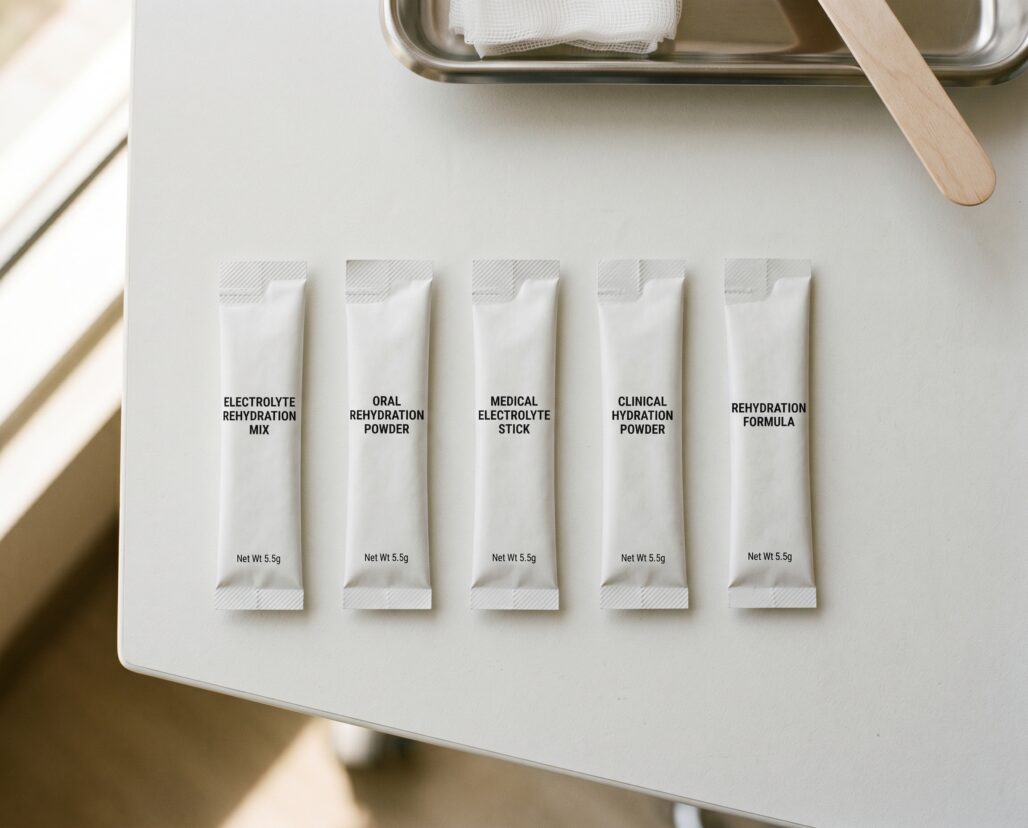
If you're searching for DripDrop alternatives, the short answer is: you can get a clinically equivalent ORS formulation for $0.50–$0.85 per stick on Amazon, and in some cases match DripDrop's sodium-glucose cotransport protocol almost exactly. Whether you should switch depends on why you're buying DripDrop in the first place. This guide covers five alternatives that actually address the hydration mechanism DripDrop is built around, explains where each one cuts corners or changes the formula, and tells you who should stay with DripDrop anyway.
Affiliate disclosure: this article contains affiliate links. As an Amazon Associate, UsefulVitamins.com earns from qualifying purchases at no extra cost to you.
Why people seek alternatives to DripDrop
DripDrop costs $24–$30 for a 32-stick pack, depending on flavor and retailer. That works out to $0.75–$0.94 per stick. On a monthly basis, if you're using one stick per day, a common protocol for endurance athletes, shift workers, or people managing illness-related fluid loss, you're spending $22–$28 per month.
That's not outrageous by supplement standards, but it's not nothing either. The friction compounds when you factor in how DripDrop is typically sold. Amazon S&S pricing creates a predictable monthly commitment; cancel more than a few days before your next shipment or you're charged. You're not locked in the way a monthly subscription service locks you in, but the default flow is auto-ship, not opt-in per order.
The formulation is also specific. DripDrop is built around an ORS (oral rehydration solution) protocol: the 330 mg sodium and 7 g glucose per stick are intentional. The glucose is not sugar added for taste, it activates the SGLT1 cotransporter in the intestinal lining, which pulls sodium (and water along with it) across the gut wall faster than passive osmosis. This is the same mechanism WHO and UNICEF ORS packets use in clinical rehydration. Most electrolyte powders on Amazon are not formulated this way. They are hydration-adjacent, not ORS-protocol.
So when someone asks for a DripDrop alternative, there are two valid questions: one about price, and one about formulation. This guide addresses both.
How we picked
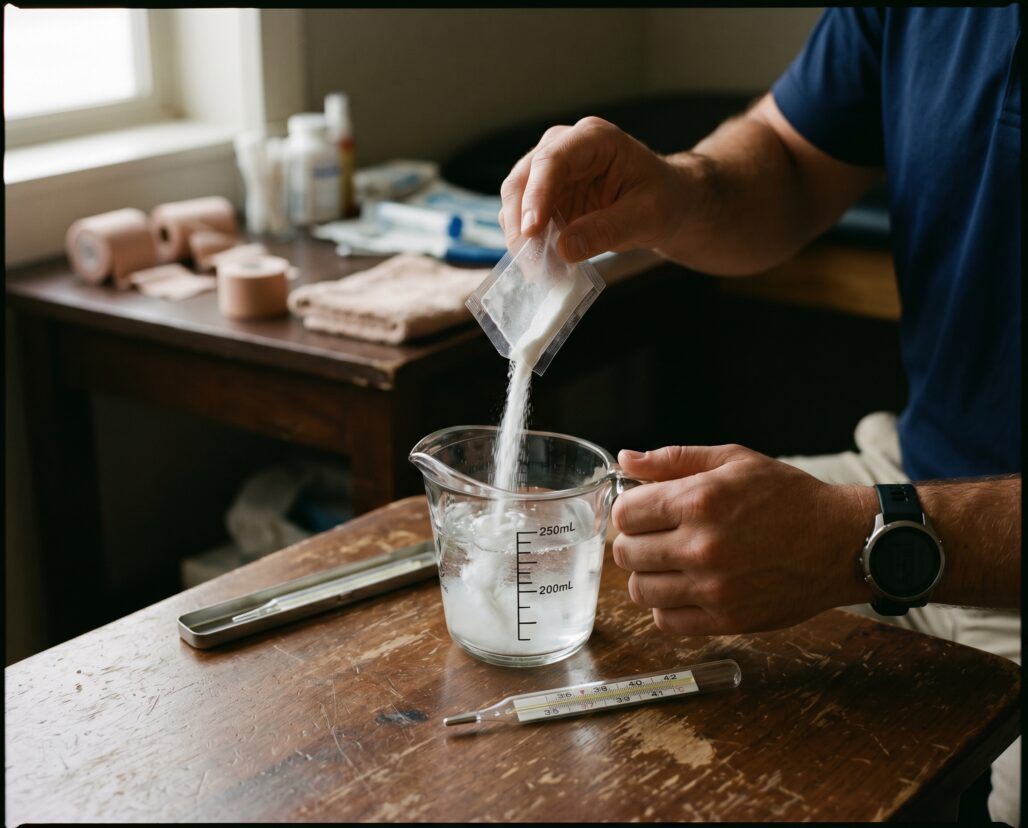
We evaluated five Amazon products against four criteria:
- ORS formulation alignment, Does the sodium-to-glucose ratio approximate the WHO ORS protocol that DripDrop is built on? Or is it a different formulation logic entirely (low-carb, mineral-only, high-sodium without glucose)?
- Cost per stick, Calculated from the most commonly purchased Amazon pack size, including S&S discounts where applicable.
- Use-case specificity, Who is this product actually designed for, and does that match DripDrop's primary use cases (illness recovery, heavy sweat, endurance sport, heat exposure)?
- Regulatory and quality signals, FDA-monitored manufacturing, pediatric-grade safety standards, third-party testing, or verified ORS classification.
We did not include products that market themselves as hydration powders but are primarily flavored vitamin-C drinks with a small sodium addition. If the formulation logic isn't intentional, it doesn't belong in this comparison.
Comparison at a glance
| Product | $/stick | Sodium | Glucose/carbs | ORS-protocol intent | Best for |
|---|---|---|---|---|---|
| DripDrop (reference) | $0.75–$0.94 | 330 mg | 7 g | Yes, doctor-formulated | General ORS replacement |
| Pedialyte AdvancedCare powder | $0.85 | 370 mg | ~6 g lactose-free | Yes, FDA-monitored | Illness recovery, pediatric-grade safety |
| Hydralyte Electrolyte Powder | $0.50 | 250 mg | 6 g | Yes, true ORS | Budget ORS match |
| Liquid IV Hydration Multiplier | $0.81 (S&S) | 500 mg | 11 g | Partial, higher glucose | Heavy sweat, endurance |
| LMNT Recharge | $1.50 | 1,000 mg | 0 g | No, keto-optimized | Keto, no-glucose protocol |
| Ultima Replenisher | $0.60 | 55 mg | 0 g | No, mineral-only | No-sugar, light activity |
Prices based on April–May 2026 Amazon listings. S&S prices noted where applicable. Prices fluctuate.
The picks
Top Pick: Pedialyte AdvancedCare Powder Packs
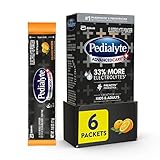
Pedialyte AdvancedCare is the closest structural match to DripDrop's formulation intent on this list. It is an FDA-monitored ORS product designed for clinical rehydration, not a wellness supplement that happens to contain electrolytes. The sodium content (370 mg per pack) sits just above DripDrop's 330 mg, the glucose-equivalent carbohydrate is in the same 6–7 g range, and the potassium (280 mg) is higher than DripDrop's 185 mg. The "AdvancedCare" line adds PreActiv Prebiotics, which the standard Pedialyte powder does not.
Formulation detail: Pedialyte was developed as a pediatric oral rehydration solution in the 1960s and has been used in clinical settings since before DripDrop existed. The FDA monitors it under OTC drug regulations, not dietary supplement regulations, that's a meaningful regulatory distinction. DripDrop is a supplement; Pedialyte occupies a different regulatory category.
The trade-off: At $0.85 per pack, Pedialyte AdvancedCare costs slightly more per unit than mid-range DripDrop pricing but less than DripDrop's single-purchase price. The flavor options are narrower and the taste profile is more clinical and less pleasant than DripDrop's fruit flavors. You're buying formulation integrity, not flavor experience.
Skip if: You find the taste unacceptable for daily use. Pedialyte's flavor profile is functional, designed to encourage sick children to drink, not to be enjoyable enough to reach for on a training run.
Actionable takeaway: If the reason you're using DripDrop is illness recovery, travel sickness, or any situation where clinical rehydration is the actual goal, Pedialyte AdvancedCare is a peer product at a comparable or lower price, with a longer regulatory track record.
Budget Pick: Hydralyte Electrolyte Powder Sticks

Hydralyte is an Australian-market ORS product that has expanded to Amazon US. It is formulated to WHO ORS standards, 250 mg sodium, 6 g glucose per stick, and is the lowest-cost true-ORS product on this list at $0.50 per stick. That is roughly half the cost of DripDrop at its highest price point and about a third cheaper than DripDrop at its lowest. Over a 30-day daily-use period, Hydralyte costs $15 versus DripDrop's $22–$28.
Formulation detail: Hydralyte's sodium is slightly lower than DripDrop (250 mg vs. 330 mg) and lower than WHO's standard ORS recommendation of 75 mmol/L. It's formulated for general rehydration rather than heavy-sweat replacement. The glucose-to-sodium ratio still activates the SGLT1 cotransport mechanism, the core mechanism is present, even if the absolute sodium dose is lower.
The trade-off: Hydralyte at $0.50/stick versus DripDrop at $0.75–$0.94/stick is a 37–47% savings per use. The lower sodium makes it a better fit for mild dehydration (illness, travel, morning-after) than for serious athletic sweat replacement, where DripDrop's higher sodium load is more appropriate.
Skip if: Your primary use case is endurance sport or heavy manual labor in heat. The 250 mg sodium ceiling will under-replace sweat losses for athletes losing 800–1,200 mg of sodium per liter of sweat.
Actionable takeaway: For everyday rehydration, illness, travel, hangover, hot day, Hydralyte delivers ORS-mechanism hydration at half the DripDrop price. It's not a perfect swap for high-sweat contexts, but it doesn't need to be.
Best for Heavy Sweat: Liquid IV Hydration Multiplier 16 Stick Pack

Liquid IV uses a Cellular Transport Technology formulation that, like DripDrop, is based on the sodium-glucose cotransport principle. The specific numbers are higher than DripDrop, 500 mg sodium and 11 g glucose per stick versus DripDrop's 330 mg sodium and 7 g glucose, which makes it better matched to high-sweat-loss contexts. At $13 for a 16-stick pack on Amazon S&S, that works out to $0.81 per stick, within DripDrop's price range.
Formulation detail: The higher glucose (11 g vs. 7 g) is both a strength and a limitation. More glucose accelerates the cotransport mechanism for rapid rehydration during heavy effort, but it also means 11 g of carbohydrates per serving, a relevant number for anyone managing blood sugar, on a low-carb protocol, or using electrolytes during fasting windows. DripDrop's 7 g is lower. Liquid IV's 500 mg sodium is meaningfully higher than DripDrop's 330 mg and appropriate for long training sessions.
The trade-off: Liquid IV is the right pick when sweat rate is high and rapid fluid uptake is the goal. It is not the right pick for illness recovery or casual daily hydration, where the higher sodium and glucose doses are more than necessary. The marketing is broad ("hydrate faster"), but the formula is specifically suited to athletic contexts.
Skip if: You're using electrolytes for illness-related dehydration or gentle daily rehydration. Liquid IV's higher electrolyte load is appropriate for endurance contexts, not for the flu.
Actionable takeaway: If DripDrop is in your kit because you train in heat or lose significant sweat volume, Liquid IV at $0.81/stick (S&S) gives you a similar mechanism with a higher ceiling on both sodium and glucose, appropriate for longer or harder efforts.
Best Keto Match: LMNT Recharge Electrolytes Variety Pack 30 Sticks

LMNT is explicitly not an ORS-protocol product. It contains 1,000 mg sodium, 200 mg potassium, and 60 mg magnesium per stick, and zero glucose. That is a deliberate formulation choice. The sodium-glucose cotransport mechanism that DripDrop, Pedialyte, and Hydralyte rely on requires glucose to activate SGLT1. LMNT skips that mechanism entirely and instead delivers a high absolute sodium load intended for people who have reduced carbohydrate intake and are excreting more sodium as a result of glycogen depletion.
Formulation detail: On a standard diet, LMNT's 1,000 mg sodium per stick is aggressively high and not necessary for most people. On a ketogenic diet (sub-50 g carbohydrate per day), sodium requirements increase substantially because insulin suppression reduces renal sodium retention. LMNT is formulated for that context. At $1.50 per stick, it is the most expensive option on this list, but it addresses a use case that no other product on the list covers.
The trade-off: If you are not on a ketogenic or very-low-carbohydrate diet, LMNT's formulation logic does not apply to you, and the 1,000 mg sodium is excessive for casual hydration. People managing blood pressure should also note that 1,000 mg sodium in a single dose is clinically significant.
Skip if: You're not on a low-carbohydrate diet, or if your reason for using DripDrop is illness recovery or endurance sport on a mixed-fuel protocol. LMNT is a keto supplement that happens to be positioned as a hydration product.
Actionable takeaway: LMNT is the right DripDrop alternative for one specific user: someone on a ketogenic or carnivore diet who is excreting high volumes of sodium and needs to replace it without ingesting glucose. For everyone else, it is the wrong product at the wrong price.
Best No-Sugar: Ultima Replenisher Electrolyte Powder Variety
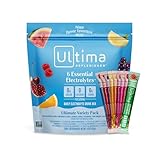
Ultima Replenisher is the furthest departure from DripDrop's formulation logic on this list, and that is exactly the point. It contains zero sugar, zero glucose, and only 55 mg of sodium per stick. It is not trying to replicate the ORS mechanism. It is a mineral-replenishment product for people who want electrolytes without any carbohydrate load, runners who already eat during long efforts, people who supplement during hot yoga, or anyone who needs a flavored hydration option without touching their daily carbohydrate intake.
Formulation detail: Ultima's mineral profile covers a broader range than most alternatives on this list: magnesium (100 mg), calcium (65 mg), phosphorus (50 mg), potassium (250 mg), and trace amounts of chloride and zinc alongside the sodium. The plant-based sweetener (stevia) keeps it carbohydrate-free. At $0.60 per stick it is the second-cheapest option on the list.
The trade-off: The 55 mg sodium is negligible for anyone with meaningful sweat losses. Without glucose, there is no SGLT1 activation and no enhanced fluid uptake compared to plain water. Ultima is a palatability and mineral product, it makes plain water more pleasant and adds a broad mineral top-up. It is not a rehydration intervention in any clinical or athletic sense.
Skip if: Rapid fluid absorption or serious sweat replacement is the goal. Ultima's low sodium and zero glucose make it a non-starter for illness recovery, heavy endurance use, or heat exposure. It is categorically not a DripDrop replacement in those contexts.
Actionable takeaway: Ultima works for the person who drinks it because they find plain water tedious and want a sugar-free flavored option with some mineral upside. At $0.60/stick, it costs less than DripDrop but also delivers less of what DripDrop is actually doing physiologically.
How your body actually handles ORS-style sodium-glucose ratios
The reason DripDrop, Pedialyte, and Hydralyte are formulated the way they are is not arbitrary. The sodium-glucose cotransport mechanism (SGLT1) in the small intestinal lining is one of the most effective fluid-uptake pathways the body has. Here's what that means in practice.
SGLT1 activation requires glucose. The transporter is a sodium-glucose symporter, it binds one glucose molecule and two sodium ions and moves all three across the intestinal wall together. Water follows the osmotic gradient this creates. Products without glucose (LMNT, Ultima) do not activate this pathway. They rely on passive osmosis and active sodium transport, which is slower and less efficient under dehydration conditions.
The glucose-to-sodium ratio matters more than absolute dose. WHO's ORS standard uses 75 mmol/L sodium and 75 mmol/L glucose, a 1:1 molar ratio. DripDrop approximates this ratio. Too much glucose relative to sodium creates an osmotically unfavorable solution that slows absorption; too little glucose fails to activate SGLT1 efficiently. Liquid IV's 11 g glucose with 500 mg sodium stays within an effective range. Ultima's 0 g glucose with 55 mg sodium is outside it entirely.
Sodium dose is context-dependent. Sweat sodium concentration varies by individual and effort level, approximately 200–1,000 mg per liter of sweat, with a population mean around 500 mg/L. DripDrop's 330 mg per stick is appropriate for moderate sweat loss or illness-related dehydration. LMNT's 1,000 mg is appropriate for ketogenic dieters or very high sweat rates. Pedialyte's 370 mg stays close to the clinical rehydration sweet spot. There is no single correct dose.
You cannot activate the cotransport mechanism retroactively. Taking LMNT after Ultima, or mixing a no-glucose electrolyte with a glucose drink, does not recreate the ORS mechanism in a biologically meaningful way. If rapid fluid uptake is the goal, the sodium and glucose need to arrive in the gut together in the correct ratio. That's what ORS-protocol products are designed to deliver.
Actionable takeaway: If the reason you're using DripDrop is genuine rehydration, illness, heat, endurance, the formulation mechanism matters. Pedialyte AdvancedCare or Hydralyte are valid lower-cost alternatives. If you're using DripDrop because it's a pleasant-tasting electrolyte drink and you're not actually dehydrated, Ultima at $0.60/stick delivers a sugar-free, broadly mineral-enriched option for that use case.
Who should stick with DripDrop anyway
Not everyone should switch. DripDrop has a defensible position in several scenarios.
You need flavor variety and a proven taste profile. DripDrop has invested heavily in flavor development. Pedialyte AdvancedCare tastes like a medical product because it is one. Hydralyte is functional. If taste compliance is the reason you're actually drinking electrolytes consistently, DripDrop's flavor library may justify the price premium.
Your use case is doctor-recommended rehydration. DripDrop was originally developed by a physician for use in developing-world dehydration contexts and is clinically validated in that setting. If a healthcare provider has specifically recommended DripDrop by name, that recommendation is likely based on both formulation and published evidence, not a product to swap arbitrarily.
You're managing a condition where consistent sodium-glucose dosing matters. For people with conditions like orthostatic hypotension, POTS, or other dysautonomias where precise electrolyte management is therapeutic, the consistency of DripDrop's formulation across batches has a value that budget alternatives may not match.
The S&S price makes the math work for you. If you're already on Amazon S&S and DripDrop is auto-delivering at a price you're comfortable with, the friction of researching and switching may not be worth the savings, particularly if you're using it infrequently.
Related reading
- Is DripDrop Worth It?, full cost-benefit breakdown before you commit to a subscription
- DripDrop vs. LMNT, head-to-head on formulation, use case fit, and who each product is actually for
- How We Review Supplements, our methodology for evaluating formulation claims and third-party evidence
For 2026 pricing across DTC supplement subscriptions and their Amazon equivalents, see our DTC supplement pricing reference.
As an Amazon Associate, I earn from qualifying purchases. Product recommendations are based on real reviews and independent research.
Settled on one? StackMyMed (our companion app) lets you scan the label and log it into your routine, then watches for overlaps and interactions across your whole cabinet.
The bottom line on DripDrop alternatives
DripDrop at $0.75–$0.94 per stick is not a premium supplement, it's a mid-range clinical hydration product. Whether you should switch depends on why you're buying it.
If the mechanism matters (illness recovery, endurance sport, heat dehydration), Pedialyte AdvancedCare is the closest peer product at a comparable price with a longer regulatory track record. Hydralyte gives you true ORS-protocol hydration at $0.50/stick, $0.25–$0.44 per stick cheaper than DripDrop. Over 30 days of daily use, that's $7.50–$13 in savings.
If your use case is heavy sweat replacement, Liquid IV at $0.81/stick S&S gives you more sodium and more glucose for the same approximate price.
If you're on a ketogenic protocol, LMNT is the only product on this list built for your electrolyte context, at a higher price, but for a real reason.
If you want a sugar-free flavored hydration option with no ORS intent, Ultima at $0.60/stick is pleasant and cheap and honest about what it is.
The case for staying with DripDrop is real: it's doctor-formulated, the flavor compliance is high, and the formulation is consistent. But the case for Pedialyte or Hydralyte is equally real if you care about the mechanism more than the flavor experience, and you'd rather not spend $0.94 per stick when $0.50 delivers the same physiology.
This article is for informational purposes and not medical advice. Electrolyte products can interact with medications and health conditions. Consult a licensed physician before altering electrolyte intake if you manage a chronic condition, cardiovascular disease, or kidney disease.
As an Amazon Associate, I earn from qualifying purchases. Product recommendations are based on real reviews and independent research.
Editorial independence note: UV earns affiliate commissions from Amazon and (selectively) from DTC brand affiliate programs. Commissions never determine our recommendations — top picks are chosen first; affiliate links are added second. Read our full methodology and editorial independence policy →
Frequently asked questions
What is the cheapest DripDrop alternative on Amazon?
Hydralyte, at about $0.50 per stick, is the cheapest true-ORS match. It delivers 250 mg sodium and 6 g glucose in the WHO oral-rehydration ratio that DripDrop is built around.
Which Amazon product is closest to DripDrop’s formula?
Pedialyte AdvancedCare Powder (about $0.85 per stick) is the closest structural match. It is an FDA-monitored ORS with 370 mg sodium and 6-7 g glucose-equivalent carbohydrate, just above DripDrop’s 330 mg sodium and 7 g glucose.
Is LMNT a good DripDrop substitute?
Only for keto. LMNT has 1,000 mg sodium and zero glucose, so it lacks the sodium-glucose cotransport mechanism DripDrop uses for rapid rehydration. It suits low-carb diets, not illness recovery.
