

Start with the goal, not the cart
Most overwhelmed supplement shelves started the same way. Someone read about magnesium for sleep, then a podcast mentioned creatine, then a friend swore by ashwagandha, and six months later there are eleven bottles and no clear sense of which one is doing anything.
The fix is boring and it works. Before you buy a single thing, finish this sentence: "I want to support or improve ___." Better sleep. Steadier energy. Filling a known gap your doctor flagged. One goal, stated plainly. A goal you can measure later is even better than a vague one.
A goal does two things. It tells you what to look up, and it gives you a way to judge later whether the supplement earned its place. "I take a bunch of stuff for general wellness" can never be evaluated. "I started vitamin D because my last blood test was low" can.
If you cannot name a goal yet, that is a useful answer too. It usually means the honest next step is a conversation with your doctor or a look at your diet, not a purchase.
Foundations first, then the short list
Here is the part the supplement aisle would rather you skip. The federal Dietary Guidelines for Americans are clear that you should meet your nutrient needs mainly from nutrient-dense food, and the NIH Office of Dietary Supplements echoes it: in most cases it is best to get nutrients from food first. Supplements fill gaps. They do not replace meals, and they will not out-run poor sleep.
So before you optimize with capsules, look at the unglamorous basics tied to your goal. Chasing better energy with a pill while sleeping five hours is spending money to paper over the real problem.
Once the foundation is honest, keep the candidate list short. Favor the few items with the strongest evidence for your specific goal rather than whatever is trending. For a lot of beginners that ends up being a small set, for example:
- A basic multivitamin or mineral supplement if your diet has known gaps. The NIH notes a multivitamin is unlikely to pose health risks, though it cannot stand in for eating a variety of foods.
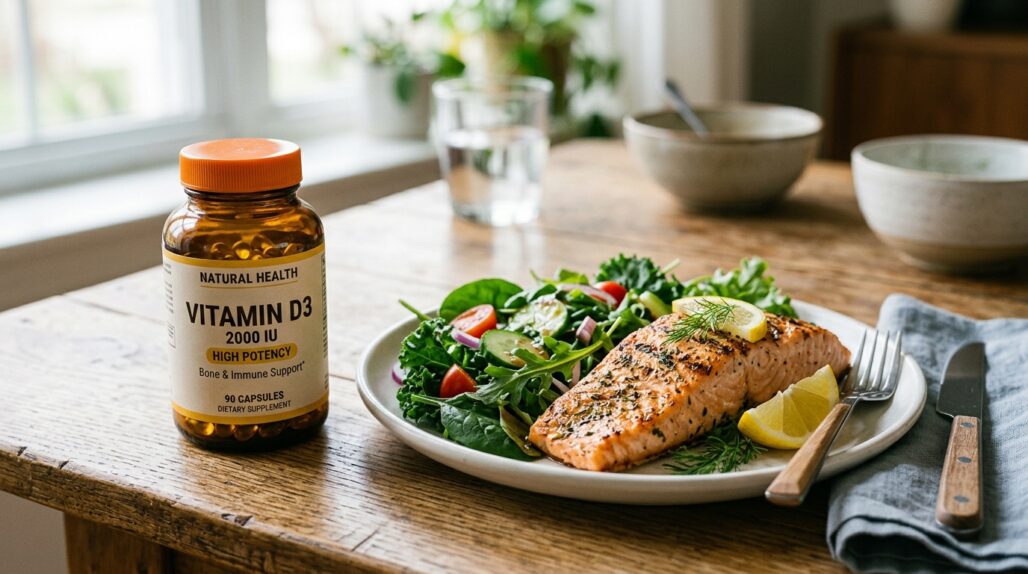
- Vitamin D, which many people fall short on. Per the NIH vitamin D fact sheet, it is fat-soluble, so it absorbs best with a meal that has some fat, and a blood test is the real way to know your level.
- Something specific and well-studied for your one goal, chosen after you read up on it.
You do not need all of these. You may not need any. The point is a deliberate short list, not a starter kit someone sold you.
Add ONE at a time and wait
This single rule prevents most beginner regret. Introduce one new supplement at a time, then give it weeks, not days, before deciding anything.
The reason is simple. If you start three things at once and feel better, you cannot tell which one helped, whether all three are worth the money, or which to blame if your stomach turns. Changing one variable at a time is the only way to learn what each item actually does for you. Many effects also build slowly, so a fair trial is usually several weeks, not a long weekend.
Here is a usable manual method that needs zero apps. Copy this onto paper or into your phone notes:
| Field | What to write |
|---|---|
| Supplement | Name and form (for example, vitamin D3 softgel) |
| Goal | The one thing you hope it helps |
| Dose and timing | Amount per the label, and when you take it |
| Start date | The day you began (this matters more than people think) |
| Check-in date | A date 4 to 8 weeks out to review honestly |
| Result | Better, no change, or worse, plus any side effects |
One row per supplement. When the check-in date arrives, you read your own notes and make a call. If nothing changed and the goal had a marker you could feel, that is real information, and stopping is a perfectly good outcome. If you want to dig into how to judge a trial fairly, our guide on telling whether a supplement is actually working walks through markers and timeframes in more detail.
Keep it small and watch for overlap
A stack does not get out of hand all at once. It creeps. So set a quiet ceiling in your head, something like "I keep what is clearly earning its place and nothing else," and revisit it whenever you are tempted to add a fifth or sixth bottle.
Two traps to watch as the list grows.
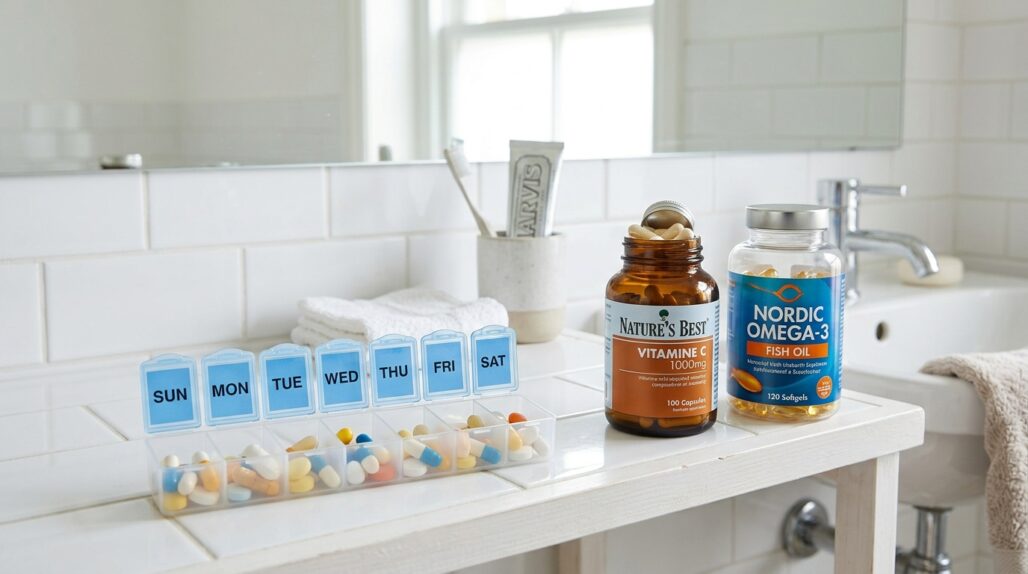
The first is hidden overlap. A multivitamin, a "stress" blend, and a standalone B-complex can each contain the same B vitamins, so you end up taking far more than you planned without noticing. Read the labels side by side. The NIH Office of Dietary Supplements is direct that more is not automatically better, and that taking too much of some nutrients can cause harm. Fat-soluble vitamins like A, D, and E are the ones to respect most here, because they can build up in the body rather than wash out, which is exactly why established upper limits exist for them.
The second trap is timing collisions, mostly with minerals. As your stack grows it is worth knowing the basics of what order to take supplements throughout the day, since some minerals compete for absorption or need food and others do not.
If you find yourself wondering whether you have simply ended up with too many bottles, that is a healthy instinct. Our supplement self-audit gives you a structured way to thin the list back down.
This is also the daily-habit beat, the part that decides whether any of this sticks. Pick a fixed cue (the coffee maker, brushing your teeth) so the supplement rides along with something you already do, and keep your written list current as you add or drop items, because a stale list is how overlap sneaks back in. Adding one supplement at a time only works if you can actually see what is already in your routine, so if paper notes keep going missing, scanning your starter stack into a free app we make, StackMyMed, keeps it in one place so you add deliberately instead of accumulating bottles, with the same plain low-tech backup (a phone note or a printed copy of the table above) if you would rather not use an app. It is for organizing your own list, not for clearing a combination as safe, so anything about interactions still goes to your pharmacist.

Tell your doctor or pharmacist what you are starting
Here is the safety rule that matters most, especially if you take any medication. Tell your healthcare providers about every supplement you are starting. The NIH advises naming all of them to your doctors, dentists, pharmacists, and dietitians, because "natural" does not mean "no effect on your medicines."
Some interactions are well documented. Per NCCIH, vitamin K can blunt the blood thinner warfarin, and St. John's wort speeds the breakdown of many drugs, which can quietly weaken everything from antidepressants to birth control to heart and transplant medications. The NCCIH also warns that some supplements raise bleeding risk or affect your response to anesthesia, so flag anything you take well before a planned surgery.
A pharmacist is the most accessible expert here, and the visit is usually free. Bring your full list, supplements included, and ask the plain question: does anything I take clash, and should anything be spaced apart? Nothing on this page tells you to start or stop a prescription on your own. If you are weighing a new supplement against existing meds, the drug and supplement interaction checker is a reasonable place to gather questions, then take those questions to the professional who can actually answer them for your situation.
How we approach this
We are not here to sell you a 12-bottle protocol. We start from food, evidence, and your one goal, and we say plainly when the honest answer is "you may not need a supplement for this." You can read more about how we review supplements and where we draw the line.
FAQ
How many supplements should a beginner start with? One. Begin with a single supplement tied to a single goal so you can tell whether it helps. You can always add a second later, deliberately, after the first has had a fair trial.
How long before I know if a supplement is working? It varies by supplement and goal, but a fair trial is usually a few weeks rather than days, and often closer to four to eight. Note your start date so you are judging a real window, not a hopeful guess.
Is a multivitamin a good first supplement? It can be a reasonable foundation if your diet has gaps, and the NIH notes it is unlikely to pose health risks. It does not replace eating a variety of foods, so treat it as a backstop, not a free pass.
Can taking too many supplements be harmful? Yes. More is not automatically better, and the NIH notes that too much of some nutrients can cause harm. Fat-soluble vitamins like A, D, and E can build up in the body, which is why they have upper limits worth respecting.
Do I really need to tell my doctor about supplements? Yes, especially if you take any medication. Some supplements interact with prescriptions, raise bleeding risk, or affect anesthesia. Telling your doctor or pharmacist is the simplest way to catch a problem before it happens.
Should I take my supplement with food? Often, yes. Fat-soluble vitamins like vitamin D absorb best with a meal that has some fat, per the NIH. Check each label, since some items work better on an empty stomach.
The bottom line
A good first stack is small, deliberate, and written down. Name one goal, get the food-and-sleep basics honest, add a single well-supported supplement, and give it weeks before you judge it. Keep the list short, watch for overlapping ingredients, and review honestly instead of just buying the next thing.
The one action that protects you most: tell your doctor or pharmacist what you are starting, especially if you take any medication. You organize the list and run the trial; let the professional make the call on what is safe for you.
This article is for general education and is not medical advice. It does not replace a conversation with your doctor or pharmacist, who can account for your medications, conditions, and situation. Never start or stop a prescription on your own.
StackMyMed is made by UsefulVitamins. It helps you organize your list and flag things to discuss with a pharmacist or doctor; it is not a diagnosis or treatment tool and does not replace professional medical advice.
Reviewed by the UsefulVitamins Editorial Team.
