

Why a growing pile rarely answers the question
Most people add supplements faster than they ever subtract them. You read something promising, you buy the bottle, you take it for a while, and you mostly forget whether it did anything. A few months later you have eight bottles and no idea which two are pulling their weight.
The problem is not effort. It is that you cannot read a result you never set up. If you start three things in the same week, then sleep a little better, you have no way to know which one helped, or whether it was the new bedtime, the lighter dinners, or just a calmer stretch at work.
Here is the reassuring part. You do not need a lab or an app to figure this out. You need a method, a notebook, and a bit of patience. This page gives you the whole method in plain text so it works even if you never download anything.
Change one thing at a time
This is the single rule that makes everything else possible. Test one new supplement at a time. Keep the rest of your routine, including diet and sleep, as steady as you reasonably can while you watch what one addition does.
It sounds slow, and it is slower than buying three at once. But it is the only way to connect a change to a cause. When several variables move together, the result is noise. When one variable moves, the result is a signal you can actually trust.
There is a second reason to go slow. Expectation alone can shift how you feel for a few weeks – a real and well-documented effect in research, which is exactly why good studies compare a supplement against a dummy pill. You cannot run a blinded trial on yourself, but you can blunt that early bump by waiting past the first couple of weeks before you decide anything.
So the working order is simple. Finish judging one item before you introduce the next. If you are mid-trial and tempted by a new bottle, write it on a wishlist and come back to it.
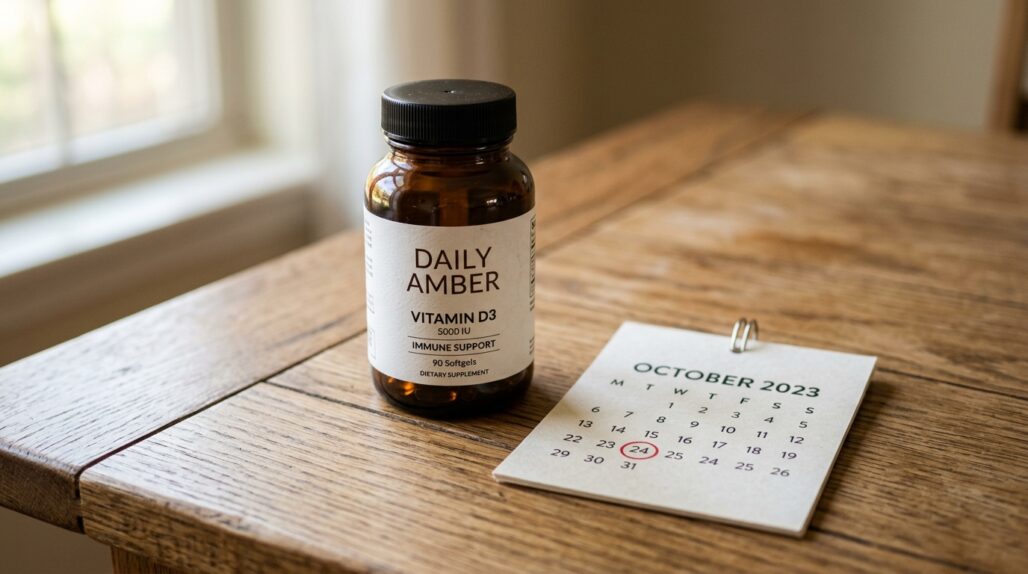
Pick a marker you can measure, and a fair window
"Do I feel better" is too vague to track. Before you start, name the one thing this supplement is supposed to change, then decide how you will measure it. A marker you can score on most days is worth far more than a vague impression weeks later.
Good markers tend to be concrete. A few examples:
- Sleep: how many times you woke, or a 1-to-10 rating of how rested you felt.
- Energy: a 1-to-10 score at the same time each afternoon.
- A specific symptom: number of headache days per week, joint stiffness in the morning, or a digestion rating.
Then set the window before you start, not after. Many supplements need weeks, not days. The NIH Office of Dietary Supplements notes that nutrients taken to correct a shortfall can take time to show up; the NIH vitamin D consumer fact sheet describes correcting low levels over a span of weeks to months rather than days. A practical window for most self-tests is 4 to 12 weeks of consistent daily use. Shorter than that and you are mostly measuring the first-few-weeks bump; you have not given a real effect time to appear.
One caution worth keeping in view. Supplements are not held to the same pre-market testing as drugs, and as the FDA's consumer guidance on dietary supplements explains, a product can carry real risks as well as benefits. A fair trial measures whether something helps you; it does not make an unproven claim true.
Set up the one-page tracker (no app needed)
You can run this on a single sheet of paper or a phone note. Copy the columns below and fill one row per supplement you test. The point is to capture a start date, a before picture, and a planned check-in so you are comparing like with like.
| Field | What to write | Example |
|---|---|---|
| Supplement and dose | Name plus the amount on the label | Magnesium glycinate, 200 mg, evening |
| Why I am taking it | The one thing it should change | Fewer night wakings |
| Start date | The day you took the first dose | March 3 |
| Before note | Your marker score now | Wake 2 to 3 times a night, rested 4 of 10 |
| Check-in date | Start date plus 4 to 12 weeks | April 28 |
| After note | Same marker, scored again | Wake once, rested 7 of 10 |
| Verdict | Keep, drop, or ask a professional | Keep |
If a daily score is too much, score your marker once a week on the same day. Consistency beats detail. A rough weekly number you actually record beats a precise one you skip.
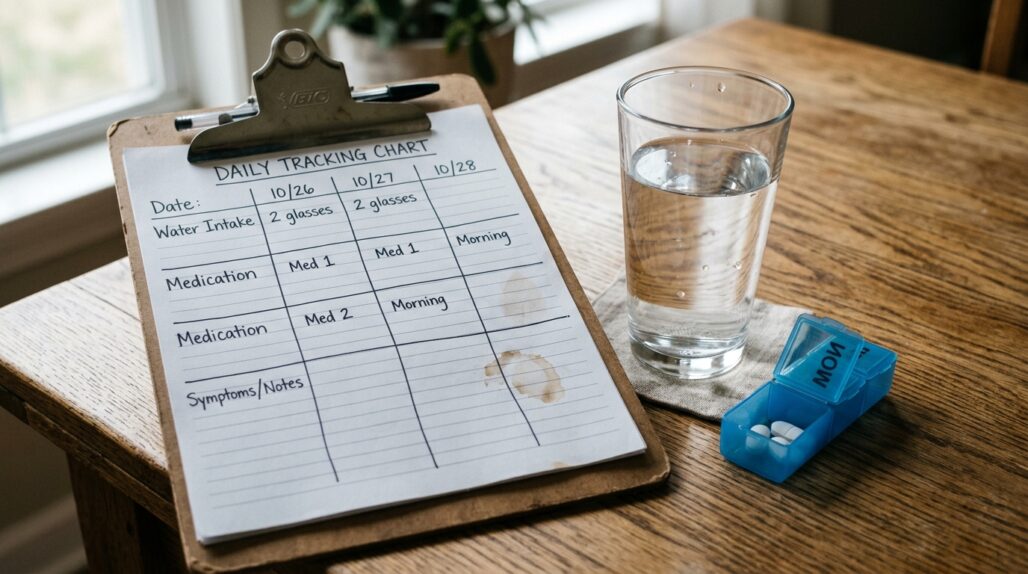
Keep the start dates current as the routine grows
The method only works if the start dates stay accurate, because the whole comparison hinges on knowing exactly when each item entered your routine. A pill organizer keeps you consistent day to day, and a dated line in a notebook or phone note records when each trial began – that is genuinely all you need.
Once you are juggling more than a few bottles, the part that slips is remembering when each one started, which is the detail that lets you match a change to the right supplement. Isolating one supplement is much easier when start dates are recorded, and timestamping each addition in a free app we make, StackMyMed (our own free app), keeps that history in one place so you can match a change to the right item; a dated notebook line does the same job if you would rather keep it on paper. Whichever you choose, if a supplement is meant to support something a medication also affects, treat any overlap as a question for your pharmacist rather than something to settle yourself.
When the answer is "no change"
This is the part most people skip, and it is the whole point. If you ran a fair trial and your marker did not move, the useful action is to stop that supplement, not to add another on top. A clear non-result is still a result; it just earned that bottle a spot in the donate pile instead of your daily routine.
Stopping is also how you keep the pile from growing forever. Every item you confirm is doing nothing is shelf space, money, and one less thing to remember. The NIH Office of Dietary Supplements is candid that the evidence behind many popular supplements is thin, so finding that one does nothing for you is common and entirely normal.
If you are unsure whether you ran a fair test, give it one more clean window with no other changes before you decide. And if the supplement was suggested by a clinician for a specific reason, check with them before dropping it rather than stopping on your own.

Some effects are silent – and that changes how you read them
Not every benefit shows up as something you can feel. If you are taking a supplement to correct a measured shortfall, like low vitamin D or low B12, "I do not feel different" is not the same as "it is not working." Correcting a deficiency can be quiet from the inside even while your levels improve.
B12 is a clear example. The StatPearls review on vitamin B12 deficiency on the NCBI Bookshelf describes cases where the picture is subclinical, meaning the problem is real on a blood test before a person notices much. For markers like these, the honest read is bloodwork ordered by your doctor, not a symptom diary. Your self-test is great for sleep, energy, and symptoms you can sense; it is the wrong tool for something only a lab can see.
So split your routine in your head. Felt effects you can track yourself. Measured effects belong to your clinician, who can order the test and tell you what the number means.
FAQ
How long should I try a supplement before deciding it works? For most things you can feel, give it 4 to 12 weeks of consistent daily use. Many nutrients take weeks to show up, so a window shorter than a month often tells you nothing useful.
Can I test two supplements at once if they are for different things? It is cleaner not to. Even when the goals differ, overlapping start dates make it harder to read side effects or timing issues. If you must, stagger the start dates by a few weeks so you can tell them apart.
What if I feel better in the first few days? Enjoy it, but do not bank on it yet. Expectation can lift how you feel early on, which is why good studies use a dummy pill for comparison. Keep going and judge at your planned check-in.
Is “no change” a good enough reason to stop? After a fair trial with nothing else changing, yes – stopping is the sensible move. If a clinician recommended it for a specific reason, check with them before dropping it.
How do I know if the effect is just placebo? You cannot blind yourself, so you cannot fully separate the two. Waiting past the first few weeks and tracking a concrete marker over a longer window gives you a more honest read than a quick impression.
What about supplements I cannot feel working? If you are taking something to correct a measured shortfall, a blood test ordered by your doctor is the real read, not how you feel. Ask your clinician whether testing makes sense for your situation.
The bottom line
You will spend less and learn more if you treat each new supplement as a small experiment instead of a hopeful addition. Test one at a time, pick a marker you can measure, write down the start date and a before note, and check again after a fair window of 4 to 12 weeks. If nothing moved, stop it rather than stacking another on top.
The single most useful habit is keeping accurate start dates so you can match a change to the right item. And before you read any result as a green light, especially if you take prescription medication or are testing something a blood test would measure, run it by your pharmacist or doctor. They can tell you what is worth keeping, what to test, and what only a lab can answer.
For your next step, a quick self-audit of whether you are taking too many supplements pairs well with this method, and our guide to building a first stack without getting overwhelmed shows how to add deliberately. If you want to understand how evidence is weighed, see how we review supplements, and if you take medication, the drug and supplement interactions guide is worth a read before you start anything new.
This article is for general information and is not medical advice. It does not replace a conversation with your doctor, pharmacist, or other qualified clinician, and you should not start, stop, or change any supplement or prescription based on it alone.
StackMyMed is made by UsefulVitamins. It helps you organize your list and flag things to discuss with a pharmacist or doctor; it is not a diagnosis or treatment tool and does not replace professional medical advice.
Reviewed by the UsefulVitamins Editorial Team.
