
Run this checklist before the first dose
A new supplement feels low-stakes. It is on the shelf next to the snacks, no prescription required, so it is easy to assume it cannot clash with anything. That assumption is where trouble starts when you already take medication.
The good news is that the checks take a few minutes, and you can do most of them at the kitchen counter. This page walks through five steps in order. None of it tells you to stop or change a prescription. It is a way to slow down for one afternoon so the new bottle becomes a safe addition instead of a surprise.
If you only do one thing, make it the last step: run the supplement past your pharmacist before you start. Everything else here helps you arrive at that conversation prepared.
Step 1: Check for interactions with your specific medications
"Natural" does not mean "no interactions." The U.S. Food and Drug Administration is direct about this: certain supplements can change how your body absorbs, processes, or clears a drug, which means you can end up with too much or too little of the medicine you actually need, as the FDA's consumer update on mixing supplements and medications explains.
A few categories come up again and again. They are worth knowing by name so you can flag them.
- Blood thinners. Vitamin E, high-dose fish oil, ginkgo, and others can add to the blood-thinning effect of a drug like warfarin. Vitamin K runs the other way and can blunt it. The NIH Office of Dietary Supplements notes that if you take warfarin, the goal is to keep your vitamin K intake about the same every day rather than letting it swing, per the NIH vitamin K factsheet.
- Thyroid medicine. Calcium and iron can bind to levothyroxine and lower how much you absorb.
- Blood pressure and heart drugs. Some supplements can push blood pressure or heart rhythm in directions that matter when you are already medicated.
- St John's wort. This one is in its own league. It can weaken a long list of drugs, including birth control, some antidepressants, and certain heart medications, which is why the FDA singles it out.
You do not need to memorize every pairing. Start by listing your supplement next to each medication you take and asking one question of each pair: is there a known interaction? An interaction checker is a fast first pass. Our drug and supplement interaction checker is built for exactly this, and our in-depth guide to drug and supplement interactions explains what the common flags actually mean. Treat the result as a prompt for your pharmacist, not a final ruling.
Step 2: Add it to your complete list so nothing is invisible
A pharmacist can only catch a clash they can see. If a supplement lives in your head or in a cupboard you forget to mention, it is invisible to the person best placed to spot the problem.
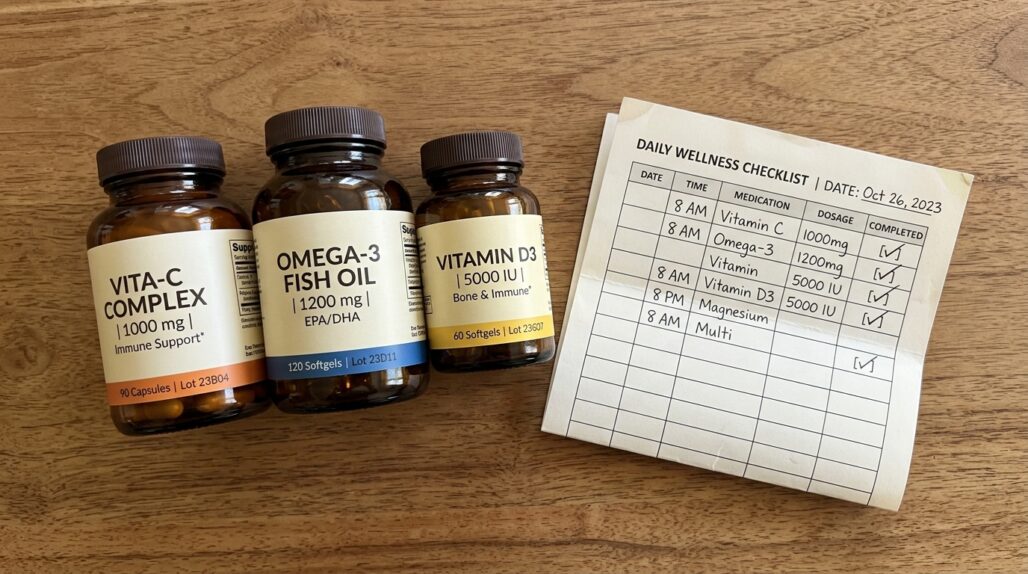
So before anything else, get the new item onto one written list with everything else you take. The Agency for Healthcare Research and Quality recommends a single "My Medicines List" that includes prescriptions, over-the-counter products, vitamins, and supplements, with the name, strength, what each is for, and how you take it, as laid out in the AHRQ guide to making a medicines list.
Here is a simple version you can copy onto paper or into a phone note right now. Fill one row per item.
| Name | Strength or dose | What it is for | When I take it |
|---|---|---|---|
| Levothyroxine | 75 mcg | Thyroid | Empty stomach, 7 am |
| Calcium | 500 mg | Bone support | With lunch and dinner |
| New: magnesium | 200 mg | Sleep, started today | Bedtime |
Keep the list where you will actually update it, and write the date at the top so you know how current it is. That dated, complete list is what turns a rushed pharmacy chat into a useful one.
Step 3: Space minerals away from the drugs they can bind to
Some supplement problems are not about chemistry going wrong inside you. They are about timing. Several minerals can grab onto certain medications in your gut and carry them out before they are absorbed, a process called chelation. A peer-reviewed review of supplement-medication interactions describes how calcium, iron, magnesium, and zinc can each reduce the absorption of drugs they bind to.
The fix is usually not to stop either one. It is to put hours between them.
| Mineral | Can reduce absorption of | General spacing |
|---|---|---|
| Calcium | Levothyroxine, some antibiotics | About 4 hours apart |
| Iron | Levothyroxine, some antibiotics | About 4 hours apart |
| Magnesium | Certain antibiotics | A few hours apart |
| Zinc | Certain antibiotics | A few hours apart |
A common real-world example: people take levothyroxine first thing on an empty stomach, then save calcium or iron for lunch and dinner. That gap is what keeps the thyroid dose working. The exact spacing depends on your specific drug, so confirm the number that applies to you. Our guide to spacing supplements and medications apart goes deeper on the timing math if your routine is crowded.

Step 4: Start one at a time and watch for new side effects
If you start three supplements on the same Monday and feel queasy on Wednesday, you have no way to know which one to blame, or whether it was the new combination at all. Starting one item at a time keeps the picture readable.
Once it is on your list and spaced sensibly, this is the part you can build into your day. Take the new supplement on its own for a couple of weeks before adding anything else, and keep a short note of anything that changes: stomach upset, sleep, headaches, or how a medication feels to take.
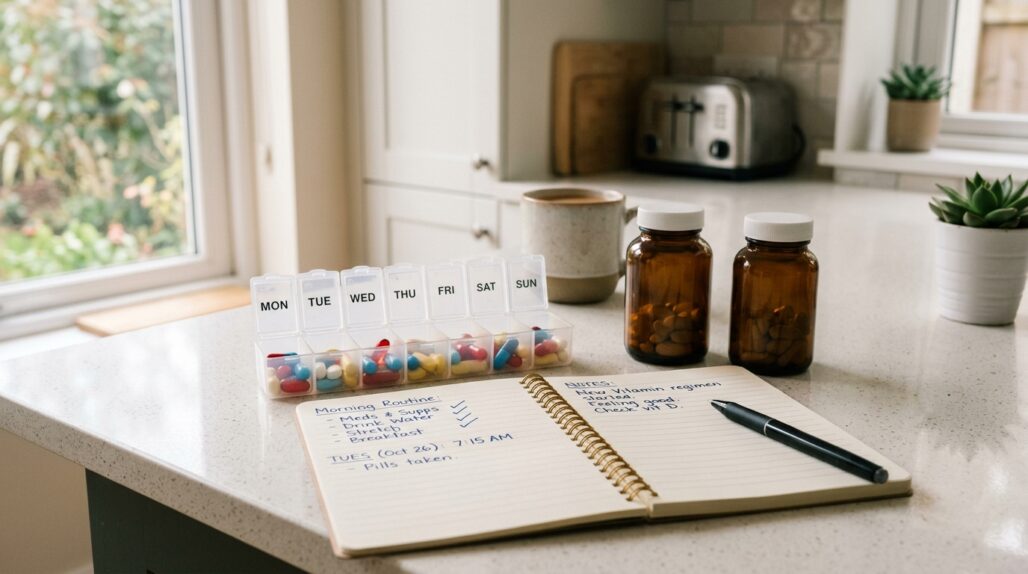
A low-tech way to stay current works fine here. A weekly pill organizer plus a dated paper note, or a reminder in your phone calendar, keeps the new item visible without anything fancy. If you would rather keep it digital, you can scan the new supplement into a free app we make, StackMyMed, the moment you buy it, which puts it next to your medications so any overlap is easy to flag with your pharmacist (the app organizes your list and surfaces possible interactions to raise with a pharmacist; it does not clear a combination as safe). Whichever method you choose, the point is the same: the bottle should never be a secret from the list.
If a new symptom shows up after you start, that is information to bring to your pharmacist or doctor, not a reason to quietly double up or quit a prescription.
Step 5: Run it past the pharmacist, and never stop a prescription to make room
This is the step that ties the others together. A pharmacist sees your whole picture, the visit is usually free, and you rarely need an appointment. Bring your dated list, point to the new item, and ask plainly: is this safe with what I take, and does anything need to be spaced apart?
Two rules hold no matter what the answer is. First, get the all-clear before the first dose when you take anything time-sensitive, which is the spirit of the FDA's advice to talk with a health care professional before adding a supplement. Second, never stop, skip, or shrink a prescription to "make room" for a supplement. If something has to give, that is a decision for your prescriber, not a swap you make on your own.
If your situation involves an older parent's mix of pills, our guide on whether a parent's supplements are safe with their prescriptions walks through the same checklist from a caregiver's seat.

FAQ
Do I really need to ask before adding a basic vitamin? Often a single common vitamin is low-risk, but it still depends on what you take. Vitamin K matters on warfarin, calcium and iron matter on thyroid medicine, and a quick pharmacist check costs you nothing and removes the guessing.
Can a supplement make my prescription stop working? It can change how well some drugs work. St John’s wort is the classic example because it can weaken birth control and several other medications, and minerals can lower absorption of certain drugs. That is why the supplement has to be on the list your pharmacist sees.
How long should I wait between a mineral supplement and my medication? Spacing of a few hours is common, and around 4 hours is often used for calcium or iron with levothyroxine. The right gap depends on your specific drug, so confirm your number with the pharmacist rather than guessing.
Is it fine to start several supplements at once to save time? It is hard to track. If a side effect shows up, you will not know which one caused it. Starting one at a time, with a couple of weeks in between, keeps cause and effect clear.
What if I already started the supplement before reading this? Do not panic, and do not stop a prescription. Add the supplement to your list, note when you started it and any changes you have noticed, and bring that to your pharmacist as your next step.
Where can I check an interaction myself first? An interaction checker is a useful first pass to see what is worth raising. Use our drug and supplement interaction checker to spot common flags, then treat anything it surfaces as a question for your pharmacist.
The bottom line
Adding a supplement on top of prescriptions is usually fine once you have done a short, honest check first. Look for known interactions with your specific drugs, write the new item onto one complete list, space minerals away from the medications they can bind to, and add one thing at a time so you can see what it does.
The single most important action is the last one: run it past your pharmacist before the first dose, especially if you take a blood thinner, thyroid medicine, or a heart or blood pressure drug. And whatever they say, never stop a prescription to make room for a supplement. That call belongs to your prescriber.
This article is for general information and is not medical advice. It does not replace guidance from your own doctor or pharmacist, who know your medications and your health history. Talk to a professional before starting, stopping, or changing anything you take.
StackMyMed is made by UsefulVitamins. It helps you organize your list and flag things to discuss with a pharmacist or doctor; it is not a diagnosis or treatment tool and does not replace professional medical advice.
Reviewed by the UsefulVitamins Editorial Team.
