
Found is one of the larger GLP-1 telehealth platforms in the U.S., and it markets itself on breadth: more than ten medications, insurance partnerships across most states, and behavioral coaching woven into the subscription. On paper that sounds thorough. In practice the experience depends heavily on whether your insurance cooperates, which drug your clinician selects, and whether that drug is compounded or branded — a distinction that became legally and practically significant after the FDA removed semaglutide from its shortage list in late 2024. This review covers what Found actually delivers, where the pricing math lands, and the specific gaps that show up in customer feedback, so you can size up the service against your own situation before committing.
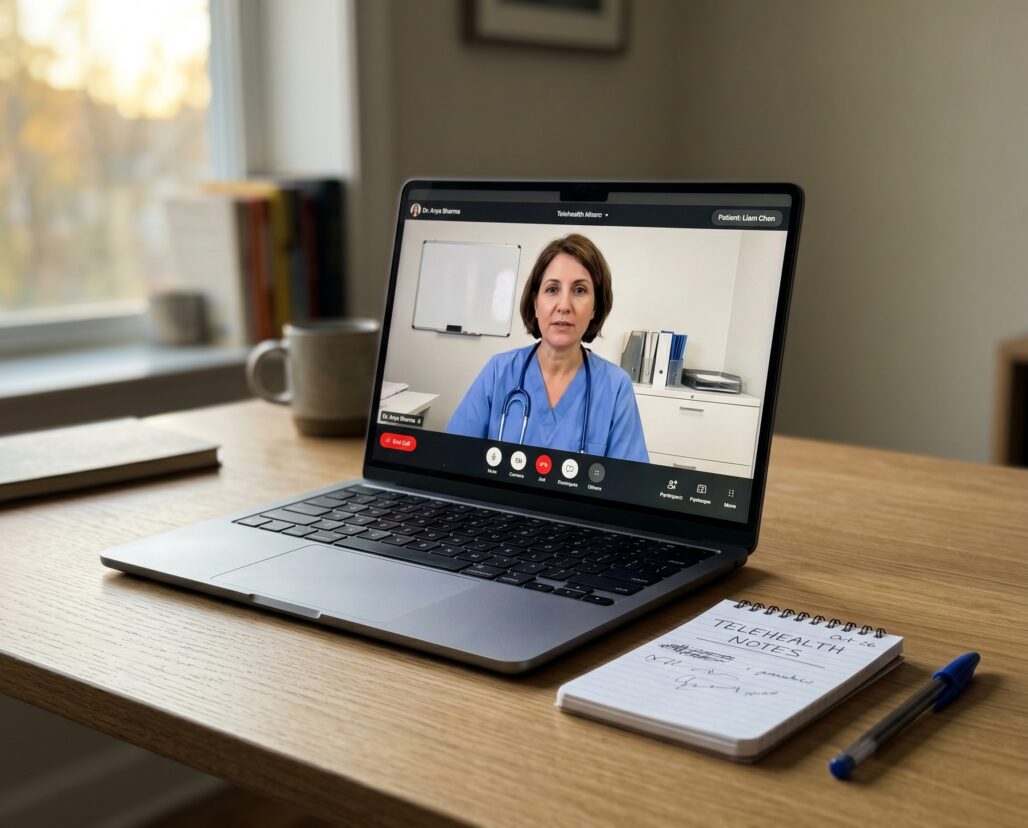
The short answer: Found is a legitimate, licensed telehealth platform with real clinicians and a genuinely wide formulary. It earns its place for people whose insurance covers branded GLP-1s, or who want a single platform handling insurance prior authorization on their behalf. It is less compelling for self-pay patients who could find compounded semaglutide more cheaply elsewhere, and the opaque total-cost structure is a recurring frustration.
Best for: People with in-network insurance coverage for Wegovy, Ozempic, or Zepbound who want clinician-managed prior authorization handled for them.
Not ideal for: Self-pay patients price-shopping compounded semaglutide, or anyone who wants crystal-clear upfront cost visibility.
What to look for: Total monthly cost including membership plus medication, not just the membership fee. The two numbers are separate.
Decision shortcut: If your insurer covers branded GLP-1s and you do not want to manage the prior-auth process yourself, Found is worth a full intake assessment. If you are paying out-of-pocket, compare the all-in number against what compounded GLP-1 programs cost elsewhere before you sign up.
How Found's Business Model Works
Found launched in 2019 as a weight-care platform aiming to close the gap between obesity medicine and primary care. The company has grown to more than 300,000 members and holds B Corp certification — a third-party audit of social and environmental practices — which signals an organizational posture somewhat different from the venture-funded sprint-to-revenue model common in direct-to-consumer health.
The platform runs on a two-layer billing structure. Layer one is the membership, covering access to the app, your clinician relationship, coaching, and community tools. Layer two is the medication, billed separately through your insurance or out-of-pocket. This separation is important to understand before enrolling, because the membership fee alone will never tell you what you will spend each month.
Found partners with major insurers including Blue Cross Blue Shield, UnitedHealthcare, Aetna, Cigna, and Anthem across most U.S. states. When insurance covers your medication, the membership cost drops significantly — some in-network members pay as little as $39 per month for the platform itself, with medication at their plan's formulary rate. For self-pay members, the math is less favorable.
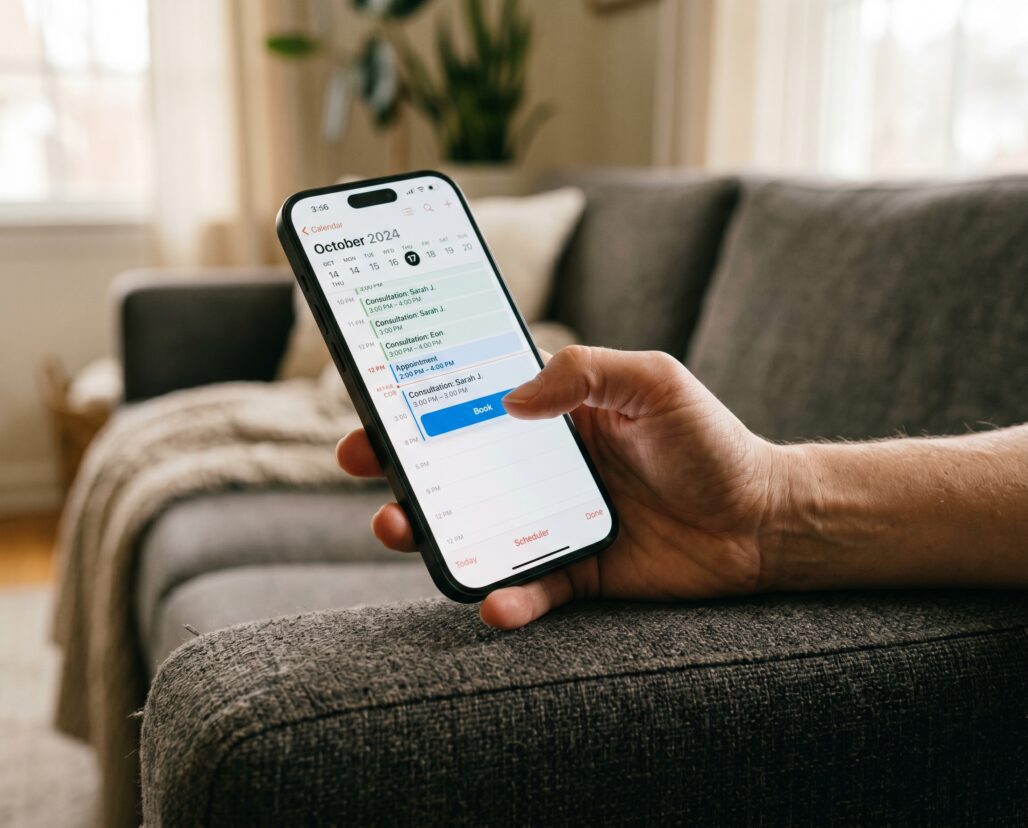
The workflow runs in a predictable sequence: an initial health assessment covering BMI, comorbidities, medications, and lifestyle factors; clinician review within about 72 hours; a lab work order if a GLP-1 is being considered; insurance prior authorization if applicable; then medication shipped to your home. Monthly check-ins follow, supported by in-app tools and a peer community.
What Found Actually Prescribes
Found's formulary is wider than most GLP-1 telehealth competitors. The injectable branded options include Ozempic, Wegovy, Zepbound, Mounjaro, Saxenda, and Victoza. Oral options include Rybelsus. Non-GLP-1 alternatives on the list include metformin, topiramate, bupropion-naltrexone, and zonisamide. The platform states clinicians can select from more than ten medications and combine them in over sixty possible treatment configurations, which gives more flexibility than a platform offering semaglutide only.
Compounded versions of semaglutide, tirzepatide, and liraglutide are also available through Found, at prices significantly below branded equivalents. This is where the regulatory context becomes load-bearing.
All GLP-1 medications — whether branded or compounded — are prescription drugs. A clinician must evaluate your medical history, current medications, and health conditions before prescribing one. Found uses licensed physicians affiliated with the platform to perform this evaluation. The telehealth format is legal and common; the clinical standard of care requirement does not change because the visit happens on a screen.
Compounded vs. Branded: The Distinction That Matters Now
Compounded semaglutide and branded semaglutide (Ozempic, Wegovy) contain the same active ingredient but are not the same product. FDA-approved branded versions have undergone the agency's full review for safety, efficacy, and manufacturing quality. Compounded versions are mixed by licensed compounding pharmacies using active ingredients from FDA-registered suppliers, but the final product itself is not FDA-approved. Found's own disclosure on its compounded medication pages states this directly: "Compounded medications are not FDA-approved or evaluated for safety or efficacy."
For roughly two years, compounded semaglutide occupied a legal grey zone that became a clear permission zone. When Wegovy and Ozempic faced supply shortages, the FDA added semaglutide to its drug shortage list, which allowed licensed compounding pharmacies to legally produce copies. Demand exploded. Many telehealth platforms, Found included, built compounded semaglutide into their offerings during that window.
The FDA declared the semaglutide shortage resolved and removed it from the shortage list. Once a drug is off the shortage list, the legal basis for compounding copies of it narrows sharply. The FDA issued enforcement discretion periods — 60 days for 503A pharmacies, 90 days for outsourcing facilities — to allow an orderly wind-down. After those windows closed, large-scale compounding of semaglutide copies became legally untenable for most operations.
The FDA subsequently sent warning letters to more than 30 telehealth companies that continued making false or misleading claims about compounded GLP-1 products after the shortage resolution. Found was not named in that specific press release, but the regulatory environment it is operating in is worth understanding before you assume compounded options will be available to you when you enroll.
If you enroll expecting compounded semaglutide and your state or the current regulatory posture makes that unavailable, your clinician will need to redirect you to a branded option — which changes the cost picture substantially.
Pricing: What You Actually Pay
Found's pricing has multiple moving parts, and the membership fee is only one of them.
Membership tiers (self-pay):
- Monthly plan: approximately $129 per month
- Quarterly plan: approximately $116 per month ($78 annualized savings)
- Annual plan: approximately $99 per month ($180 annualized savings)
- Insurance in-network plan: approximately $39 per month or $199 per year
A higher-tier option at approximately $199 per month adds video consultations with clinicians, which is relevant for people who want synchronous appointments rather than asynchronous messaging.
Medication costs (separate from membership):
- Compounded semaglutide (where available): approximately $189 per month
- Branded injectable GLP-1s (self-pay, no insurance): $349 to $1,100+ per month depending on the drug
- Branded options with insurance: copay only, which varies widely by plan
Lab work, when ordered, is an additional cost billed separately through your insurer or out-of-pocket. This is not disclosed prominently during signup, and it is one of the most consistent complaints in customer feedback.
For an insured member whose plan covers Wegovy or Ozempic, Found can be a strong value: a low monthly membership fee, clinician-managed prior authorization, and medication at formulary cost. For a self-pay member on compounded semaglutide (where still available), the all-in cost lands around $318 to $378 per month depending on membership tier — which is competitive but not the lowest available. For a self-pay member needing branded GLP-1s, the cost can exceed $1,200 per month when medication is included, which is a different conversation entirely.
There is also a cancellation fee. If you cancel before completing a six-month commitment, Found charges $99. No trial period or money-back guarantee is offered. The 72-hour notice requirement for cancellation is another operational friction point worth knowing in advance.
The Post-Shortage-List Reality for Members
The period after the FDA removed semaglutide from the shortage list created a specific squeeze for people who had enrolled at Found (or any similar platform) specifically for compounded semaglutide. Members who had stabilized on compounded versions were notified they would need to transition to branded alternatives — at significantly higher cost — or adjust their treatment plan.
This is not Found's fault in the strict legal sense. The FDA's decision drove the change. But how platforms communicated the shift varied, and Found received some customer complaints related to abruptness and lack of clear options when compounded availability changed. The Trustpilot score of 3.8 out of 5 (across roughly 280 reviews as of the most recent available data) and the BBB B- rating reflect a service that works well for many members but has friction points in communication and cost transparency that surface under these kinds of transitions.
The practical takeaway: if compounded semaglutide availability is central to your budget plan, ask Found's intake team explicitly about current availability in your state before completing enrollment. Do not assume it will be available at the price shown in general marketing.
Customer Review Patterns: What People Say
Looking across Trustpilot, BBB, and independent review sources, the customer feedback on Found splits along a clear axis.
Positive reviews cluster around several themes. Members appreciate the speed of the initial assessment process — most describe getting a clinician response within 24 to 72 hours, which is faster than scheduling with a primary care physician in many markets. The app's tracking tools and the peer community receive consistent praise. Members who got insurance prior authorizations approved report a smooth experience with Found handling the administrative burden.
Negative reviews cluster around different themes. The most common complaint is the $99 cancellation fee that catches members off guard, particularly those who enrolled without fully understanding the six-month commitment structure. Surprise lab fees appear frequently. Communication issues surface specifically during transitions — when a medication becomes unavailable, when insurance authorization gets denied, or when switching clinicians, members describe difficulty getting timely, direct answers.
The coaching model is another source of mixed feedback. Month one includes a dedicated coach for one-on-one messaging. After that, messages go to whichever coach is available in the rotation. For members who value continuity of relationship, this can feel like a downgrade after the first 30 days.
Where the Found Model Earns — and Where It Doesn't
Found earns its membership fee most clearly in the insurance management scenario. Navigating prior authorization for a branded GLP-1 is genuinely time-consuming and frustrating when done solo. Found's clinical team handles the submission process, follows up on denials, and can pivot to alternatives if a preferred drug gets rejected. For an insured member, that administrative offload has real value.
The wide formulary is also a genuine differentiator. Most GLP-1 telehealth platforms are effectively single-medication services. Found's clinicians can adjust between GLP-1 classes, add non-GLP-1 metabolic drugs, or try oral options like Rybelsus if injectables do not suit the patient. That flexibility makes Found more useful for people whose first-line prescription does not work or causes side effects.
Where it earns: insurance-navigated prior authorization, wide formulary with combination options, established clinical infrastructure.
Where the model shows strain is in cost transparency. The membership-plus-medication billing structure is not dishonest, but it is easy to misread. Someone who signs up at $99 per month and then receives a $189 compounded medication bill plus a lab work invoice on top of it did not do anything wrong — they just did not add the columns. Better upfront disclosure of total cost ranges would improve the member experience significantly.
Where it falls short: cost transparency before enrollment, communication during medication transitions, coaching continuity after month one.
Red flag to check: Ask specifically whether compounded semaglutide is currently available in your state before you enroll. The regulatory situation post-shortage-list removal means this can change without much notice.
Worth knowing: If you are pregnant or become pregnant while on any GLP-1 program, you must discontinue the medication immediately and contact your clinician. GLP-1 receptor agonists are contraindicated in pregnancy. This applies to all platforms, including Found.
Frequently Asked Questions
Is Found legitimate? Yes. Found is a licensed telehealth platform with clinicians who hold state-level prescribing authority. It is not a supplement reseller or an overseas pharmacy. The medications it prescribes require a licensed physician evaluation, which the platform provides.
Does Found prescribe compounded semaglutide? It has offered compounded semaglutide, tirzepatide, and liraglutide. Current availability depends on state regulations and the post-shortage-list regulatory enforcement environment. Confirm availability before enrolling if this is a deciding factor.
What does Found cost per month, total? For self-pay members on compounded semaglutide, expect approximately $280 to $380 per month all-in (membership plus medication). For insured members with formulary coverage, the membership portion is as low as $39 per month and medication is covered at your plan's copay rate. Branded GLP-1s without insurance add $349 to $1,100+ on top of membership.
How is Found different from Ro or Hims/Hers? All three are telehealth platforms prescribing GLP-1s. Found's primary differentiation is the wider formulary (10+ medications vs. typically one or two), the insurance partnership network, and the behavioral coaching component. See our Ro GLP-1 review and Hims/Hers GLP-1 review for direct comparisons.
The Bottom Line on Found
Found is a more complete weight-care platform than most of its GLP-1 telehealth competitors. The wide formulary, insurance partnership infrastructure, and behavioral coaching layer give it genuine advantages over single-medication services. The appeal is strongest for insured patients whose plans cover branded GLP-1s and who want the prior-authorization process handled for them.
The compounded semaglutide story is more complicated now than Found's marketing materials always acknowledge. The FDA's removal of semaglutide from the shortage list in late 2024 changed the legal basis for compounding copies of branded drugs, and enforcement has followed. Self-pay patients whose budget depended on compounded pricing need to verify current availability in their state rather than assume it.
The cost transparency issue is real but solvable: go into the intake process knowing that membership and medication are billed separately, that lab work is an additional line item, and that a six-month cancellation-fee commitment applies. With that understanding in place, you are evaluating Found accurately rather than discovering the full picture after you've enrolled.
For a grounding in how semaglutide works before you consider any platform, see our complete semaglutide guide. For a full breakdown of GLP-1 cost structures and what insurance actually covers, the peptide cost and insurance guide has the framework you need.
This article is for informational purposes and not medical advice. Peptides, especially those marketed for therapeutic use, can interact with medications and health conditions. Consult a licensed physician before starting any supplement, particularly if you are pregnant, nursing, taking prescription medications, or managing a chronic condition.
