
Affiliate disclosure: this article contains affiliate links. As an Amazon Associate, UsefulVitamins.com earns from qualifying purchases at no extra cost to you.
Before you buy
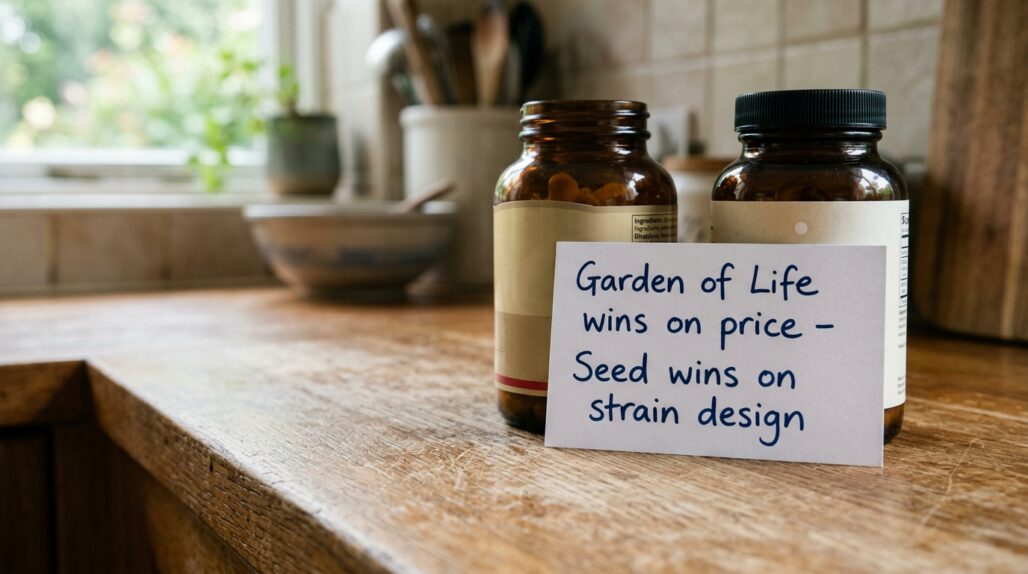
This is a price-versus-design decision, not a good-versus-bad one. Both products are legitimate, well-made probiotics from companies that take quality seriously. The question is whether Seed's roughly $50 a month buys you enough extra to justify costing more than double a strong drugstore-grade option.
The honest framing: a daily probiotic is maintenance, not medicine. The NIH Office of Dietary Supplements is clear that probiotic effects are strain-specific and that more strains or higher CFU counts do not automatically mean a better result for you. So the marketing math ("24 strains beats 16 strains") is not how this actually works.
Most people reading this want one capsule a day for general gut comfort. If that is you, buy the Garden of Life Once Daily and stop reading the upsells. The rest of this article is for the smaller group deciding whether Seed's specific design is worth the spend, plus anyone who wants the numbers laid out side by side.
One caveat before you start either: if you are pregnant, immunocompromised, or managing a GI condition, talk to your doctor first. A supplement label is not medical advice.
What each one actually is
Garden of Life's relevant line is the Dr. Formulated Probiotics Once Daily family – the Women's, Men's, and general adult versions you see on Amazon and in grocery aisles. The Women's formula lists 50 billion CFU and 16 strains; the Men's lists 50 billion CFU and 15 strains. Both are shelf-stable capsules with a small amount of organic prebiotic fiber, per the Garden of Life Dr. Formulated product information.
Worth knowing: Garden of Life also sells refrigerated RAW Probiotics with much higher CFU counts. Those are a different product. For an apples-to-apples fight with Seed, the shelf-stable Once Daily is the right comparison, since Seed is also shelf-stable.
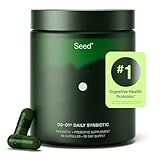
Seed's DS-01 Daily Synbiotic is a two-part product: a probiotic plus a prebiotic, which is what "synbiotic" means. It carries 24 strains and around 53.6 billion AFU (Seed reports active fluorescent units rather than CFU; some materials cite about 56 billion, so treat the figure as approximate).
The standout engineering is the capsule-in-capsule design. An outer prebiotic capsule is meant to protect the inner probiotic capsule through stomach acid so more of it reaches the colon. Seed's prebiotic is a pomegranate-derived punicalagin compound, not the inulin or fiber you see in cheaper products.
Strains, CFU, and prebiotic design compared
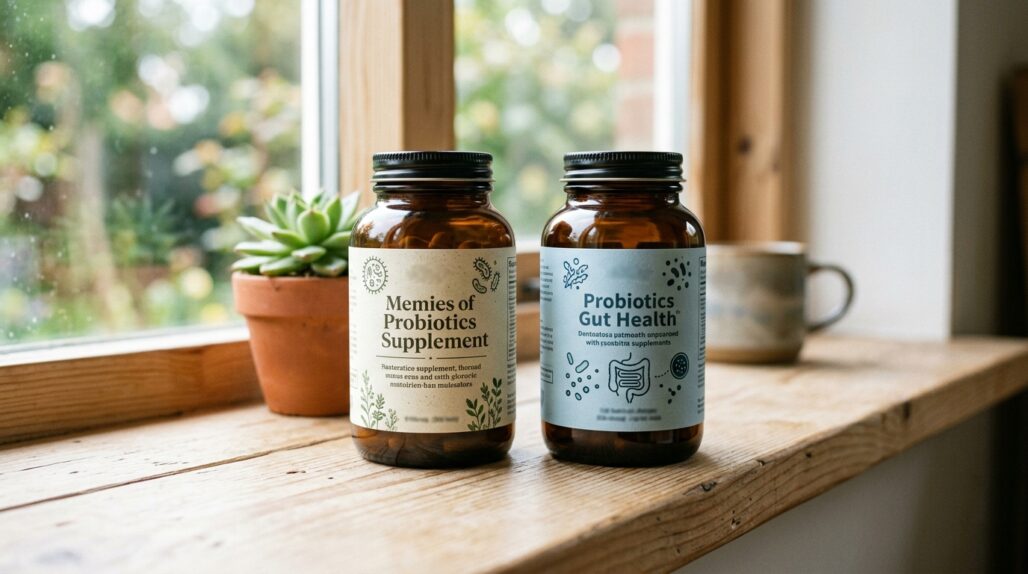
Here is the practical difference. Garden of Life leans on familiar, broad Lactobacillus and Bifidobacterium species at a high total count. Seed leans on a longer list of individually named, study-matched strains grouped into digestive, skin, heart, and micronutrient blends.
That naming matters more than the headline numbers. The NIH notes that benefits attach to specific strains studied at specific doses, not to a genus or a total CFU. Seed's pitch is that its exact strains were chosen from dose-matched trials. Garden of Life names its species but is less granular about which exact strains were clinically tested.
On the prebiotic, Seed's outer-capsule punicalagin system is genuinely more sophisticated than Garden of Life's added fiber. Whether that translates to a result you would feel is the open question – delivery technology is easier to demonstrate in a lab than in your gut.
| Dimension | Garden of Life Once Daily | Seed DS-01 |
|---|---|---|
| Live count | 50 billion CFU | Around 53.6 billion AFU |
| Number of strains | 15 to 16, depending on formula | 24 |
| Strain naming | Species named; some clinically studied | Individual strains named and study-matched |
| Prebiotic | Small dose of organic prebiotic fiber | Pomegranate punicalagin in outer capsule |
| Delivery | Single vegetarian capsule | Capsule-in-capsule, timed for the colon |
| Storage | Shelf-stable, no fridge | Shelf-stable, no fridge |
| How to buy | Amazon and grocery, one-time | Mostly subscription via Seed |
| Cost per month | Around $30 to $40 | Around $49.99 |
Third-party testing and storage
Both lines clear a reasonable quality bar, with one edge to Garden of Life on transparency.
Garden of Life is a B Corp and its Dr. Formulated line is Non-GMO Project Verified and NSF Certified Gluten Free, per its certifications page. Some Dr. Formulated SKUs also carry NSF Contents Tested and Certified, which means an outside lab confirmed the label matches what is in the bottle – a meaningful, named seal. NSF's database lists that contents seal for the 40 billion CFU Women's Once Daily rather than the 50 billion versions, so confirm the exact seal on the bottle you buy.
Seed says it does third-party testing for allergens, heavy metals, pesticides, and contaminants. The catch, as Healthline's review notes, is that Seed does not publicly name the testing lab. The testing sounds rigorous; it is just less independently checkable than a third-party seal.
On storage, it is a wash. Both are shelf-stable and need no refrigeration, which makes either fine for travel or a bathroom cabinet. If shelf-stability were the deciding factor, neither wins.
What the evidence actually supports
Seed has invested more in published research on its own formula. A randomized controlled trial reported in early 2026 supported DS-01 for digestive and quality-of-life measures, and Seed cites several trials on its strains. That is more brand-specific evidence than Garden of Life publishes for its exact Once Daily blend.
Read that carefully, though. Studies on a healthy population showing modest digestive and quality-of-life shifts are a reasonable reason to prefer Seed's design – they are not proof you will feel a difference, and they are not a treatment claim for any condition.
For most healthy adults, the realistic outcome from either product is the same: maybe somewhat less bloating and more regular digestion, maybe nothing dramatic. Probiotics help some people noticeably and others not at all, and that is true regardless of which bottle you buy.
Cost per month – the gap that decides it
This is where the decision usually lands. Garden of Life Once Daily runs around $30 to $40 for a 30-day bottle (we have seen it as low as the high $20s on sale), so roughly $1 to $1.30 a day. As of writing – check the current Amazon price, which moves.
Seed DS-01 is around $49.99 a month on subscription, or about $1.67 a day, with a small saving on the quarterly plan. Historically Seed was subscription-only, though an Amazon listing now exists; verify current options and price before buying.
So you are paying roughly $10 to $20 more each month for Seed's extra strains, its punicalagin prebiotic, and its delivery capsule. Over a year that is well over $100 in difference. That premium only makes sense if Seed's specific design is the reason you are buying – not because you assume pricier means it works better.
If price is the main lever and you want the cheapest credible daily option, you can also compare broader multi-strain capsules. Our roundup-style look at value picks like the Physician's Choice probiotic covers options that undercut both brands.
Who should buy which
Buy Garden of Life Once Daily if you want a dependable, third-party-tested, shelf-stable daily probiotic at a fair price and you are not chasing a specific strain. That is most people. The Women's version also adds strains aimed at vaginal and pH support if that is relevant to you.
Buy Seed DS-01 if you specifically want its 24 named, study-matched strains, its pomegranate prebiotic, and its colon-targeted delivery, and the extra cost does not bother you. It is a genuinely well-designed product – just a premium one.
If you are weighing Seed against other premium synbiotics rather than against a value pick, two head-to-heads are more useful than this one: our Ritual Synbiotic+ vs Seed DS-01 breakdown, and our Just Thrive vs Seed DS-01 comparison for the spore-based angle.


As an Amazon Associate, UsefulVitamins.com earns from qualifying purchases at no extra cost to you.
UsefulVitamins is reader-supported. If you buy through links on this page we may earn a small commission, at no extra cost to you. It never changes our verdict.
FAQ
Is Seed DS-01 worth the extra money over Garden of Life? For most people, no. Garden of Life Once Daily delivers a comparable live count and shelf-stability for roughly a third less. Seed is worth it mainly if you specifically want its 24 named strains and capsule-in-capsule prebiotic design.
Does more strains or higher CFU mean a better probiotic? Not on its own. The NIH Office of Dietary Supplements stresses that probiotic effects are strain-specific, so 24 strains is not automatically better than 16 for your goal.
Do either of these need to be refrigerated? No. Both Garden of Life Once Daily and Seed DS-01 are shelf-stable and need no refrigeration, which makes either easy to travel with.
Can I buy Seed DS-01 without a subscription? It has historically been subscription-first through Seed, though an Amazon listing now exists. Check current buying options and price before you commit, since both move.
Which is better for everyday gut health? For routine daily support, the difference in real-world results is likely small. The cheaper Garden of Life is the sensible default; Seed is the choice if you want its specific design and will pay for it.
Should I take a probiotic at all? If you have a specific GI concern, talk to your doctor about whether a probiotic helps and which strain. As a general daily supplement, results vary widely from person to person.
The verdict
This comparison comes down to one number: the price gap. Garden of Life Dr. Formulated Once Daily is the better buy for most people, giving you 50 billion CFU, 15 to 16 strains, transparent third-party certifications, and shelf-stability for around $30 to $40 a month.
Seed DS-01 earns its premium only for a specific buyer – someone who wants its 24 named, study-matched strains, its pomegranate prebiotic, and its colon-targeted capsule, and who is fine paying around $50 a month for that design. It is a strong product; it is just priced for people who value the engineering, not for people who only want a daily capsule.
Your next step: if you want value, add the Garden of Life Once Daily to your cart and check today's price. If you want Seed's specific design, confirm the current subscription terms first. And if you are still torn between premium synbiotics, read our prebiotics vs probiotics vs synbiotics explainer so you know what you are actually paying for.
This article is for general information only and is not medical advice. Supplements are not intended to diagnose, treat, cure, or prevent any disease. Talk to a healthcare professional before starting a probiotic, especially if you are pregnant, immunocompromised, or managing a medical condition.
Reviewed by the UsefulVitamins Editorial Team.
