
Affiliate disclosure: this article contains affiliate links. As an Amazon Associate, UsefulVitamins.com earns from qualifying purchases at no extra cost to you.
Before you buy
This comparison gets framed online as a fight, but it is really a fork in the road. Just Thrive and Seed DS-01 are different categories of probiotic, and the right answer depends on what you are trying to do.
Just Thrive is a spore-based probiotic – four strains of Bacillus bacteria that arrive as dormant spores and wake up in your gut. Seed DS-01 is a synbiotic – 24 strains of more familiar bacteria plus a plant prebiotic, packaged in a two-part capsule. One is built for ruggedness; the other for breadth.
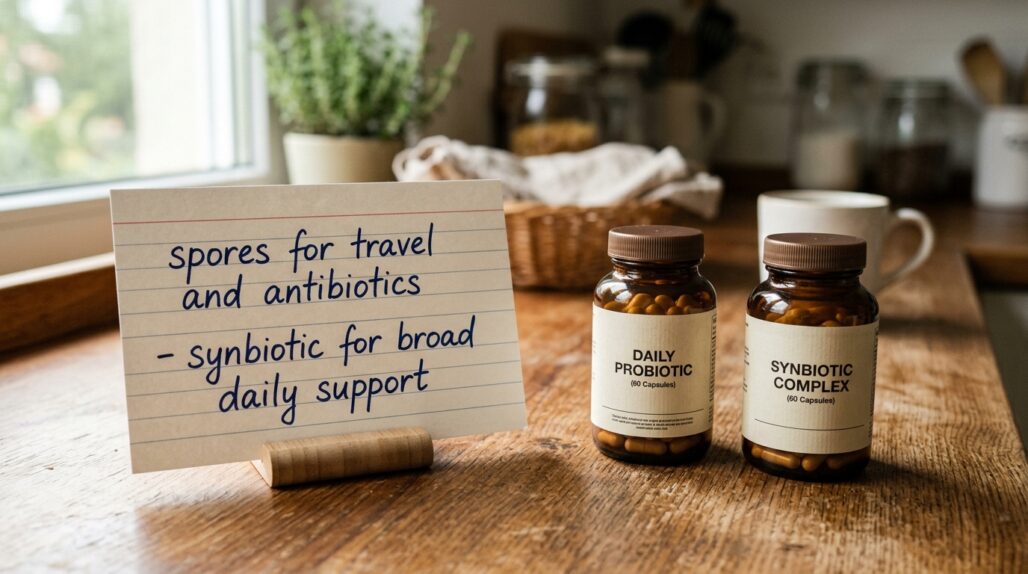
So the real decision is about your situation. Are you the person leaving a bottle in a hot car, flying constantly, or starting a course of antibiotics? Lean spore. Are you the person who wants a single daily product that covers digestion, regularity, and a bit of skin support, and you do not mind paying for it? Lean synbiotic.
And there is a third honest answer that neither brand wants on the page: most healthy people with no specific gut complaint do not need a $50 probiotic at all. We will get to who that is.
What each one actually is
The category difference drives everything else, so start here.
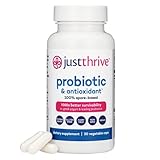
Just Thrive Probiotic & Antioxidant delivers about 3 billion CFU from four Bacillus spore strains: Bacillus subtilis HU58, Bacillus indicus HU36, Bacillus coagulans SC-208, and Bacillus clausii SC-109. It is one capsule a day. Per the Just Thrive product page, the B. indicus HU36 strain also produces carotenoid antioxidants in the gut, which is where the "& Antioxidant" name comes from.
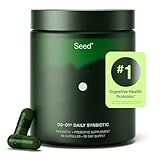
Seed DS-01 Daily Synbiotic is a different animal. It packs 24 strains totaling 53.6 billion AFU (active fluorescent units, Seed's preferred count) plus a 400 mg pomegranate-derived prebiotic, taken as two capsules a day. The Seed DS-01 page groups its strains into four blends aimed at digestion, the gut barrier, skin, and micronutrient activity.
A note on the numbers: CFU and AFU are not directly comparable. AFU counts live, active cells by a flow-cytometry method; CFU counts colonies that grow on a plate. Do not read "53.6 billion vs 3 billion" as "Seed is 18x stronger." Spore counts and vegetative-cell counts measure different things, and higher is not automatically better.
Strains, CFU, and prebiotic design
Here is the head-to-head on what is inside and how it is built.
| Dimension | Just Thrive | Seed DS-01 |
|---|---|---|
| Type | Spore-based probiotic | Synbiotic (probiotic + prebiotic) |
| Strains | 4 Bacillus strains | 24 strains |
| Potency | ~3 billion CFU | 53.6 billion AFU |
| Prebiotic | None | 400 mg pomegranate polyphenols |
| Daily dose | 1 capsule | 2 capsules |
| Delivery | Spore shell survives acid | ViaCap capsule-in-capsule |
| Storage | Shelf-stable, no fridge | Shelf-stable, no fridge |
| Price/month | Around $50 | Around $50 |
Just Thrive's edge is the spore shell itself. Bacillus strains arrive dormant and protected by a tough coat, then germinate in the intestine. Independent work supports this in principle – a randomized human study on Bacillus subtilis DE111 found the spores reached and germinated in the small intestine, and a broader review of Bacillus probiotics describes that gastric survivability as a real, repeatable property. The "1000x survivability" marketing is a brand claim, but the underlying biology is legitimate.
Seed's edge is the prebiotic and the whole-formula testing. The pomegranate polyphenols (Seed brands them as Microbiota-Accessible Polyphenolic Precursors) feed bacteria rather than fermenting in the upper gut, which is part of why Seed markets it as gentle. The ViaCap design nests the probiotic capsule inside a prebiotic outer capsule to protect strains through stomach acid.
The strain-specificity caveat applies to both. The NIH Office of Dietary Supplements is blunt that probiotic effects are strain-specific and that a label claim is not proof of benefit. Seed cites a stack of studies on its individual strains and some whole-formula trials; Just Thrive leans on the spore-survivability data and strain pedigree. Neither has the kind of evidence that lets you promise a specific outcome. If you want the deeper background on how these pieces fit together, our explainer on prebiotics, probiotics, and synbiotics walks through the categories.
Shelf-stability, travel, and the antibiotics question
This is where one common assumption is just wrong.
Both products are shelf-stable and need no refrigeration. Seed is explicit that DS-01 is shelf-stable, and Just Thrive is too. So "no fridge needed" is not a reason to pick Just Thrive over Seed – that is true of both.
Where Just Thrive genuinely pulls ahead is heat and abuse tolerance. Spores shrug off conditions that degrade ordinary probiotics. If your bottle lives in a glove box, a gym bag, or a checked suitcase across climates, the spore format is the safer bet. You can leave it in a hot car and not worry.
The antibiotics angle is the strongest practical case for spores. Because dormant spores are less affected by the harsh environment around an antibiotic course, a spore probiotic is a reasonable choice to take alongside antibiotics, spaced apart from the dose. That said, the most-studied product for antibiotic-associated digestive issues is actually the yeast Saccharomyces boulardii, not a Bacillus spore – so do not assume Just Thrive is the only or best tool there. Talk to whoever prescribed the antibiotic.
For everyday home use, neither has a storage advantage. The travel-and-antibiotics scenario is the honest reason to reach for Just Thrive.
Cost per month, and the value pick
Sticker prices are close. The gap is what you get for the money.
- Just Thrive: around $49.99 for 30 one-capsule servings, so roughly $1.67 a day as of writing; check current price.
- Seed DS-01: around $49.99 a month on subscription (it is subscription-first), often a bit less on a 3-month plan, at two capsules a day.
So they land near the same monthly cost, but the products differ. You are paying Seed for 24 strains plus a prebiotic and more whole-formula data; you are paying Just Thrive for a rugged, single-capsule spore design. Per Healthline's independent review, Seed is one of the pricier probiotics on the market, and Just Thrive sits in the same premium band.
Here is the part neither brand puts on the bottle. For a healthy adult with no specific complaint, a $15-25 multi-strain Amazon probiotic delivers the same "general daily support" claim for a third of the price. The premium for either of these is only worth it if you have a reason – the travel/antibiotics case for Just Thrive, or the broad-formula and skin/regularity data for Seed.

As an Amazon Associate, UsefulVitamins.com earns from qualifying purchases at no extra cost to you.
UsefulVitamins may earn a commission from qualifying purchases made through links on this page, at no extra cost to you. This never changes our verdict.
If you want to sanity-check the premium against a cheaper everyday option, our Physician's Choice probiotic review covers a popular budget multi-strain that handles basic daily support.
Who should buy which
Strip away the marketing and it comes down to a few clean rules.
- Buy Just Thrive if you travel often, leave supplements in hot places, are starting antibiotics, or specifically want the spore format and a once-daily single capsule.
- Buy Seed DS-01 if you want the widest strain count, a built-in prebiotic, and the brand with the most whole-formula human studies, and the higher price does not bother you.
- Buy neither if you are healthy, have no gut complaint, and just want "a probiotic" – a cheaper multi-strain capsule is the smarter spend.
If you are weighing Seed against other premium players, it shows up in several of our head-to-heads, including Ritual Synbiotic+ vs Seed DS-01 and Garden of Life vs Seed DS-01, which is useful if your real question is "is Seed worth it versus everything else."
And if the spore idea is what pulled you in, our standalone Just Thrive review digs further into the strains and the survivability claim on their own terms.

FAQ
Is Just Thrive or Seed DS-01 stronger? They are not measured the same way – Just Thrive lists about 3 billion CFU and Seed lists 53.6 billion AFU, which use different counting methods. Higher numbers do not automatically mean better results, and both are dosed within reasonable ranges for their strain types.
Does either one need refrigeration? No. Both Just Thrive and Seed DS-01 are shelf-stable and need no fridge, so storage is not a deciding factor between them. Just Thrive’s spores tolerate heat and rough handling better, which matters mainly for travel.
Which is better for taking with antibiotics? A spore probiotic like Just Thrive is a reasonable companion during a course because dormant spores are less affected by the surrounding environment. But the most-studied option for antibiotic-associated digestive upset is the yeast Saccharomyces boulardii, so ask your prescriber what fits.
Is the prebiotic in Seed worth the extra design? The pomegranate polyphenols feed bacteria rather than fermenting in the upper gut, which is part of why Seed is marketed as gentle. It is a genuine difference from Just Thrive, which has no prebiotic, though whether you notice it depends on your gut.
Are these third-party tested? Seed states DS-01 is tested for allergens, pesticides, and contaminants, though it does not always name the testing lab publicly. Confirm current testing and certification details on each brand’s official page before buying.
Can I just buy a cheaper probiotic instead? For general daily support with no specific complaint, yes – a $15-25 multi-strain capsule covers most people. The premium for Just Thrive or Seed is only worth it if you have a reason like travel, antibiotics, or wanting the broad synbiotic formula.
The verdict
This is a goal question, not a winner question. Just Thrive is the rugged, single-capsule spore product – the one to pack for travel, leave in the car, or take alongside antibiotics. Seed DS-01 is the broad 24-strain synbiotic with a prebiotic and the most whole-formula human data – the one to choose if you want comprehensive daily support and the price does not deter you.
Both cost around $50 a month as of writing, so the money is roughly a wash; buy the one whose design matches your situation. And be honest with yourself first – if you are healthy with no gut complaint, a cheaper multi-strain capsule is the smarter buy than either of these.
Next step: decide which scenario is you – travel and antibiotics, or broad daily support – then check the current price on the matching product before committing to a subscription.
This article is for general information and is not medical advice. Supplements are not a treatment for any condition. Talk to your doctor or pharmacist before starting a probiotic, especially if you are immunocompromised, pregnant, or taking other medications.
Reviewed by the UsefulVitamins Editorial Team.
