
If you're searching for Hydrant alternatives, here is the short version: you can match or beat Hydrant's electrolyte profile for $0.30–$0.60 per serving on Amazon, without locking into a subscription. Hydrant costs $2.50 per stick on subscription — $30 for a 12-pack — with 260 mg sodium, 200 mg potassium, 75 mg magnesium, and 4 g of cane sugar. That mid-tier electrolyte profile is not unique, and several Amazon alternatives match it at a fraction of the cost. This guide tells you which ones actually deliver, where each cuts a corner, and which three situations justify paying Hydrant's premium anyway.

Affiliate disclosure: this article contains affiliate links. As an Amazon Associate, UsefulVitamins.com earns from qualifying purchases at no extra cost to you.
Why people seek alternatives to Hydrant
Hydrant sells on a subscription that auto-ships every 30 days. At $30 per 12-pack — $2.50 per stick — a daily habit costs $75 per month. Cancel before the next billing cycle or you're charged for another shipment. There is no one-click cancel in the account portal; you email support. That friction is a documented pattern in r/HydroHomies, where the cancellation process generates as many complaints as the product itself.
Beyond cost and subscription mechanics, Hydrant's electrolyte ratios are middle-of-the-road. At 260 mg sodium per stick, it sits well below the 500+ mg range recommended for exercise-related sweat replacement. The 4 g of cane sugar is small but present — a detail that matters to anyone monitoring total sugar intake across a full day of hydration products. Neither the sodium dose nor the sugar level is a dealbreaker in isolation; together they mean Hydrant is optimized for mild daily hydration rather than high-sweat athletic use or strict low-sugar diets.
Finally, some users want a format that doesn't involve powder packets. Traveling with 30 sachets is a friction point. A liquid dropper that fits in a jacket pocket or a dissolvable tablet that takes up no bag space covers the same need with a different trade-off profile.
How we picked
We evaluated five Amazon electrolyte products against four criteria:
- Sodium dose and ratio — Does the product match, exceed, or fall short of Hydrant's 260 mg sodium? How does it ratio potassium and magnesium against sodium?
- Sugar load — Does the product add sugar? If so, is the dose comparable to or lower than Hydrant's 4 g?
- Plant-based sourcing — Does the product use plant-derived or synthetic mineral sources? Is it vegan-certified?
- Cost per serving — Calculated from the most common Amazon pack size at current pricing, including Subscribe & Save where applicable.
No product on this list is a perfect 1:1 Hydrant replacement. Each has a defined trade-off. We flag it plainly for each pick.
Comparison at a glance
| Product | $/serving | Sodium | Sugar | Plant-based | Format |
|---|---|---|---|---|---|
| Buoy Hydration Drops | $0.40 | ~100 mg (scalable) | 0 g | Yes | Liquid drops |
| Ultima Replenisher | $0.60 | 55 mg | 0 g | Yes | Stick powder |
| KEY Nutrients Electrolyte Powder | ~$0.55 | 340 mg | 0 g | Yes (vegan) | Bulk powder |
| Liquid IV Hydration Multiplier | ~$0.81 (S&S) | 510 mg | 11 g | No | Stick powder |
| Nuun Sport Tablets | $0.30 | 300 mg | 1 g | Yes | Tablet |
Hydrant reference: $2.50/stick, 260 mg sodium, 4 g sugar, plant-based. Prices based on April 2026 Amazon listings. Subscribe & Save (S&S) rates noted where applied.
The picks
Top Pick: Buoy Hydration Drops

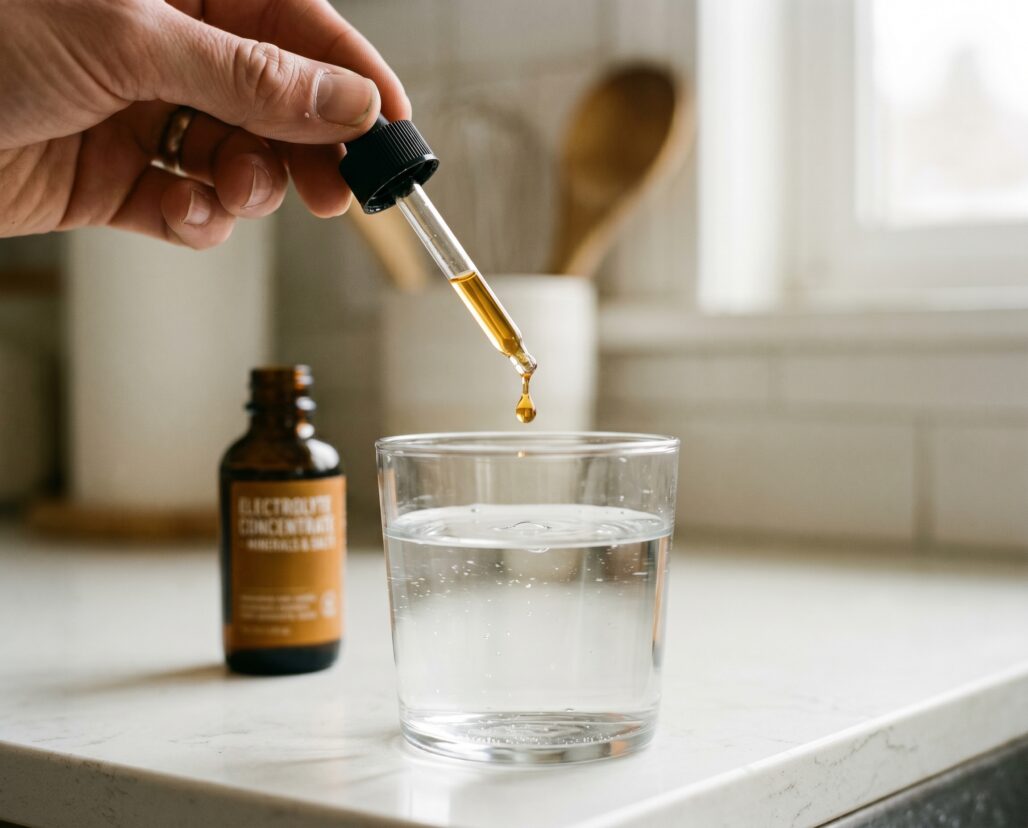
Buoy solves the format problem that stick packets don't. It's a liquid electrolyte concentrate in a small dropper bottle — add it to any beverage, coffee included, without changing taste. At $0.40 per serving it costs 84% less than Hydrant on a per-use basis, and the subscription is a standard Amazon auto-delivery you can pause or cancel in two clicks with no email required.
The electrolyte profile uses plant-based mineral sources and carries no sugar. Sodium comes in around 100 mg per standard serving, which is lower than Hydrant's 260 mg — but Buoy is designed to be dosed to preference. Two squeezes instead of one puts you at roughly Hydrant's sodium range without committing to a fixed dose. That flexibility is genuinely useful for people whose hydration needs shift day to day.
Form detail: Minerals are in ionic form from plant-derived sea minerals, which have absorption kinetics comparable to synthetic electrolyte salts in most published studies. No artificial colors, no artificial flavors.
The trade-off: Buoy's sodium ceiling depends on how many squeezes you add, which introduces dosing variability. If you want a guaranteed 260 mg sodium per use with no measuring, a fixed-dose stick format gives you more certainty. Buoy also has no potassium or magnesium listed on the main label variant — verify the current SKU before purchasing if those minerals matter to your protocol.
Skip if: You need a precise, fixed electrolyte dose per serving for athletic recovery. Go with Nuun Sport instead.
Actionable takeaway: Buoy is the right call when format convenience and zero-sugar plant-based sourcing matter more than a fixed sodium target. The 84% per-serving cost reduction versus Hydrant is the clearest math on this list.
Budget Pick: Ultima Replenisher Electrolyte Powder
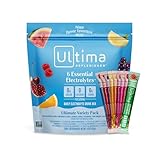
Ultima Replenisher covers the core electrolyte panel — sodium, potassium, magnesium, calcium, chloride, phosphorus — in a stick format with zero sugar and plant-derived coloring. At $0.60 per serving it costs 76% less than Hydrant. The variety pack format lets you sample flavors before committing to a bulk size, which is a sensible way to evaluate taste before locking in.
The sodium dose at 55 mg per serving is well below Hydrant's 260 mg. Ultima is designed for mild daily hydration and general wellness rather than sweat replacement. If you're using electrolytes primarily to improve morning hydration or support daily water intake, the lower sodium dose is not a problem. If you're replacing fluids lost through heavy exercise, 55 mg sodium will not cover it.
Form detail: Sweetened with stevia (plant-derived), no artificial sweeteners. No sugar of any kind — a meaningful distinction for anyone tracking total daily sugar across multiple products.
The trade-off: Low sodium is a design choice, not a deficiency. Ultima is built for everyday hydration, not athletic electrolyte replacement. The potassium and magnesium doses are competitive with Hydrant; the sodium gap is the only meaningful structural difference.
Skip if: You sweat heavily during workouts or are replacing electrolytes after exercise. The 55 mg sodium dose will not cover exercise-grade fluid loss. Use Nuun Sport instead.
Actionable takeaway: Ultima at $0.60 versus Hydrant at $2.50 is a 4x price reduction for a zero-sugar, plant-derived daily hydration stick that covers the same functional use case Hydrant targets. The sodium trade-off is real but irrelevant for non-athletic use.
Best for Plant-Based: KEY Nutrients Electrolyte Powder

KEY Nutrients is the closest sodium match to Hydrant on this list at 340 mg per serving — 80 mg above Hydrant's 260 mg, which keeps it in the same general range without crossing into high-sodium territory. The formula is vegan-certified, uses no artificial colors, and carries zero sugar. It's sold in bulk powder format, which brings the per-serving cost down significantly versus stick packs.
The full electrolyte panel — sodium, potassium, magnesium, calcium, chloride — is comparable to Hydrant in breadth. The absence of sugar is a direct improvement over Hydrant's 4 g cane sugar for anyone on a low-sugar diet.
Form detail: Sweetened with stevia. Available in multiple flavors. Bulk format requires a scoop and mixing, which adds one step versus a stick packet — relevant if portability matters.
The trade-off: Bulk powder format is not pocket-portable. If you're adding electrolytes during a commute or travel, a stick or tablet format wins on convenience. KEY Nutrients works best as a home or gym base product.
Skip if: Portability is the primary reason you're looking at electrolyte products. Use Buoy drops or Nuun tablets for on-the-go use.
Actionable takeaway: KEY Nutrients is the strongest plant-based, zero-sugar match to Hydrant's electrolyte profile at a fraction of the cost. For anyone specifically seeking a vegan, no-artificial-colors alternative, this is the clearest direct substitute.
Best Sodium-Match: Liquid IV Hydration Multiplier

Liquid IV's Hydration Multiplier delivers 510 mg sodium per stick — nearly double Hydrant's 260 mg — and uses Cellular Transport Technology (CTT), which leverages the glucose-sodium cotransporter mechanism to increase fluid absorption rate. This is the product to pick if your use case is exercise recovery, travel dehydration, or heat exposure. The science behind sodium-glucose cotransport is established; the CTT branding is Liquid IV's name for a mechanism that has been used in oral rehydration solutions for decades.
At $13 for a 16-stick pack on Subscribe & Save, the per-stick cost lands at $0.81 — still 68% less than Hydrant's $2.50. Like any S&S subscription it can be paused or canceled through your Amazon account without an email process.
Form detail: Contains 11 g of sugar per stick — nearly three times Hydrant's 4 g. The glucose serves a functional role (cotransport), not just a flavoring role. If you are monitoring sugar intake, the dose is not negligible.
The trade-off: Liquid IV is not plant-based. Sugar sourcing is conventional cane sugar. The sodium-glucose ratio is specifically engineered for rapid rehydration, which means it's over-engineered for mild daily hydration. Drinking Liquid IV as a routine daily beverage when you're not sweating heavily is like using a sports rehydration drip for morning coffee — functional but mismatched to the use case.
Skip if: You're looking for a low-sugar daily hydration product. Liquid IV's 11 g sugar is a hard no for that use case. Go with Ultima Replenisher or KEY Nutrients instead.
Actionable takeaway: Liquid IV is the right call specifically when rapid, high-sodium rehydration is the goal — post-workout, post-flight, or after illness. For everything else, it's overkill on sodium and sugar.
Best for Athletes: Nuun Sport Electrolyte Tablets

Nuun Sport delivers 300 mg sodium per tablet, slightly above Hydrant's 260 mg, at $0.30 per serving — the lowest price on this list. Drop one tablet into 16 oz of water, wait 30 seconds for it to dissolve, done. The tablet format is the most portable option here: a tube of 10 tablets fits in a jersey pocket, a gym bag zipper, or a travel toiletry pouch without the bulk of stick packets.
The formula carries only 1 g of sugar per tablet — 75% less than Hydrant's 4 g. It is caffeinated variants are available (Nuun Sport Caffeine), but the standard variety pack is caffeine-free. Plant-based mineral sources, non-GMO certified.
Form detail: Nuun tablets include a small amount of dextrose (simple glucose) to drive the sodium cotransport mechanism — similar functional logic to Liquid IV but at a much lower sugar dose. The 1 g figure is not a rounding error; it is an intentional formulation choice.
The trade-off: Nuun requires water to dissolve — you can't stir it into a cold-press coffee without it fizzing, and it doesn't work as a concentrate. If your use case is adding electrolytes to an existing beverage (not water), Buoy drops are the better format choice.
Skip if: You want to add electrolytes to coffee, juice, or any non-water beverage. Use Buoy drops instead.
Actionable takeaway: Nuun Sport at $0.30 per serving versus Hydrant at $2.50 is an 88% per-serving cost reduction with a comparable sodium dose and 75% less sugar. For daily hydration and light-to-moderate athletic use, this is the strongest value play on the list.
How your body actually handles plant-based electrolyte sources
The "plant-based" label on an electrolyte product does not change the molecular identity of sodium chloride or potassium citrate — the electrolyte ion your intestine absorbs is chemically identical whether it came from sea minerals or a synthetic salt. What the sourcing claim primarily affects is the absence of synthetic additives and the presence (or absence) of trace mineral co-factors.
Absorption kinetics are driven primarily by the sodium-glucose cotransporter (SGLT1) in the small intestine. Products with a small amount of glucose alongside sodium — Liquid IV and Nuun both use this intentionally — absorb faster than plain sodium alone. For mild daily hydration, this difference is clinically insignificant. For rehydration after exercise or illness, the glucose-sodium pairing meaningfully speeds fluid uptake. Hydrant's 4 g sugar serves this function. Products with zero sugar (Ultima, KEY Nutrients, Buoy) do not leverage the cotransport mechanism but still hydrate effectively at non-athletic use intensities.
Sodium dose context: The American College of Sports Medicine recommends 500-700 mg of sodium per liter of fluid for exercise-related replacement. Hydrant's 260 mg per stick, mixed into 16 oz (roughly half a liter), delivers approximately 520 mg per liter — technically in range for light exercise. Nuun's 300 mg per 16 oz is comparable. Ultima's 55 mg per 16 oz is well below the exercise threshold and appropriate only for rest-state daily hydration.
Magnesium form matters. Hydrant lists 75 mg magnesium but does not specify the form on its consumer-facing label. Magnesium oxide has roughly 4% absorption efficiency; magnesium citrate and glycinate run 20-30%. If magnesium adequacy is a specific health goal, verify the form before assuming the labeled dose is the absorbed dose. KEY Nutrients uses magnesium malate, which is a bioavailable form — a meaningful formulation detail.
Potassium context: Hydrant's 200 mg potassium per stick is 4% of the daily adequate intake (4,700 mg). None of the products on this list provide meaningful daily potassium coverage on their own. If potassium adequacy is a concern, food sources (bananas, potatoes, avocado) deliver far more per dollar than any supplement format.
Who should stick with Hydrant anyway
Hydrant is not a bad product. It is a correctly formulated mid-tier electrolyte stick with a palatable taste profile and legitimate plant-based sourcing. Three specific situations argue for keeping it:
You travel constantly and need a known brand experience. Hydrant sticks are widely available in airport retail channels and hotel gyms. If you're in a context where you can't order from Amazon and need to buy off a shelf, Hydrant's retail presence is a practical consideration the Amazon alternatives can't match.
You've tried the alternatives and the taste friction is real. Ultima's stevia profile doesn't work for everyone. Nuun tablets have a mild effervescent quality some users dislike. Buoy drops are taste-neutral but require a separate beverage to add them to. If you've run through the alternatives and Hydrant is the one you'll actually drink daily, the per-serving premium has a pragmatic defense.
Your daily habit is already built around the subscription and you're not exercising enough to justify a higher-sodium product. Hydrant's 260 mg sodium is correctly dosed for mild sedentary-to-lightly-active daily hydration. If you've already optimized the subscription timing and cancellation isn't on the table, the $2.50/serving is a routine cost rather than an active decision.
If none of those apply — if you're ordering from Amazon, care about per-serving cost, and your hydration use case is anything from daily wellness to athletic recovery — at least one product on this list covers your need at a fraction of Hydrant's price.
Settled on one? StackMyMed (our companion app) lets you scan the label and log it into your routine, then watches for overlaps and interactions across your whole cabinet.
Related reading
- Is Hydrant Worth It? — full ingredient and value analysis before you subscribe
- Hydrant vs. Liquid IV — sodium dose, sugar, and CTT compared head-to-head
- How We Review Supplements — our methodology for electrolyte and supplement evaluation
For 2026 pricing across DTC supplement subscriptions and their Amazon equivalents, see our DTC supplement pricing reference.
As an Amazon Associate, I earn from qualifying purchases. Product recommendations are based on real reviews and independent research.
This article is for informational purposes and not medical advice. Electrolyte supplements can interact with medications and health conditions. Consult a licensed physician before starting any supplement, particularly if you are pregnant, nursing, taking prescription medications, or managing a chronic condition.
As an Amazon Associate, I earn from qualifying purchases. Product recommendations are based on real reviews and independent research.
Editorial independence note: UV earns affiliate commissions from Amazon and (selectively) from DTC brand affiliate programs. Commissions never determine our recommendations — top picks are chosen first; affiliate links are added second. Read our full methodology and editorial independence policy →
Frequently asked questions
Are Hydrant alternatives on Amazon as good as Hydrant?
For most everyday hydration, yes. Buoy, Ultima, and KEY Nutrients match or beat Hydrant’s zero-sugar, plant-based profile at $0.30 to $0.60 per serving versus $2.50, with no email-required subscription. The main trade-off is sodium dose, which varies by product.
What is the closest Amazon match to Hydrant’s formula?
KEY Nutrients Electrolyte Powder is the closest sodium match at 340mg per serving (versus Hydrant’s 260mg), and it is vegan-certified, zero sugar, with a full electrolyte panel. Sold as bulk powder, it also has the lowest per-serving cost on the list.
Which alternative is best for heavy sweat or workouts?
Nuun Sport tablets deliver a fixed 300mg sodium per serving at about $0.30 each, making them the better athletic-recovery pick. For very high sweat loss, Liquid IV’s 510mg sodium goes higher, though it adds 11g of sugar.
